
AI-generated
Irish Buttermilk Soda Bread
Log in or create a free account to save recipes.
Source: https://recipheon.com/en/recipes/breakfast/irish-buttermilk-soda-bread
About this recipe
Irish buttermilk soda bread has a golden crust and a soft crumb with small air pockets. Baking soda and the buttermilk's acidity make it rise, so it goes into the oven as soon as the ingredients are combined. Briefly mix the dough and gather it into a low round loaf without kneading. A deep cross allows it to expand freely during baking and helps the center bake through. These ingredients make one loaf yielding 12 slices. Be sure to let it cool completely on a rack before slicing; including this wait, preparation takes about 3 hours.
Ingredients
One loaf for 12 slices
510 g white all-purpose flour with no added raising agents, divided: 500 g for the dough and 10 g for flouring and dusting
400 ml plain cultured buttermilk
5 g baking soda
8 g fine salt
Steps
Preheat a conventional oven (no fan) to 230°C with a rack in the middle position. Line a baking sheet with parchment paper and leave it on the counter. Reserve 10 g of the flour for flouring and dusting, and put the remaining 500 g in a large bowl. Have a cooling rack ready for cooling the bread completely later.
Add the baking soda and salt to the 500 g flour in the bowl. Mix thoroughly with a whisk or spoon so the baking soda is evenly distributed throughout the flour, without clumps. Briefly stir the buttermilk before measuring it.
Make sure the oven is fully heated before combining the wet and dry ingredients. Pour all the buttermilk into the flour and stir with a spoon for about 1–2 minutes, just until the ingredients come together and no dry flour pockets remain. The dough should be soft, slightly sticky and uneven, but able to come together into one mass. Do not knead it, and do not try to smooth it with prolonged mixing, as the bread may become tough.
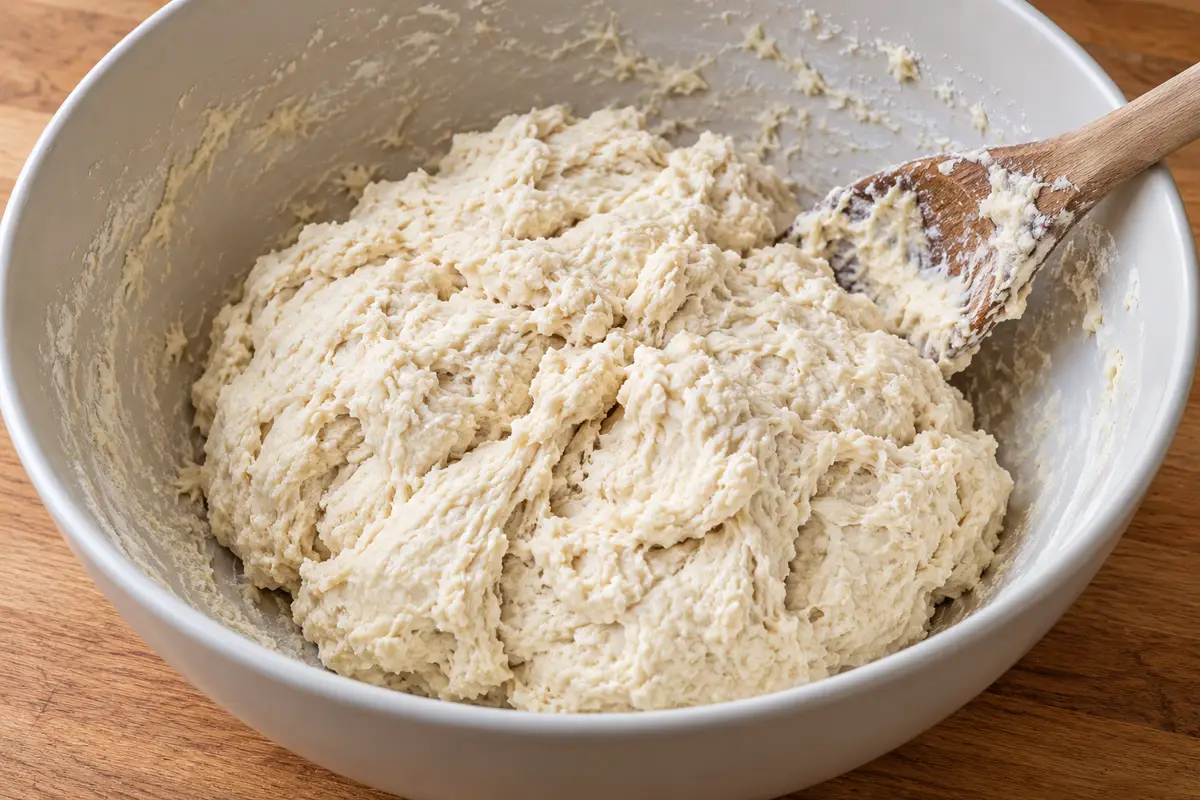
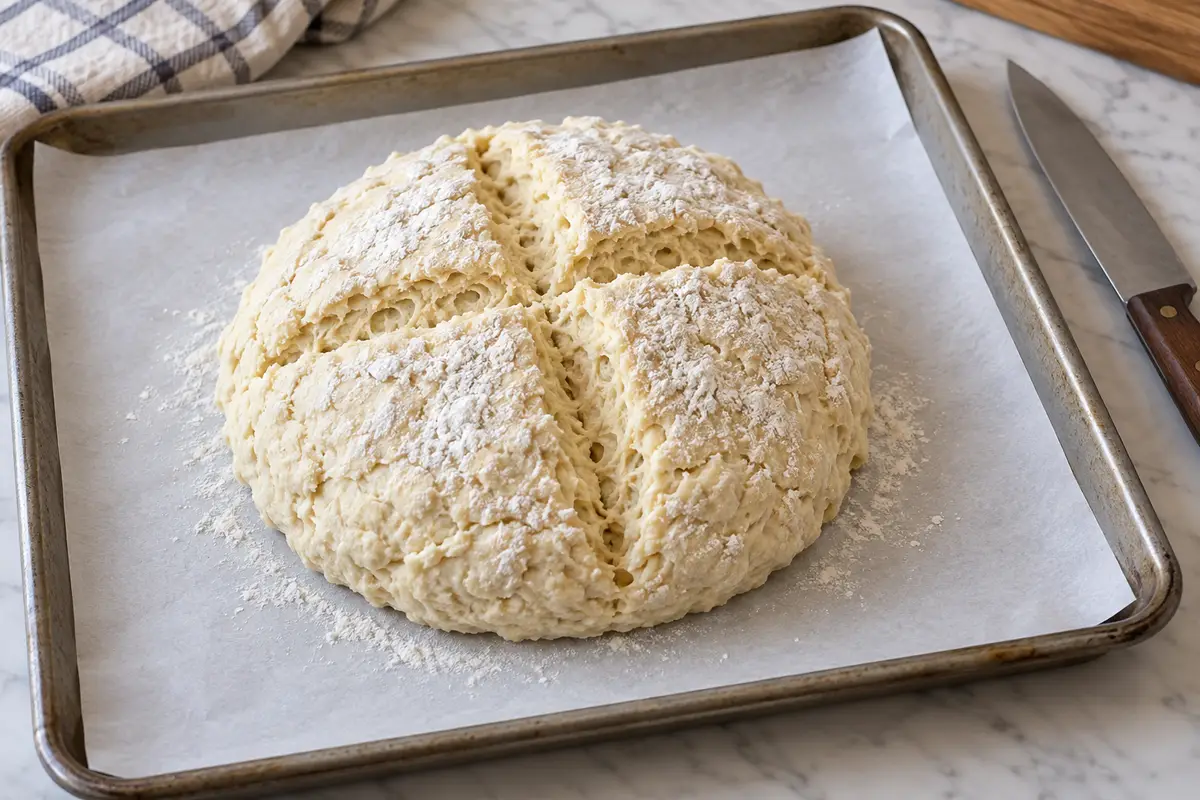
AI-generated Lightly flour the counter with part of the reserved flour and turn the dough out onto it. With floured hands, briefly gather it into a round loaf about 20 cm in diameter and about 4 cm high, then transfer it to the prepared baking sheet. Dust the top with the remaining flour and use a sharp knife to make two crossing cuts from edge to edge, about 3 cm deep; do not cut through the base of the loaf. Proceed to baking immediately.
AI-generated Place the baking sheet in the preheated oven and bake for 15 minutes at 230°C, then reduce the temperature to 200°C and bake for about 25–30 minutes more. The crust should be distinctly golden and the cuts wide open. A skewer inserted into the center of the loaf through a cut should come out without sticky raw dough; a few dry crumbs are fine. If the center needs more baking, bake for about 5–10 minutes more, loosely covering the top with aluminum foil if it is already well browned.
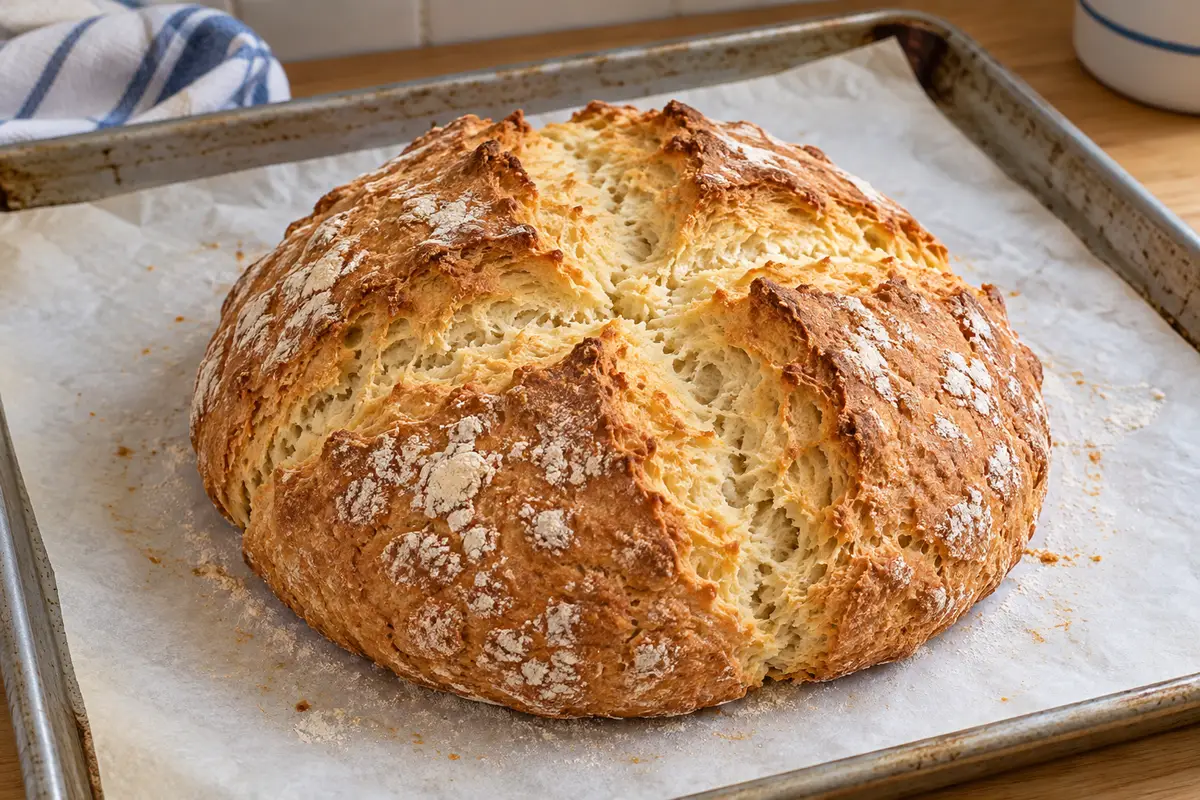
AI-generated Remove the bread from the baking sheet and place it on a rack without covering it, so steam can escape freely from underneath too. Cool for about 2 hours, until the loaf is completely cool; if it is still warm, wait longer. Only once it has cooled completely, use a serrated knife to cut it into 12 slices, so the soft crumb is not compressed during slicing.
Estimated nutrition

Rate this recipe
0 ratings
Comments