
AI-generated
Laverbread cakes — Welsh patties of cooked seaweed and oats
Log in or create a free account to save recipes.
Source: https://recipheon.com/en/recipes/breakfast/laverbread-cakes-welsh-patties-of-cooked-seaweed-and-oats
About this recipe
Laverbread cakes are small savory patties made with Welsh cooked laver seaweed paste and ground oats. The name laverbread can be misleading: the ingredient itself is a dark, soft paste, not a loaf of bread. In this simple homemade version, it is mixed with medium-ground oatmeal, left briefly to thicken, then fried in small portions in butter. The outside becomes lightly crisp while the center stays soft, with a distinct taste of the sea. You need ready-cooked laverbread intended for eating; dried nori sheets will not produce the same mixture. No eggs, flour or special molds are needed. Eight cakes, fried in two batches, make four small breakfast servings. Serve them straight from the pan while the oats on the surface are still browned and the cakes are warm and tender.
Ingredients
Seaweed cakes
240 g ready-cooked plain laverbread, a thick laver seaweed paste, weighed with its own liquid
60 g dry whole-grain medium-ground oatmeal
20 g unsalted butter, not clarified: 10 g for each of two batches
0.2 g ground black pepper
Steps
Put the weighed ready-cooked laverbread in a bowl, keeping its own liquid. Add the dry oatmeal and pepper. Mix thoroughly with a spoon, breaking up larger clumps of paste to distribute the oats evenly. Do not add salt: prepared laverbread already contains salt. Use cooked paste, not dried seaweed sheets.
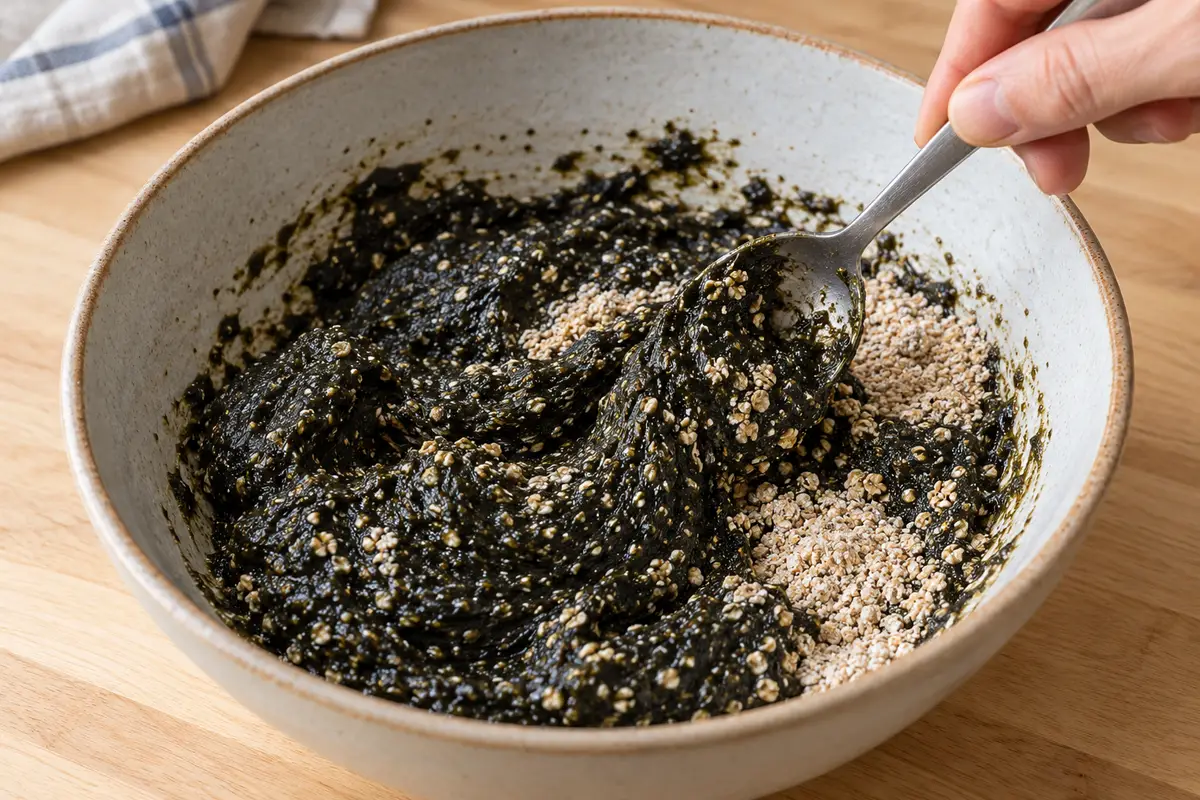
AI-generated Cover the bowl and leave for about 10 minutes. The oats will absorb some moisture and the mixture will become firmer, though still sticky and delicate. Stir again, scraping everything from the sides of the bowl. Do not try to make a dry dough by adding flour or extra oatmeal; the cakes should stay soft inside.
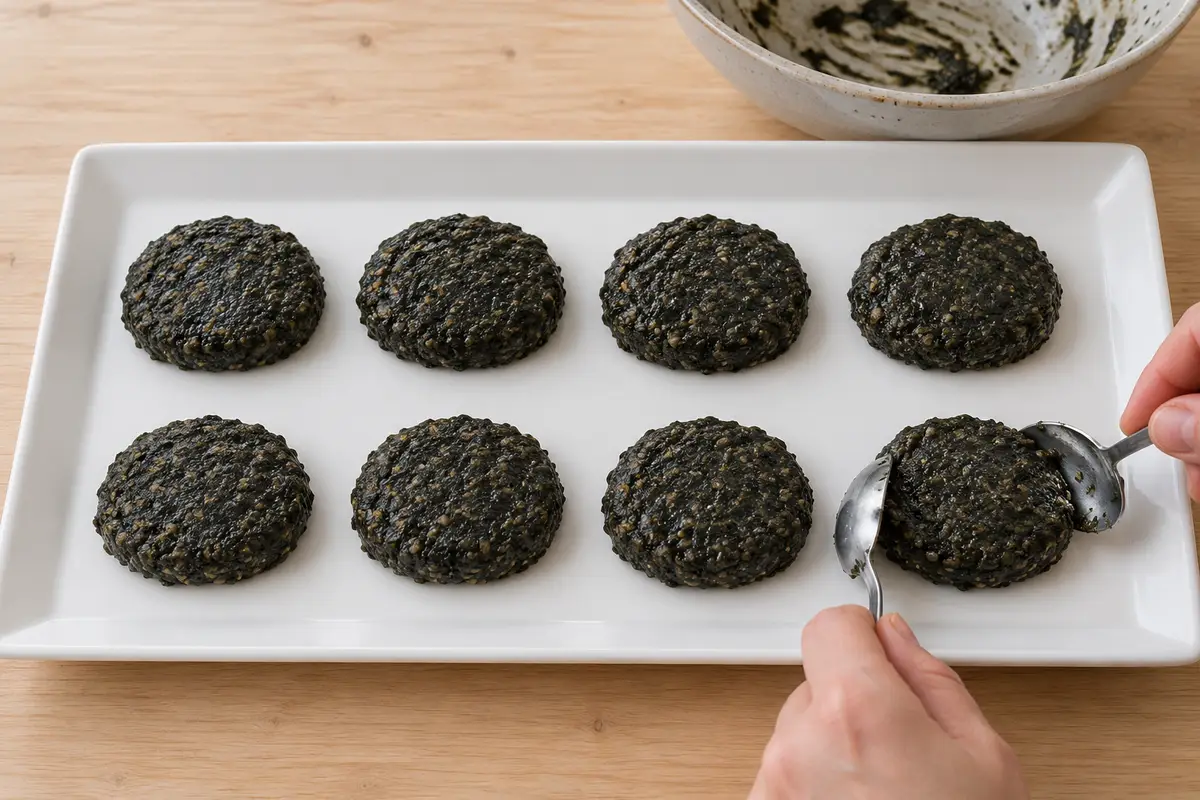
Divide all the mixture into eight similar portions. Using two spoons, shape rounds on a plate about 5–6 cm across and 1–1.2 cm thick. Neaten the edges, but do not press firmly. Scrape the remaining mixture from the bowl into the cakes. Do not dust the work surface, and do not coat the portions in extra oats.
AI-generated In a nonstick frying pan about 24 cm across, melt 10 g of butter over medium-low heat. When it foams lightly, add four cakes with space between them. Fry for about 3–4 minutes, until the undersides set and brown. Turn gently with a wide spatula and fry for another 3–4 minutes. Do not move them constantly, as the soft mixture may fall apart.
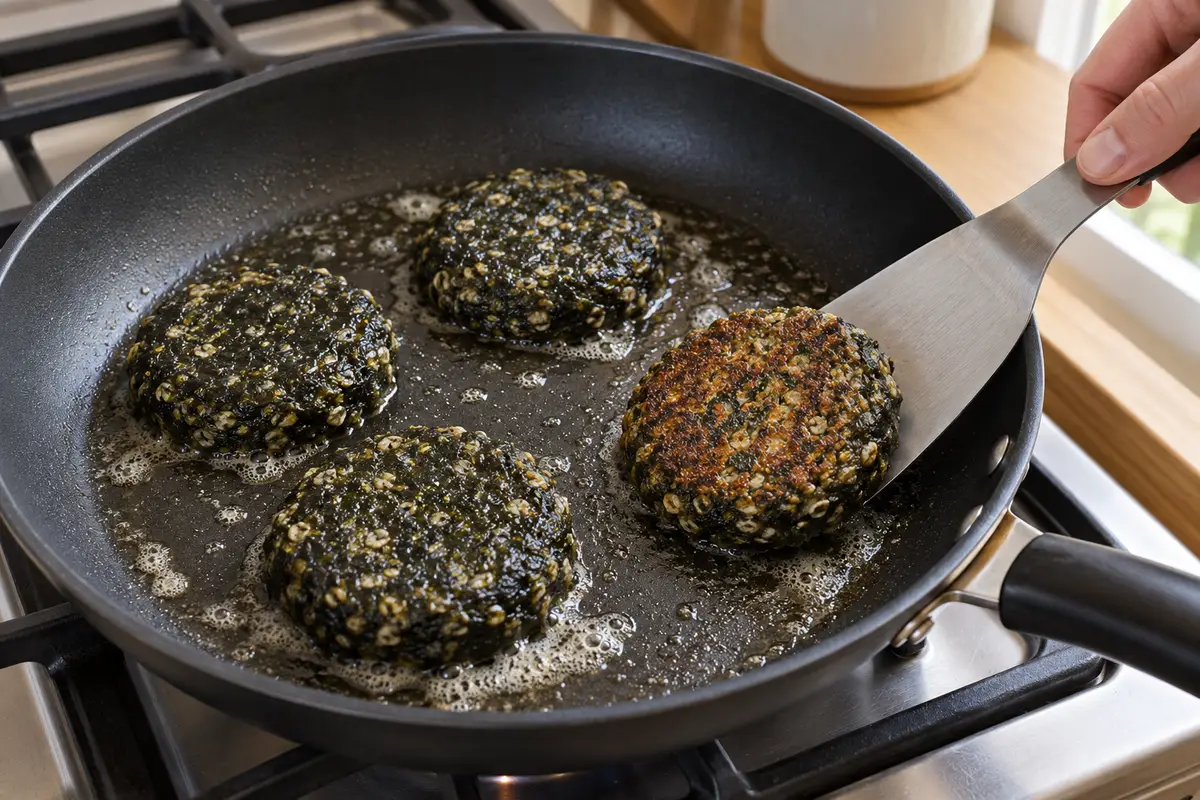
AI-generated Transfer the first batch to a plate along with the melted butter left in the pan. Add the remaining 10 g of butter and fry the next four cakes in the same way, for about 3–4 minutes per side. If the fat darkens quickly, lower the heat. Serve the butter from the second batch as well; do not drain the cakes on paper towels.
Serve each batch as soon as it is fried, allowing two cakes per small breakfast serving. They should have a lightly crisp surface and a soft, moist center. Do not leave them in a warm pan for long, as they will lose their tenderness. Cool any uneaten cooked cakes quickly, refrigerate within 2 hours and use the next day, reheating thoroughly.
Estimated nutrition
We couldn't estimate the nutrition for this recipe yet.

Rate this recipe
0 ratings
Comments