
AI-generated
Pain de campagne — wheat and rye sourdough bread
Log in or create a free account to save recipes.
Source: https://recipheon.com/en/recipes/breakfast/pain-de-campagne-wheat-and-rye-sourdough-bread
About this recipe
Pain de campagne is a country loaf with a browned, crisp crust and a springy crumb. This homemade version combines strong wheat bread flour, whole-grain rye flour and a ready, active rye sourdough starter. No baker's yeast is added. A few gentle folds strengthen the dough, while a longer fermentation and an overnight refrigerator rise develop its flavor. Visible aeration and increased volume matter most, since the starter's pace depends on its condition and the kitchen temperature. Bake the round loaf in a cast-iron Dutch oven, first covered and then uncovered to brown the crust well. Let it cool completely before cutting the first slice. The recipe makes one loaf intended for about sixteen slices, including both heels; it needs no oil, seeds or extra decoration.
Ingredients
All dough for one loaf
400 g strong Manitoba wheat bread flour, about 14–15% protein, dry, for the dough
100 g dry whole-grain rye flour for the dough
100 g ready, active rye sourdough starter at 100% hydration, maintained with the same whole-grain rye flour, with equal weights of flour and water, not dried starter powder
325 g water, weighed, lukewarm, all for the dough in addition to the water already in the starter
11 g fine salt
Weighed flour for shaping
10 g of the same Manitoba wheat bread flour, 3 g for the counter and 7 g for the cloth; loose residue after proofing is not intended for serving
Steps
Use a starter that was fed earlier, has clearly risen and is full of bubbles, before it starts to collapse. Weigh 100 g ready starter; the recipe time does not include creating or previously feeding it. Prepare a bowl, dough spatula, a proofing bowl about 20–22 cm in diameter with a cloth, and a 4–5 L cast-iron Dutch oven about 24 cm in diameter, with a lid and handles rated for 230°C.
In a large bowl, mix all 100 g starter into 325 g lukewarm water. Add 400 g wheat bread flour and 100 g whole-grain rye flour. Mix thoroughly with a spatula, gathering all flour from the bottom until no dry patches remain. Cover and leave for 20 minutes. Do not add yeast, oil or unweighed water; keep the dusting flour separate.
Sprinkle all 11 g salt over the dough. Press and fold it in the bowl for about 3–5 minutes, until the salt is evenly incorporated and the dough starts to hold together. It should be soft and slightly sticky, but not fluid. Scrape any residue from the sides into the main dough. Cover the bowl and mark the starting dough level; do not oil the bowl and do not add extra flour.
Do three sets of folds about 30 minutes apart. For each set, lift one side of the dough with a flexible spatula, gently stretch it up and fold toward the center; rotate the bowl and repeat on the other three sides. Do not tear the dough and do not press it flat. Between sets, keep the bowl covered in a warm, undisturbed spot, about 23–25°C. All dough stays in the bowl, without extra flour or fat.
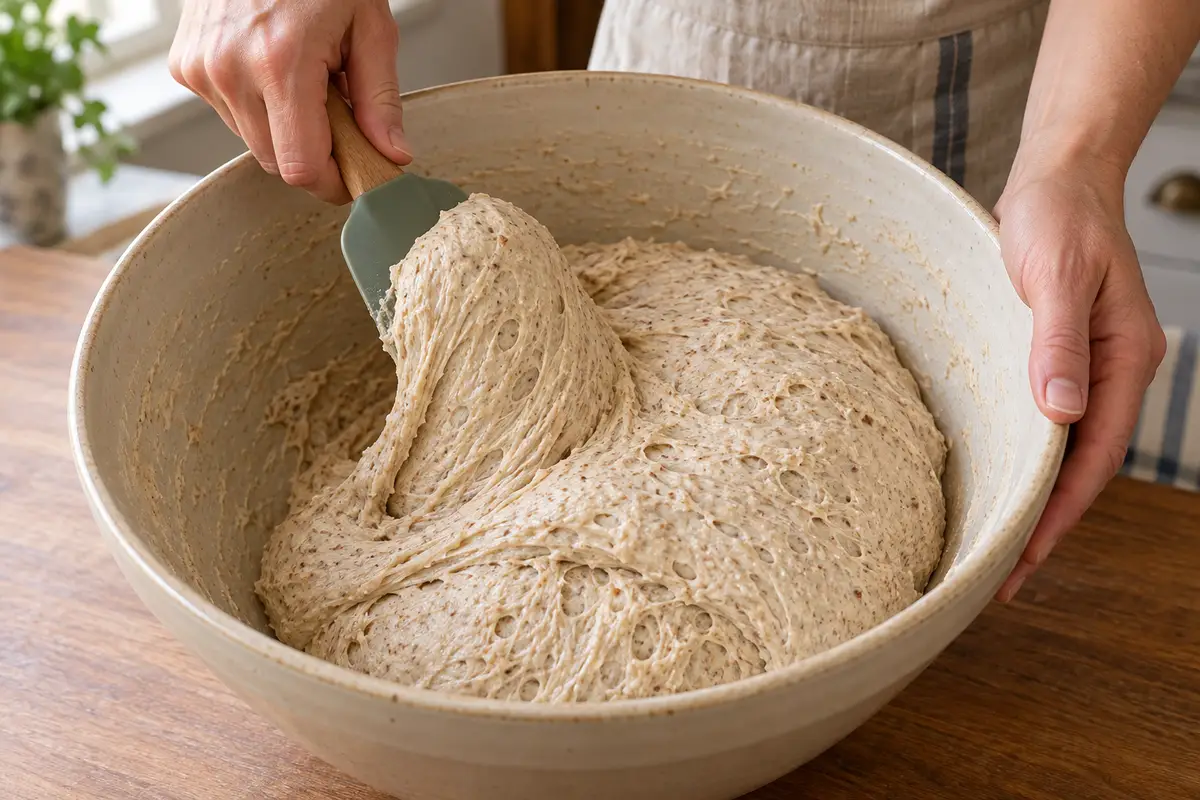
AI-generated After the last fold, leave the dough covered until its volume has increased by about one-half to three-quarters, it is slightly domed and bubbles show at the sides. Total fermentation from mixing starter with flour usually takes about 4–6 hours in a warm kitchen, including the initial rest and folds. It takes longer in cooler conditions. Follow the dough's appearance and lightness; do not insist on waiting for it to double.
Separately weigh 3 g bread flour for the counter and 7 g for the cloth. Gently turn all the dough onto the sparingly floured counter. Gather the edges inward with a dough spatula, turn seam side down and form a loose ball without forcefully knocking out gas. Cover with a bowl for about 20 minutes. Do not trim the edges and do not set any dough aside; do the final shaping on the same counter without extra dusting flour.
Line the proofing bowl with a clean cloth and evenly rub the weighed 7 g flour into it. Turn the dough over, fold the edges inward one after another and join them. Turn seam side down; use a few short pulls with the dough spatula to draw the ball across the counter and gently tighten the surface without tearing it. Transfer seam side up to the prepared bowl and cover, leaving room to rise.
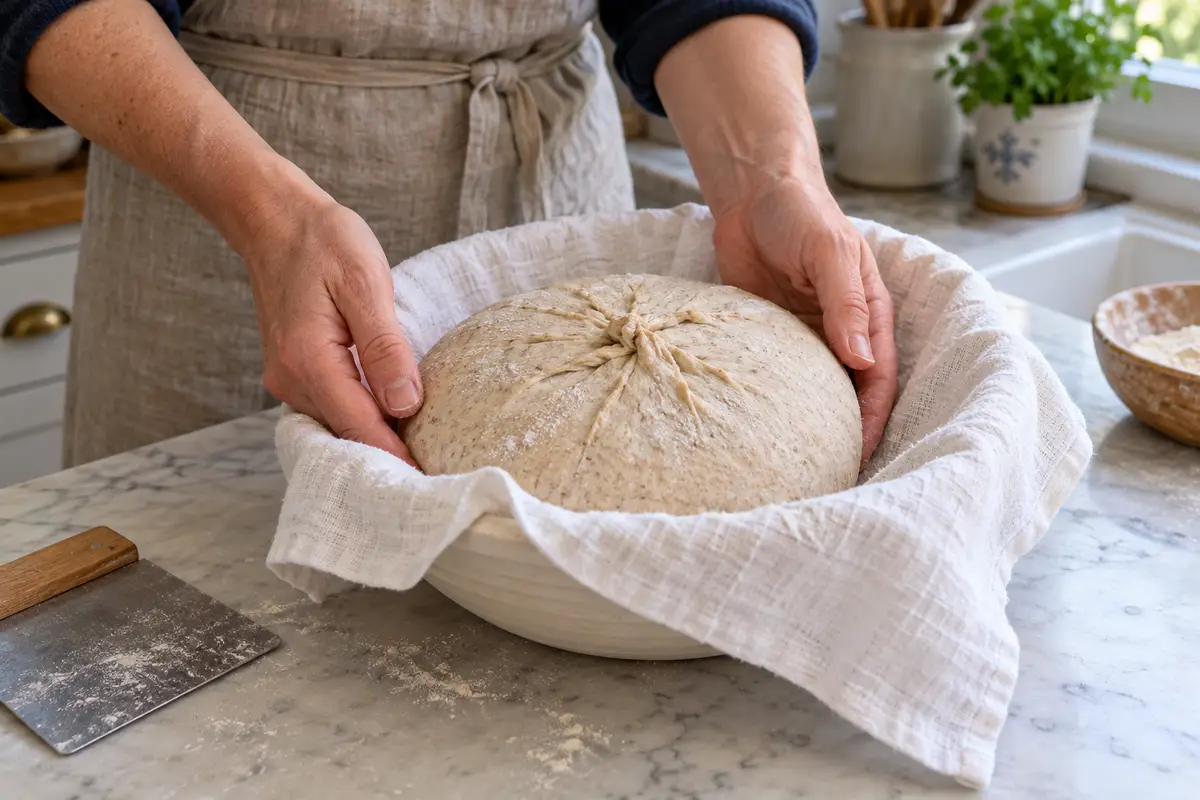
AI-generated Refrigerate the covered bowl for about 8–12 hours. The dough should gradually rise a little while holding its shape; it does not have to double. Do not leave the loaf on the counter overnight. Bake directly from the refrigerator while still cold and easier to score. The earlier active bulk rise in the bowl is necessary; chilling alone does not replace it.
For about the last 45 minutes of refrigeration, put the empty cast-iron Dutch oven with its lid in the oven and heat both to 230°C, conventional heat. The pot must allow dry preheating and this temperature; do not use a glass vessel or a lid with an unsuitable handle. Prepare dry oven mitts, a heatproof trivet and parchment rated for at least 230°C. Do not pour water into the hot pot.
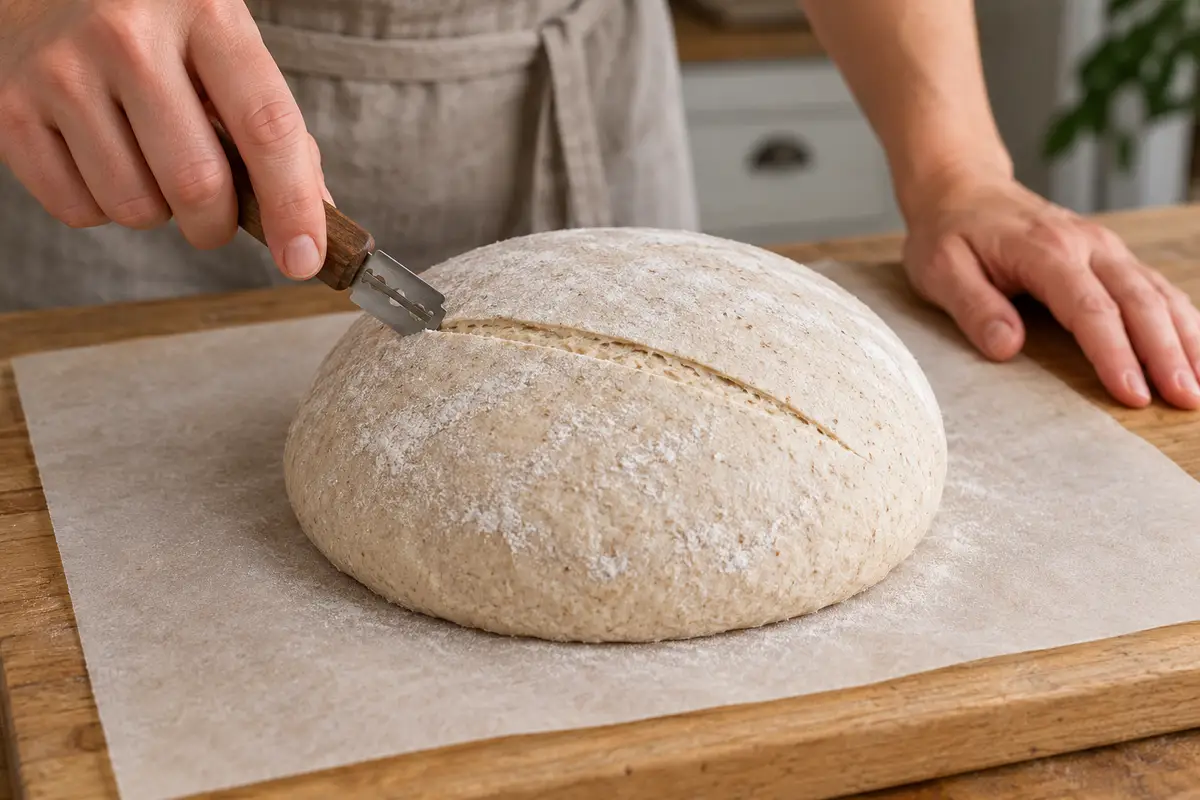
Take the bowl out of the refrigerator. Turn the loaf onto parchment laid on a board, remove the cloth and gently brush off loose flour; that residue is not served. Use a sharp knife or bread lame to make one firm slash across the top, about 1 cm deep. Wearing mitts, set the hot pot on the trivet. Hold the paper by its sides, lower the whole loaf inside and put on the lid without touching the hot walls.
AI-generated Bake at 230°C for about 25 minutes with the lid on. Then carefully remove it, directing hot steam away from your face and hands. Bake uncovered for about another 25–30 minutes, until the crust is deep golden brown and the sides are noticeably firm. If the top darkens quickly, reduce the temperature to 210°C near the end of baking. Lift out the whole loaf using the parchment and transfer to a rack; do not leave it to cool in the pot.
Cool on a rack for at least 3 hours, until the loaf is cold in the center too. Do not slice it hot; the moist crumb needs time to set. Divide into about 16 slices, counting both heels; the entire loaf is intended to be eaten. Once cool, keep in a clean cloth or bread box for 2–3 days. Slice and freeze any extra in airtight packaging; do not add unlisted butter or other accompaniments for serving.
Estimated nutrition

Rate this recipe
0 ratings
Comments