
AI-generated
Baba au rhum — yeast cakes soaked in rum syrup
Log in or create a free account to save recipes.
Source: https://recipheon.com/en/recipes/desserts/baba-au-rhum-yeast-cakes-soaked-in-rum-syrup
About this recipe
Baba au rhum are small French yeast cakes with a springy, porous crumb that absorbs sweet rum syrup. The dough contains little sugar, so soaking gives the cakes their characteristic flavor and moistness. The key is to work the soft dough thoroughly, let it rise patiently and bake the cakes until clearly golden. They should cool completely before their bath in lukewarm syrup: hot cakes and those soaked too long can easily fall apart. This home version makes eight individual cakes without whipped cream, fruit or an extra glaze. Vanilla gently complements the rum, which is added only to the cooled liquid. After briefly draining and resting, the dessert should be moist all the way through while holding its shape. Excess syrup is not part of the eight servings. The dessert contains alcohol because the rum is not boiled after it is added.
Ingredients
Yeast dough and molds
200 g type 550 wheat flour
3 whole eggs, size M, about 150 g after cracking, without shells
50 g milk with 3.2% fat, weighed
60 g softened butter with 82% fat for the dough
20 g fine white sugar
10 g fresh baker's yeast
3 g fine salt
12 g butter with 82% fat for thinly greasing the molds; set the unused remainder aside outside the servings
Vanilla syrup with rum
600 g water
300 g fine white sugar
100 g light rum with 40% alcohol, weighed, without added sugar or flavorings
1 vanilla bean; the seeds remain in the syrup, but remove the empty bean; from about 1 kg finished syrup, the cakes usually retain about 500–600 g after draining, with the rest excluded from the servings
Steps
Prepare eight metal molds without central tubes, each holding about 150 ml, such as tall individual cake or muffin molds. Do not use paper liners. Thinly grease the insides with the butter allocated to the molds, without leaving lumps or puddles; set the unused remainder aside. Take the eggs and the 60 g butter for the dough out of the refrigerator in advance. Warm the milk only until pleasantly lukewarm, not hot, and dissolve the fresh yeast in it. Beat the eggs with a fork and weigh out about 150 g without shells.
Put the flour, 20 g sugar and salt in the bowl of a stand mixer fitted with a paddle and briefly mix. Add the eggs and the milk with the yeast. Mix on low speed until combined, then work for about 8–10 minutes on medium speed, scraping down the bowl. Add the softened 60 g butter in small portions and work for about another 5 minutes. The dough should become smooth, glossy and stretchy, pulling away from parts of the bowl as it mixes. Once stopped, it will still be soft and sticky; do not add flour to turn it into a firm ball.
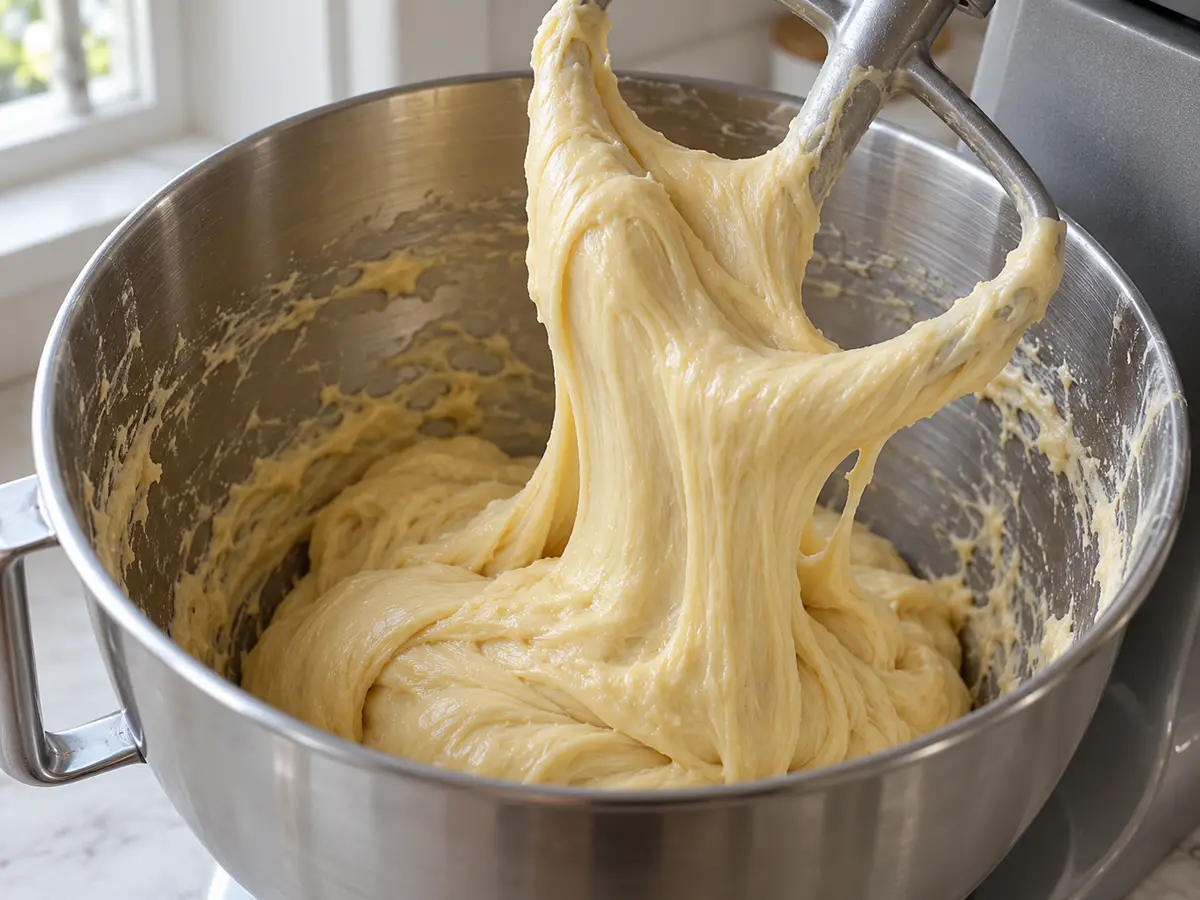
AI-generated Scrape the dough into the center of the bowl and cover it. Leave in a quiet, slightly warm, draft-free place for about 60–90 minutes, until roughly doubled in volume with a visibly aerated surface. In a cool kitchen, wait longer rather than putting the bowl on a hot radiator. Briefly stir the risen dough with a spatula to release the largest bubbles.
Divide all the dough among the eight prepared molds, about 60–62 g in each. Use two spoons or a piping bag without a tip to help; the dough should fill roughly half their capacity, no more. Smooth the surface with a spoon and place the molds on a baking sheet. Cover loosely so the covering does not stick to the rising dough, and leave for about 35–60 minutes. Wait until the dough is fluffy and reaches about three-quarters of the molds' height. Toward the end of proofing, preheat the oven to 180°C with conventional top and bottom heat.
Bake on the middle oven rack for about 25–30 minutes, until the cakes are evenly golden and springy when lightly touched, and a skewer inserted into the center comes out without wet dough. Do not open the oven during the first 20 minutes. After taking them out, wait about 5 minutes, carefully remove the cakes from their molds and place on a rack. Cool for about 60 minutes, until completely cooled. Do not soak cakes that are still hot.
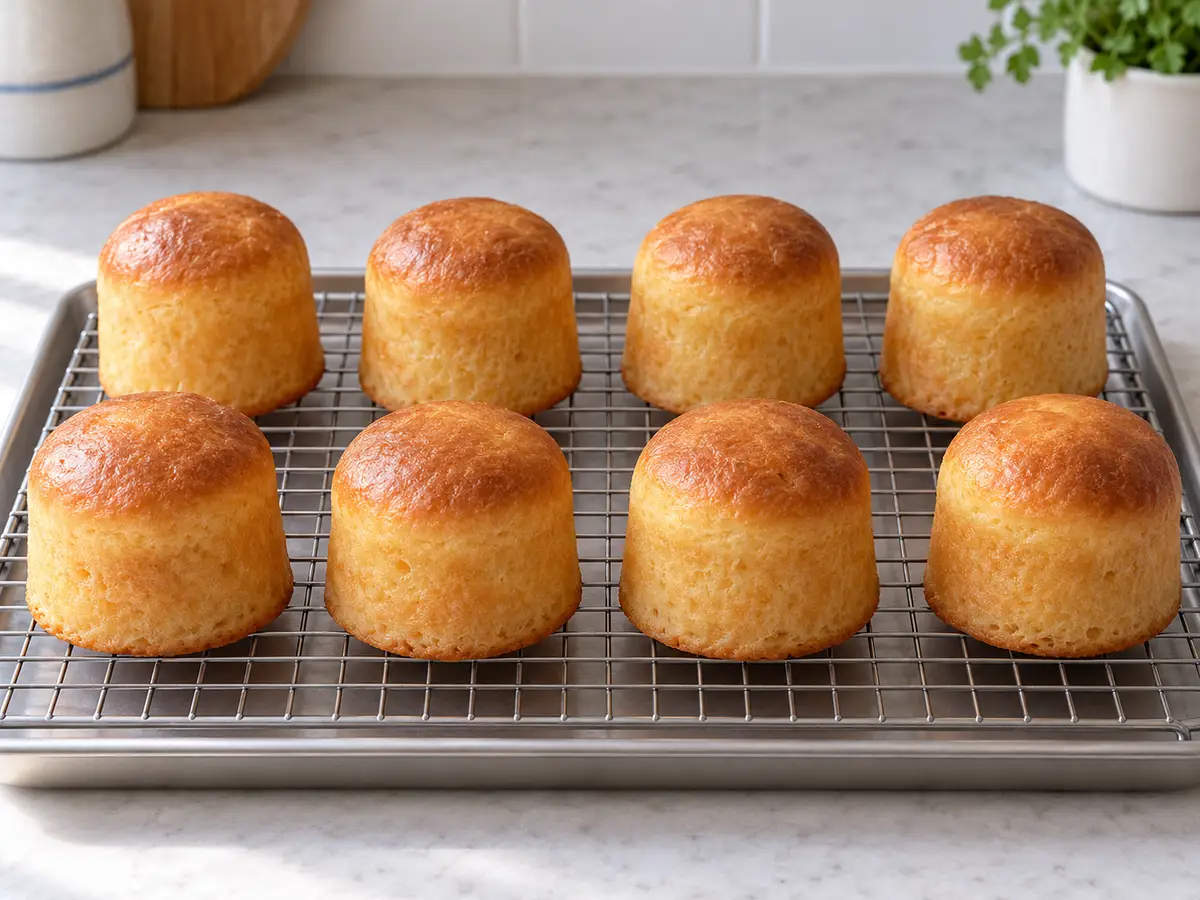
AI-generated While the cakes cool, bring 600 g water to a boil with 300 g sugar, the split vanilla bean and its scraped-out seeds. Stir until the sugar dissolves and boil for only about a minute, without reducing for a long time. Take off the heat, cover and set aside for about 30–45 minutes, until the liquid is only lukewarm. Remove the empty bean, pour in all the weighed 100 g rum and mix. From this point on, do not reheat the syrup and do not boil it. Pour it into a container deep and narrow enough to immerse individual cakes.
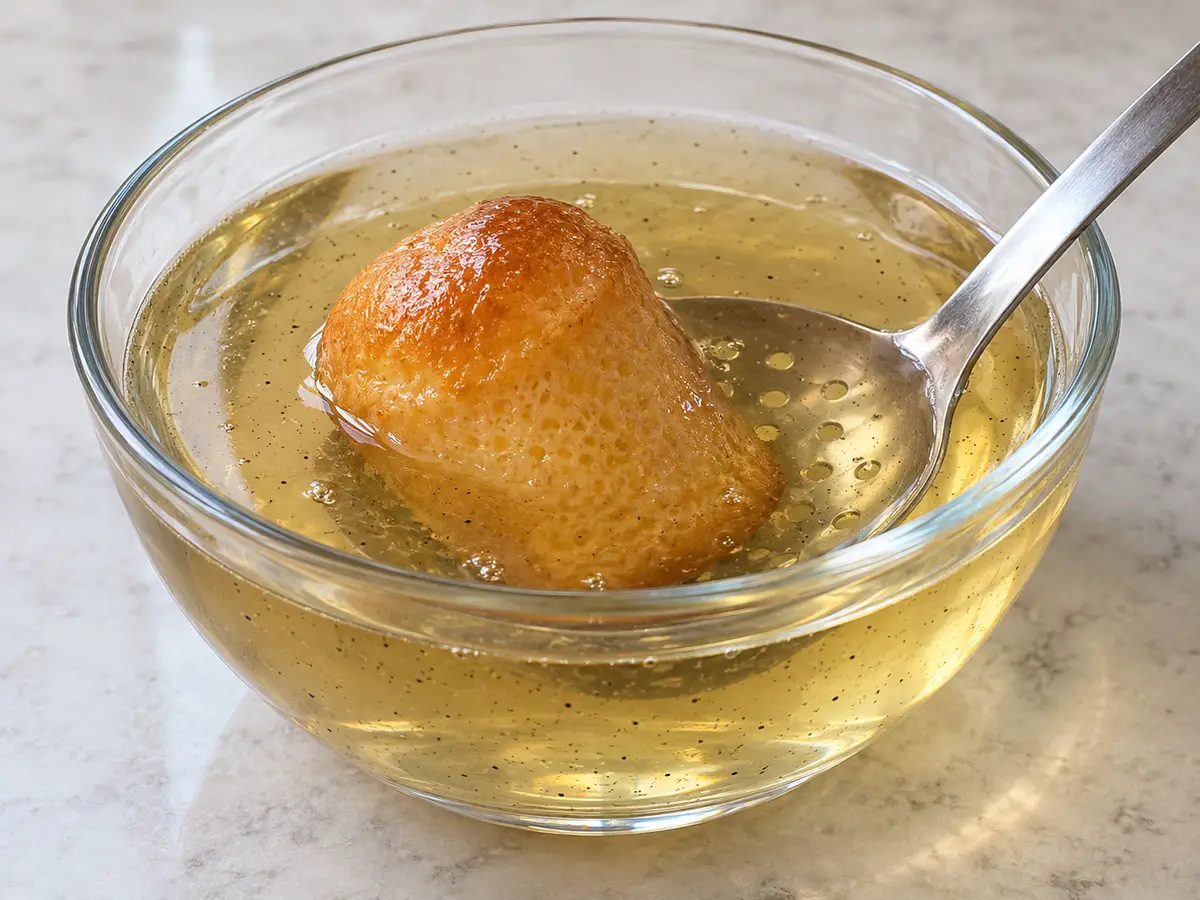
Place one or two completely cooled cakes at a time in the lukewarm syrup. Gently hold them below the surface with a wide slotted spoon and turn them so they absorb syrup on both sides. Start with about 2 minutes in total; if they are still light and dry inside, extend the bath by another minute. They should become noticeably heavier, swell slightly and remain whole. Lift them from underneath, without squeezing, and place on a rack over a tray for about 5–10 minutes. They will usually retain about 500–600 g liquid in total after draining; do not force all the prepared syrup into them.
AI-generated Transfer the soaked and drained cakes to a lidded container in a single layer and refrigerate for at least an hour so the moisture spreads through the crumb. Serve one cake per person, taking them out about 15–20 minutes beforehand. Do not add whipped cream, fruit or icing. Unused syrup and drained liquid are excluded from the eight servings. Keep the finished dessert covered in the refrigerator and eat within 2 days. Remember that rum added to lukewarm syrup remains a source of alcohol.
Estimated nutrition

Rate this recipe
0 ratings
Comments