
AI-generated
Bündner Nusstorte — Shortcrust Tart with Caramel Walnuts
Log in or create a free account to save recipes.
Source: https://recipheon.com/en/recipes/desserts/bundner-nusstorte-shortcrust-tart-with-caramel-walnuts
About this recipe
Bündner Nusstorte is a Swiss shortcrust tart filled with walnuts in a creamy caramel. It comes from Graubünden and has a distinctive pastry lid covering a dense, rich walnut filling. This home version makes one tart in a 22 cm springform pan, divided into twelve small portions. The pastry is rolled between sheets of paper, so there is no need for extra flour. Warm cream is added to amber caramel, and the walnut filling is cooled before it goes into the pastry case. After baking, the tart needs to cool completely and rest overnight in the refrigerator so the filling sets and the slices cut neatly. Plan to make it the day before serving and take it out of the refrigerator a little early to let the creamy caramel soften.
Ingredients
Shortcrust pastry
300 g all-purpose flour, type 450
150 g cold butter with 82% fat
100 g fine white granulated sugar
1 egg weighing about 50 g without the shell
1 g fine salt
Walnuts in caramel
250 g shelled walnuts without any additions
180 g white sugar
200 g liquid cream with 30% fat
20 g runny honey
35 ml water, including 30 ml for the caramel and 5 ml to seal the pastry
Steps
Mix the flour with 100 g of sugar and the salt. Add the cold butter, cut into cubes, and rub in with your fingertips until fine crumbs form. Add the egg and quickly bring together into a smooth dough, pressing rather than kneading for a long time. Divide into two pieces: about two-thirds for the base and sides and one-third for the lid. Flatten, wrap, and refrigerate for 1 hour. Make the filling during this time so it has time to cool as well.
Check the walnuts, removing any shell fragments, and chop roughly; some pieces can stay larger. Warm the cream in a small saucepan until hot and lightly steaming, without boiling vigorously. Prepare a pot holding at least 2 l with a heavy, light-colored base, and a long wooden spoon or spatula. Measure 30 ml water separately for the caramel and reserve 5 ml to seal the pastry later.
Put 180 g of sugar and 30 ml water in the pot. Heat over medium heat until the sugar dissolves and starts to boil. From this point, do not stir with a spoon; gently tilt the pot if needed. Cook until the syrup turns a clear amber color, usually about 6–10 minutes. Remove from the heat. Slowly pour in the hot cream in three additions, stirring with the long spoon and keeping your face and hands away from the steam: the mixture will foam vigorously and expand. Do not touch and do not taste the hot caramel. Return to low heat and stir for about 3–5 minutes until any sugar lumps dissolve and the sauce is smooth.
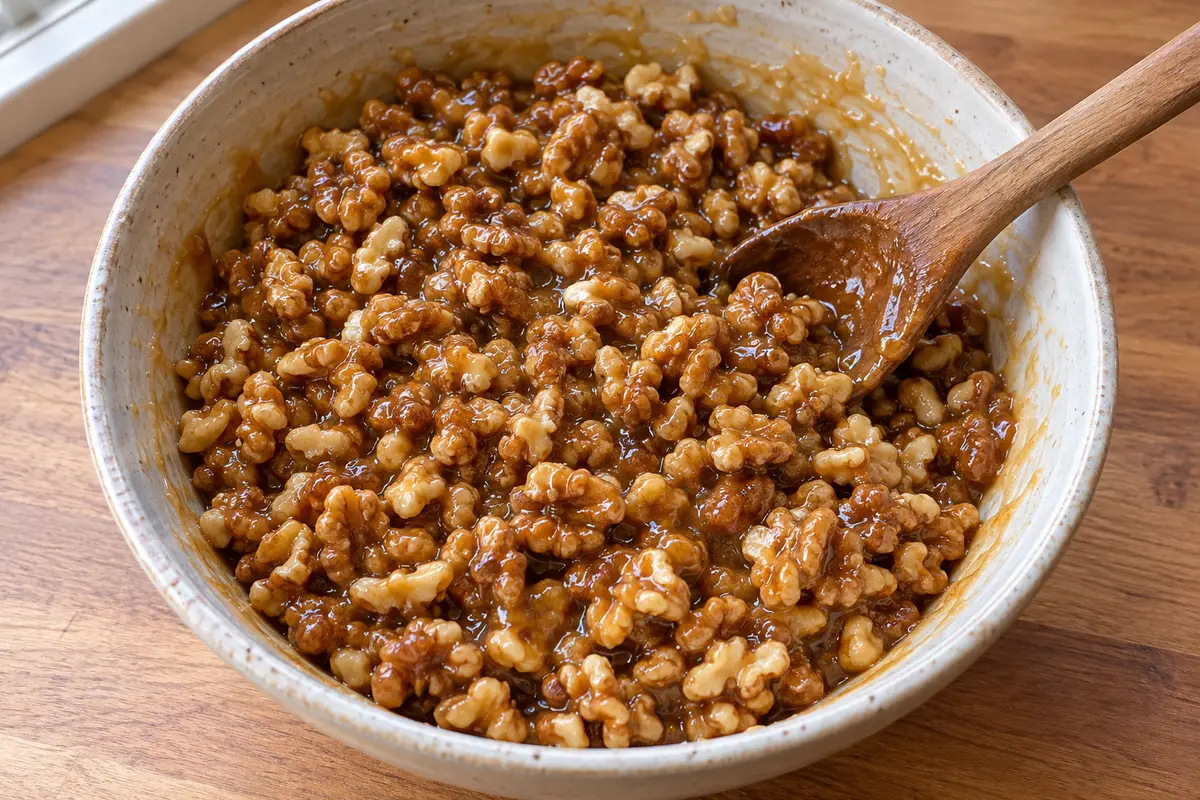
Add all the walnuts and the honey to the caramel. Heat for about 2 minutes more, stirring, until every piece is coated in sauce. Transfer all the filling to a wide heatproof bowl and leave for about 45–60 minutes, stirring occasionally, until it reaches room temperature. The filling will thicken as it cools but should still spread with a spoon. Do not put it into the pastry while warm, as it will melt the butter in the dough.
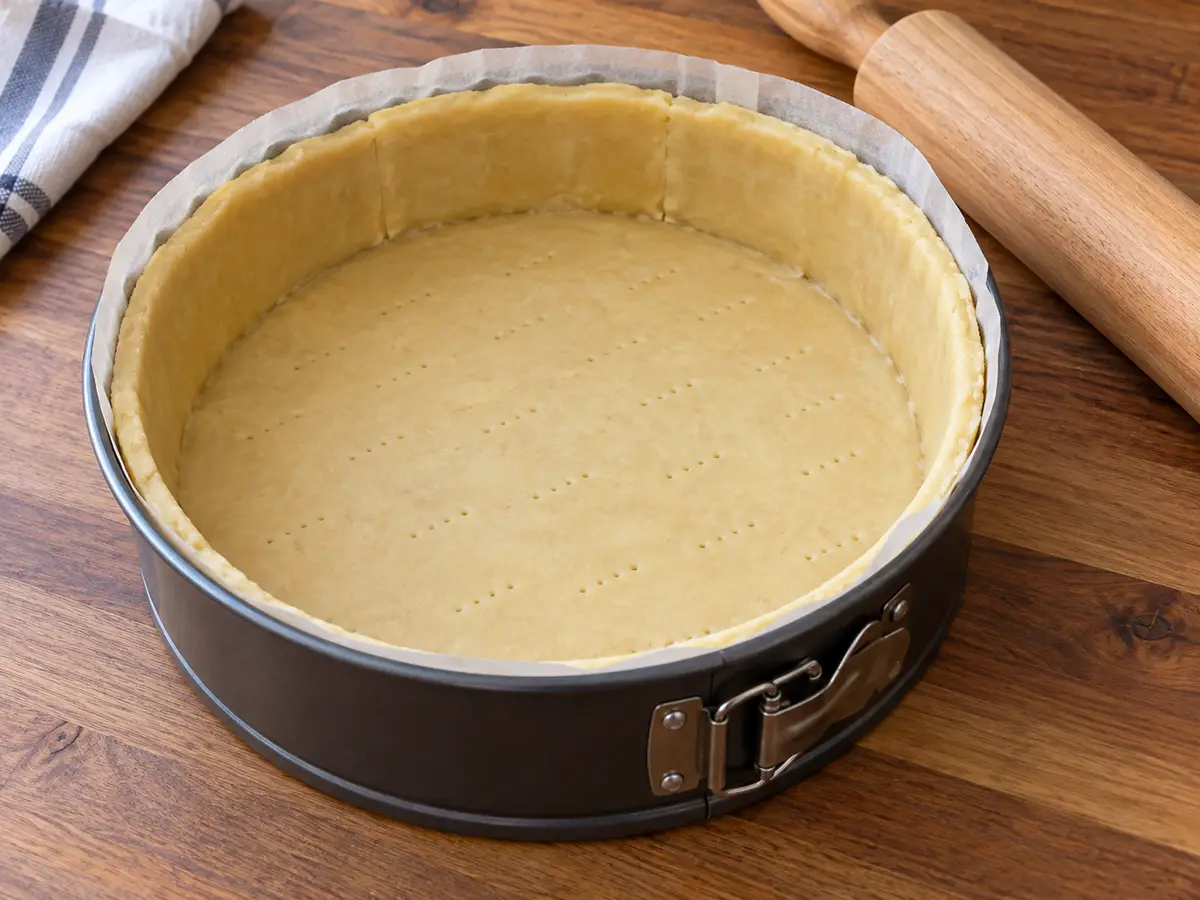
AI-generated Line the base of a 22 cm springform pan with parchment and place a strip of parchment around the sides. Roll the larger piece of dough between two sheets of paper into a circle about 30 cm across and roughly 4–5 mm thick. Remove the top sheet, transfer the dough to the pan, and remove the remaining rolling paper. Gently fit the pastry to the base and sides, forming a border about 4 cm high. Press any cracks together with your fingers and move uneven bits to thinner areas, using the whole portion. Prick the base with a fork. Roll the smaller piece between sheets of paper into a lid about 23 cm across. Do not add dusting flour; refrigerate for a few minutes if the dough softens.
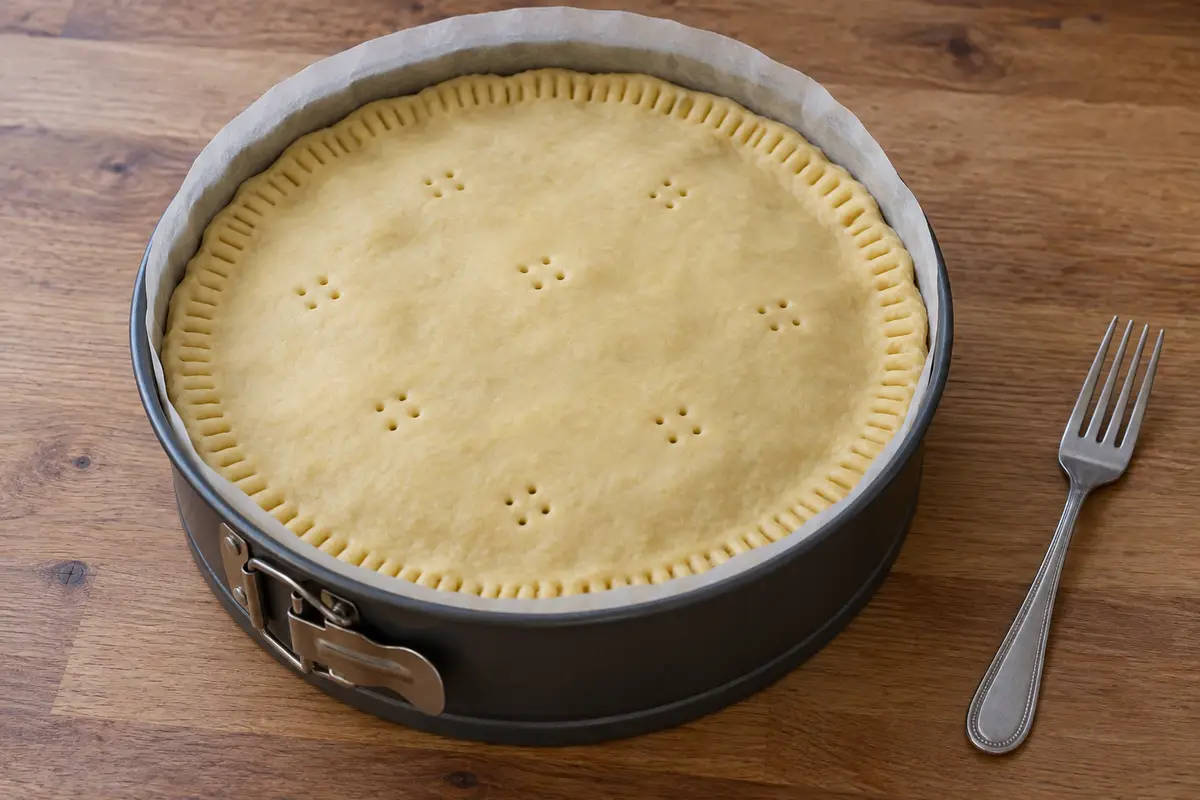
AI-generated Spread all the cooled filling over the base and level it. Fold the overhanging pastry inward over the walnut filling to make a sealing border. Lightly moisten it with some of the remaining 5 ml water, without leaving puddles. Add the lid, remove the paper, and press it firmly onto the folded border with your fingers, then with the tines of a fork. Press any excess pastry around the edge into the join rather than discarding it. Prick the lid several times with a fork to let steam escape. Refrigerate the pan for 20 minutes and heat the oven to 170°C using conventional top and bottom heat.
AI-generated Place the springform pan on a rimmed baking sheet on a lower-middle oven rack. Bake for about 55–65 minutes until the top and visible edge are evenly golden and dry. If the lid browns too quickly, loosely cover it with aluminum foil for the final fifteen minutes or so. After removing the tart from the oven, leave it in the pan: the filling is still very hot and soft, so do not try to open the springform pan or cut the tart immediately.
Cool the tart in its pan on a wire rack for about 2–3 hours, until it is no longer warm. Then cover and refrigerate for at least 8 hours, ideally overnight. After this rest, carefully release the ring, remove the parchment from the sides, and transfer the tart from the pan base to a plate. Take it out of the refrigerator about 20–30 minutes before serving. Cut into twelve small portions with a sharp knife. Keep the remaining tart tightly covered in the refrigerator for up to 4 days.
Estimated nutrition

Rate this recipe
0 ratings
Comments