
AI-generated
Pastéis de Nata – Portuguese Custard Tarts
Log in or create a free account to save recipes.
Source: https://recipheon.com/en/recipes/desserts/pasteis-de-nata-portuguese-custard-tarts
About this recipe
Pastéis de nata have crisp, buttery shells and smooth egg-yolk custard with dark patches on top. This homemade version of the Portuguese tarts uses store-bought butter puff pastry and a metal muffin pan. The pastry is rolled into a log, sliced into rounds, and pressed into the cups, leaving thin layers visible after baking. The custard is scented with lemon and cinnamon; let the mixture cool before adding the egg yolks. Thin pastry bases, chilled dough, and a thoroughly preheated oven help create a crisp bottom without drying out the filling. The recipe makes 12 tarts to serve slightly warm.
Ingredients
Pastry and pan
350 g store-bought chilled butter puff pastry, fresh and ready to roll out
10 g softened unsalted butter, for greasing the pan
Custard and water for shaping
300 ml milk (3.2% fat): 75 ml to mix with the flour and 225 ml to heat
180 g white sugar
25 g all-purpose flour
4 medium egg yolks, approximately 70 g in total, without the whites
150 ml water: 100 ml for the syrup and 50 ml for moistening your fingers while shaping, with any unused water discarded
1 cinnamon stick, approximately 6 cm long and approximately 2 g, for infusing in the syrup and then removing
3 g yellow lemon peel from a washed lemon, in 2 wide strips without the white pith, for infusing in the syrup and then removing
Steps
Set a conventional oven to 250°C with no fan and place a heavy baking sheet just below the middle rack position. Preheat the oven with the sheet inside for at least 30 minutes while preparing the pastry and custard. Use a metal muffin pan with 12 wells, suitable for baking at 250°C, with wells approximately 100 ml in capacity, approximately 7 cm across the top, and approximately 3.5 cm deep. Spread all 10 g of softened butter in a thin layer over the bottoms and sides of the wells.
Unfold the chilled pastry and, if needed, roll it between sheets of parchment paper into a rectangle approximately 30 × 40 cm and approximately 2–3 mm thick, without dusting with flour. Position the rectangle with a short 30 cm edge facing you and roll up tightly from that edge to form a log approximately 30 cm long. Do not squash the log; wrap it in the paper and refrigerate for 20 minutes to make it easier to cut even rounds. While it chills, prepare the syrup and milk mixture in the next steps.
Put the sugar in a small saucepan, pour in 100 ml of water, and add the cinnamon stick and strips of lemon peel. Heat over medium heat, gently swirling the pan, until the sugar dissolves. Once the syrup is clearly boiling across the entire surface, boil for approximately 3 minutes without stirring with a spoon; it should stay clear, without turning caramel-colored. Remove from the heat and leave the cinnamon and peel to infuse while you prepare the milk mixture.
In a bowl, thoroughly mix the flour with 75 ml of cold milk to make a smooth mixture without lumps. Heat the remaining 225 ml of milk in a saucepan over medium heat until small bubbles appear around the edge, then gradually whisk it into the flour mixture. Pour everything back into the saucepan and heat over medium-low heat, stirring constantly and scraping the bottom. Once noticeably thickened and gently bubbling, cook for approximately 1 more minute, until smooth, then remove from the heat.
Remove the cinnamon stick and lemon peel from the syrup; do not add them to the finished filling. Pour the syrup in a thin stream into the hot milk mixture, whisking gently all the time, until smooth and more fluid. Pour into a wide bowl and let cool for approximately 20 minutes, stirring occasionally, while shaping the pastry shells in the next step. Before adding the yolks, the mixture must be lukewarm: after stirring it, a small drop on the inside of your wrist should feel only slightly warm, not hot.
Use a sharp knife to cut the chilled log into 12 even rounds approximately 2.5 cm thick. Place one flat in each muffin cup, with the spiral cut side facing up. Pour the remaining 50 ml of water into a small bowl and lightly moisten your fingers as you press the center of each round onto the base, then work the pastry upward until it covers the sides almost to the rim. Do not unravel the spiral and do not make holes in the pastry; the base should be approximately 1–2 mm thick, while the sides can stay slightly thicker. Refrigerate the pan with the shells for 15 minutes and discard any unused finger-moistening water; finish the custard during this time.
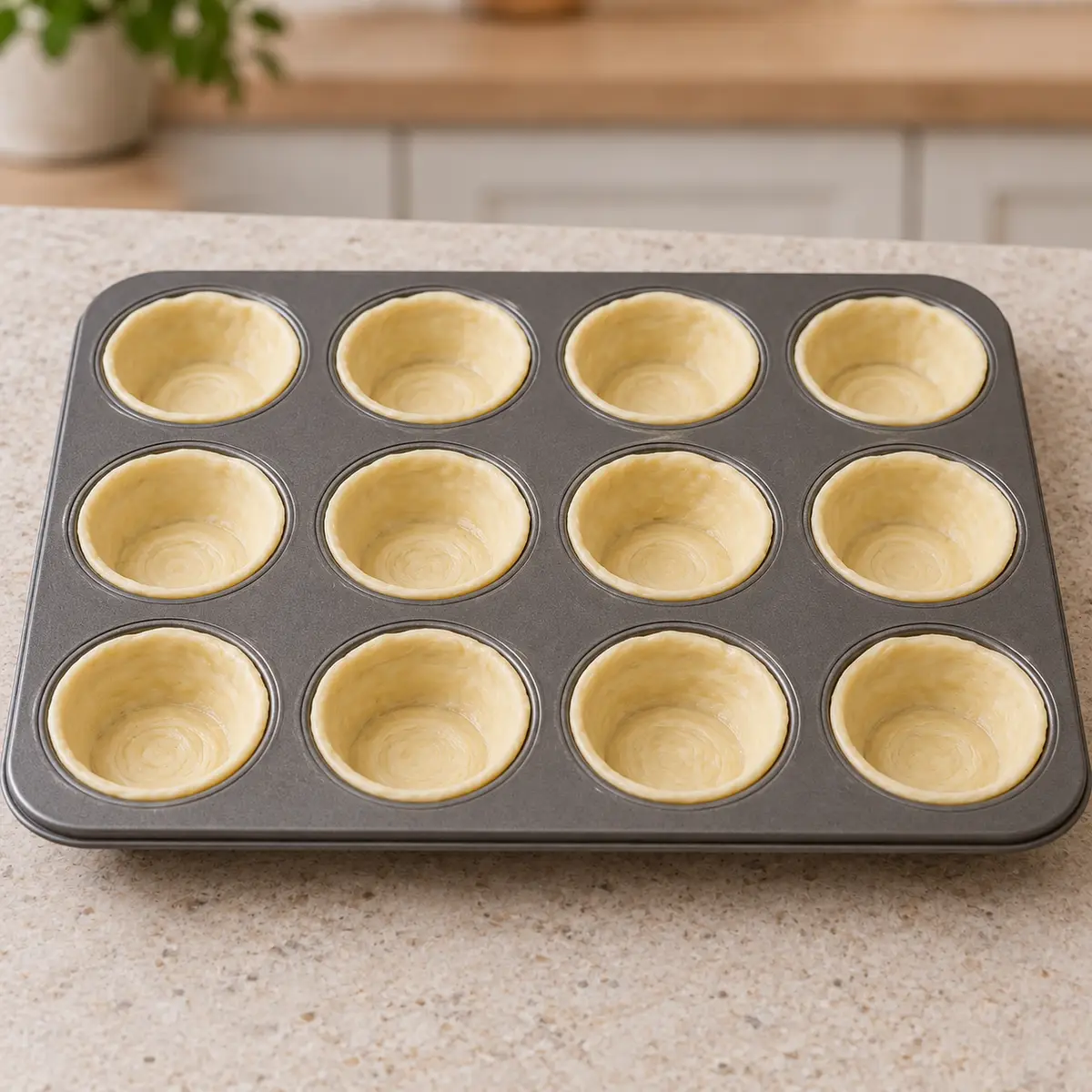
AI-generated Check that the milk-and-syrup mixture is lukewarm as described earlier; if it is still hot, wait so the yolks do not scramble. In a separate bowl, whisk the yolks just until combined, then gradually add the cooled mixture to them, whisking gently. Do not whisk the mixture until foamy and do not reheat it after adding the yolks. Strain the custard through a fine-mesh sieve into a pitcher with a spout to remove any lumps and make a smooth filling.
Remove the pan from the refrigerator and gently stir the custard in the pitcher. Divide all the custard evenly among the 12 shells, pouring approximately 45–50 ml into each and not filling above 3/4 of their height. Leave space at the top, as the filling and pastry will rise during baking. Immediately place the pan in the preheated oven on the hot baking sheet.
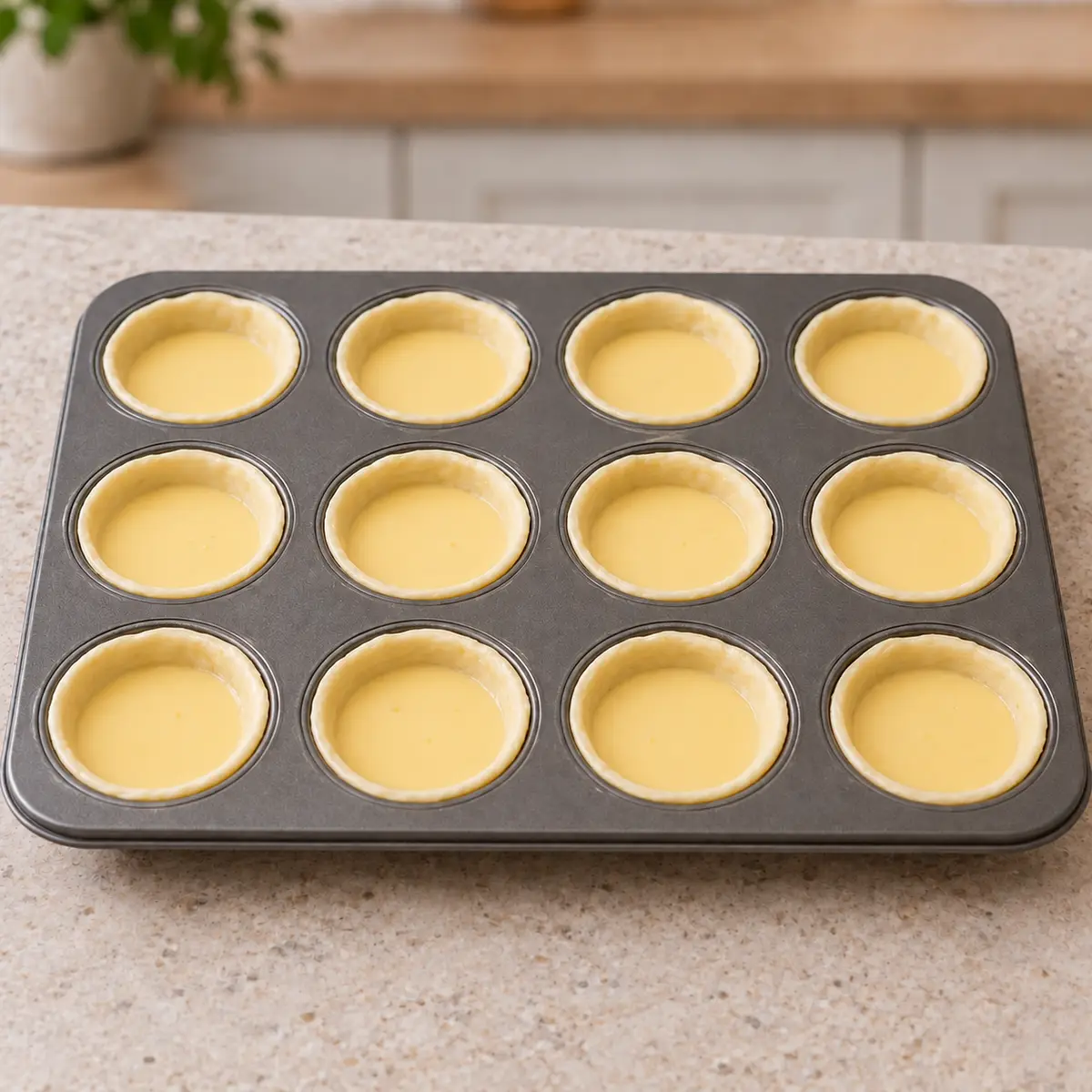
AI-generated Bake at 250°C on the conventional setting with no fan for approximately 20–25 minutes, watching the tarts toward the end. The pastry should be deeply golden with distinct layers, and the custard should have dark brown patches on top. The filling should be set around the edges and may wobble slightly in the very center when you move the pan, but it should not ripple like a liquid. Remove the pan when the tarts reach this stage; do not keep baking simply to darken the entire surface of the custard.
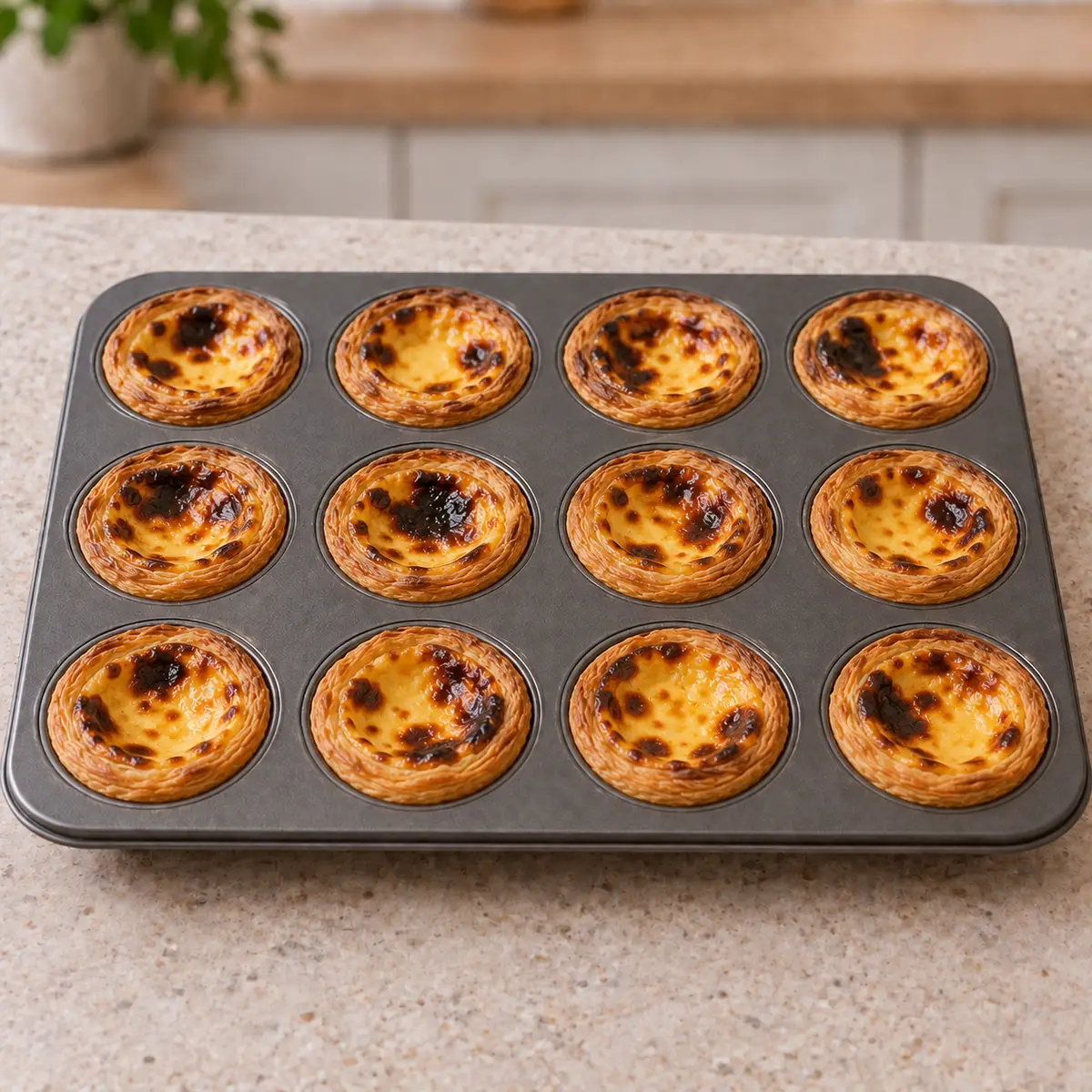
AI-generated Leave the tarts in the pan for approximately 5 minutes, until the filling settles slightly and firms up. Gently lift them out by loosening the edges with a thin spatula and transfer to a wire rack for another 10 minutes, allowing steam to escape from the bases. Serve slightly warm, with 1 tart per portion.
Estimated nutrition

Rate this recipe
0 ratings
Comments