
AI-generated
Cocoa Sponge Cake with Whipped Cream and Chocolate Glaze
Log in or create a free account to save recipes.
Source: https://recipheon.com/en/recipes/desserts/cocoa-sponge-cake-with-whipped-cream-and-chocolate-glaze
About this recipe
Cocoa sponge cake sandwiches a thick layer of whipped cream beneath chocolate glaze and piped rosettes. Two dark layers contrast with the pale filling, and a little sugar-and-water syrup moistens them without making them soggy. Beating the eggs gives the sponge its airy texture; fold gently after adding flour and cocoa to preserve that volume. Whip the cream only once the cake has cooled completely. Apply the glaze when cool but still fluid so it does not melt the filling. Several hours in the refrigerator make even slicing easier. The rectangular pan yields twelve servings, each with a rosette of freshly whipped cream.
Ingredients
Sponge Cake and Syrup
6 raw hen's eggs, size M, about 300 g edible weight without shells, at room temperature
200 g fine white sugar, divided: 180 g for the sponge and 20 g for the syrup
150 g dry wheat cake flour
35 g dry unsweetened cocoa powder
120 ml water for the syrup, all used to moisten the sponge
Cream and Glaze
950 ml liquid heavy whipping cream made from cow's milk, 36% fat, divided: 700 ml cold for the filling, 150 ml for the glaze, and 100 ml cold for the rosettes
60 g powdered sugar, divided: 50 g for the filling and 10 g for the rosettes
150 g dark chocolate, 70% cocoa, without a filling, to be chopped
20 g butter made from cow's milk, 82% fat
Steps
Preheat the oven to 170°C on the conventional (no-fan) setting. Line only the bottom of a rectangular metal pan with internal dimensions of 24 × 30 cm and a height of at least 6 cm with parchment paper; do not grease the sides. Sift together 150 g flour and 35 g cocoa. Prepare a mixer, large bowl, spatula, cooling rack, and piping bag with a star tip; keep the cream for the filling and rosettes in the refrigerator.
Crack all 6 eggs into the large bowl, add 180 g fine sugar, and beat with the mixer for about 10 minutes. The mixture should increase noticeably in volume and become pale and thick. When the beaters are lifted, the falling ribbon should remain visible on the surface briefly; only then stop beating.
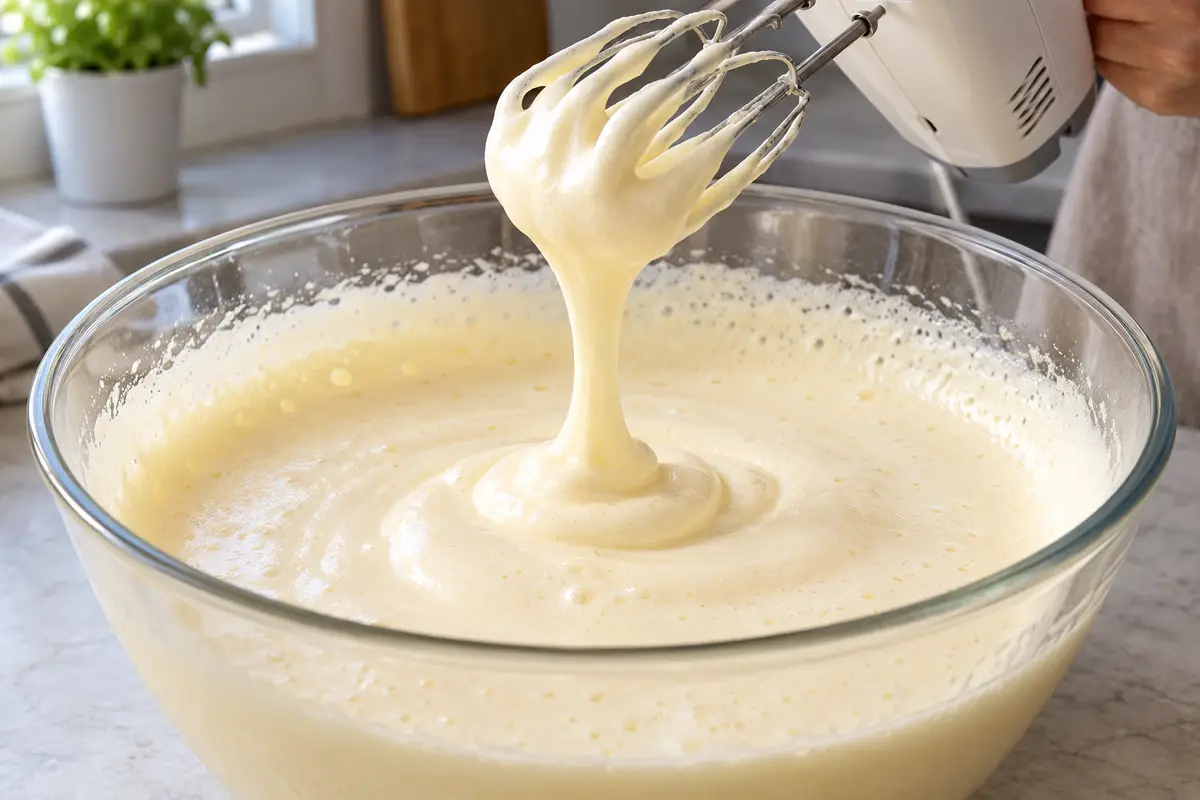
AI-generated Add the sifted flour and cocoa in three portions. After each addition, gently fold from the bottom upward with the spatula while turning the bowl, just until the dry streaks disappear; do not use the mixer anymore. Transfer all the batter to the pan and level the surface without pressing down firmly or shaking. The batter should remain airy and uniformly cocoa-colored.
Bake on the middle rack for about 30–35 minutes; do not open the oven for the first 25 minutes. The top should spring back when lightly touched, and a skewer inserted into the center should come out without wet batter. If the center is still wet, bake for another 5 minutes and check again. Let the pan stand for 10 minutes, loosen the edges with a thin knife, remove the sponge, peel off the paper, and cool on the rack for about 80 more minutes until completely cool; prepare the syrup and glaze during the final 30 minutes of cooling.
Heat 120 ml water with the remaining 20 g fine sugar just until dissolved, without prolonged boiling, and set aside to cool. Chop 150 g chocolate, place in a bowl, and add 20 g butter. Heat 150 ml cream in a small saucepan until small bubbles appear at the edge, pour over the chocolate, wait 2 minutes, and stir until smooth. Leave the glaze for about 25–30 minutes, stirring a few times: it should feel cool to the touch but flow freely from a spoon; the syrup must cool too. Do this toward the end of the sponge's cooling time so the components cool at the same time.
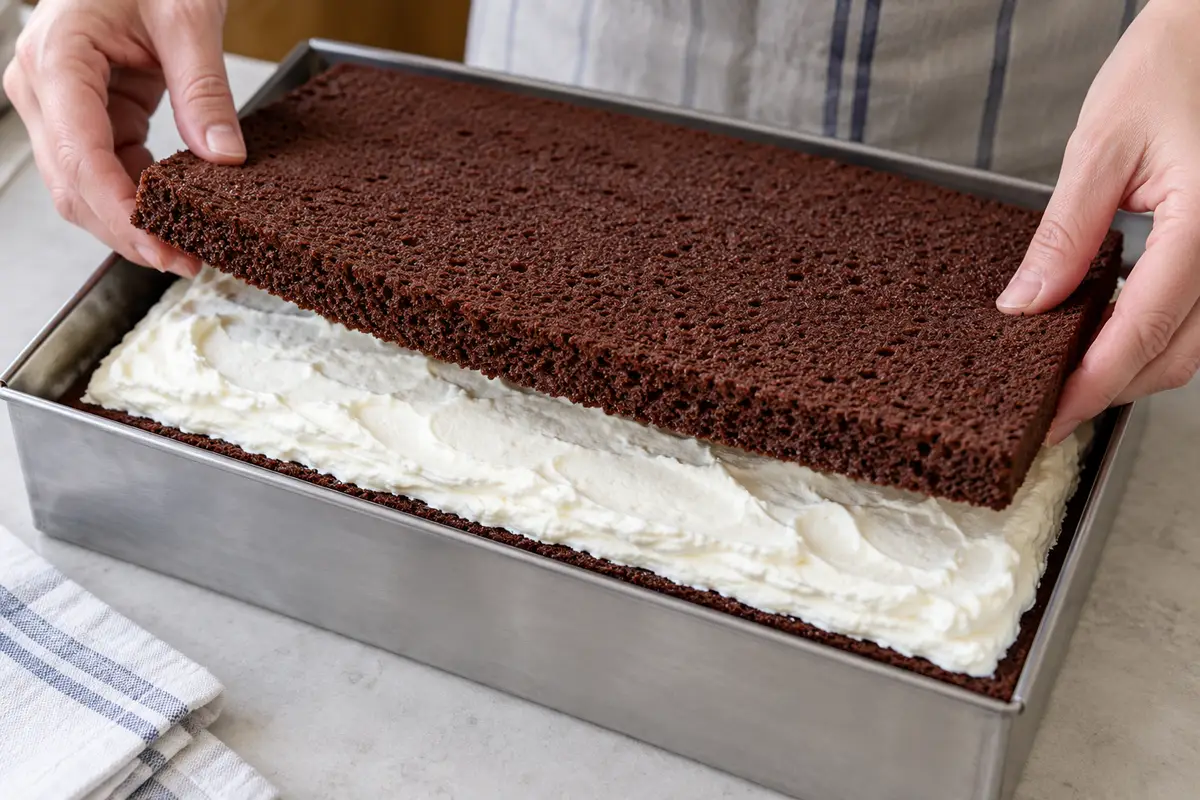
Using a long serrated knife, slice the completely cool sponge horizontally into two layers of similar thickness. Place the bottom layer in the clean pan and the top on a board, cut side up. Divide all the cooled syrup into two equal portions and spread one over each cut surface with a spoon or brush. Do not add more water, and do not soak the cake until it sits in liquid.
In a cool bowl, whip 700 ml cold cream, 36% fat, starting at medium speed. When it thickens, add 50 g powdered sugar and whip briefly to clear, stable peaks; stop before it becomes grainy. Spread all the filling in an even, thick layer over the bottom sponge, cover with the top layer with its moistened side facing the cream, and gently level without pressing firmly. Keep the cake in the pan, which supports the sides.
AI-generated Check that the glaze is cool and still fluid, then spread all of it over the top sponge layer, moving the spatula lightly without pressing the cake into the cream. Apply it as soon as it reaches a cool, fluid consistency. Do not put warm glaze on the cake, and do not add extra cream.
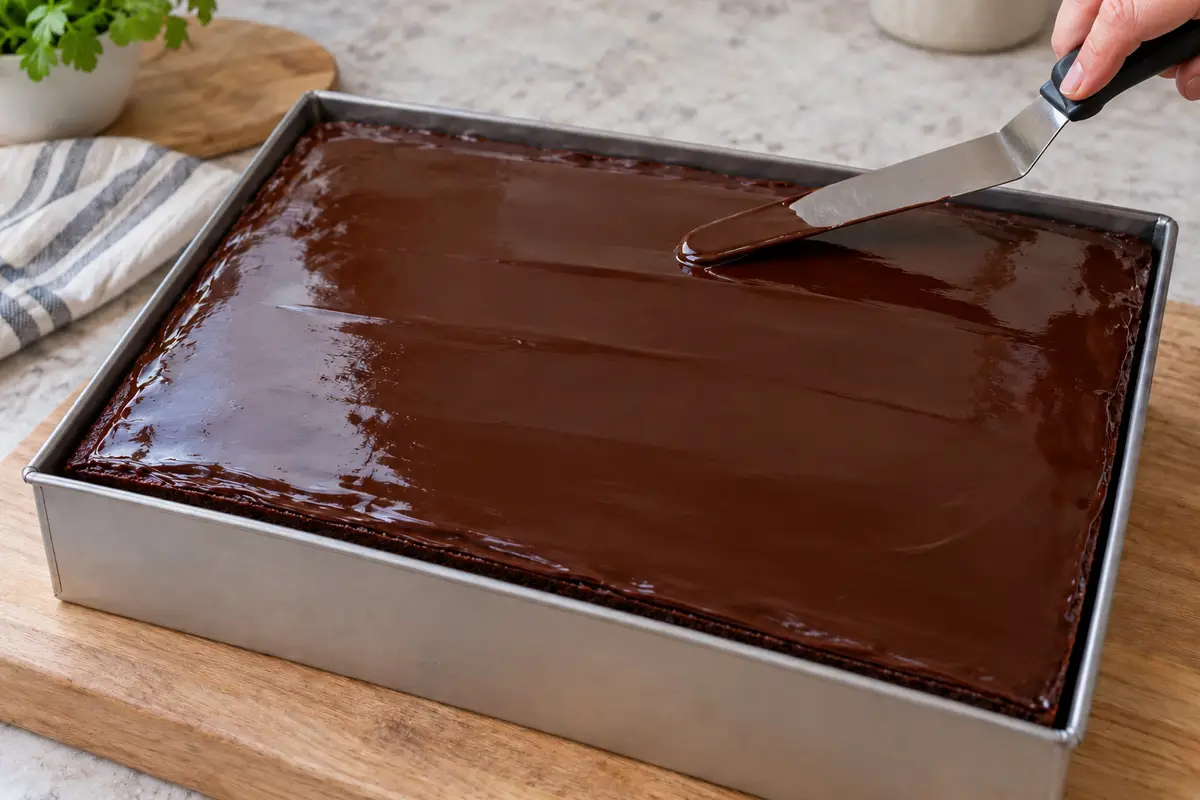
AI-generated Put the pan in the refrigerator immediately and chill for at least 6 hours. Cover the cake so the cover does not touch the glaze. The filling should remain firm and the glaze set enough to slice without chocolate running down the sides; do not leave the cream-filled cake on the counter during this wait.
After chilling, whip the remaining 100 ml cold cream, 36% fat, with the final 10 g powdered sugar to stable peaks and transfer to the piping bag. Cut the cake into 12 pieces, dividing the shorter side into three sections and the longer side into four; the portions will be about 8 × 7.5 cm. Use a sharp knife and wipe it between cuts. Divide the freshly whipped cream into 12 rosettes, one per piece, and serve the cake cold; immediately return the remaining portions to the refrigerator.
Estimated nutrition

Rate this recipe
0 ratings
Comments