
AI-generated
Crème caramel — vanilla custard with caramel sauce
Log in or create a free account to save recipes.
Source: https://recipheon.com/en/recipes/desserts/creme-caramel-vanilla-custard-with-caramel-sauce
About this recipe
Crème caramel is a delicate vanilla egg custard covered in amber caramel when turned out of its mold. The caramel first sets into a hard layer on the bottom, then gradually absorbs moisture from the custard during baking and long chilling, turning into a sauce. No separate topping is needed. This home version uses weighed milk, whole eggs and a small amount of extra yolks for a silky dessert that holds its shape on a plate. A water bath and gentle baking help prevent a grainy texture and numerous bubbles. Stir calmly without whipping in foam, and remove the molds when the edges are set but the centers still wobble slightly. Chilling takes the most patience: only thoroughly cold custard can be safely turned out, and the caramel needs time to liquefy. This makes six servings without whipped cream, fruit or extra decoration; serve all the sauce from each mold with its custard.
Ingredients
All the caramel for the mold bases
90 g fine white sugar for the caramel
30 g water for cooking the caramel, not for the water bath
All the vanilla custard
500 g milk with 3.2% fat, weighed
150 g raw whole eggs without shells, about 3 medium (M) eggs
40 g raw egg yolks without whites, weighed net, about 2 yolks
70 g fine white sugar for the custard
8 g sugar with real ground vanilla
For the water bath only
about 1–1½ l hot water for the dish around the molds, not an ingredient in the dessert
Steps
Preheat the oven to 150°C, conventional top and bottom heat, without the fan. Prepare 6 smooth ovenproof porcelain molds of 180–200 ml each, with straight or slightly flared sides, and a larger deep metal baking dish. The molds should be dry and at room temperature. Do not grease them. Set them near the saucepan so you can divide the hot caramel promptly.
Combine 90 g sugar and 30 g water in a small saucepan with a heavy, light-colored base. Heat gently, stirring only until the sugar is moistened and dissolved. Once boiling, do not stir with a spoon; carefully swirl the pan if needed. Cook until evenly amber, without dark smoke. Remove from the heat immediately because the caramel continues to darken. Do not touch it and do not taste it while hot; do not add any more water.
Promptly divide the liquid caramel among all 6 molds, carefully tilting each to coat the bottom thinly. Hold the hot porcelain with a dry oven mitt. Use all the pourable caramel from the pan, without reserving any for decoration. Leave the molds for a few minutes; the caramel will harden and may crack. This is normal: moisture from the custard will dissolve it later.
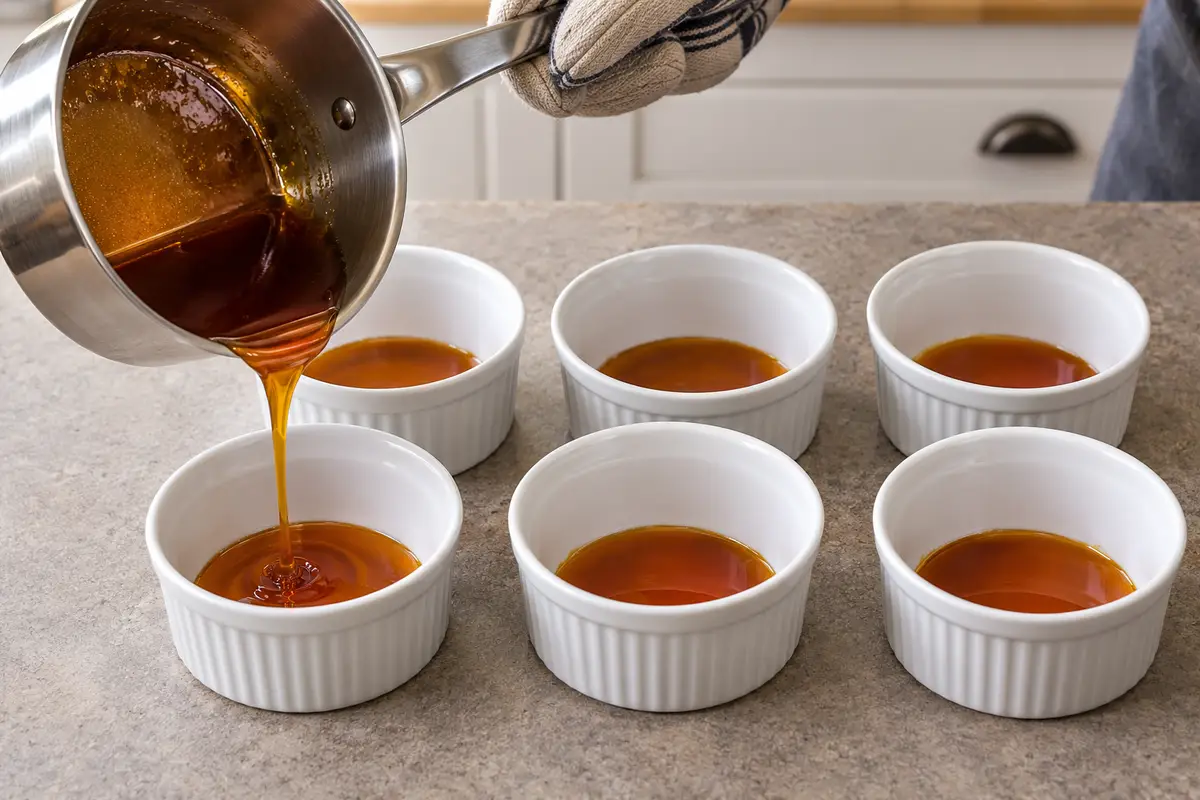
AI-generated Pour 500 g milk into a clean saucepan and add 70 g sugar and 8 g sugar with real vanilla. Heat, stirring, until the sugar dissolves, the milk is visibly steaming and small bubbles appear around the edge. Do not bring to a rolling boil and do not cook for a long time. Remove the pan from the heat. All the milk and vanilla will go into the custard.
In a bowl, gently whisk 150 g whole eggs and 40 g extra yolks just until combined, without whipping in foam. Pour in about one third of the hot milk in a thin stream, whisking gently throughout. Then gradually add the remaining milk and scrape in all the pan contents. Do not pour all the hot milk at once onto unstirred eggs and do not aerate the mixture.
Let the mixture stand for about 5 minutes so larger bubbles subside. Pour into a pitcher, then divide as evenly as possible over the set caramel, using everything from the bowl. Leave room below the mold rims. Do not strain out any of the custard and do not add water to thin it. You can pop individual visible surface bubbles with the tip of a teaspoon.
Place the filled molds in the metal dish and slide it onto the middle oven rack. Carefully pour hot water around them to about halfway up the molds, usually 1–1½ l depending on the dish. Water must not enter the custard. Cover the dish with a loose tent of aluminum foil, without touching the mixture and without sealing tightly. The bath water is not served or added to the dessert.
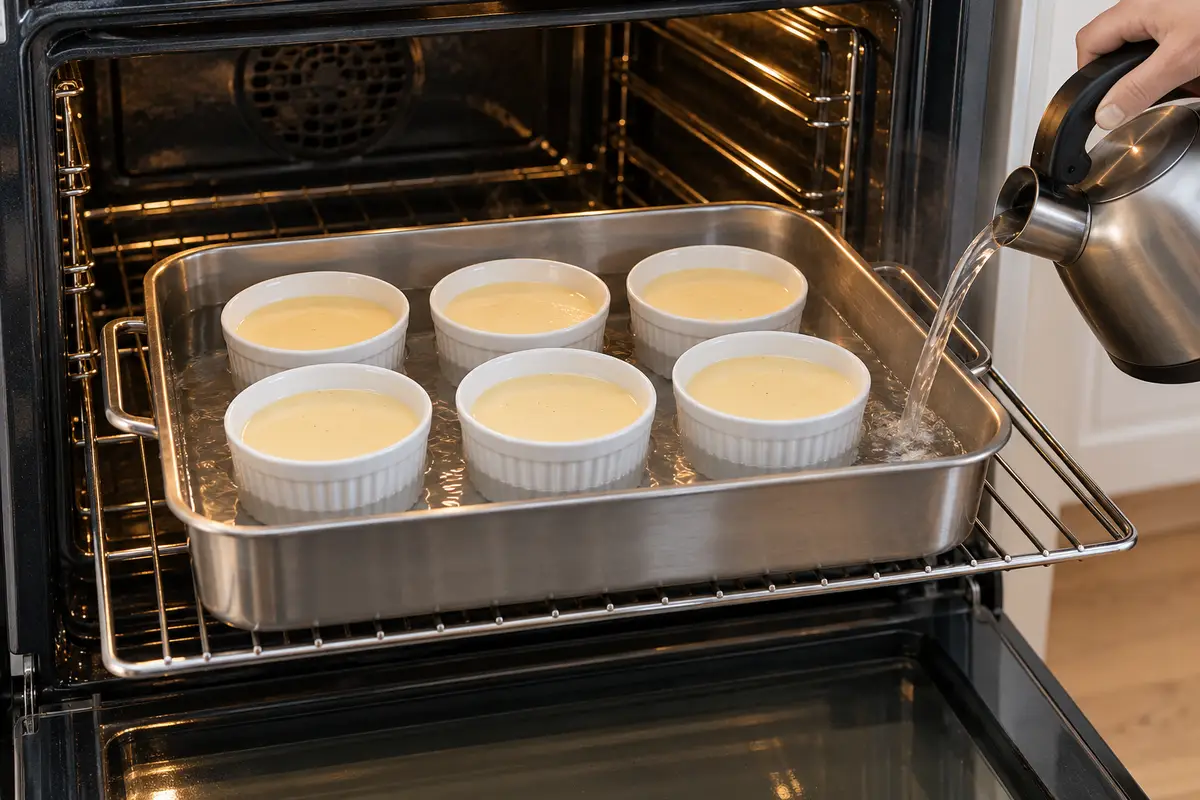
AI-generated Bake for about 40–50 minutes. The edges should be set and the center should wobble slightly as a whole when the mold is gently moved, without a rippling liquid layer. The custard should not noticeably rise, bubble or brown deeply. Remove the foil carefully, keeping your face away from the steam. Lift the molds out of the bath with tongs that grip firmly or dry oven mitts; do not move the entire dish full of hot water.
Set the molds on a rack for about 30–45 minutes, until no longer hot. Do not leave them on the counter for several hours. Cover each individually and refrigerate for at least 8 hours, preferably overnight. The custard will firm up while the caramel absorbs moisture and becomes liquid. Do not unmold the dessert while warm and do not shorten chilling by freezing it.
Run a thin knife just inside the wall of each cold mold. Place a small plate on top, hold both firmly and turn over in one confident movement. Wait briefly for the custard to slide out, then lift the mold straight up. If it sticks, warm its base for 10–15 seconds in warm, not boiling water, dry it and repeat. Pour all the liquid caramel from the mold onto the plate, without adding water to the sauce.
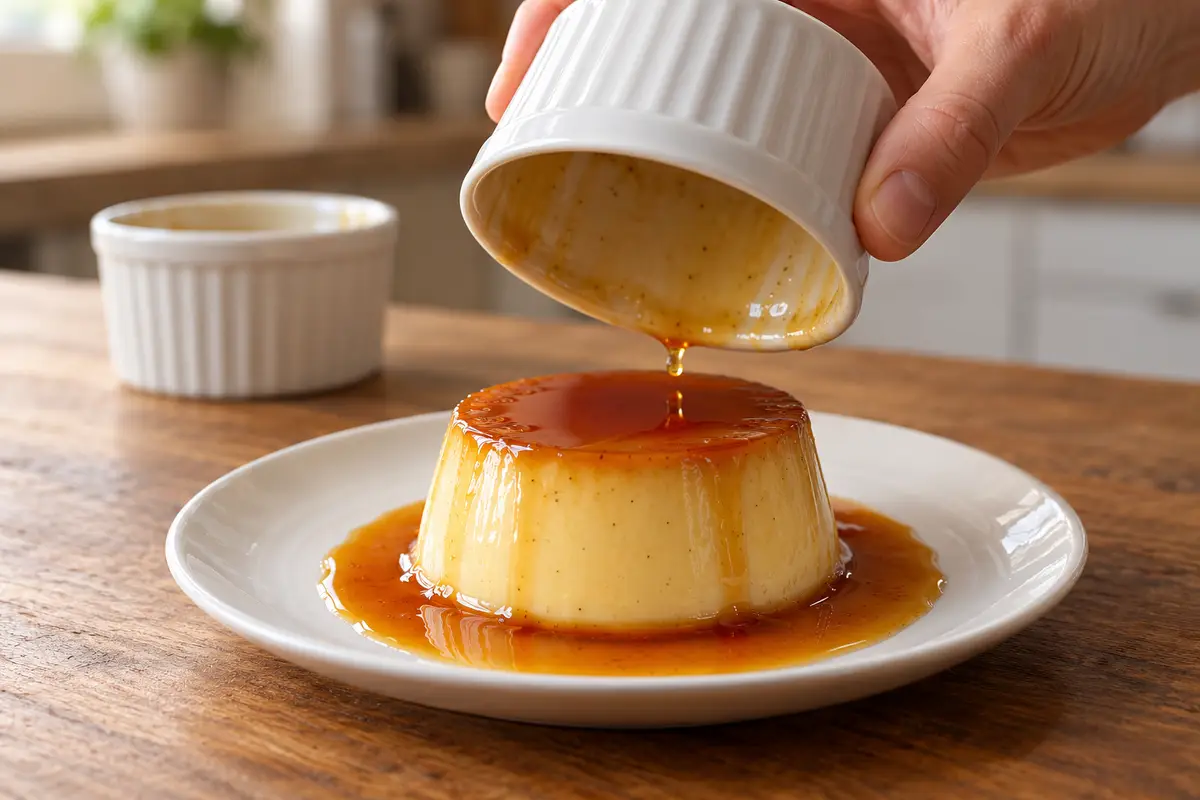
AI-generated One mold with all its sauce is one of the 6 servings. Serve cold, without whipped cream, fruit or extra caramel. Keep the remaining custards covered in their molds in the refrigerator for up to 2 days after preparation, turning them out only just before serving. Leave the water bath to cool and discard its water; do not use it as part of the dessert.
Estimated nutrition

Rate this recipe
0 ratings
Comments