
AI-generated
Drømmekage — Danish cake with a caramel coconut topping
Log in or create a free account to save recipes.
Source: https://recipheon.com/en/recipes/desserts/drommekage-danish-cake-with-a-caramel-coconut-topping
About this recipe
Drømmekage is a Danish sheet cake with a pale, fluffy base and a distinctive topping of coconut, butter and brown sugar. First bake the delicate vanilla cake, then add the hot coconut mixture to the nearly finished surface. A brief final bake at a higher temperature makes the top bubble and turn caramel brown; once cooled, it stays slightly chewy beneath a thin browned crust. Two ingredients matter: plain unsweetened desiccated shredded coconut and soft, moist brown sugar with cane syrup. Defatted coconut flour and dry demerara sugar behave differently. The base must support the topping, so do not add it to liquid batter. Spread all the mixture in small portions and let the cake cool undisturbed in its pan after baking. This home version yields twenty rectangular pieces with an even coconut layer; it needs no cream, icing or extra sprinkles.
Ingredients
Pan and vanilla cake base
5 g unsalted butter with 82% fat for greasing the pan sides
75 g unsalted butter with 82% fat for the cake
200 g milk with 3.2% fat, weighed for the cake
200 g eggs without shells, about 4 medium (M) eggs
250 g fine white sugar
8 g sugar with real ground vanilla
250 g all-purpose flour, type 550
8 g baking powder
1 g fine salt
Entire caramel coconut topping
125 g unsalted butter with 82% fat
200 g soft moist brown sugar of the brun farin type, with added cane syrup, not free-flowing demerara sugar
100 g fine unsweetened desiccated shredded coconut, not defatted coconut flour
50 g milk with 3.2% fat, weighed for the topping
Steps
Preheat the oven to 200°C, conventional heat. Prepare a metal pan with inside dimensions of 24 × 30 cm and at least 5 cm tall. Line the bottom with parchment and grease the sides with all 5 g butter set aside for the pan. Do not add flour or breadcrumbs. Position the rack slightly below the center. Weigh all ingredients; the coconut must be desiccated and unsweetened, and the brown sugar soft and moist.
In a small saucepan, gently warm the 75 g butter with 200 g milk just until the butter melts. Do not boil and do not clarify. Set aside until only lukewarm, without steam; hot liquid would weaken the whipped egg mixture. In another bowl, mix the 250 g flour, baking powder and salt. Have a sieve and wide spatula ready.
Beat the room-temperature eggs with the white sugar and vanilla sugar for about 5–7 minutes. The mixture should increase greatly in volume, turn pale and fall from the beaters in a thick ribbon that briefly stays visible on the surface. Do not add butter or milk at this stage. This aeration helps make a light cake base.
Sift about half the dry mixture into the eggs and gently fold with a spatula. Add half the lukewarm milk and butter, then the remaining flour and the rest of the liquid. Fold from the bottom just until dry streaks disappear, without beating again with the mixer. Transfer all the batter to the pan, scraping the bowl, and level it. Do not add extra liquid or fat.
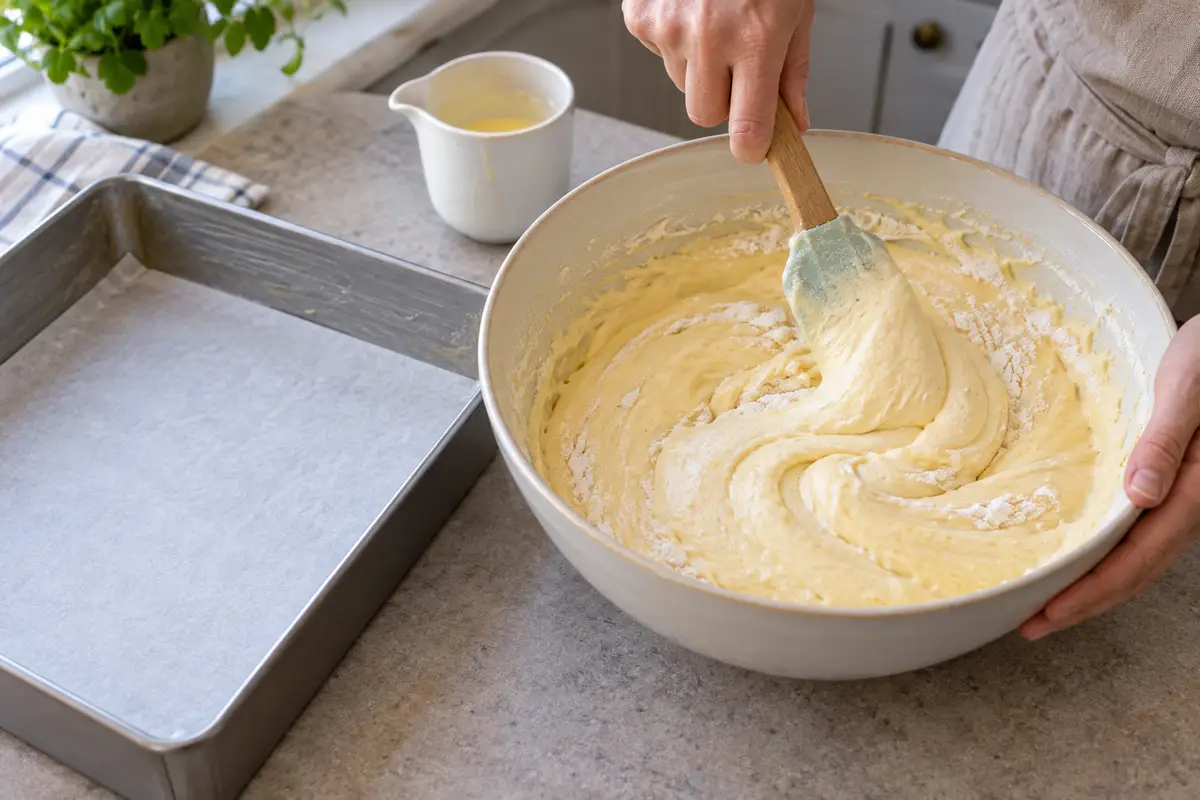
AI-generated Bake at 200°C for about 20–25 minutes. The base should rise, turn lightly golden and hold its shape after a gentle touch. The center must not ripple like liquid; a skewer should not bring out raw batter, though a few moist crumbs are fine. If the center is loose, bake a few minutes longer. The base should be nearly done before taking the heavy topping. Do not cool it between stages.
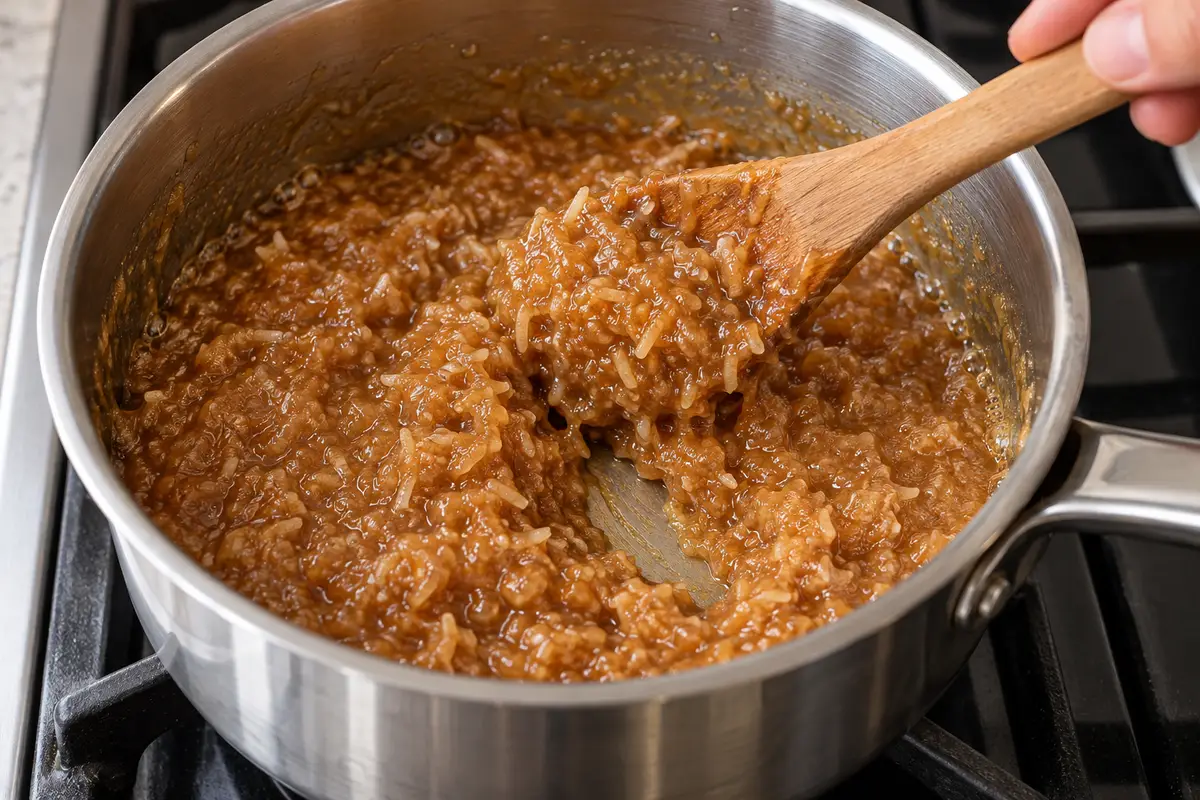
About 10 minutes before the first bake ends, put the 125 g butter, brown sugar and 50 g milk in a saucepan. Heat gently, stirring and breaking up sugar lumps. Once the butter melts, stir in all 100 g coconut. Bring to a gentle bubble and cook, stirring, for about 1 minute. This makes a thick, moist brown mixture, not dry caramel. Remove from the heat and keep warm; do not add milk or water.
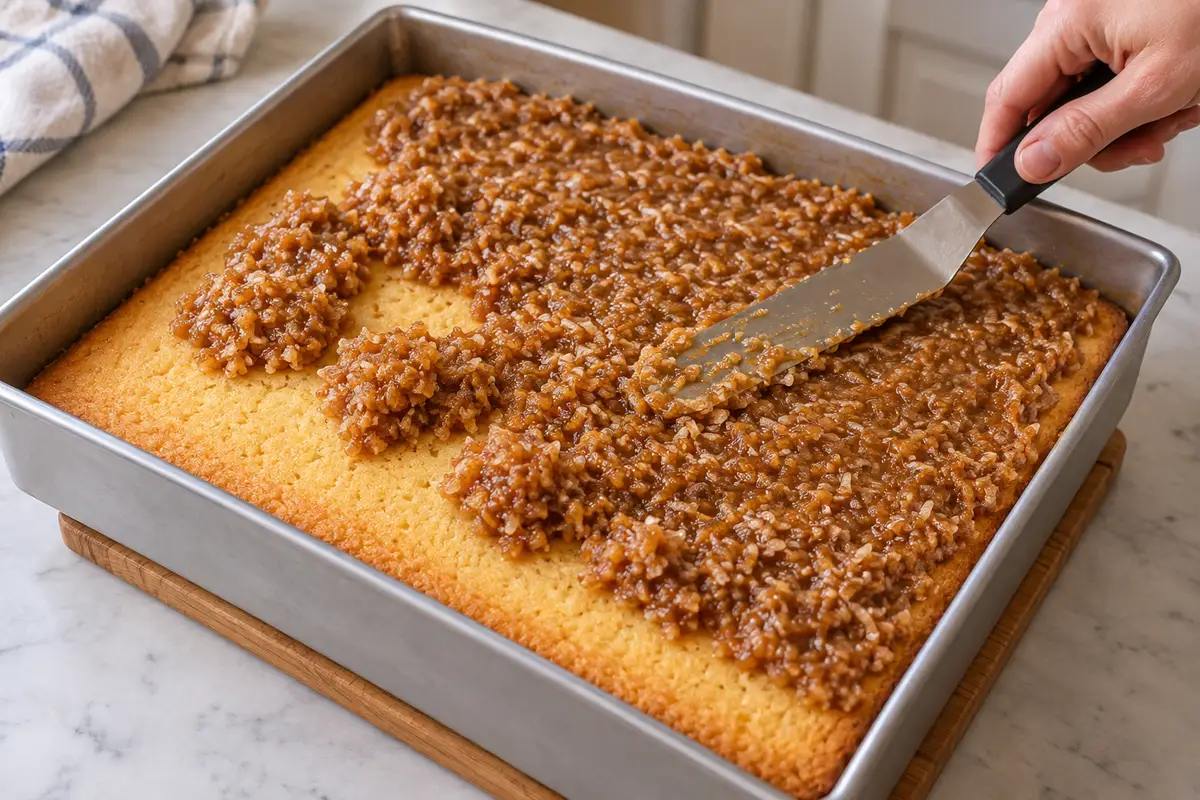
AI-generated Remove the pan with the nearly baked base and increase the oven to 225°C, conventional heat. Add the warm topping in small portions across the surface, without making a heavy mound in the center. Carefully level with a spatula without piercing the base. Scrape all the mixture from the saucepan and use every bit of coconut; do not reserve any for decoration. Leave about ½ cm next to the sides for spreading. Take care with the hot pan and sticky sugar mixture.
AI-generated Put the pan on the middle level and finish baking at 225°C for about 5–8 minutes, until the top clearly bubbles and turns an even caramel brown. The coconut on the surface may be darker, but not black. Do not use the broiler and do not wait for the hot mixture to become hard: it sets as it cools. Remove the pan to a rack once the top is browned; watch during the final minutes, as coconut burns easily.
Leave the cake in its pan on a rack until completely cold, about 1½–2 hours. Do not touch the hot sugar layer and do not invert the cake. Only once cold does the top become firm and slightly chewy beneath the browned crust. Loosen the sides with a thin spatula and lift out the pieces after cutting. Parchment is excluded from servings; do not add butter residue from the pan to the cake.
Cut the cold cake into 20 pieces in a 4 × 5 grid, cutting through the coconut top first with a sharp knife. Serve the edges too; do not trim anything. Do not add icing, powdered sugar, cream or extra coconut. Keep tightly covered for up to 2 days at cool room temperature or up to 4 days in the refrigerator. After refrigerating, leave out for about 20 minutes before serving. Pack only when completely cold.
Estimated nutrition

Rate this recipe
0 ratings
Comments