
AI-generated
Pastiera napoletana — shortcrust tart with ricotta, wheat and orange
Log in or create a free account to save recipes.
Source: https://recipheon.com/en/recipes/desserts/pastiera-napoletana-shortcrust-tart-with-ricotta-wheat-and-orange
About this recipe
Pastiera napoletana combines shortcrust pastry with a moist ricotta and cooked wheat filling, candied orange pieces and a delicate orange blossom fragrance. The grains keep their texture, while overnight chilling makes the filling easy to slice neatly. This home version uses buttery pastry and ready-cooked grano cotto, so there is no need to soak or cook dry wheat for hours. Drain the ricotta in the refrigerator before weighing it, so loose whey does not enter the filling. Cool the milky wheat mixture before adding cheese and eggs. Arrange seven pastry strips on top and use all scraps in the base, rim or lattice. Weighed food-grade orange blossom water gives a gentle aroma, not a concentrated essence. The tart needs time to bake and rest, making it useful to prepare before serving day. A 24 cm pan yields twelve servings without powdered sugar, whipped cream or extra decoration.
Ingredients
All the shortcrust pastry and lattice
250 g all-purpose flour (wheat flour, type 550)
125 g cold unsalted butter with 82% fat
100 g fine white sugar
50 g raw whole egg without shell, about 1 medium (M) egg
1 g fine salt
All the milky cooked wheat mixture
350 g cooked grano cotto wheat for pastiera, straight from the package with its thick moist mixture, without draining, not dry grain
175 g milk with 3.2% fat, weighed
15 g unsalted butter with 82% fat
All the remaining filling ingredients
350 g cow's milk ricotta, weighed after draining loose whey in the refrigerator, about 400 g before draining
140 g fine white sugar
150 g raw whole eggs without shells, about 3 medium (M) eggs
8 g sugar with real ground vanilla
80 g finely diced candied orange peel without loose syrup
5 g food-grade unsweetened orange blossom water, a hydrosol, not concentrated flavoring in an ampoule
Steps
Place about 400 g ricotta in a sieve over a bowl, cover and refrigerate for about 8–12 hours, without squeezing firmly. Then weigh 350 g of the drained cheese. This is the amount used in the recipe; do not weigh 350 g before draining. The whey released depends on the cheese. Extra ricotta and whey stay outside these servings. Do not substitute curd cheese or cream cheese for the ricotta.
Rub 250 g flour with 125 g cold butter and the salt into fine crumbs, using your fingers or brief food processor pulses. Add 100 g sugar and 50 g beaten egg. Combine quickly, just until the dough comes together; do not add water and do not knead for a long time. Flatten, wrap and refrigerate for about 45–60 minutes. Do not reserve any ingredients for brushing or sprinkling.
Place 350 g ready-cooked grano cotto with its thick moist mixture, 175 g milk and 15 g butter in a saucepan. Do not use 350 g dry wheat and do not drain the ready-cooked product. Heat on low for about 10–15 minutes, stirring often, until the grains form a creamy mixture with no loose milk. The spoon should briefly expose the pan base. Do not add any more milk, water or sugar.
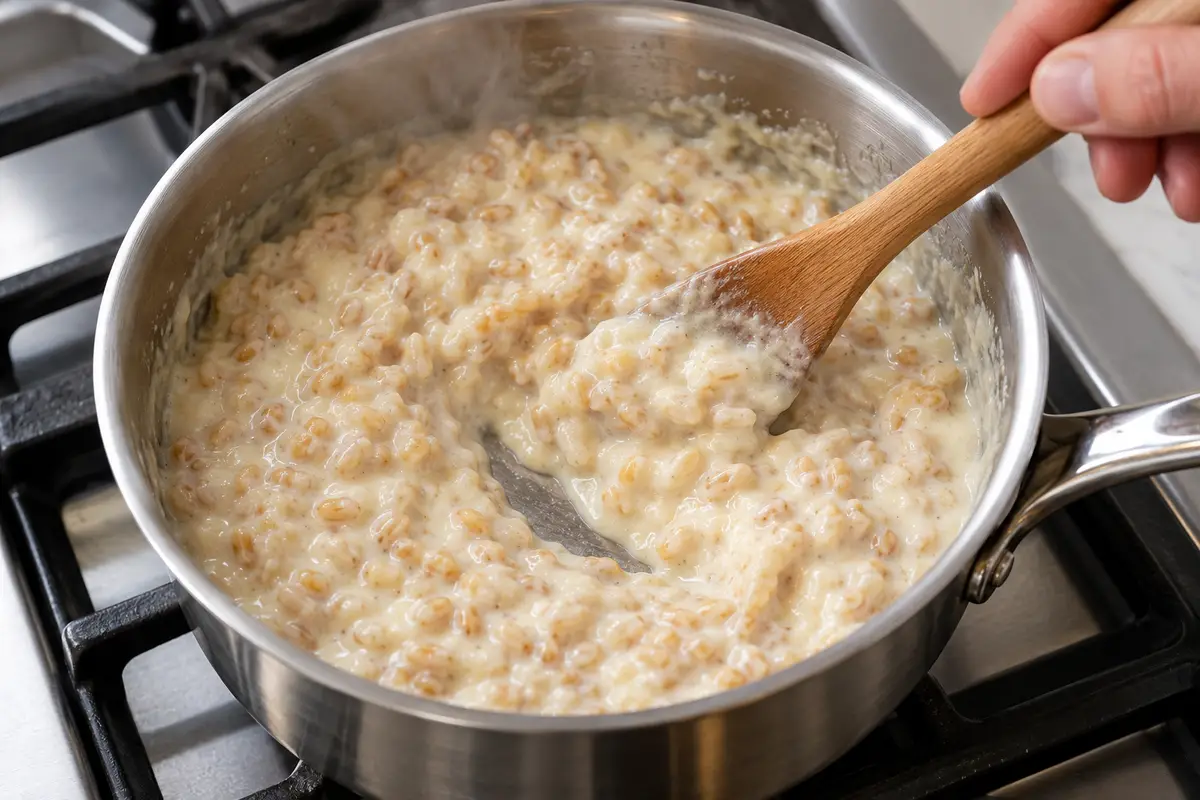
AI-generated Transfer all the pan contents to a wide shallow dish and spread thinly. Leave for about 30–45 minutes, stirring occasionally, until cool; refrigerate if it needs longer. Do not add ricotta and eggs to the hot mixture. Do not drain it and do not press the grains through a sieve: everything, including the moisture, stays in the filling.
Mix 350 g drained ricotta with 140 g sugar and 8 g vanilla sugar until smooth, without whipping in foam. Gradually stir in 150 g beaten whole eggs. Add 80 g candied orange peel and the weighed 5 g food-grade orange blossom water. This is a gentle hydrosol, not flavoring in an ampoule; do not measure it with a bottle cap and do not increase the amount to match the package size.
Add all the cooled wheat mixture to the ricotta, scraping out the dish. Fold with a spatula until combined, without aerating and without blending the grains smooth. The filling should be thick and moist, with visible grains and small orange peel pieces, not liquid like milk. Do not add flour, starch, cream or pudding mix. Refrigerate while preparing the pan.
Prepare a metal pan with an internal diameter of 24 cm and height of at least 5 cm; line the base and sides with parchment, without greasing. Set aside about one third of the dough for strips. Roll the rest between sheets of parchment into a round about 34 cm across and 3–4 mm thick. Line the base and sides to about 4½ cm high, joining cracks with your fingers. Do not dust with flour. Keep scraps for strips or patching the rim; do not discard anything.
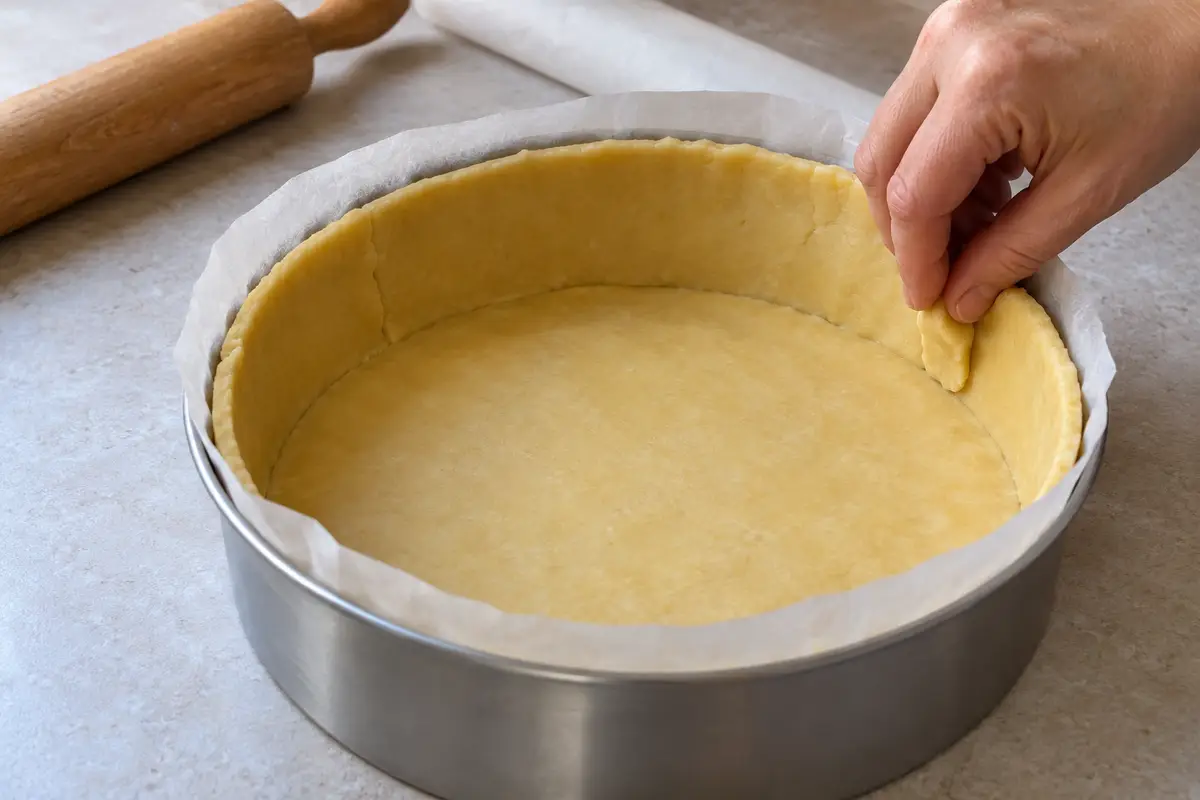
AI-generated Prick the base shallowly with a fork, without tearing the parchment, and refrigerate the pan for about 15 minutes. Preheat the oven to 170°C, conventional top and bottom heat, without the fan. Position a rack slightly below the center. Do not prebake the shell separately. Keep the remaining dough cool so it is easy to cut into strips.
Transfer all the filling to the chilled raw pastry shell and level without pressing hard. Leave at least about 1 cm below the upper pastry edge, because the filling will rise slightly and then settle. Use the specified pan to fit everything. Do not pour away any released liquid and do not reserve any cheese or wheat for decoration.
Roll the remaining dough and scraps between parchment to about 3–4 mm thick. Cut 7 strips about 1½–2 cm wide: lay 3 in one direction and 4 diagonally, without weaving or pressing into the filling. Trim at the rim. Press all ends and leftovers into the rim or join them to the strips; all dough must stay on the tart. Do not brush with egg, milk or fat and do not sprinkle with sugar.
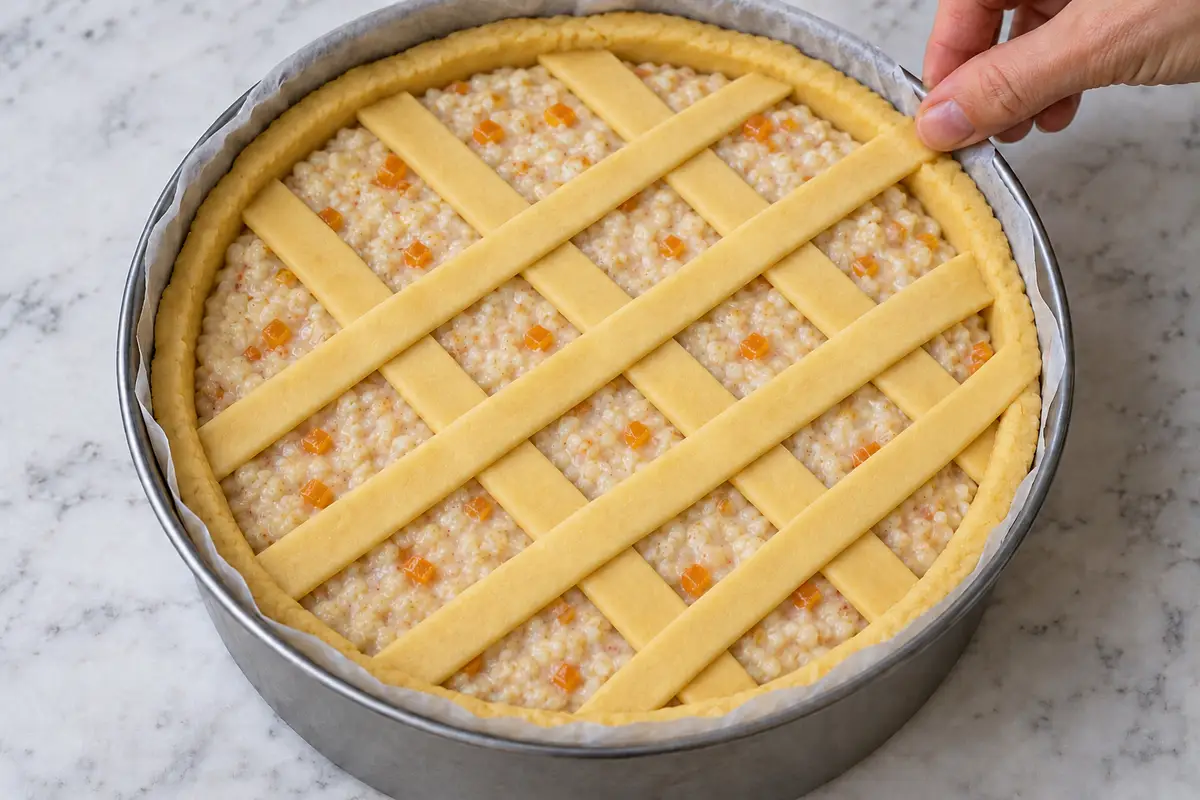
AI-generated Bake for about 80–95 minutes until the pastry and lattice are golden brown, the filling edges are stable and the center trembles gently as a whole when the pan is lightly moved, without a liquid wave. Slight doming is normal. If the top darkens too quickly, shield loosely with foil toward the end of baking. Do not expect a completely dry center like a sponge cake and do not bake until the filling is hard.
Leave the tart in its pan on a rack for about 60–90 minutes, until no longer hot. Do not remove it while warm and do not leave it on the counter for several hours. Cover loosely and refrigerate for at least 8 hours, preferably overnight. The filling will firm up and the flavors will come together. Only when cold, carefully remove the tart from the pan or cut it directly in the pan, removing parchment as you serve.
Cut the entire tart into 12 pieces, serving the rim and every lattice fragment too. Leave servings out of the refrigerator for about 20–30 minutes before eating, without prolonged warm holding. Do not add powdered sugar, whipped cream or fruit. Keep the remainder covered in the refrigerator for up to 3 days after baking. The recipe includes the whole tart and pastry made from scraps, without a separate decorative portion.
Estimated nutrition

Rate this recipe
0 ratings
Comments