
AI-generated
Dacquoise Meringue Cake with Coffee Cream and Nuts
Log in or create a free account to save recipes.
Source: https://recipheon.com/en/recipes/desserts/dacquoise-meringue-cake-with-coffee-cream-and-nuts
About this recipe
This dacquoise cake has two nut meringue layers with a lightly crisp surface and a thick layer of coffee cream. Ground almonds and hazelnuts give the meringue a denser structure than egg whites and sugar alone; the center stays tender while the surface browns lightly. Prepare and bake each layer separately so the meringue with nuts does not sit for too long before going into the oven. Beat the mascarpone and whipping cream briefly until noticeably thick, then flavor with concentrated, cooled coffee. Chopped nuts in the cream add crunch without a separate garnish. Cool the layers completely before filling; after two hours in the refrigerator, the cream is firmer and the cake is easier to slice. A cake about 22 cm in diameter yields twelve servings.
Ingredients
Meringue Layers and Divided Ingredients
180 g raw egg whites, about 6 whites from size M eggs; the yolks are not used in this recipe, and the whites are divided into two 90 g portions
160 g superfine white sugar, divided into two 80 g portions for the meringue layers
130 g powdered sugar, divided: 100 g for the meringue layers in two 50 g portions and 30 g for the cream
100 g dry blanched almonds without skins, finely ground, divided into two 50 g portions for the meringue layers
100 g dry unsalted hazelnuts without shells, divided: 80 g finely ground for the meringue layers in two 40 g portions and 20 g chopped for the cream
Coffee Cream
250 g well-chilled mascarpone made from cow's milk
300 ml well-chilled whipping cream made from cow's milk (36% fat)
5 g pure instant coffee without sugar or added milk
15 ml hot water to dissolve the coffee, all used in the cream
Steps
Preheat a conventional oven (no fan) to 160°C and prepare a flat baking sheet and two sheets of parchment paper with 22 cm circles drawn on them; place the paper with the drawn side facing down. For each meringue layer, prepare a separate mixture of 50 g ground almonds, 40 g ground hazelnuts, and 50 g powdered sugar, breaking up larger lumps. Chop the remaining 20 g hazelnuts into small pieces for the cream. Dissolve 5 g coffee in 15 ml hot water in a small container, leave for about 15 minutes to cool, then cover and refrigerate while you prepare the meringue layers.
In a clean, dry bowl, beat 90 g egg whites on medium mixer speed until finely foamy. Gradually add the first 80 g superfine sugar, one tablespoon at a time, while continuing to beat. The whole beating process takes about 8–10 minutes: the meringue should be thick and glossy, hold a distinct peak on the end of the beater, and have no detectable sugar crystals when rubbed between your fingers.
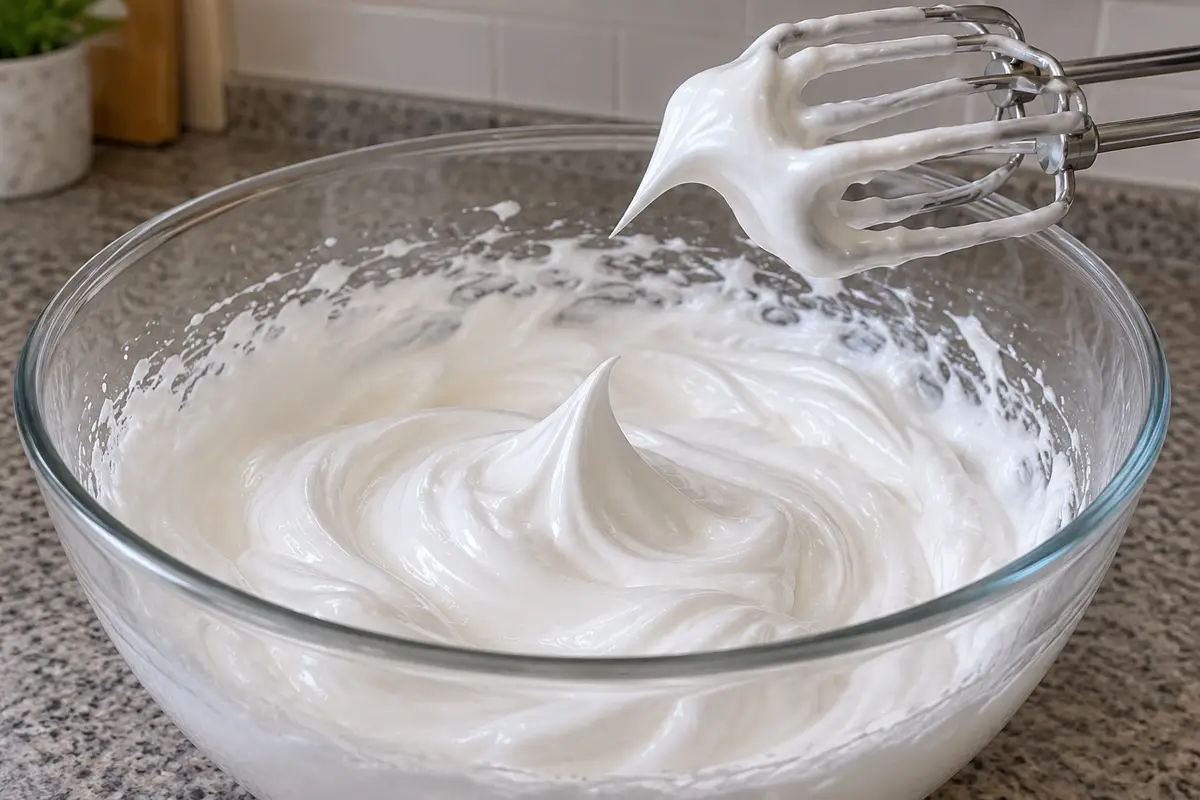
AI-generated Add the first prepared mixture of almonds, hazelnuts, and powdered sugar to the meringue. Use a broad spatula to fold gently from the bottom upward, just until no dry patches remain. The mixture will stay airy but become thicker and flecked with tiny nut particles; do not use the mixer, or it may lose volume.
Place the first sheet of paper on the baking sheet and spoon all the prepared mixture inside the drawn circle. Spread with a spatula into an even disc about 22 cm in diameter and about 1–1.5 cm thick, leveling the center and edges. Do not make a high rim or a hollow for the cream: the layer needs to be flat.
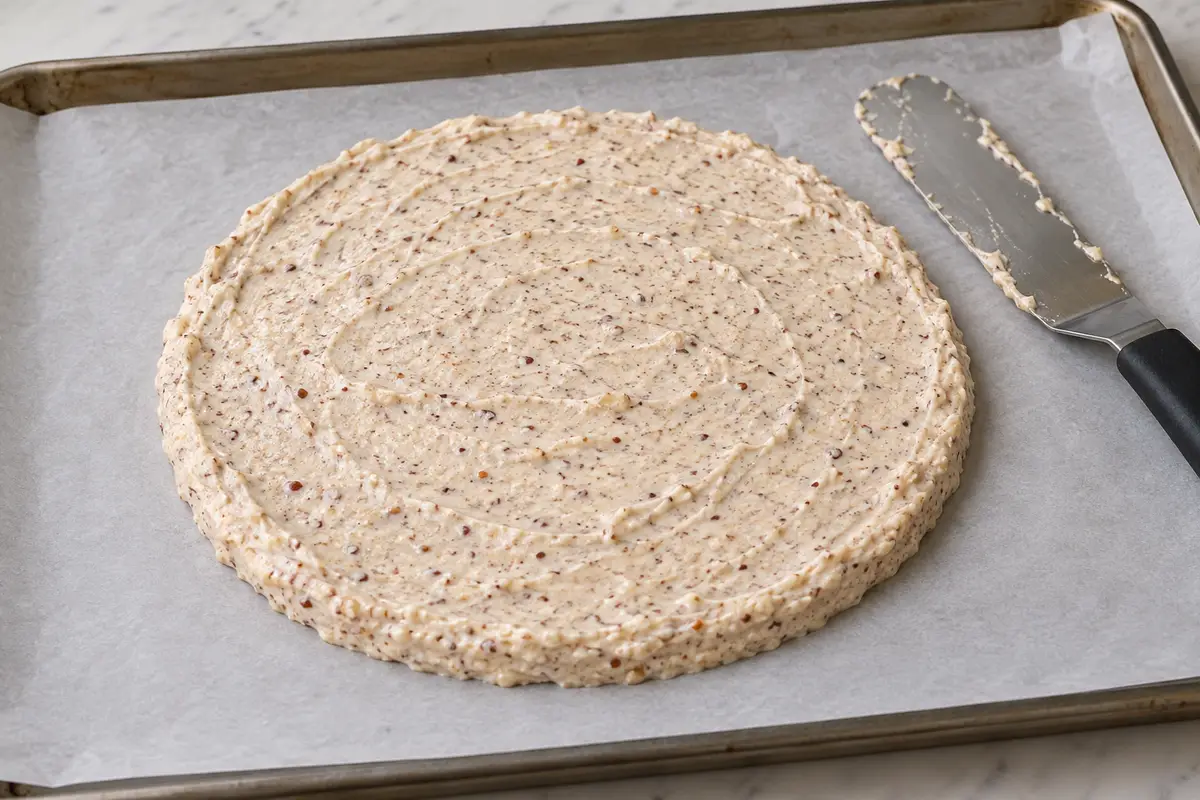
AI-generated Place the baking sheet on the middle rack of the preheated oven and bake for 25–30 minutes. The layer should be lightly golden, dry on the surface, and springy to a very gentle touch, without wet foam; the nutty center does not need to be brittle like a dry meringue. Remove the baking sheet, slide the layer with its paper onto a wire rack, and leave to cool for about 45 minutes. Do not peel the paper off the hot meringue; keep the oven on at 160°C for the second layer.
While the first layer cools, beat the remaining 90 g egg whites with the remaining 80 g superfine sugar as in step two, for about 8–10 minutes until thick and glossy. Gently fold in the second prepared mixture of 50 g almonds, 40 g hazelnuts, and 50 g powdered sugar, then shape an identical flat disc about 22 cm in diameter and about 1–1.5 cm thick on the second sheet of paper. Bake on the same baking sheet for 25–30 minutes at 160°C in a conventional oven (no fan), until the surface is lightly golden and dry, then turn off the oven and cool the layer on a wire rack for about 45 minutes. The first layer cools while you prepare and bake the second; both must be completely cool before filling.
Place the cold 250 g mascarpone, the remaining 30 g powdered sugar, and all the chilled coffee concentrate in a bowl, then mix briefly on low speed just until combined. Pour in the cold 300 ml whipping cream and beat on medium speed for about 2–3 minutes until the cream noticeably thickens, holds the beater marks, and does not run off the spatula. Stop beating once it reaches this consistency; mixing too long may split the cream. Fold in the reserved 20 g chopped hazelnuts with a spatula.
Gently peel the paper off the completely cooled layers, supporting the meringue from underneath. Place the first layer on a flat plate or cake stand and spread all the cream in an even, thick layer, leaving a border of about 1 cm. Cover with the second layer and settle it lightly onto the cream without pressing hard, which could break the meringue. Leave the top without an additional cream layer or garnish.
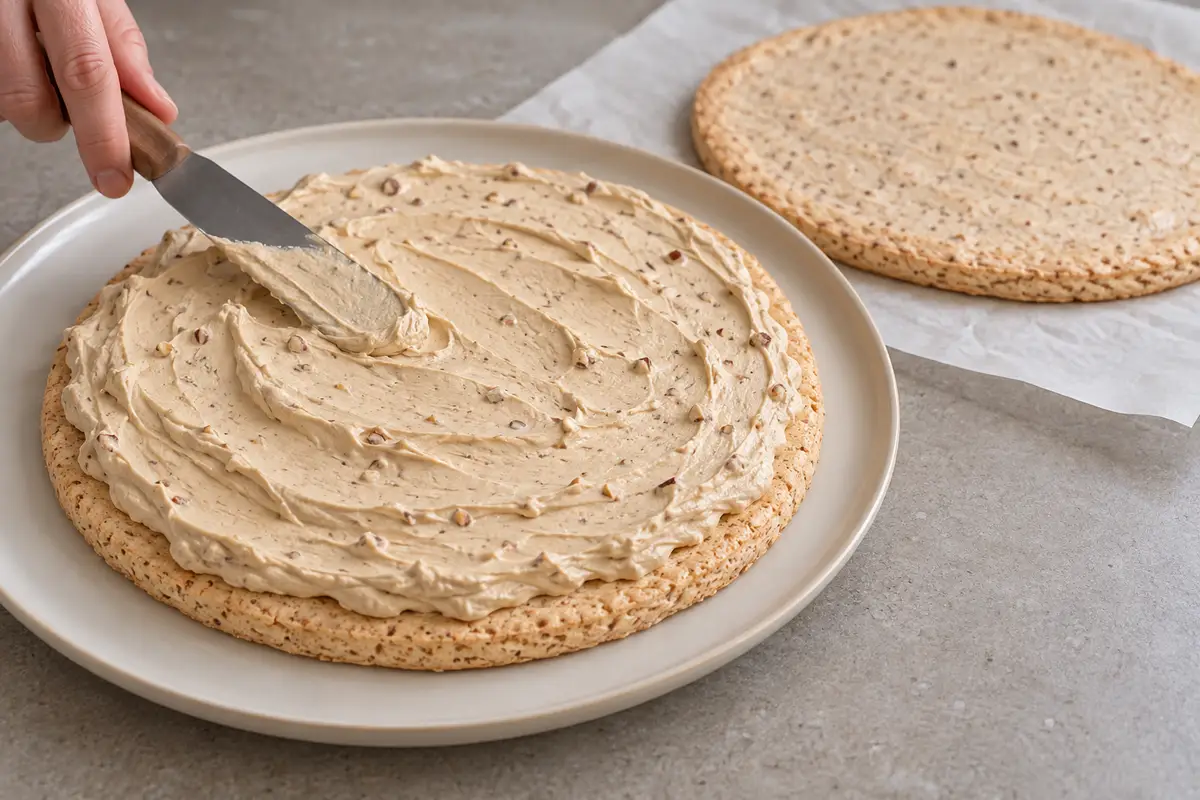
AI-generated Refrigerate the cake for about 2 hours so the cream firms up and joins the layers together. Cover it with a tall lid or loose plastic wrap that does not touch the surface. After chilling, the cream should stay as a layer between the meringues, although the meringue in contact with the cream will be slightly softer.
Cut the chilled cake into twelve wedges with a sharp serrated knife. Cut through the top layer with a gentle sawing motion, then guide the knife through the cream and bottom layer without pressing abruptly. Wipe the blade between cuts so cream does not stick to the next pieces, and serve the cake chilled.
Estimated nutrition

Rate this recipe
0 ratings
Comments