
AI-generated
Flødeboller — Danish meringue treats on wafers in a chocolate shell
Log in or create a free account to save recipes.
Source: https://recipheon.com/en/recipes/desserts/flodeboller-danish-meringue-treats-on-wafers-in-a-chocolate-shell
About this recipe
Flødeboller have a thin wafer base, fluffy vanilla meringue and a dark chocolate shell that cracks gently at the first bite. Despite the name, they need no cream: the filling is made by whipping egg whites with hot sugar syrup. This home version uses liquid pasteurized whites suitable for whipping, while glucose syrup helps keep the texture smooth and springy. The order of work matters more than speed. Prepare wafer rounds and stable meringue first, let the piped mounds dry slightly, then coat with tempered chocolate. Do not turn the delicate wafers upside down and do not dip whole treats into a bowl. Chocolate flows over the meringue standing on a rack to form an even shell. Easy coating needs more chocolate than ultimately remains on the treats; keep the rest separately. These ingredients make sixteen small treats, without shredded coconut, nuts or extra decorations.
Ingredients
Wafer bases
25 g dry wafer sheet for cakes without filling, about 1 sheet 28 × 23.5 cm, for cutting 16 rounds 5 cm in diameter
All the vanilla meringue
100 g liquid pasteurized egg whites without yolks or additives, suitable for whipping
150 g fine white sugar for the syrup
80 g liquid glucose syrup for confectionery, not powdered glucose
60 g water for the syrup
20 g fine white sugar for whipping the whites
8 g sugar with real ground vanilla
Chocolate shell and extra for coating
350 g dark chocolate with 60% cocoa and cocoa butter, without filling, preferably couverture for coating; some will remain outside the treats
Steps
Cut 16 rounds 5 cm in diameter from the dry wafer, pressing carefully with a sharp cutter. Save scraps for another dessert; only the rounds are served here. Lay them on parchment. Have a clean dry bowl, mixer, small saucepan, candy thermometer, piping bag with a round 1½–2 cm tip and a rack over a parchment-lined tray ready. Weigh the two sugar portions separately. The whites must be pasteurized and suitable for whipping.
In a small saucepan, combine the 150 g sugar, glucose syrup and 60 g water. Heat gently, stirring only until the sugar dissolves. Then increase the heat and boil without stirring with a spoon. The thermometer tip should be immersed in syrup, not resting on the bottom. Once boiling, prepare the meringue from the next step at the same time. The target is 117°C, without caramel coloring.
While the syrup cooks, beat the whites until fine foam begins to form soft peaks. Gradually add the 20 g sugar and vanilla sugar and beat to glossy, shape-holding foam that is still flexible. Do not beat until dry. Watch the syrup too; if nearing 117°C, reduce the heat so it does not exceed the temperature before the foam is ready. With a hand mixer, steady the bowl on a damp cloth.
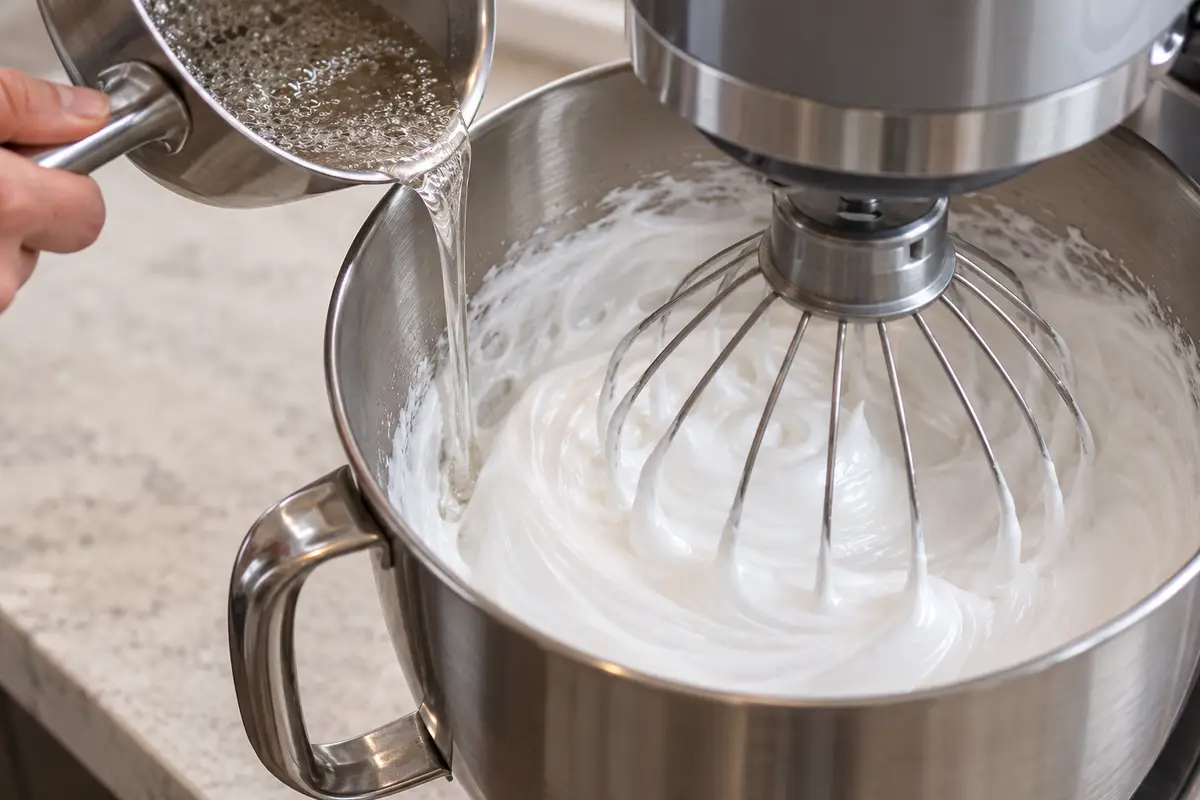
Once the syrup reaches 117°C, remove the saucepan. Beating on medium speed, pour in a thin stream between the beater and bowl wall, not onto the spinning beaters. Do not scrape in any hard crystals from the saucepan sides. Increase speed and beat for about 8–10 minutes until thick, springy and almost cool, and the bowl is no longer hot. A peak should hold its shape. Do not add water. Take care with the hot sticky syrup.
AI-generated Transfer all the meringue to the piping bag, scraping the bowl. Divide as evenly as possible among the 16 wafers. Hold the tip vertically just above the base and pipe stable mounds about 3½–4 cm tall, slightly narrower than the wafers. Ease pressure before lifting the bag so you do not make a long thin point. Use all the meringue; do not add second wafers or an extra portion for decoration.
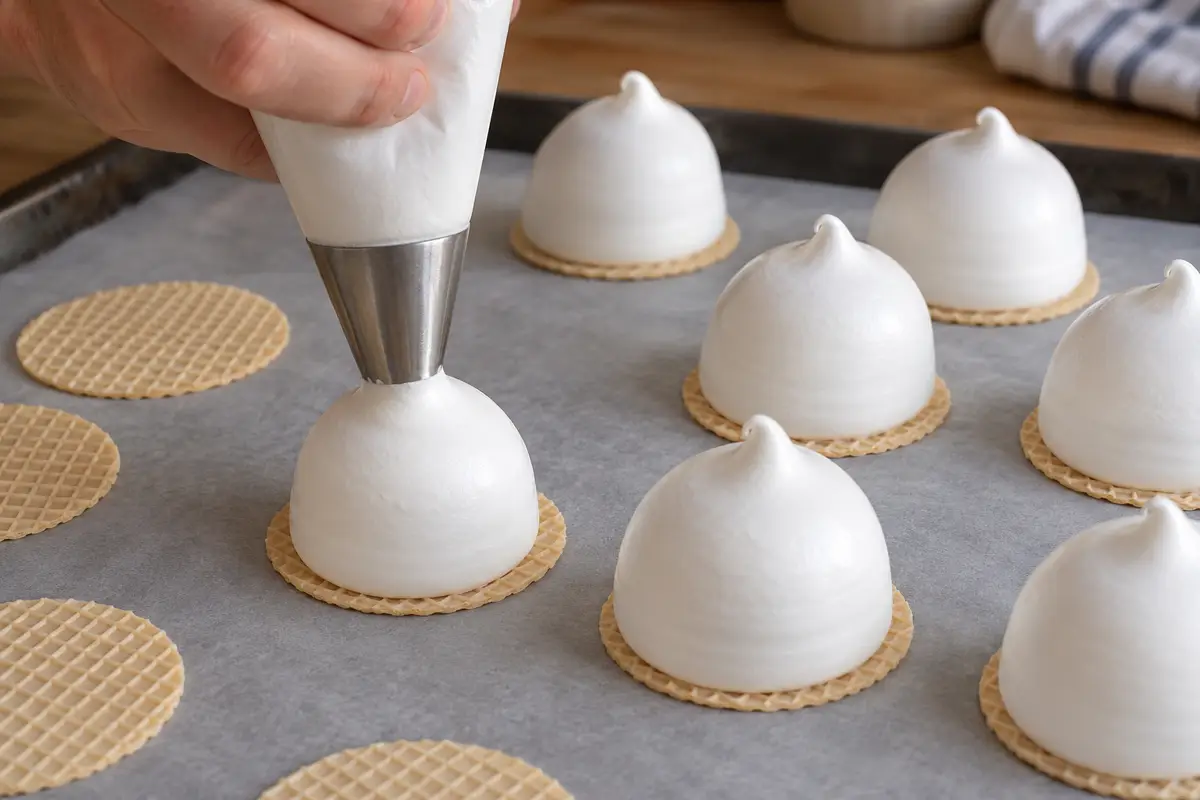
AI-generated Leave the treats for about 1 hour at cool room temperature, without a cover touching the tops. The surface should become slightly dry and the mounds should not spread. Do not freeze them now and do not coat still-warm meringue. Before adding chocolate, carefully transfer each wafer to the rack over the parchment-lined tray, leaving space for the coating to flow down.
Chop all the chocolate. Weigh 230 g into a dry bowl and keep 120 g finely chopped for seeding. Set the bowl over gently steaming water, without its bottom touching the water. Melt the first 230 g, stirring, to 45–50°C. Do not let the water boil or allow steam or drops to enter the chocolate. Remove the bowl and dry its underside. Do not add oil, butter, cream or water.
Add the reserved 120 g chocolate and stir off the water bath until it has all melted and cooled to 27–28°C. Then briefly warm over water, stirring, to 31–32°C. Chocolate should flow freely from a spoon. A thin streak on parchment should set in a cool room within a few minutes, without wet streaks. During coating, maintain 31–32°C with brief gentle warming; do not thin with additions and do not overheat.
Pour chocolate over each mound from the tip, letting it flow down every side to the wafer edge. A small spoon helps close gaps. Do not dip and do not turn the delicate bases upside down. You may collect clean chocolate drips from the parchment into the bowl as you work, gently warm and use for the next treats. Use enough to give each a closed shell; do not pour all remaining chocolate over the finished treats.
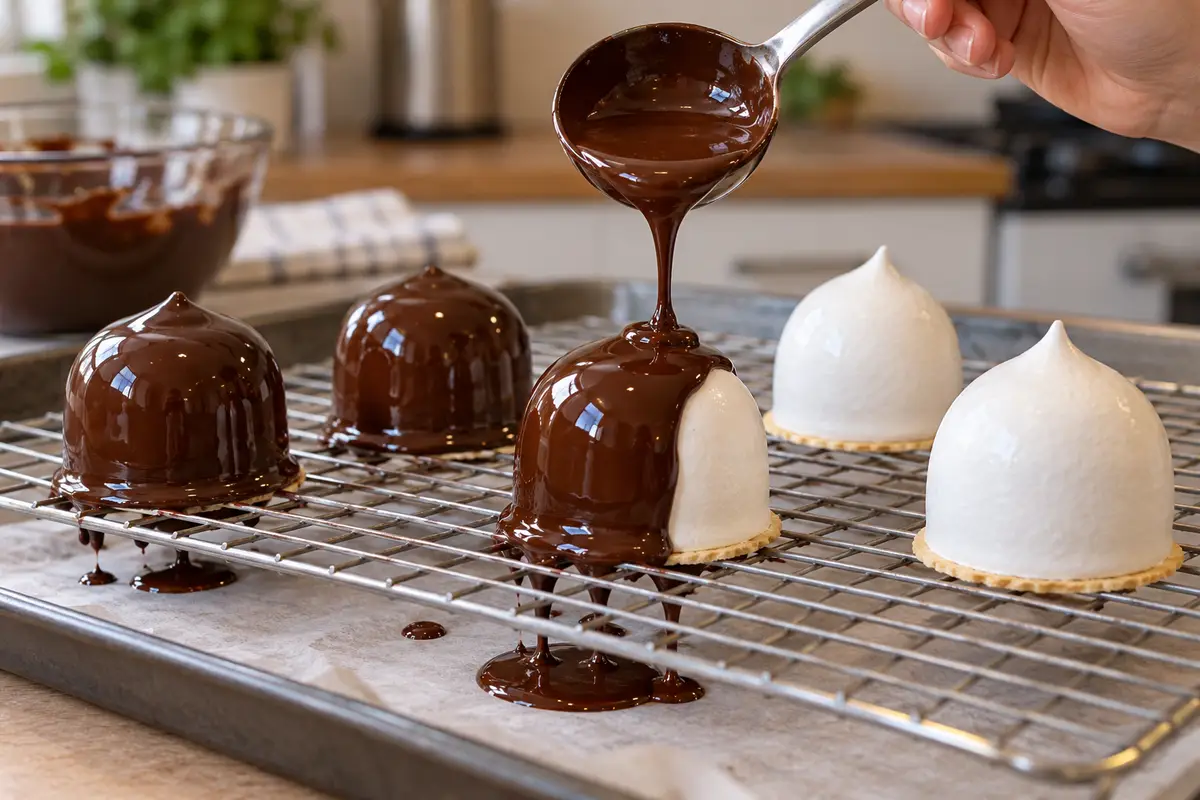
AI-generated Leave the treats for about 20–30 minutes in a cool place, preferably about 18–20°C, until the chocolate is hard and no longer marks a light touch. If the kitchen is warm, refrigerate the tray for 10–15 minutes. Once set, transfer with a spatula, gently cutting any chocolate threads by the rack. Do not force them off by their tips and do not add sprinkles.
Transfer excess chocolate from the bowl and parchment to a separate dish, cool and refrigerate for another baking project. Do not serve it as part of these 16 treats. Chocolate needed for easy coating does not all stay on the meringue; the exact amount depends on shell thickness and dripping. Use wafer scraps separately too, without adding them to servings.
One treat is one of the 16 servings. Serve without cream, fruit or extra wafers. Best on the day made; keep in a closed box in the refrigerator for up to 2 days. Leave out for a few minutes before eating. The wafer may soften from the meringue moisture and chocolate may turn slightly dull over time. Store unused packaged egg whites according to their label.
Estimated nutrition

Rate this recipe
0 ratings
Comments