
AI-generated
German Yeast Cake with Vanilla Cream and Caramelized Almonds
Log in or create a free account to save recipes.
Source: https://recipheon.com/en/recipes/desserts/german-yeast-cake-with-vanilla-cream-and-caramelized-almonds
About this recipe
This cake combines soft yeast dough, smooth vanilla cream and a thin, crisp layer of caramelized almonds. The almond topping bakes with the dough, so it only needs a brief boil, without prolonged reduction into hard caramel. The filling is made with homemade pudding and softened butter: both must be at the same room temperature to blend into a smooth cream. Once the cake has cooled completely, it is split horizontally, and the top layer is cut into wedges before filling. When serving, the knife then cuts only through the cream and soft bottom layer, without pressing the crisp top into the filling.
Ingredients
Shared ingredients
520 ml milk, 3.2% fat: 120 ml for the dough, 80 ml for mixing with the cornstarch and 320 ml for heating for the pudding
205 g unsalted butter, 82% fat: 45 g softened for the dough, 5 g for greasing the pan, 35 g for the almond topping and 120 g for the filling; soften this last portion at room temperature
130 g white sugar: 35 g for the dough, 35 g for the almond topping and 60 g for the cooked filling base
Yeast dough
260 g wheat flour, type 550: 250 g for the dough and 10 g for dusting; discard any unused dusting flour
4 g instant dry yeast for the dough
2 g fine salt for the dough
1 medium egg, about 50 g without the shell, for the dough
Almond topping and filling
90 g raw blanched almonds, thinly sliced, for the topping
20 g liquid wildflower honey for the almond topping
25 g liquid unsweetened whipping cream, 30% fat, for the almond topping
35 g cornstarch for the cooked filling base, not corn flour
5 ml vanilla extract for the pudding
Steps
Gently warm 120 ml milk until lukewarm, not hot. In a bowl, combine 250 g flour, the yeast, 35 g sugar and 2 g salt, add all the milk and the egg, and knead for about 5 minutes. Add 45 g softened butter in several additions and knead for about 5 minutes more, until the dough is smooth, elastic and slightly tacky but starts to pull away from the bowl; do not add extra flour.
Cover the bowl and leave in a warm place without drafts for about 1 hour, until the dough has roughly doubled in volume. It should be noticeably puffy and soft; if it rises more slowly, wait for this stage before shaping.
Line the bottom of a 24 cm springform pan at least 6 cm deep with parchment paper, and grease the inside of the ring with all 5 g butter. Turn the dough onto a work surface dusted with only as much of the measured 10 g dusting flour as needed, gently deflate it and roll into a disk about 24 cm across; discard any unused flour. Transfer all the dough to the pan, ease it evenly to the edges, cover with a kitchen towel and leave for about 30 minutes until puffy again. Meanwhile, prepare the topping and preheat a conventional oven (no fan) to 180°C, with a rack slightly below the center.
During the second rise, put 35 g butter, 35 g sugar, all the honey and all the cream in a small saucepan. Heat over medium-low heat, stirring, until the butter melts and the mixture begins to bubble gently, then boil for about 1 minute. Remove from the heat, gently stir in all the sliced almonds and leave for about 10–15 minutes, stirring occasionally, until the topping is lukewarm and still spreadable. Do not reduce it for a long time and do not wait for dark caramel; the thin layer will brown in the oven.
Spoon all the lukewarm topping onto the risen dough in small portions and gently spread into a thin layer without pressing it into the dough. Bake for about 30–35 minutes, until the almonds are golden, the edges of the cake are browned and a wooden skewer inserted from the top between the almonds into the center of the crumb comes out without wet, raw dough; the stickiness of the topping itself is not a measure of doneness. If the top darkens too much, loosely cover it with aluminum foil; after removing the cake from the oven, leave it in the pan for about 10 minutes, then loosen the edges with a thin knife, remove the ring and carefully slide the cake off the pan base onto a rack, removing the paper. Cool for about 80 minutes more, until the center has cooled completely too; while the cake is baking, start the pudding in the next step.
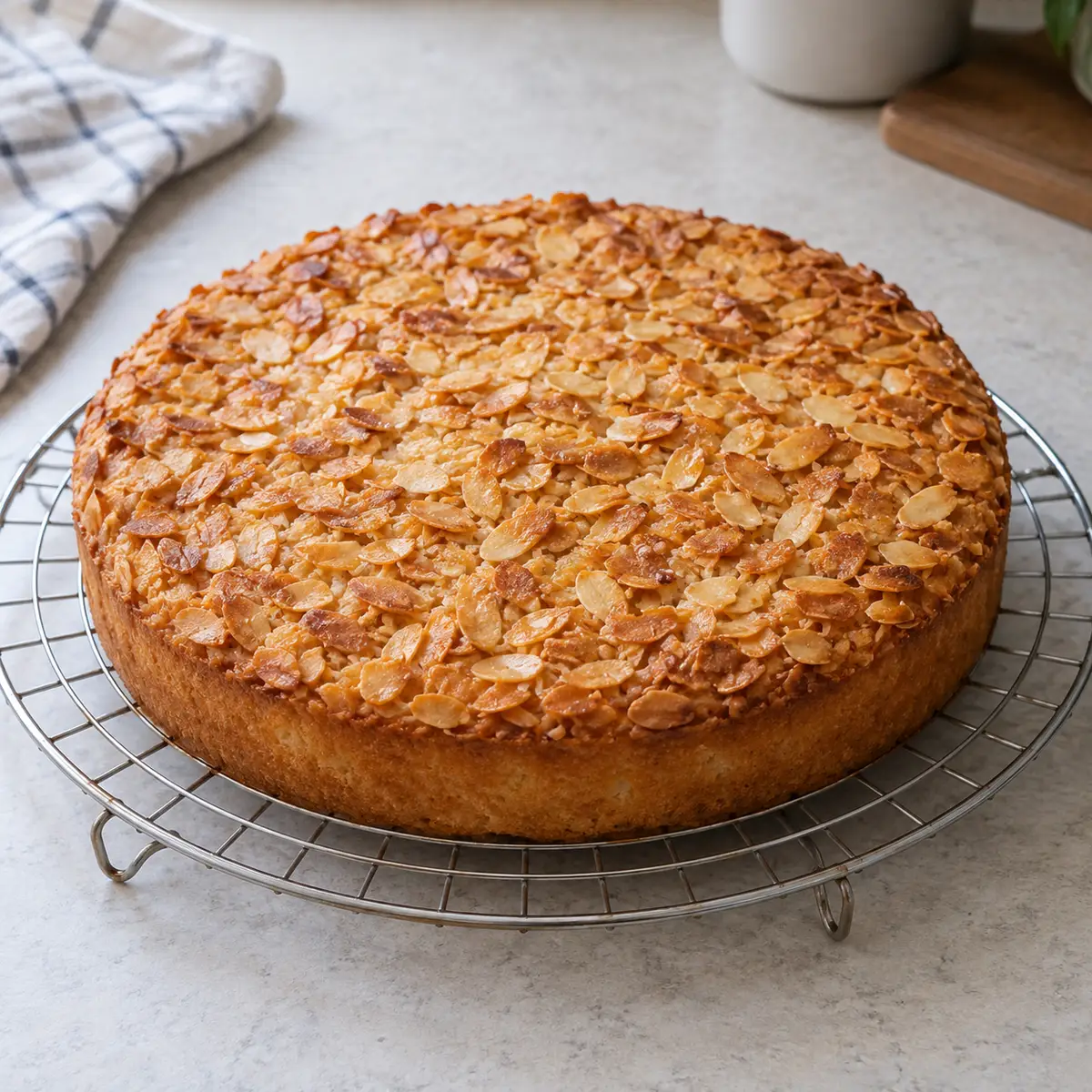
AI-generated While the cake bakes, take out the 120 g butter for the filling, cut it into cubes and leave at room temperature to soften. In a small bowl, mix all the cornstarch and 60 g sugar with 80 ml cold milk, then heat the remaining 320 ml milk in a saucepan until almost boiling; pour in the cornstarch mixture, whisking vigorously. Cook over low heat, stirring constantly across the bottom, until thickened and large bubbles appear, then cook for about 1 minute more; remove from the heat and stir in all 5 ml vanilla extract. Transfer all the pudding to a wide dish in a layer no more than about 2 cm deep, cover with plastic wrap touching the surface and cool for about 1.5 hours while the cake cools, until the pudding is no longer warm at all and has reached room temperature; do not refrigerate it before combining with the butter.
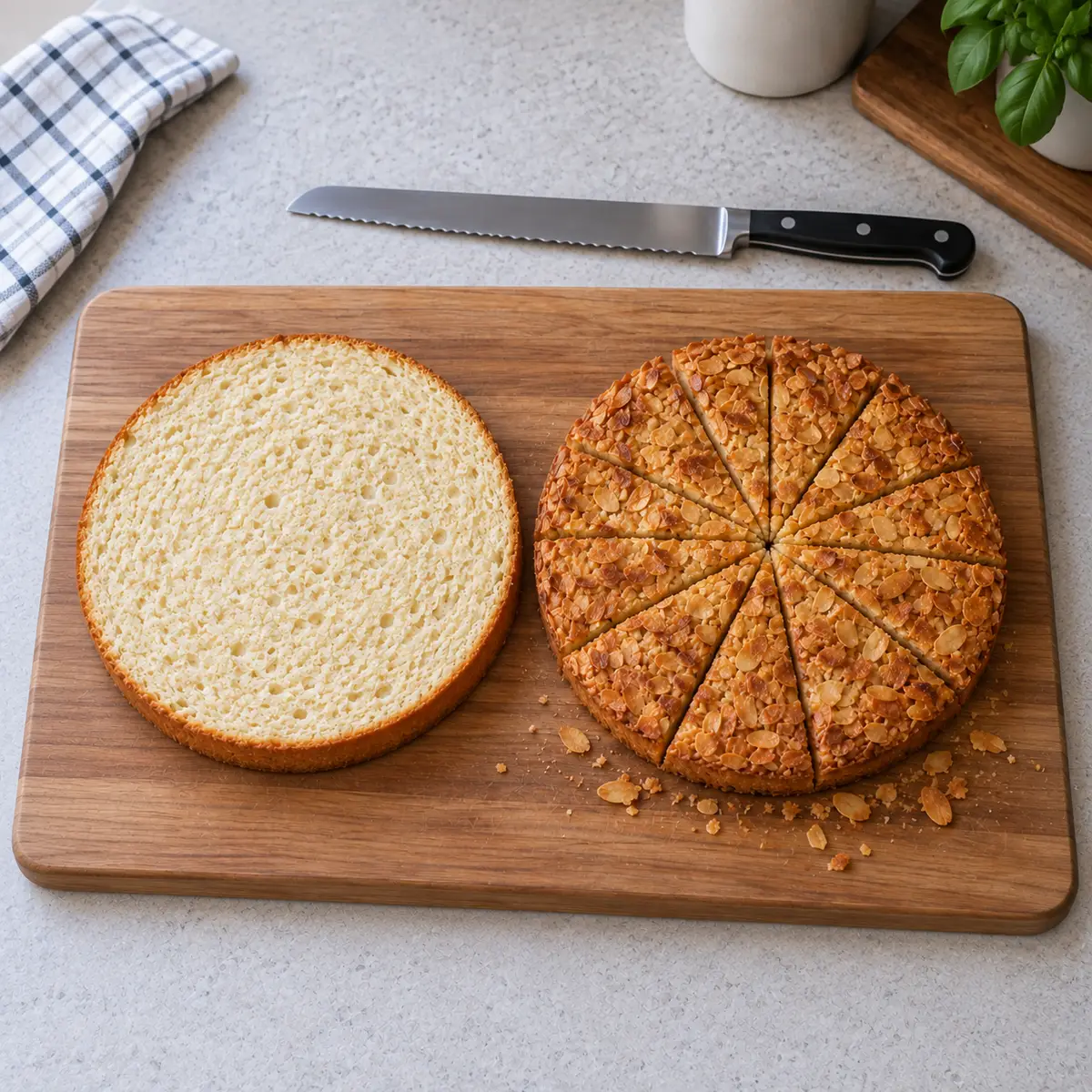
Using a long serrated knife, cut the completely cooled cake horizontally into two layers, keeping the blade roughly halfway up the yeast cake. Slide the almond-topped layer onto a cutting board and use gentle sawing motions to cut it into 12 equal wedges without pressing hard. Keep all the pieces, fallen almonds and crumbs for assembly; leave the bottom layer whole.
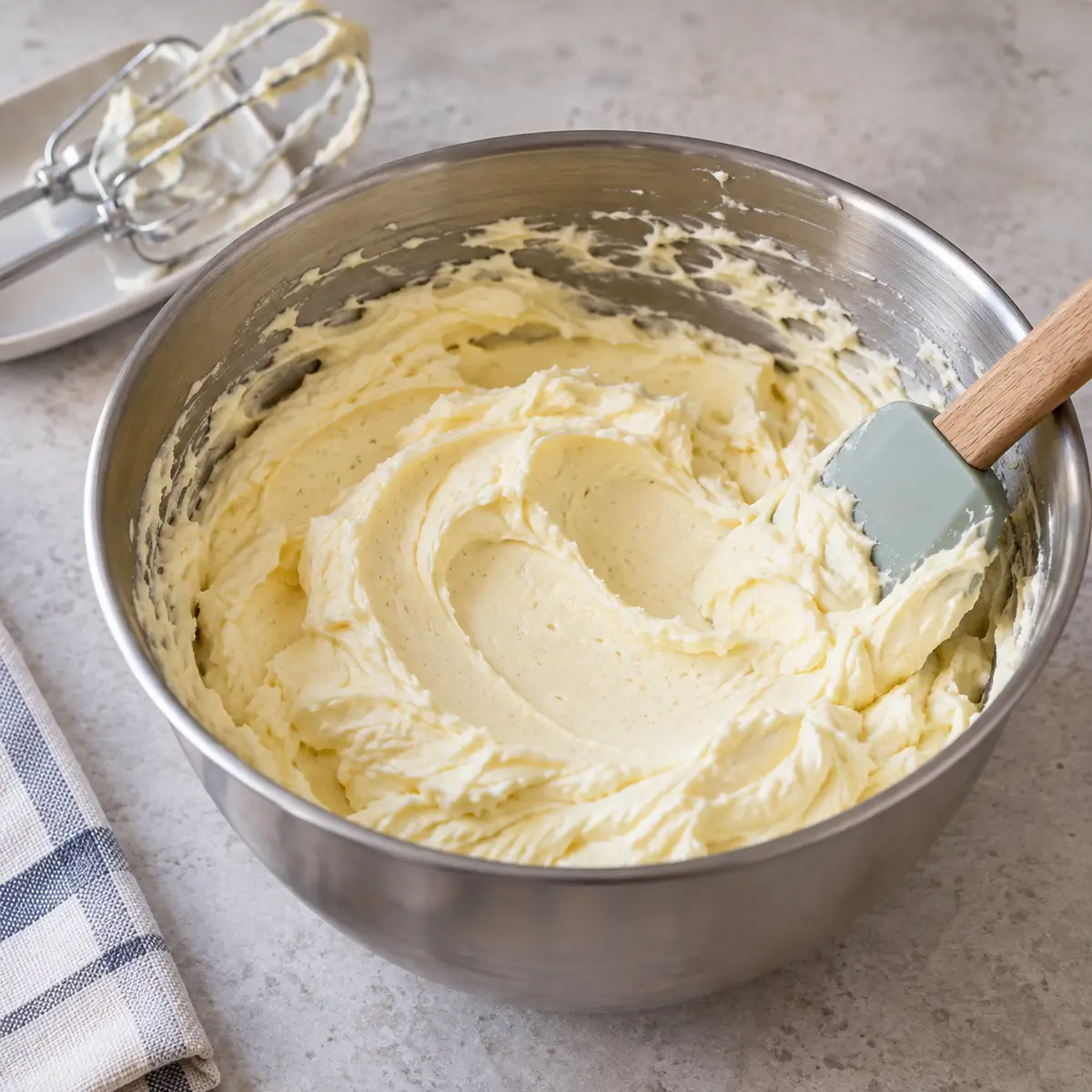
AI-generated Check that the softened 120 g butter and the cooked filling base are at the same room temperature: the base must not be warm or refrigerator-cold, and the butter should yield easily to pressure from a spoon, without any melted patches. Beat the butter with a mixer for about 5 minutes until pale and fluffy, and separately stir the pudding briefly until smooth. Add all the pudding to the butter, 1 tablespoon at a time, mixing at medium speed until combined after each addition. The finished filling should be uniform, thick and smooth, hold the marks left by a spatula and spread easily.
AI-generated Place the bottom cake layer on a flat serving platter and surround it with the clean springform ring. Add all the filling, scraping the bowl, and spread evenly to the edges in a layer about 1.5 cm thick. Arrange the 12 wedges of the top layer on it in their original order; transfer them with a wide spatula and do not press down on the filling. Scatter the reserved almond pieces and crumbs over the top, then refrigerate the cake for about 2 hours, until the filling is thoroughly chilled and firm.
Take the cake out of the refrigerator about 15 minutes before serving so the filling softens slightly while remaining firm. Run a thin knife between the filling and the ring and remove the ring; with a sharp knife, cut through the filling and bottom layer along the gaps between the precut wedges. Serve 12 pieces, lifting each with a wide spatula to keep both cake layers and the filling intact.
Estimated nutrition

Rate this recipe
0 ratings
Comments