
AI-generated
Romanian Curd Cheese Doughnuts with Sour Cream and Preserves
Log in or create a free account to save recipes.
Source: https://recipheon.com/en/recipes/desserts/romanian-cottage-cheese-doughnuts-with-sour-cream-and-preserves
About this recipe
These Romanian curd cheese doughnuts are served as a golden ring with a small ball, sour cream and preserves. The centers should be soft, with a distinct cheese flavor, so draining the cheese thoroughly and adding flour sparingly are the most important steps. Mix the dough briefly, just until combined, so it does not become tough and rubbery after frying. The hole in each ring helps the doughnut cook evenly, while the smaller balls come out of the oil earlier. Sour cream balances the sweetness of the sour cherry preserves; add both toppings just before eating, while the doughnuts are still warm.
Ingredients
Curd cheese dough
500 g dry unsalted full-fat Polish curd cheese (twaróg), thoroughly drained and weighed after draining; allow about 700 g before draining, discard the whey and save any extra drained cheese for another dish
2 medium (size M) eggs, about 100 g without the shells, for the dough
280–330 g all-purpose flour: 250–300 g for the dough and 30 g for dusting; discard any unused dusting flour
50 g superfine sugar for the dough
8 g baking powder for the dough
5 ml vanilla extract for the dough
2 g fine salt for the dough
Frying and serving
1500 ml refined sunflower oil for deep-frying; do not serve the remaining oil
320 g thick sour cream (18% fat), 40 g per serving
200 g sour cherry preserves with fruit pieces and no pits, 25 g per serving
Steps
Line a sieve with a clean cloth, set it over a bowl and add the curd cheese. Fold the edges of the cloth over the cheese and refrigerate for about 2 hours, then press gently through the cloth to remove the free whey; the cheese should be firm, with soft curds, and leave no puddle when transferred to a plate. If it is still releasing liquid, drain it longer instead of thickening the dough with a large amount of flour later. Only then weigh out 500 g for the recipe; discard the whey and set aside any extra drained cheese for another dish.
Mash the measured 500 g of curd cheese with a fork in a large bowl, breaking up the larger curds without blending it into a runny cream. Add the 2 eggs, all 50 g of sugar, 5 ml of vanilla and 2 g of salt. Stir with a spoon until evenly combined; small curds may remain visible.
In a separate bowl, mix 250 g of flour with all 8 g of baking powder, then add to the cheese mixture. Stir with a spoon, then briefly bring the dough together by hand, just until no dry flour remains; do not knead it like bread dough. It should be soft and slightly sticky but keep its shape when gathered into a ball; if it spreads and coats your hands thickly, add flour in 10 g increments, up to another 50 g. Do not add the reserve flour automatically, and do not exceed 300 g of flour in the dough; keep the 30 g for dusting separate.
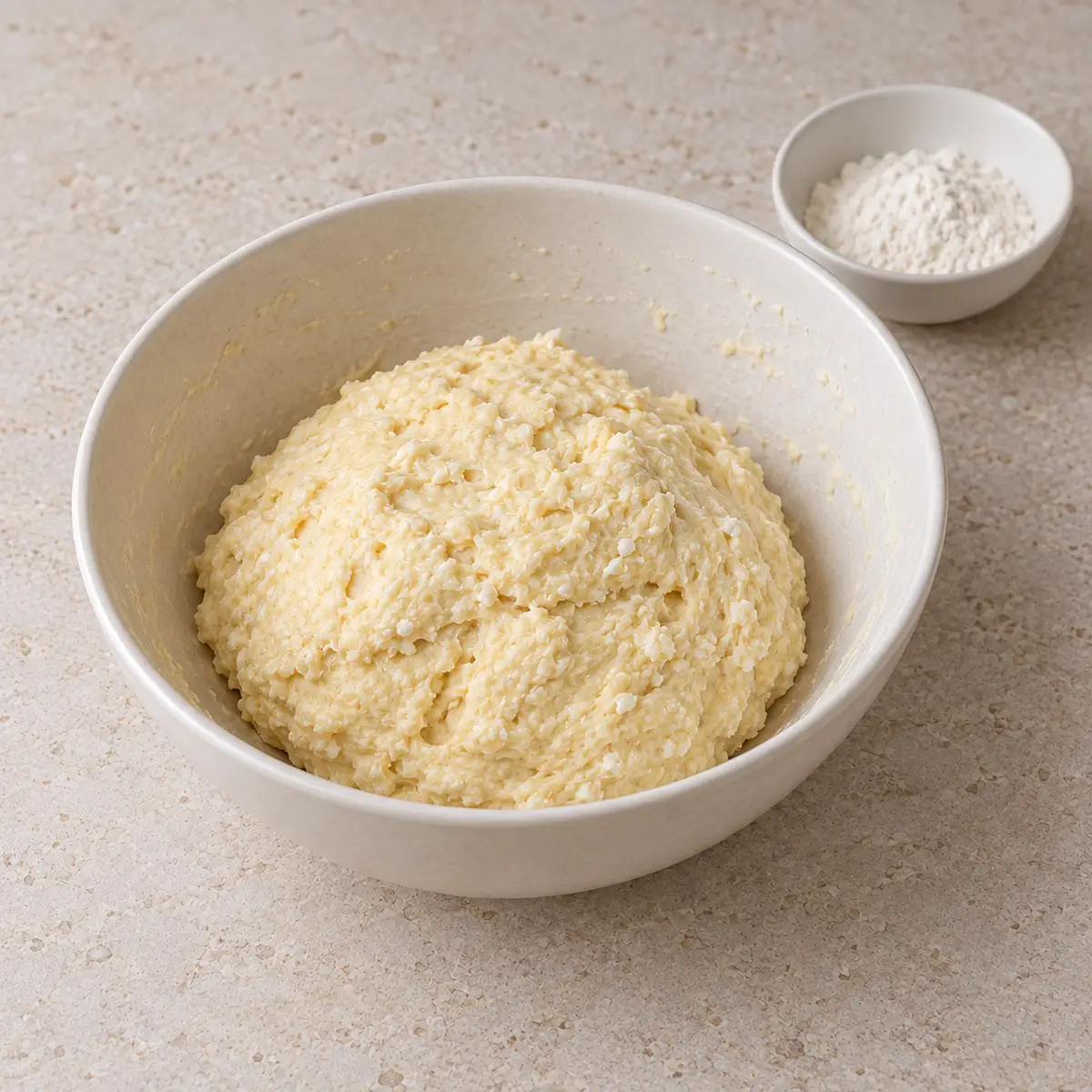
AI-generated Dust the counter, your hands and a large tray with flour from the measured 30 g portion, using only as much as needed so the dough does not stick. Weigh out 8 pieces of dough, 15 g each, and roll into small balls; divide all the remaining dough into 8 equal portions. Round each larger portion, flatten it slightly and make a hole with your finger, gently widening it to about 3 cm; each ring should be about 8–9 cm in diameter and about 2 cm thick. Arrange all the rings and balls on the floured tray without overlapping and cover loosely with a cloth; use all the dough and discard any unused dusting flour.
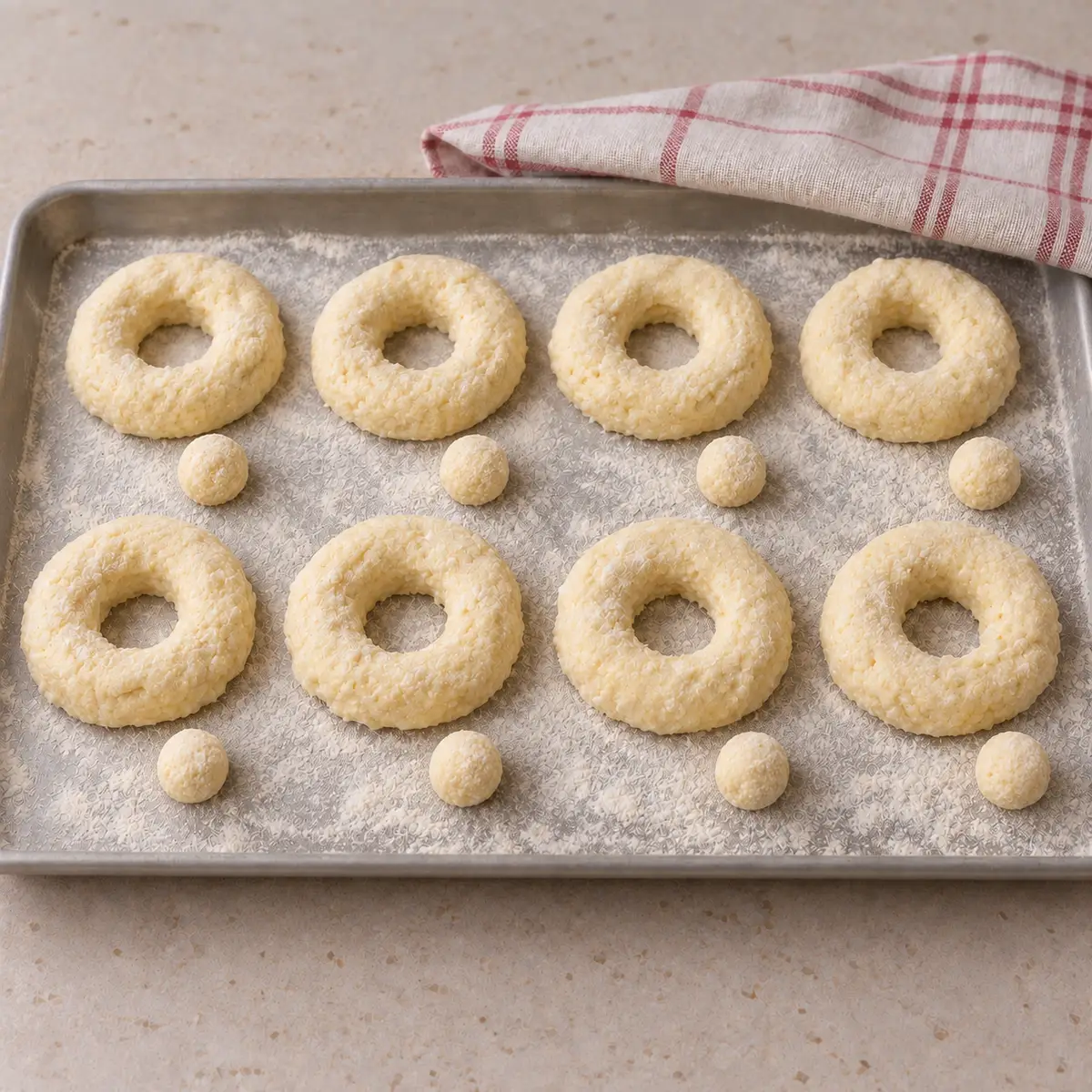
AI-generated Pour 1500 ml of oil into a wide pot about 24 cm in diameter with a capacity of at least 4 l; the oil will be about 3 cm deep, with plenty of space below the rim. Heat over medium heat for about 10 minutes to about 165–170°C, without letting it smoke; the shaped doughnuts rest under the cloth during this time. When you lower the first ball into the oil, it should immediately be surrounded by small, steady bubbles, gradually rise to the surface and brown slowly. If it darkens rapidly, reduce the heat before adding the rings.
Add the second ball alongside the first, then carefully lower in 2 rings, leaving space between them. Fry the balls for about 2–3 minutes in total, turning them, and the rings for about 3–4 minutes on each side; adjust the heat so the oil bubbles gently and the surfaces turn evenly golden. Lift out the cooked pieces with a slotted spoon onto paper towels, removing the balls before the rings. Break one ball in half and cut into the side of one ring: the center should be soft and cheesy, with no wet, stretchy raw dough; if any remains, return the undercooked pieces to the oil over lower heat for 1–2 minutes and check again.
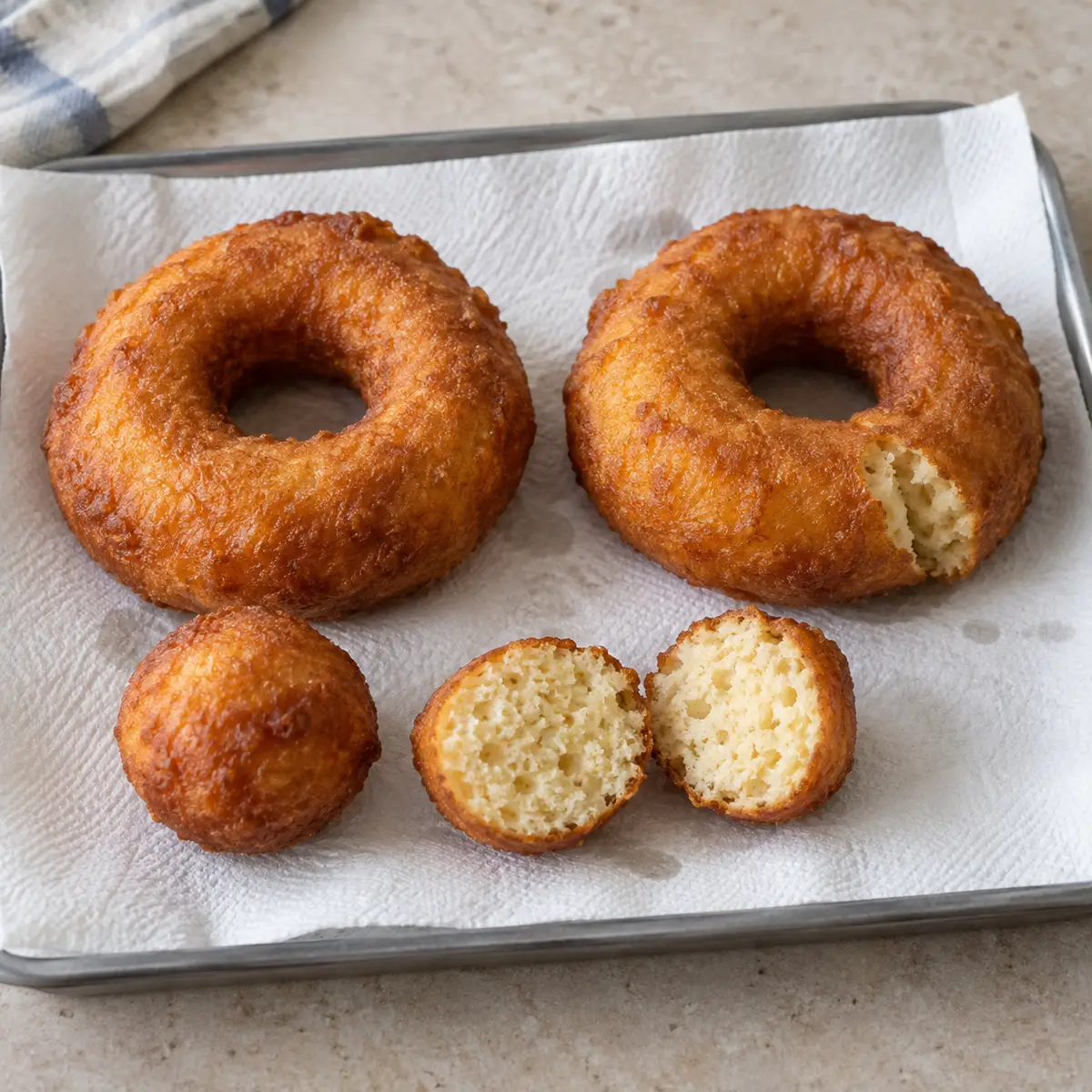
AI-generated Fry the remaining 6 rings and 6 balls in 3 more batches, with 2 rings and 2 balls in each, using the same cooking times and doneness cues. Allow the oil to heat back up for about 1 minute between batches; do not add all the dough at once. Drain the cooked doughnuts on paper towels, then transfer to a rack without stacking so the undersides do not become soggy from steam; serve each cooked batch with the toppings described in the next step, without waiting for all the frying to be finished. Keep both halves of the test ball and the ring you cut into for serving as well; after frying, let the oil cool and do not serve it with the dessert.
Divide all the sour cream and preserves among 8 servings, allowing 40 g of sour cream and 25 g of preserves for each. Spoon the sour cream onto a warm ring, add the preserves with fruit pieces and place a small ball on top; use both halves of the ball for the test portion. Serve as soon as the toppings have been added, without sprinkling with extra sugar.
Estimated nutrition

Rate this recipe
0 ratings
Comments