
AI-generated
Viennese Apple Strudel with Raisins and Cinnamon
Log in or create a free account to save recipes.
Source: https://recipheon.com/en/recipes/desserts/viennese-apple-strudel-with-raisins-and-cinnamon
About this recipe
Apple strudel wraps apples, raisins and cinnamon in thin, crisp layers of hand-stretched pastry. After resting, the well-kneaded dough becomes elastic enough to stretch almost translucent on a cloth. Breadcrumbs browned in butter absorb the apple juices, keeping the filling moist without letting the base soak up too much liquid. Add the sugar to the fruit just before rolling so it does not have time to release too much juice. Butter separates the delicate pastry layers and helps them brown. A short rest after baking makes it easier to cut the strudel into even portions without crushing the filling.
Ingredients
Stretched pastry dough
200 g wheat flour, type 550: 180 g for the dough and 20 g for dusting; discard any unused dusting flour
250 ml water: 100 ml lukewarm for the dough and 150 ml hot for soaking the raisins, to be drained afterward
20 g refined canola oil: 15 g for the dough and 5 g for greasing the bowl and dough ball
25 ml lemon juice: 5 ml for the dough and 20 ml for the apples
2 g fine salt for the dough
Filling and finishing
900 g firm, tart apples, such as Granny Smith, weighed after peeling and coring; buy approximately 1.2 kg whole apples
70 g dried raisins without seeds, weighed before soaking
70 g fine, dry breadcrumbs without seasoning
90 g unsalted butter, 82% fat: 30 g for the breadcrumbs, 30 g for the stretched dough, 20 g for the top before baking and 10 g during baking
80 g superfine white sugar for the apples
4 g ground cinnamon for the apples
15 g powdered sugar for dusting the finished strudel
Steps
Combine 180 g flour with 2 g salt, 100 ml lukewarm water, 15 g oil and 5 ml lemon juice in a bowl. Bring together, then knead on the counter for about 10 minutes, until the dough is smooth, soft and springy, with no dry lumps. It may stick slightly to your hands at first; keep kneading before reaching for the dusting flour, and if it still sticks, use just a little from the measured 20 g allowance.
Shape into a ball and use the remaining 5 g oil to lightly grease the bowl and the entire surface of the dough. Cover the bowl and leave at room temperature for about 1 hour so the dough stretches more easily and does not dry out. Meanwhile, pour 150 ml hot water over the raisins, leave for about 15 minutes, then drain thoroughly and pat dry with paper towels; discard the soaking water. Prepare the breadcrumbs and apples as described in the next steps while the dough rests.
Melt 30 g butter in a skillet about 24 cm in diameter over medium-low heat. Add all the breadcrumbs and stir for about 5 minutes, until evenly golden and fragrant with toasted bread; do not let them become dark brown and bitter. Transfer to a plate and spread in a thin layer to cool, so the crumbs do not go onto the delicate dough while warm.
Peel and core the apples, weigh out 900 g of flesh, then cut into slices about 3 mm thick. Mix with the remaining 20 ml lemon juice; set aside the sugar and cinnamon for later. Toward the end of the dough's resting time, start preheating a conventional oven (no fan) to 190°C. Prepare a baking sheet with a flat surface measuring at least 40 × 30 cm and a piece of parchment paper cut to fit; leave the paper beside a clean, smooth cotton kitchen towel or tablecloth measuring at least 60 × 120 cm, spread out on a stable table.
After the full hour of resting, lightly dust the cloth and rolling pin with the remaining dusting flour, using only as much as needed. Roll the dough out to about 30 × 40 cm, then slide the backs of your hands underneath and gently stretch from the center toward the edges, working your way around the table. Form a rectangle about 45 cm wide and 90–100 cm long, thin enough for the cloth's pattern to show through; if it is still opaque, gently stretch it farther lengthwise, then position the shorter side facing you. Carefully stretch any thicker edges with your fingers, without trimming off dough; bring small tears together and gently pinch to seal, then discard any unused dusting flour.
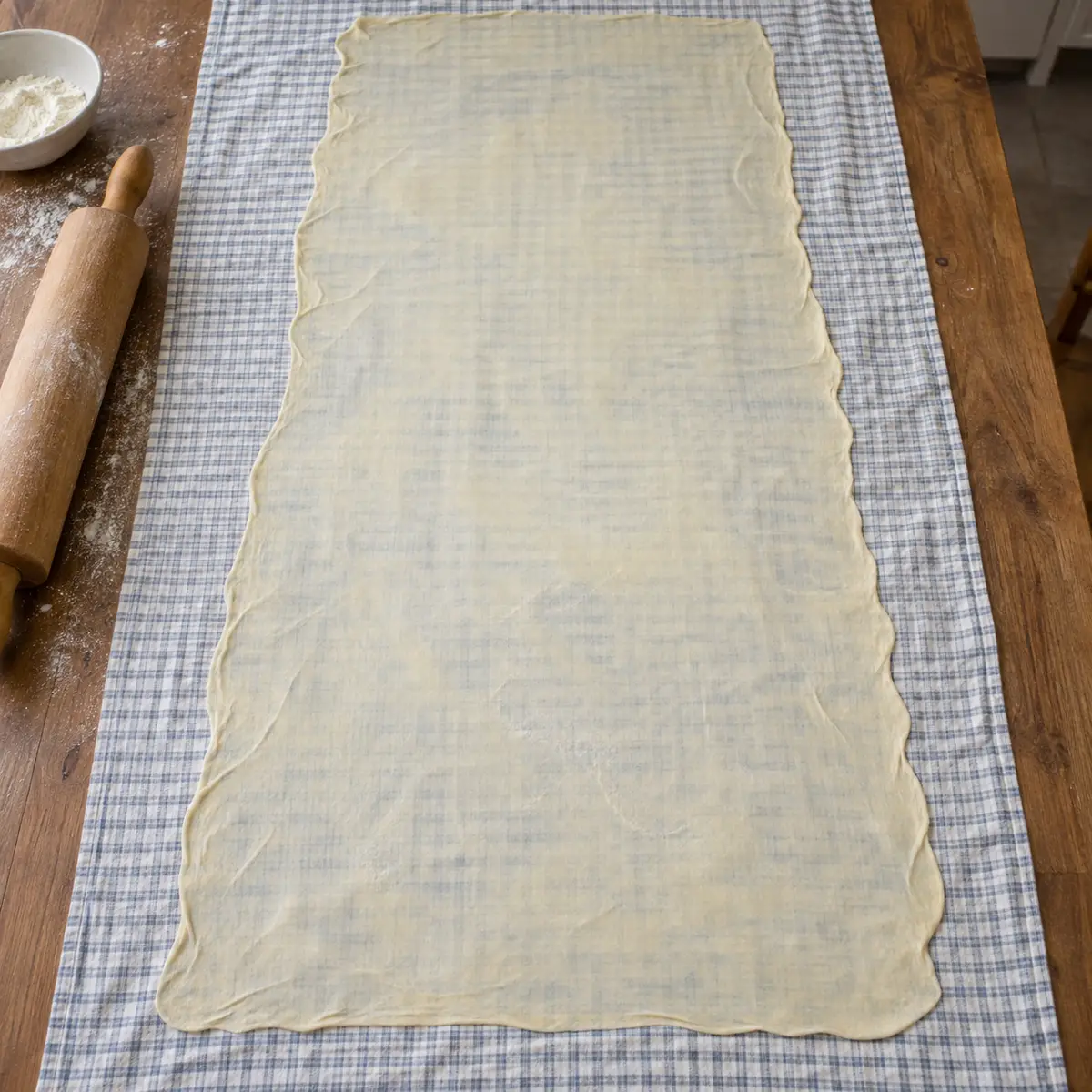
AI-generated Melt the remaining 60 g butter in a small saucepan over low heat, without browning, then remove from the heat. Measure out 30 g melted butter and gently distribute over the entire pastry sheet with a thin drizzle and a soft pastry brush, without dragging the dough; reserve the remaining 30 g for the top. Only now mix the apples with all the sugar, cinnamon and drained raisins, then proceed immediately to adding the filling.
Spread all the cooled breadcrumbs over the part of the pastry nearest you in a rectangle about 39 × 25 cm, leaving 3 cm of bare dough on each side and about 5 cm along the near edge. Distribute all the apple filling evenly over the crumbs, including the small amount of juice left in the bowl. Leave the far part of the pastry without filling; once rolled, it will form the strudel's thin outer layers.
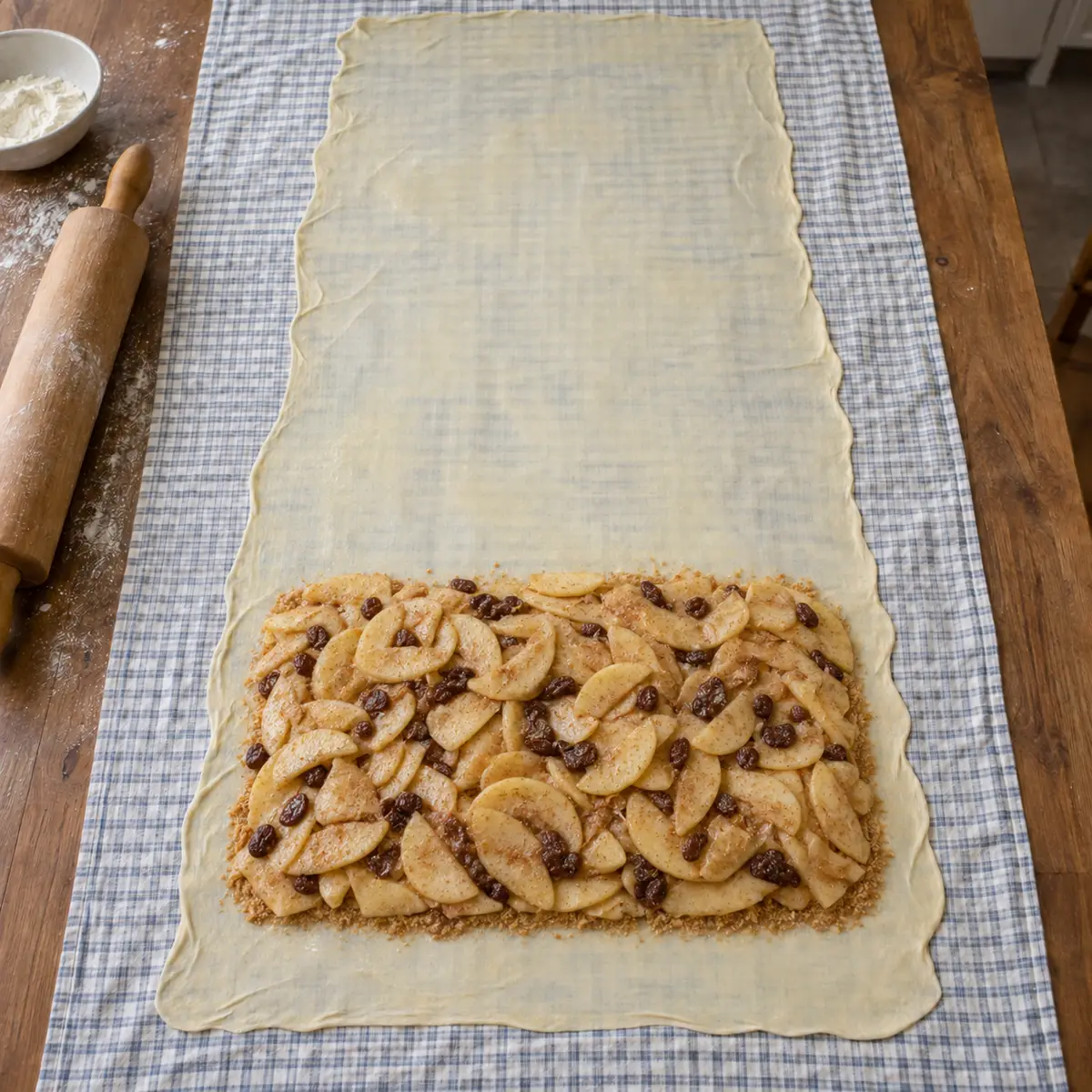
AI-generated Fold both side margins of dough over the filling, then cover it with the near edge. Lift the cloth from your side and gradually roll the dough from the filled section toward the empty section to form an even log about 39 cm long; do not squeeze it tightly. Slide the prepared parchment paper beside the far edge and use the cloth to roll the strudel onto it, seam side down; transfer it to the baking sheet with the paper. Brush the top with 20 g of the reserved melted butter, leaving the final 10 g to use during baking.
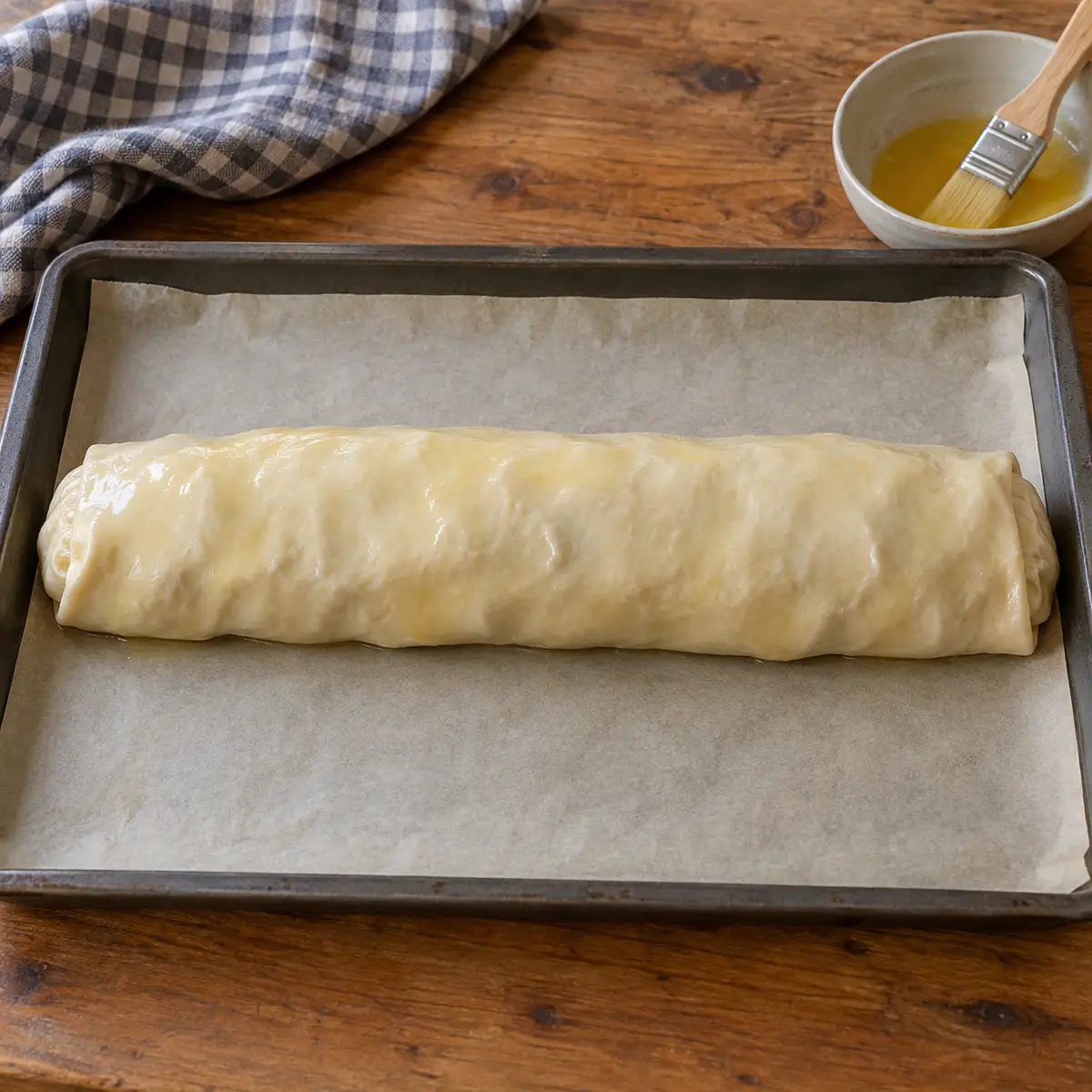
AI-generated Bake on the middle rack of the preheated oven for about 45–50 minutes. After about 25 minutes, briefly pull out the baking sheet and brush the top with the final 10 g butter; if it has solidified, gently reheat it first. The finished strudel should be distinctly golden and dry on the surface, with a browned base, and a thin skewer inserted from the side should pass through the apples without noticeable resistance. If the pastry is already browned but the apples are still firm, loosely cover the top with aluminum foil and bake for about 5–10 minutes more, then check again.
Remove the baking sheet from the oven and leave the strudel without a cover for about 20 minutes. Use wide spatulas to transfer it to a board or platter, sift all 15 g powdered sugar over it and cut into 8 portions with a serrated knife, using gentle sawing motions instead of pressing down firmly. Serve while still warm, with a juicy filling and crisp outer layers of pastry.
Estimated nutrition

Rate this recipe
0 ratings
Comments