
AI-generated
Lemon Meringue Tart
Log in or create a free account to save recipes.
Source: https://recipheon.com/en/recipes/desserts/lemon-meringue-tart
About this recipe
Lemon meringue tart combines a crumbly, buttery crust, a tangy filling made with lemon juice and zest, and a soft meringue layer. The crust is fully baked before the filling is added so the bottom stays dry and does not absorb the uncooked filling. The meringue goes onto the hot filling and meets the pastry edges, helping reduce shrinkage and liquid collecting between the layers. The whole tart is then baked in the oven, rather than just torching the peaks. The meringue is tender inside with a lightly golden surface, and the filling can be sliced after cooling and chilling. Grate only the yellow part of the lemon peel, without the bitter white pith. The round pan yields ten servings.
Ingredients
Crust, filling and meringue
200 g dry wheat cake flour
140 g butter made from cow's milk, 82% fat, divided: 100 g cold butter for the crust and 40 g for the filling
30 g powdered sugar for the crust
5 raw medium (size M) chicken eggs, about 250 g edible contents without shells, divided: 1 whole egg, about 50 g, for the crust, 4 yolks, about 70 g in total, for the filling, and 4 whites, about 130 g in total, for the meringue
320 g superfine white sugar, divided: 120 g for the filling and 200 g for the meringue
150 ml freshly squeezed lemon juice without seeds
5 g finely grated fresh yellow lemon zest, without the white pith
150 ml water, divided: 50 ml cold water for the yolks and 100 ml to heat
35 g dry cornstarch
Steps
Gather a metal tart pan with an inside diameter of 24 cm, a height of about 3 cm and a removable bottom, parchment paper, ceramic pie weights, a rolling pin, a saucepan of about 1.5 l and a mixer. Of the five eggs, keep one whole for the crust and separate the other four into yolks for the filling and whites for the meringue; do not let any yolk get into the whites. Rub 200 g flour, 30 g powdered sugar and 100 g cold cubed butter together into fine crumbs, add the whole egg and knead briefly, just until combined. Flatten the dough into a disk, cover and refrigerate for 30 minutes; keep the yolks and whites refrigerated until the later steps as well.
Roll the chilled dough between two sheets of parchment to about 4 mm thick and line the bottom and sides of the pan, without dusting with flour and without greasing. Do not stretch the dough; trim off all overhanging pieces and press them onto thin spots on the inside, keeping all the dough in the crust. Trim the edges level with the top of the pan, prick the bottom with a fork and chill for another 30 minutes. Near the end of this chilling time, preheat the oven to 180°C on the conventional (no-fan) setting.
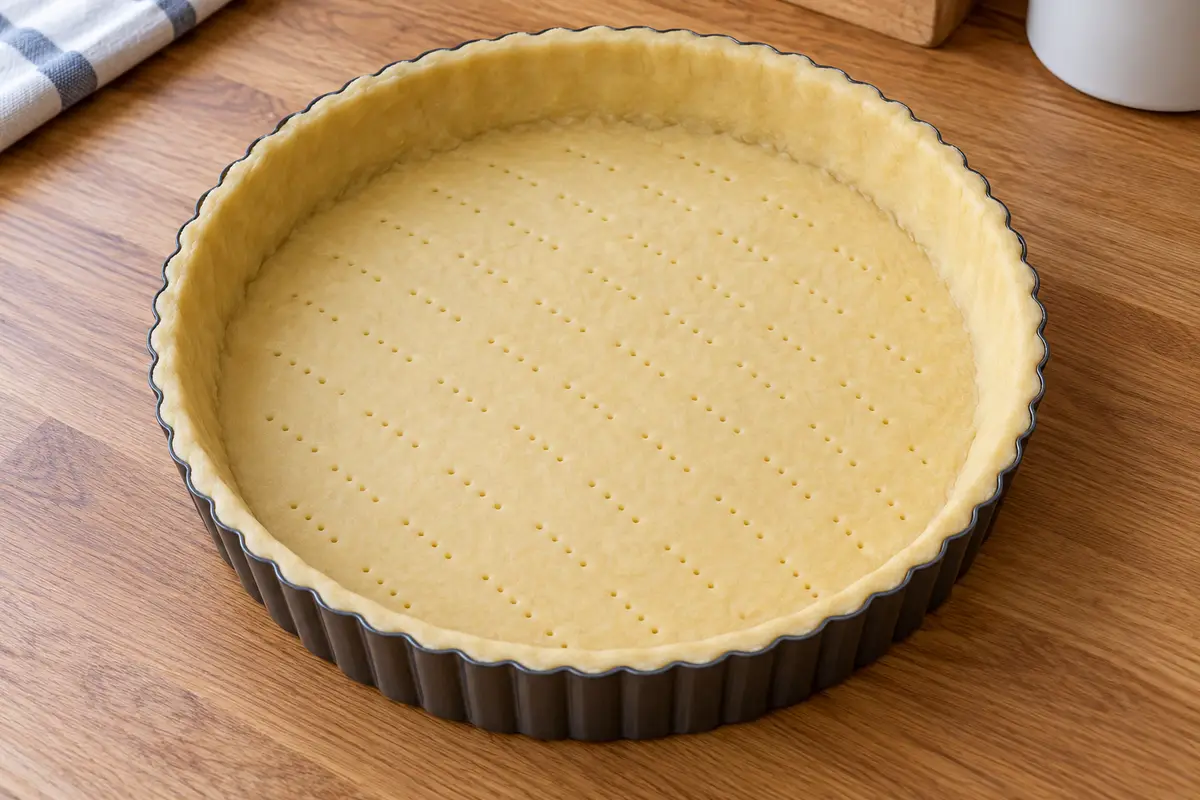
AI-generated Cover the dough with parchment and fill with ceramic pie weights right up to the edges to support the sides. Bake on the middle rack for 20 minutes, carefully remove all the parchment and weights, then bake uncovered for about another 15–20 minutes, until the bottom is dry and lightly golden and the edges are evenly browned. Do not leave a damp, raw bottom beneath the filling. Remove the pan and lower the oven temperature to 160°C; take the whites and yolks out of the refrigerator to prepare the meringue and filling without cooling the crust as a separate step.
In a clean, dry bowl with no traces of fat, beat all four egg whites with clean beaters, first to a soft foam. Gradually add 200 g superfine sugar, a spoonful at a time, beating continuously until the meringue is thick and glossy and forms stable peaks. This will take about 10 minutes; a little of the mixture rubbed between your fingers should not have distinct sugar crystals. Set aside briefly, only while cooking the filling in the next step.
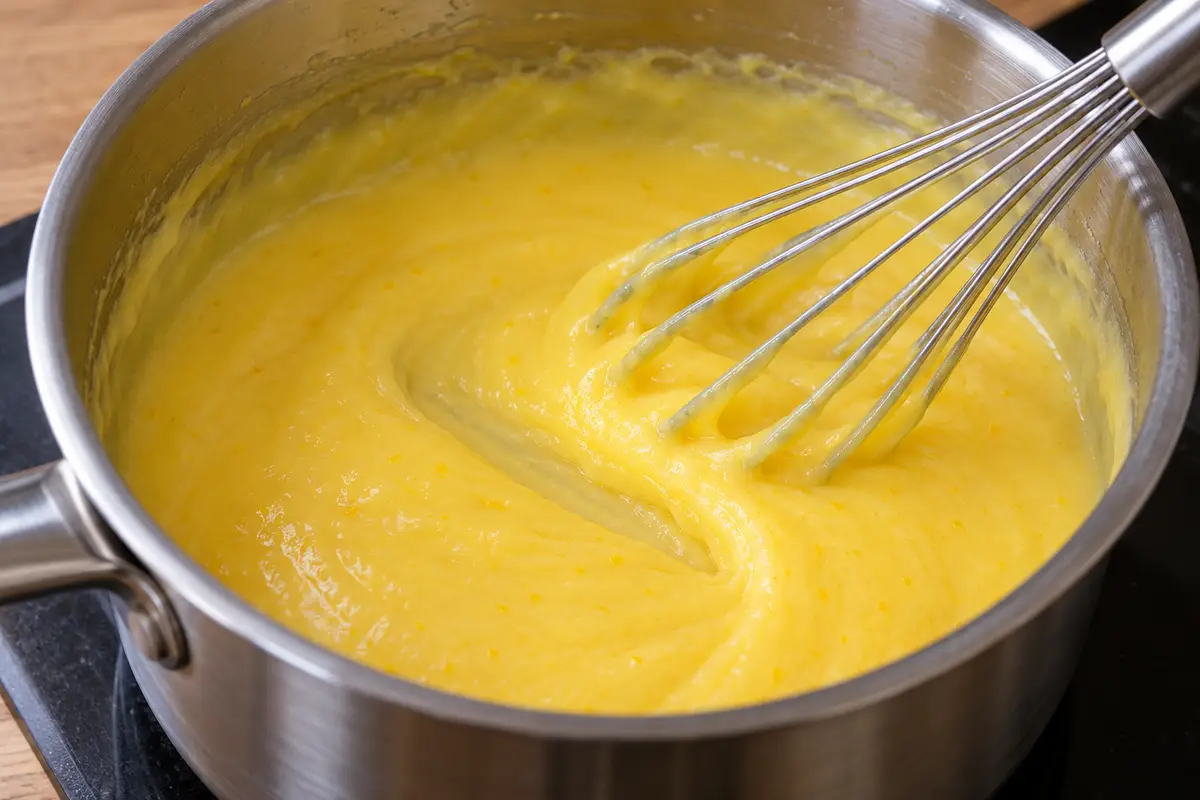
Mix the four yolks with 120 g sugar, 35 g cornstarch and 50 ml cold water until smooth. In the saucepan, heat all 150 ml juice, 5 g zest and the remaining 100 ml water until small bubbles appear at the edges. Gradually whisk this liquid into the yolks and pour everything back into the saucepan. Cook over medium-low heat, whisking constantly along the bottom, until the filling is thick and slow bubbles appear; from that point, simmer gently for another 1–2 minutes, stirring without stopping. Remove from the heat, stir in 40 g butter until melted and immediately transfer all the hot filling to the baked crust; it should be smooth and briefly retain the whisk's trail.
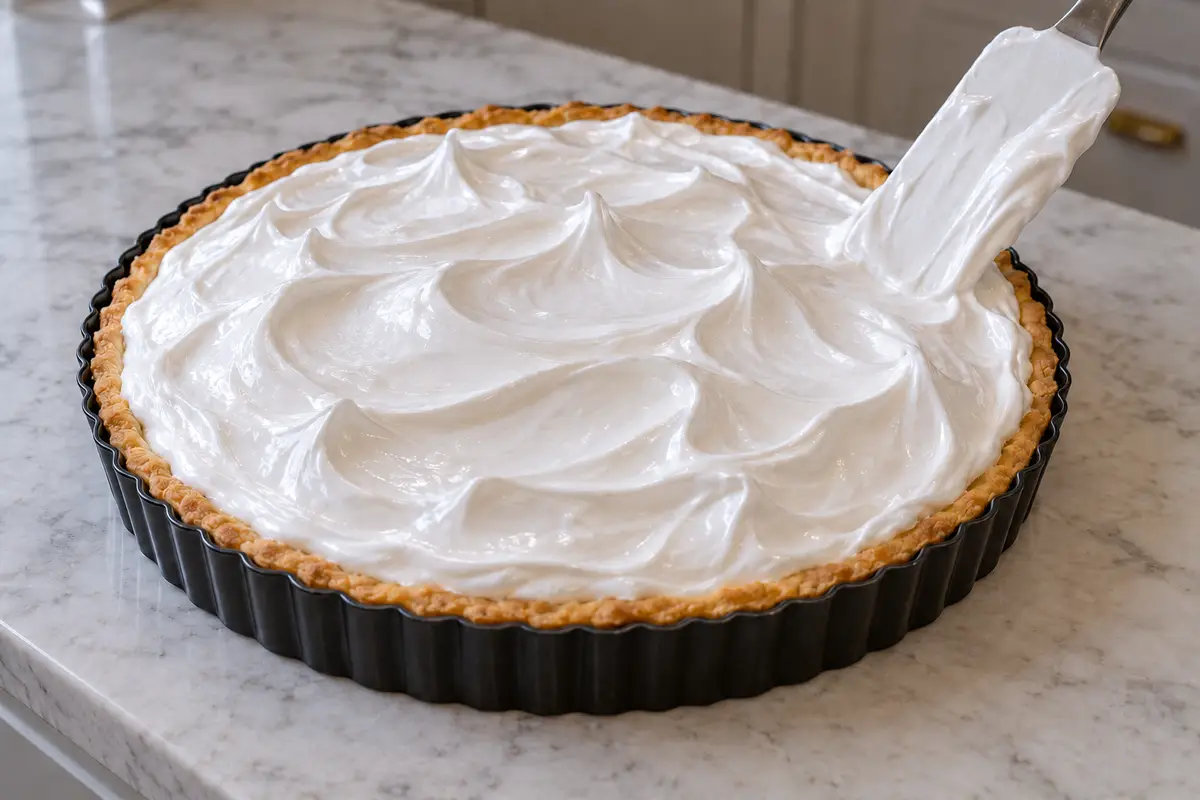
AI-generated Immediately spread all the prepared meringue over the hot filling, starting around the perimeter. Seal it firmly to the pastry edge without leaving a gap, then fill in the center and use a spatula to form soft waves and low peaks. Do not wait for the filling to cool, and do not leave the meringue as just a loose dome in the center. Keep all three layers in the pan for the next baking stage.
AI-generated Place the tart on the middle rack of the oven preheated to 160°C on the conventional (no-fan) setting and bake for about 25–30 minutes. The entire meringue layer needs to heat through and set, with the surface and peaks turning lightly golden; do not shorten this stage to just browning the top. The meringue will stay soft inside, not become a dry, crisp meringue cookie. Do not replace baking with a kitchen torch or brief broiling.
After baking, set the pan on a wire rack and let cool for about 90 minutes until completely cool, then refrigerate for at least 2 hours so the filling sets. Cover the tart without letting the covering touch the meringue; refrigeration is part of the preparation, so do not leave it on the counter during this time. Carefully remove from the pan, cut into 10 servings with a sharp knife wiped between cuts and serve. Return any remaining slices to the refrigerator immediately.
Estimated nutrition

Rate this recipe
0 ratings
Comments