
AI-generated
Panettone — fluffy Italian sweet bread with raisins and orange peel
Log in or create a free account to save recipes.
Source: https://recipheon.com/en/recipes/desserts/panettone-fluffy-italian-sweet-bread-with-raisins-and-orange-peel
About this recipe
Panettone has a tall dome, a tender buttery crumb and an orange aroma, with raisins and candied peel in every slice. This home version uses fresh baker's yeast, is prepared in a day and cools overnight; it does not require maintaining a sourdough starter. Strong flour, patient kneading and judging the proof by the dough's appearance matter most. Whole eggs and yolks are weighed without shells, and butter goes into already elastic dough in small additions. Briefly soak the raisins, then dry them thoroughly so they do not bring an uncontrolled amount of liquid into the dough. Add the fruit last, once the dough can hold a thin stretched membrane. A tall paper mold gives the characteristic shape; a shallow cut with a little butter helps the dome open. Cooling matters too: invert the hot bread on sturdy metal skewers and suspend it over the counter so the delicate center does not collapse under its own weight. Slice only once completely cooled, without extra icing or toppings.
Ingredients
Raisins and orange peel
100 g small soft raisins without seeds, weighed dry before soaking
150 g lukewarm water only for soaking the raisins; unabsorbed liquid will be discarded
80 g finely diced candied orange peel, without separately added liquid syrup; not fresh peel
Rich yeast dough
360 g strong Manitoba bread flour for prolonged kneading, about 14–15% protein and W 380–400, including 60 g for the sponge; no extra flour for dusting
110 g milk with 3.2% fat, weighed, including 60 g for the sponge and 50 g for the dough
12 g fresh baker's yeast
90 g fine white sugar, including 10 g for the sponge and 80 g for the dough
100 g beaten whole egg without shells, about 2 medium (M) eggs
54 g raw egg yolks without whites, about 3 medium (M) yolks; unused whites are excluded from the recipe
110 g unsalted butter with 82% fat, including 105 g softened for the dough and 5 g for the top
5 g fine salt
Steps
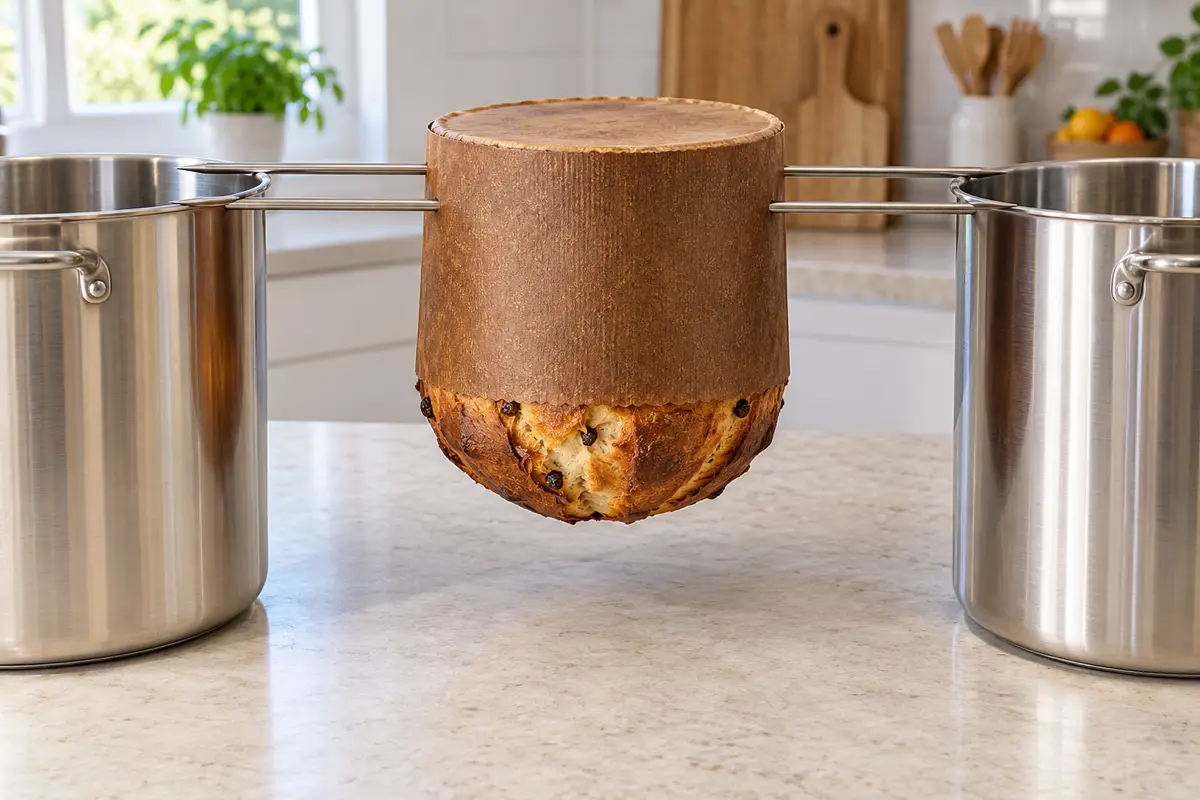
Prepare a tall paper panettone mold for 1 kg, about 18 cm across and 12 cm high; do not grease it. You will need two rigid metal cooking skewers 35–40 cm long and two stable, heavy pots at least 22 cm high. Put the pots on the counter without heating them, with a gap of about 22 cm. Check that the ends of both skewers will rest firmly on their rims and that the inverted bread will hang freely, with its dome above the counter. Keep this space ready for cooling.
Cover the 100 g raisins with the allocated 150 g lukewarm water and leave for 15 minutes. Drain in a sieve, discard the liquid, then spread the fruit on paper towels and gently pat the top dry too. They should be soft but without a wet surface; do not add soaking water to the dough. Weigh out 80 g candied peel without separate liquid syrup. Do not rinse it and do not coat the fruit in flour.
Take the eggs, yolks and butter out of the refrigerator in advance. From the listed ingredients, measure 60 g milk, 60 g flour and 10 g sugar. Warm the milk only until lukewarm, not hot. Dissolve all 12 g yeast and the sugar in it, then add the flour. Cover and leave for 45–60 minutes in a warm place without drafts, until the sponge clearly increases in volume and becomes bubbly. Keep the remaining 50 g milk at room temperature.
Add the remaining 300 g flour, 50 g milk, 100 g whole egg and 54 g yolks to all the sponge. Knead with a dough hook on low speed for about 8–10 minutes, until the ingredients form an elastic dough. Add the remaining 80 g sugar in three portions, waiting for each to incorporate, then add the salt. Knead for a few more minutes. By hand, work longer, stretching and folding the sticky dough on a clean counter without dusting; do not add flour for convenience.
Set aside 5 g butter for the dome. Add the remaining 105 g softened, unmelted butter a small piece at a time, waiting for the previous piece to be absorbed. Knead for about 15–20 minutes, until smooth, glossy and very elastic. A small piece should stretch into a thin membrane before tearing. The dough may stick slightly to your hands. If it becomes warm and greasy, stop, refrigerate the bowl for 10–15 minutes and only then continue. Do not increase the speed to hurry it along.
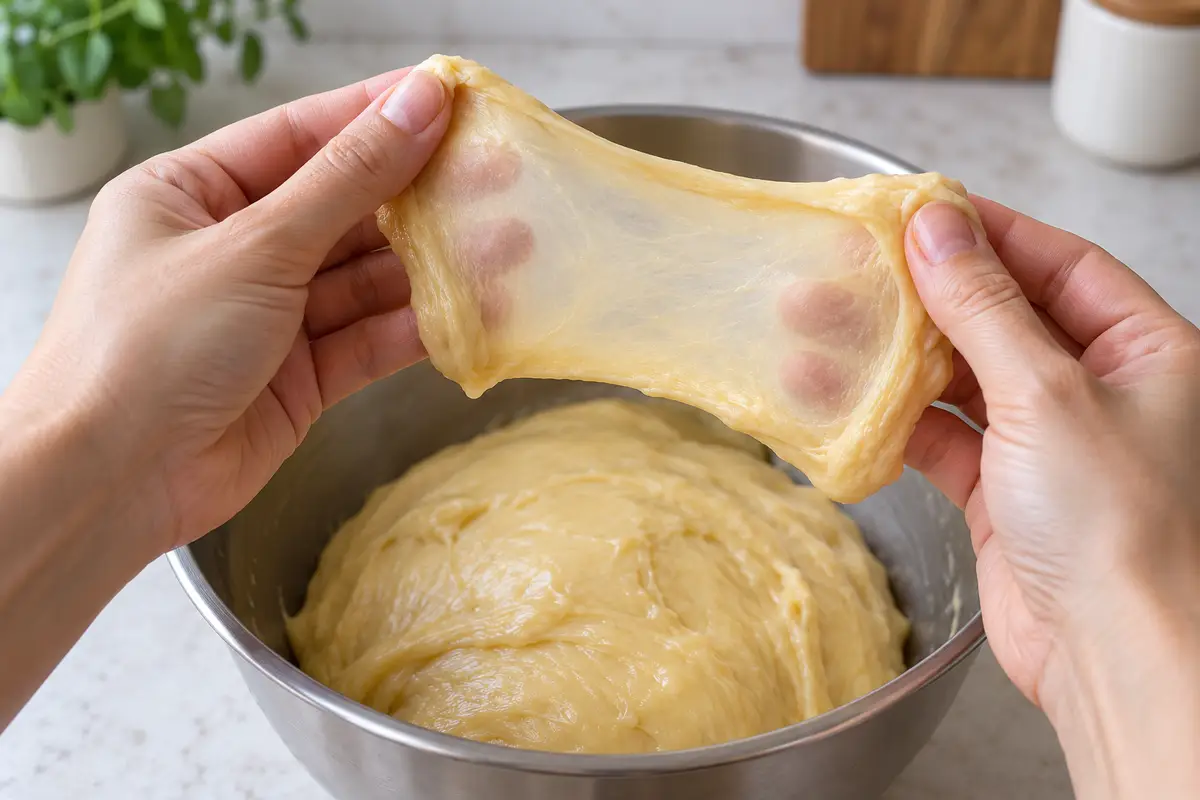
AI-generated Add all the raisins you patted dry and all the candied peel. Mix on the lowest speed only until the fruit is distributed, or gently fold a few times by hand. Do not mash and do not crush the fruit. Scrape all the dough into a large bowl without greasing, cover and mark its starting level. No extra soaking liquid, flour or butter is needed now.
Leave the covered bowl in a warm, quiet place for about 2½–4 hours, until the dough has at least doubled in volume and is clearly aerated. In a cooler kitchen it will take longer; judge by volume, not just the clock. Do not put the bowl on a hot radiator or in a heated oven. Gently turn the risen dough onto a clean counter, gather with a spatula and leave for 15–20 minutes under an upturned bowl.
Fold the edges inward, turn seam-side down and round the dough by drawing it toward you with a spatula and your hand against the counter. The top should be taut, without tearing; tuck surface raisins underneath. Put the entire ball seam-side down into the paper mold standing on a baking sheet. Loosely cover with a large food bag so it does not touch the rising dome. Do not divide the dough and do not set aside scraps for another bake.
Leave for about 3–5 hours, until the center of the dome is about 2 cm below the paper rim. Do not wait for the dough to overflow the mold. Toward the end, preheat the oven to 170°C with conventional top and bottom heat, with a low rack so the dome is far from the heating element. Remove the bag for 10–15 minutes. With a very sharp knife, make a shallow cross on top, without cutting deeply or dragging the dough. Put the reserved 5 g butter in the center of the cross.
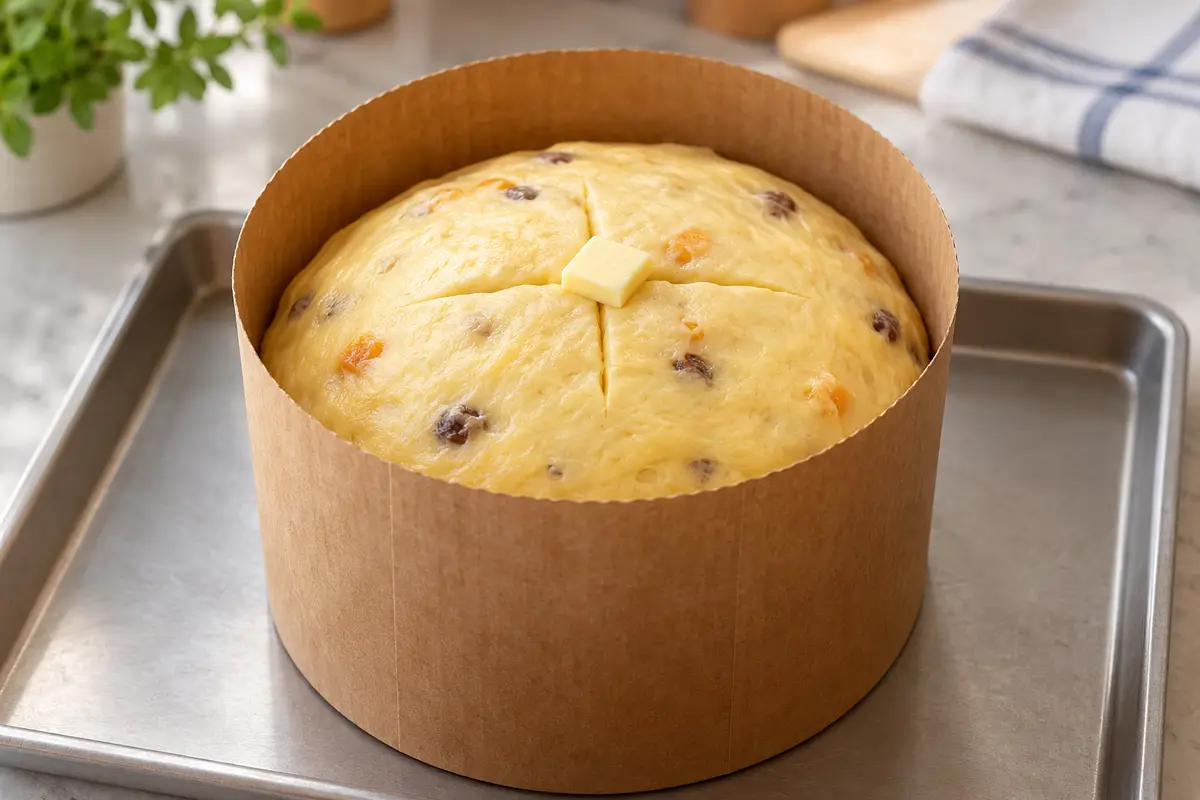
AI-generated Bake on the baking sheet at 170°C for about 50–60 minutes. Do not open the oven for the first 35 minutes. Once the top is well browned, loosely cover with foil and continue baking. The bread should have a baked, deep golden dome, and a long wooden skewer inserted deeply into the center should come out without raw dough; a single moist mark from fruit is not raw crumb. If dough coats the skewer, bake covered for another 5–10 minutes and check the center again.
After taking it out, do not remove the paper. Wearing oven mitts, pierce the hot bread with two parallel metal skewers about 2 cm above the bottom, 4–5 cm apart. They must pass through both paper sides and the crumb. Immediately and carefully invert the bread and rest all four ends on the rims of the prepared pots. The dome must not touch the counter or supports. Check stability and leave it to cool completely for at least 8 hours, without moving it; do not hold hot skewers with bare hands.
AI-generated Turn the completely cold panettone upright, remove the skewers and peel away the paper gradually as you slice. Cut into 12 servings with a long serrated knife, without crushing the crumb. Serve without icing, powdered sugar or extra butter. Store tightly wrapped at cool room temperature for up to 3 days; for longer storage, freeze servings for up to 2 months. Wrap only once cold so steam does not condense inside the packaging.
Estimated nutrition

Rate this recipe
0 ratings
Comments