
AI-generated
Yeast Doughnuts with Rose Preserve
Log in or create a free account to save recipes.
Source: https://recipheon.com/en/recipes/desserts/yeast-doughnuts-with-rose-preserve
About this recipe
Yeast doughnuts with rose preserve have a soft, fluffy crumb, a golden crust, and a thin layer of icing. Knead the dough made with milk, egg yolks, and butter until elastic, then let it rise gently twice. Instead of cutting out rounds, divide the dough into sixteen equal pieces and shape smooth balls, leaving no scraps to knead again. Fry the doughnuts in small batches, making sure the oil is not too cool or too hot. Cut the first doughnut in half to check the texture inside. Pipe the thick preserve made from rosehips and rose petals into the doughnuts only once they have cooled, so the filling does not leak out during frying. Finish by coating the doughnuts with icing.
Ingredients
Dough, Frying, and Finishing
520 g dry all-purpose flour without added raising agents, divided: 30 g for the yeast starter, 470 g for the dough, and 20 g for light dusting; discard any loose, unused dusting flour
250 ml cow's milk (3.2% fat), divided: 100 ml for the yeast starter and 150 ml for the dough
25 g fresh baker's yeast
60 g fine white granulated sugar, divided: 10 g for the yeast starter and 50 g for the dough
1 raw whole size M egg, about 50 g edible contents without the shell
4 raw yolks from size M eggs, about 60 g edible contents; the separated whites are not used in this recipe
60 g butter made from cow's milk (82% fat), all for the dough
5 g fine salt
1.5 l rapeseed oil for deep-frying; the remaining oil is not served, and the amount absorbed by the doughnuts is not measured
300 g prepared, sweetened, thick rosehip and rose petal preserve, smooth, without seeds or large pieces, all for the filling
120 g powdered sugar, all for the icing
25 ml water, all for the icing
Steps
Set out a large bowl, a scale, two trays lined with parchment paper, a heavy pot with a capacity of about 5 l and a diameter of 24 cm, a slotted spoon, a wire rack, and a piping bag with a narrow filling tip. Take the egg, yolks, and milk out of the refrigerator when you start; set the unused whites aside for another use. Melt all 60 g butter over low heat and set aside until still liquid but no longer hot. Gently warm the milk until lukewarm: it should feel pleasantly warm, not scalding.
Combine 100 ml lukewarm milk, the crumbled 25 g fresh yeast, 10 g sugar, and 30 g flour in the bowl. Stir, cover, and leave in a warm place without drafts for about 10–15 minutes, until the starter is noticeably foamy and has risen. Meanwhile, measure the remaining ingredients and prepare a space for kneading.
Add the remaining 470 g flour, 150 ml milk, 50 g sugar, the whole egg, four yolks, and 5 g salt to the starter. Mix and knead for about 5 minutes, then gradually add all the cooled melted butter and knead for about another 5 minutes. The dough should be soft, elastic, and slightly sticky, but form a cohesive ball; do not add the dusting flour to it. Scrape the dough from your hands and the sides of the bowl back into the main batch.
Cover the bowl and leave in a warm place without drafts for about 60–75 minutes, until the dough has roughly doubled in volume. Do not put it on a hot burner or directly beside a hot oven. The risen dough will feel light, with visible bubbles beneath the surface.
Gently release the excess air from the dough and weigh the whole batch. Divide into 16 equal portions, approximately 63 g each, using every piece. Use only as much of the measured 20 g flour as needed to lightly dust the counter and the paper on the trays. Flatten each portion with your palm, gather the edges into the center, and round into a ball, sealing the seam underneath; space the balls at least 5 cm apart. Discard the loose flour left after shaping rather than kneading it into the dough.
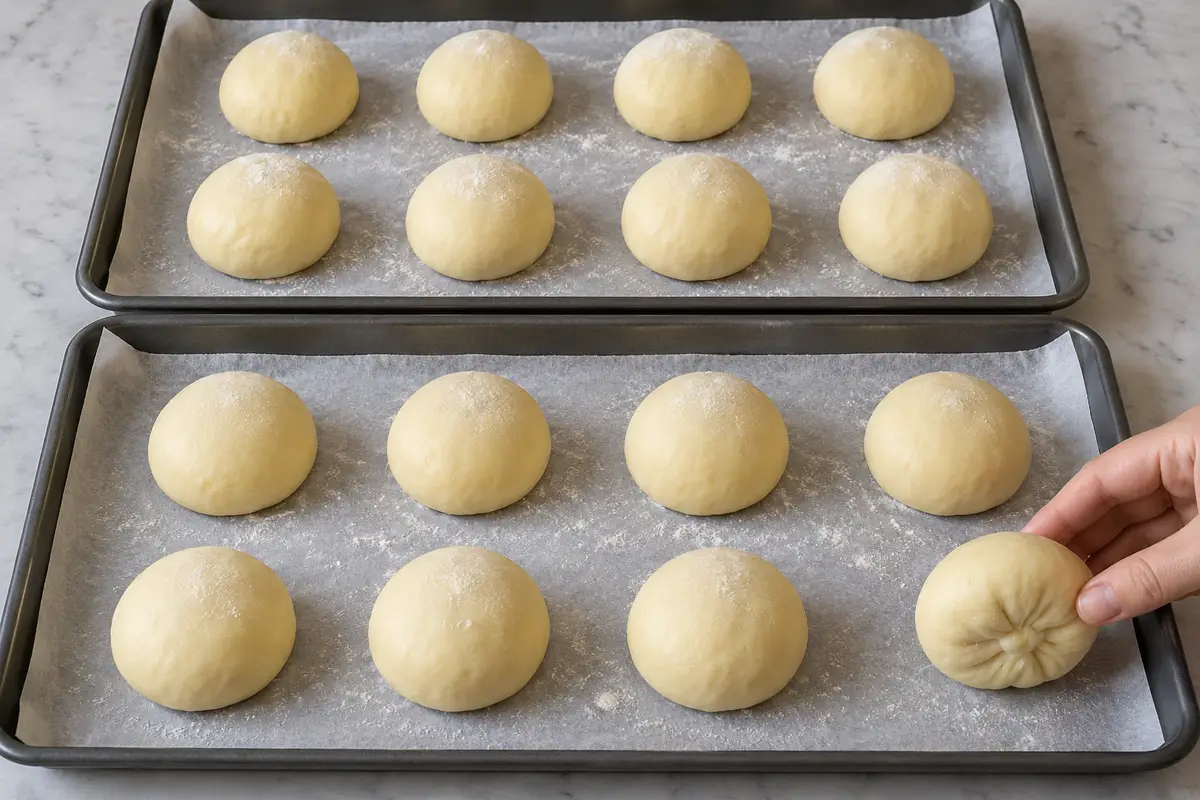
AI-generated Loosely cover the trays and leave for about 30–45 minutes, until the balls are noticeably puffy and a shallow indentation made with a finger springs back slowly. During about the last 10 minutes of rising, pour all 1.5 l oil into the dry pot and heat over medium heat to about 170°C, keeping it between 165–175°C while frying. The oil should be about 3 cm deep, with the pot filled well below halfway. If you are not measuring the oil temperature, a small piece of dough from one portion should float and sizzle gently without immediately darkening; fry it and include it with that same portion. Keep the remaining batches loosely covered in a cooler part of the kitchen, away from the pot.
Carefully lower four doughnuts into the oil, seam side up, without crowding them together. Fry for about 3 minutes, turn, and fry for about another 3–4 minutes, or 6–7 minutes total, until both sides are golden. Lift out, let the oil drip back into the pot, and place on the rack. Let the first doughnut cool briefly, then cut it in half: the center should be porous and springy, without a wet, raw strip of dough. If it is raw, carefully return both halves and the remaining doughnuts to the oil at the lower end of the temperature range and extend the frying time; only fully cooked pieces should go onto the rack with the finished doughnuts. Fry the next three batches of four in the same way, allowing about 1–2 minutes between batches for the oil to return to the proper temperature.
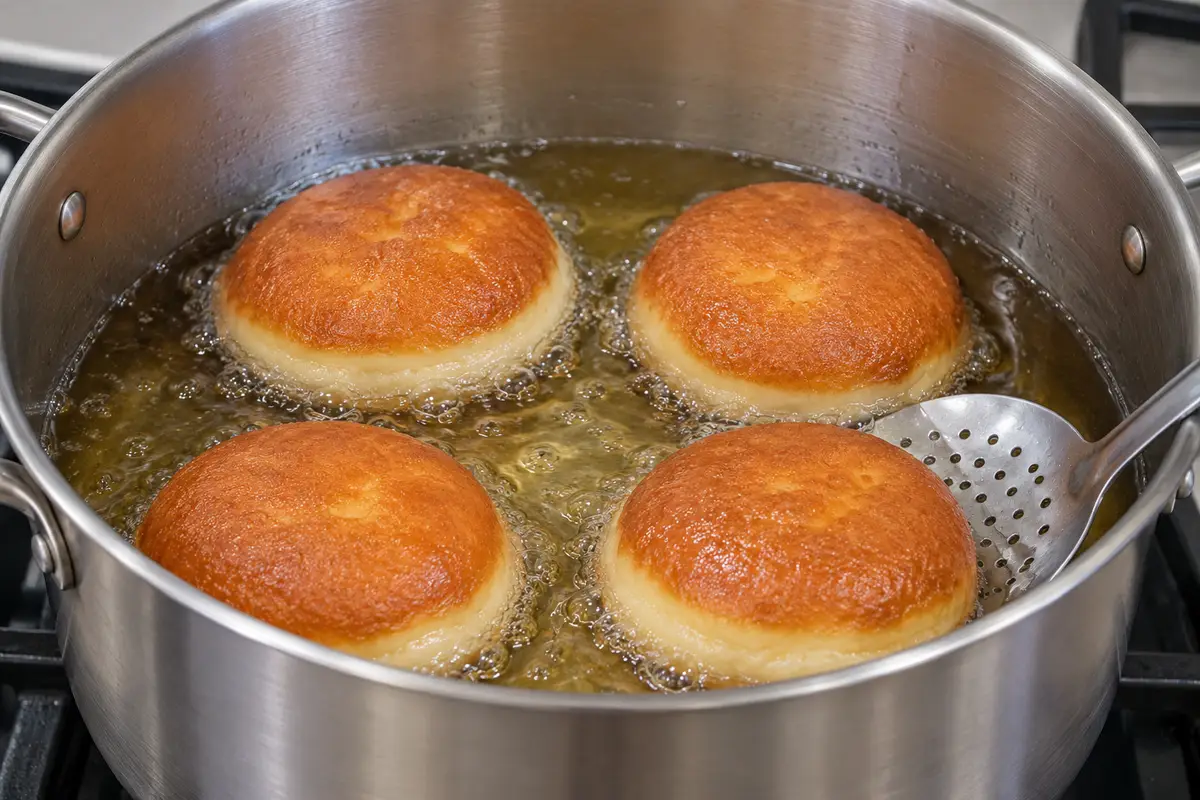
AI-generated Leave the doughnuts on the rack until cool; the last batch usually needs about 30 minutes, while the earlier batches cool during subsequent frying. The centers should no longer be warm before filling. The oil left in the pot is not part of the serving; once completely cool, dispose of it appropriately and do not pour it down the drain.
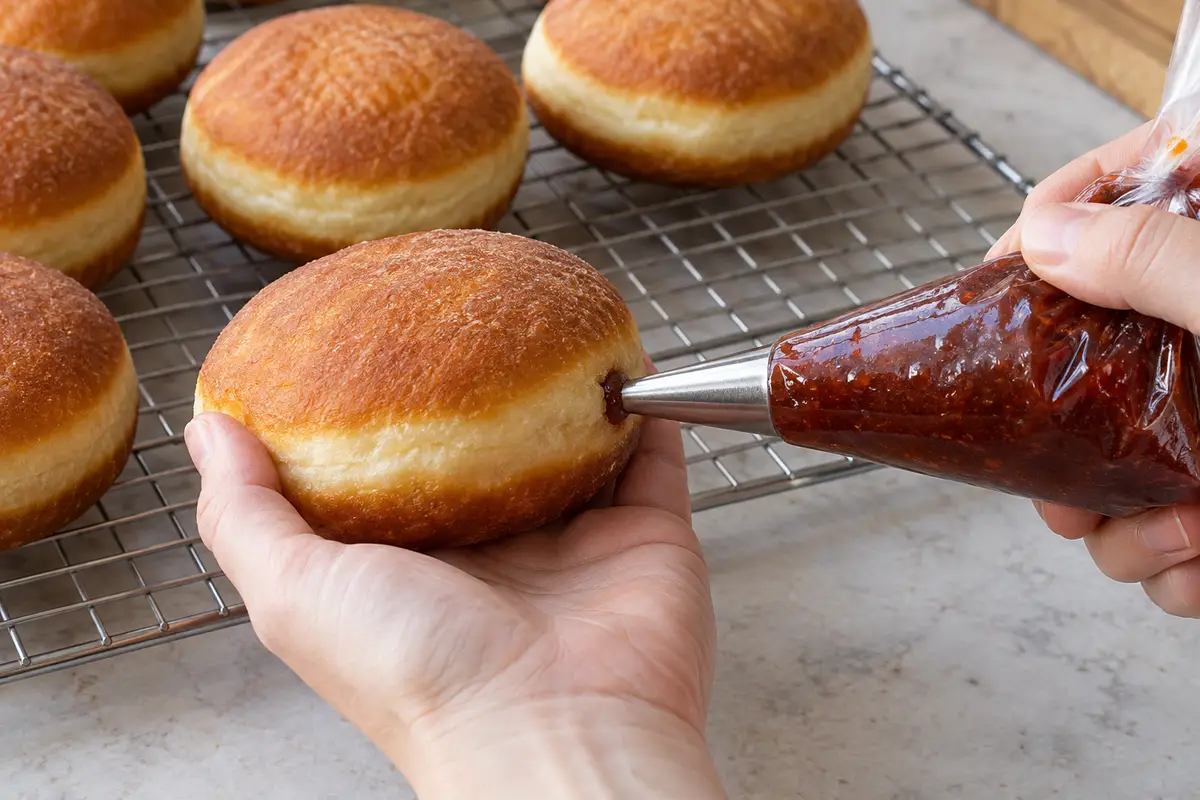
Transfer all 300 g thick rose preserve to the piping bag. Insert the tip into the side of each cooled doughnut and pipe in roughly 18–19 g filling, dividing all of it evenly among 16 portions. Spread the preserve allocated to the test doughnut onto its cut halves. Fill gently so you do not tear the thin crust.
AI-generated Mix all 120 g powdered sugar with 25 ml water to make a smooth, thick but spreadable icing. Coat the doughnuts with a thin layer of icing. Serve 16 portions, one doughnut per person.
Estimated nutrition

Rate this recipe
0 ratings
Comments