
AI-generated
Polish Choux Cake with Vanilla Custard Cream
Log in or create a free account to save recipes.
Source: https://recipheon.com/en/recipes/desserts/polish-choux-cake-with-vanilla-custard-cream
About this recipe
This Polish choux cake sandwiches a tall layer of vanilla custard buttercream between two undulating pastry sheets. The golden pastry is light and full of uneven peaks, while the filling has a distinct vanilla aroma and a smooth, fluffy texture. The sheets bake one after the other in a single rectangular pan and must cool completely before filling. The key to the cream is thoroughly cooked custard and a similar temperature for the custard and softened butter when beating them together. After two hours in the refrigerator, the filling firms up enough to slice. The cake makes 12 servings, and preparation, baking, cooling and chilling take about six hours.
Ingredients
Ingredients for two pastry sheets and cream
375 g unsalted butter (82% fat): 125 g for the choux pastry and 250 g for the cream
190 g wheat flour for baking (Polish type 450): 160 g for the choux pastry and 30 g for the cream
250 ml water for the choux pastry
230–260 g beaten whole eggs without shells, about 5 medium (M) eggs; adjust the amount added to the choux dough according to its consistency
¼ tsp fine salt for the choux pastry
1 l milk (3.2% fat) for the cream
4 egg yolks from medium (M) eggs for the cream
60 g cornstarch for the cream
190 g sugar: 180 g superfine sugar for the cream and 10 g powdered sugar for dusting
1 vanilla bean for the cream
Steps
Set aside 200 ml milk and whisk it with the egg yolks, 30 g flour and all the cornstarch to make a smooth mixture without lumps. Pour the remaining 800 ml milk into a heavy-bottomed saucepan and add 180 g superfine sugar. Split the vanilla bean lengthwise, scrape out the seeds and add both the seeds and the scraped bean to the saucepan. Leave the 250 g butter for the cream in the refrigerator for now.
Heat the milk with the sugar and vanilla over medium heat, stirring, until it boils, then remove and discard the vanilla bean. Stir the yolk mixture, then gradually pour in about half the hot milk, whisking constantly; pour everything back into the saucepan. Cook over medium-low heat, stirring along the bottom and sides, until the custard thickens noticeably and large bubbles start bursting in the center as well. From this point, cook for another 2 minutes, stirring vigorously: the finished custard should be thick and smooth, without a raw flour taste.
Transfer the custard to one or two shallow dishes, keeping the layer no more than 2 cm thick, and cover with plastic wrap touching the surface. Place the dishes in cold water for about 20 minutes, making sure no water gets into the custard, then refrigerate for at least an hour, until completely chilled. Prepare and bake the pastry sheets during this time; leave the custard in the refrigerator until the second sheet is cooling.
Preheat a conventional oven (no fan) to 200°C and prepare one metal pan with an internal base measuring 20 × 30 cm and sides at least 5 cm high. In a saucepan, bring 250 ml water to a boil with 125 g butter and the salt; the butter should melt before the liquid boils. Remove the saucepan from the heat, add all 160 g flour at once and stir vigorously with a spatula. Return to low heat and stir for 2–3 minutes, until the dough forms a ball, pulls away from the sides and leaves a thin film on the bottom. Transfer to a bowl, stir to release the steam and leave for about 10 minutes: before adding the eggs, it should be warm but no longer hot.
Add the beaten eggs to the cooled dough in several batches, mixing thoroughly after each addition with a spatula or a mixer on low speed. First mix in about 200 g, then add the remaining egg a little at a time, checking the consistency; you will usually need 230–260 g in total. The finished dough should be smooth and glossy, hold soft folds in the bowl, and fall slowly from a lifted spatula in a thick ribbon, leaving a V shape hanging from it. Stop adding eggs once you reach this consistency—the dough should not be runny.
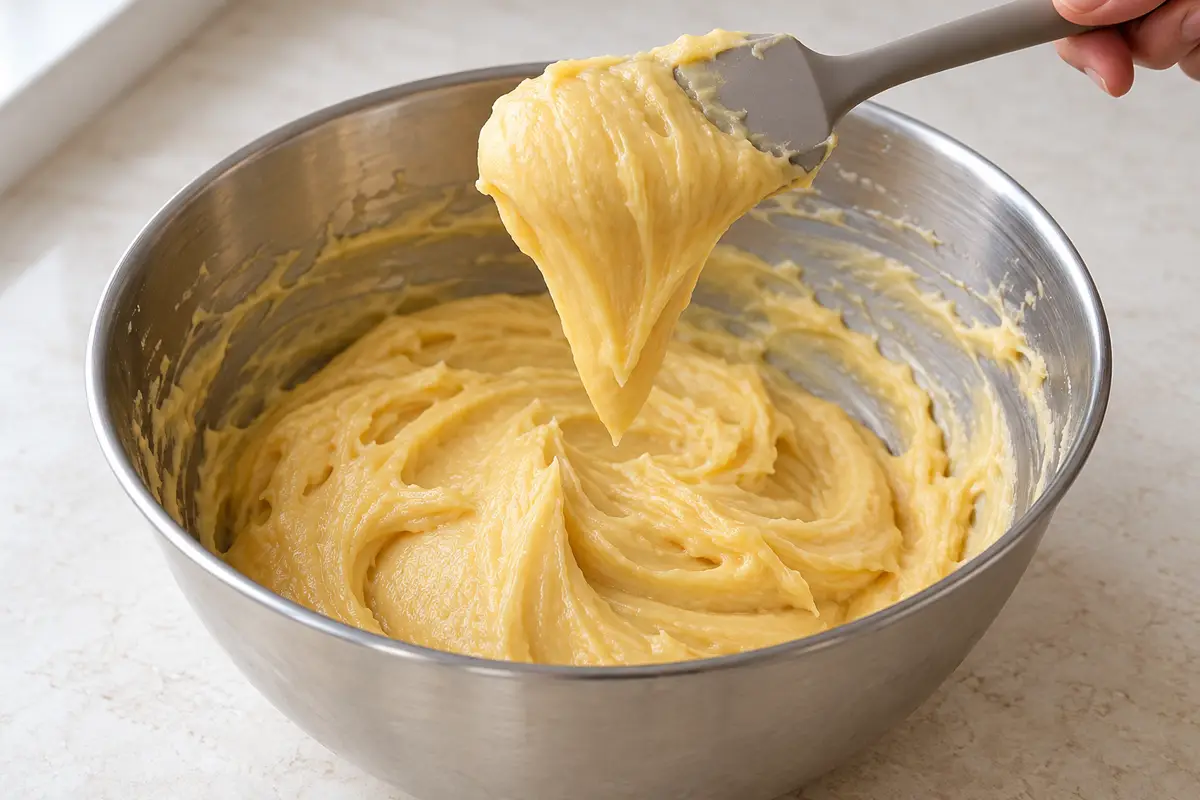
AI-generated Divide the dough into two equal portions; cover one and refrigerate while the first sheet bakes. Line the bottom of the pan with parchment paper, leaving extra paper at the sides so you can lift out the baked sheet. Spread the other half of the dough into the pan, right to the corners, in a layer about 5–7 mm thick. Leave broad, irregular spatula marks on the surface; these will become the characteristic undulations during baking.
Place the pan on the middle rack and bake for 20 minutes at 200°C, then reduce the temperature to 180°C without opening the door and bake for another 15–25 minutes. Do not open the oven during the first 30 minutes; if the sheet is still pale in the hollows after this, keep baking without looking inside. The finished sheet should be well risen and golden even in the cracks, with a dry, firm shell, not soft, pale folds. Only then remove the pan; extend the baking time by a few minutes if needed.
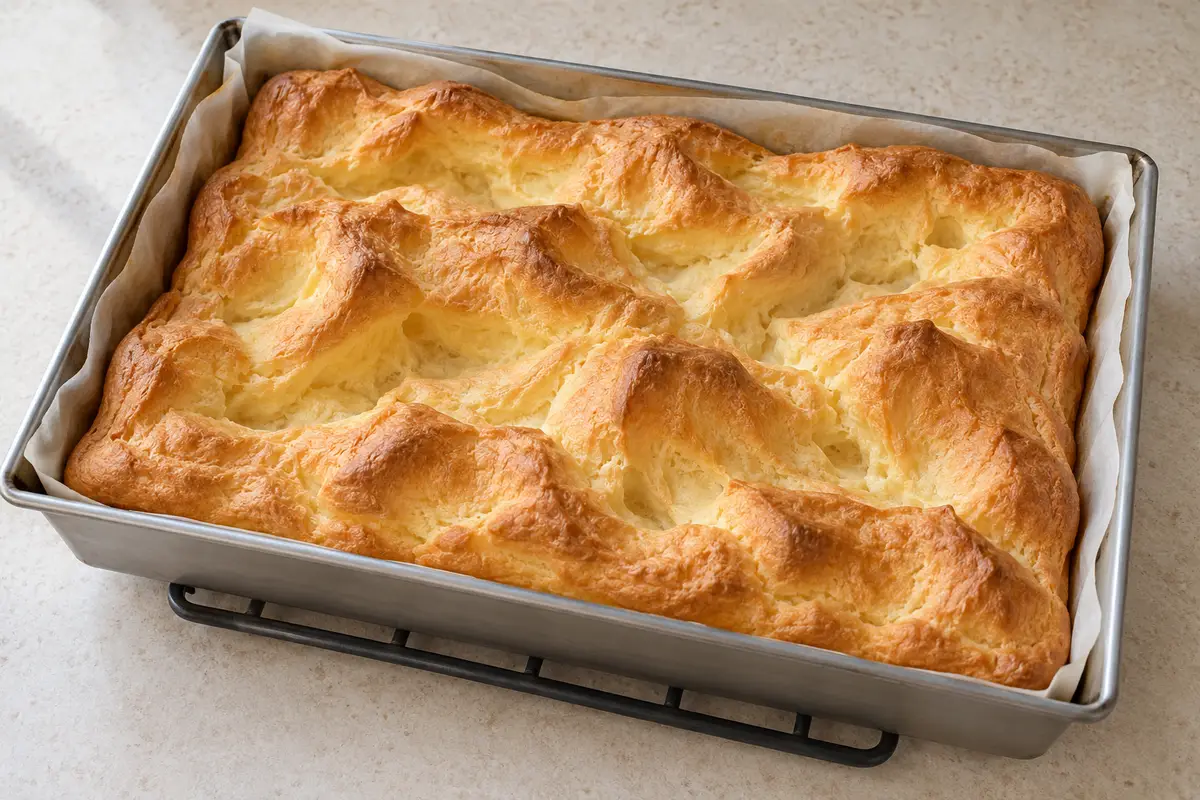
AI-generated Carefully lift the first sheet by the parchment and transfer to a wire rack, then slide the paper out from under it. Set the oven back to 200°C, take the remaining dough out of the refrigerator and wait about 5 minutes, until the pan is no longer hot. Line the bottom with fresh parchment, spread the second half of the dough just as you did the first, and bake for 20 minutes at 200°C followed by 15–25 minutes at 180°C, changing the temperature without opening the door. Follow the same rules for doneness and opening the oven as for the first sheet; transfer the baked second sheet to a rack as well and remove the paper from underneath.
Leave the second sheet on the rack for about an hour, until completely cool; the first has already been cooling since its earlier bake. When the second sheet goes onto the rack, take the custard and 250 g butter for the cream out of the refrigerator so they reach a similar room temperature during that hour. The butter should be soft and easy to spread, but not melted, and the custard must not be warm or ice-cold. If the ingredients still differ noticeably in temperature, wait before beating them together—warm custard will melt the butter, while custard that is too cold can cause the cream to curdle.
Beat the softened butter with a mixer for 3–4 minutes, until paler and fluffy. Briefly whisk the custard until smooth, then add it to the butter 1–2 tbsp at a time, mixing on medium speed until each addition is incorporated. Add all the custard this way; the finished cream should be uniform, fluffy and firm enough to retain the marks left by the beaters.
Line the cold pan with parchment paper extending above the sides and place the less undulating pastry sheet inside. Spread all the cream over it, filling the hollows and leveling the top to form a tall layer about 2–3 cm thick. Cover with the second sheet, undulating side up, and press very lightly so it touches the cream without crushing the peaks.
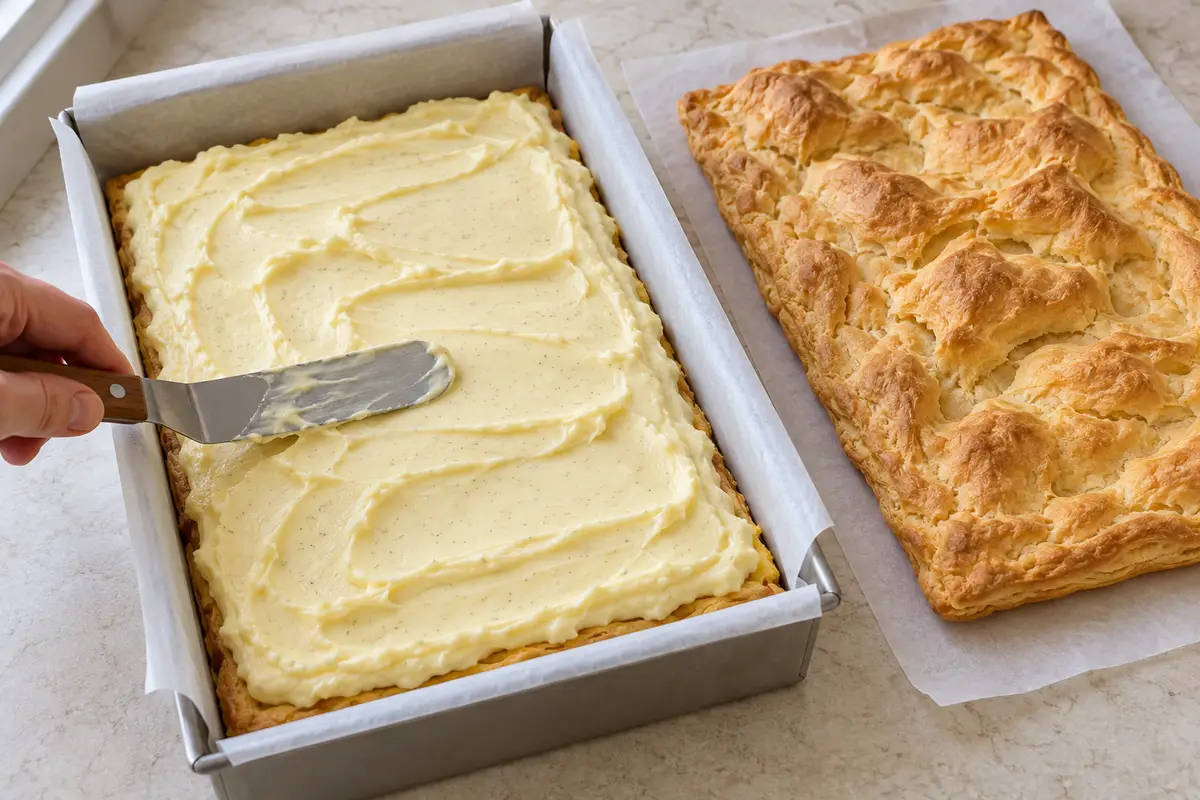
AI-generated Refrigerate the cake for at least 2 hours, until the cream sets and can be sliced evenly. Before serving, lift the cake by the parchment, dust the top with 10 g powdered sugar through a sieve and cut with a serrated knife into 12 pieces, in 3 rows of 4 servings, without pressing hard on the top sheet. Keep the remaining servings refrigerated; the filled pastry gradually softens from contact with the cream.
Estimated nutrition

Rate this recipe
0 ratings
Comments