
AI-generated
Shortcrust Cake with Meringue, Blackcurrant and Custard Cream
Log in or create a free account to save recipes.
Source: https://recipheon.com/en/recipes/desserts/shortcrust-cake-with-meringue-blackcurrant-and-custard-cream
About this recipe
This shortcrust cake with meringue and blackcurrant has two baked sheets joined with custard buttercream. Each sheet has a thin pastry base covered with jam and light meringue, with smooth cream between the sheets. The tartness of the currants balances the sweetness of the meringue layers. Bake the sheets one after the other in one oven, whipping each batch of egg whites just before using it. For the cream, the custard must be completely cooled and at a similar temperature to the softened butter. Once assembled, the cake needs six hours in the refrigerator so the cream can set and the layers can be sliced evenly.
Ingredients
For two sheets and the cream
525 g dry wheat cake flour, type 450 or 500, divided: 500 g for the shortcrust pastry and 25 g for the custard
450 g butter with 82% fat, divided: 250 g cold for the pastry and 200 g for the cream
6 medium eggs, size M, separated and divided into 4 yolks for the pastry, 2 yolks for the custard and 6 whites for two batches of meringue
100 g powdered sugar for the shortcrust pastry
420 g fine white granulated sugar, divided: 120 g for the custard and 150 g for each batch of meringue
50 g dry potato starch, divided: 40 g for the custard and 5 g for each batch of meringue
600 ml milk with 3.2% fat for the custard
10 g vanilla sugar for the custard
300 g regular sweetened blackcurrant jam, divided: 150 g for each sheet
5 g baking powder for the shortcrust pastry
2 g fine salt for the shortcrust pastry
Steps
Prepare two rectangular metal pans with internal dimensions of 25 × 35 cm and sides at least 6 cm high; line both with parchment paper, leaving the edges overhanging. Use one oven and bake one sheet at a time. Separate the eggs: set aside 4 yolks for the pastry and 2 for the custard, and divide the whites between two clean, dry bowls, with 3 whites in each. Cover all the separated egg portions and refrigerate until needed; keep the 200 g butter for the cream in the refrigerator for now as well.
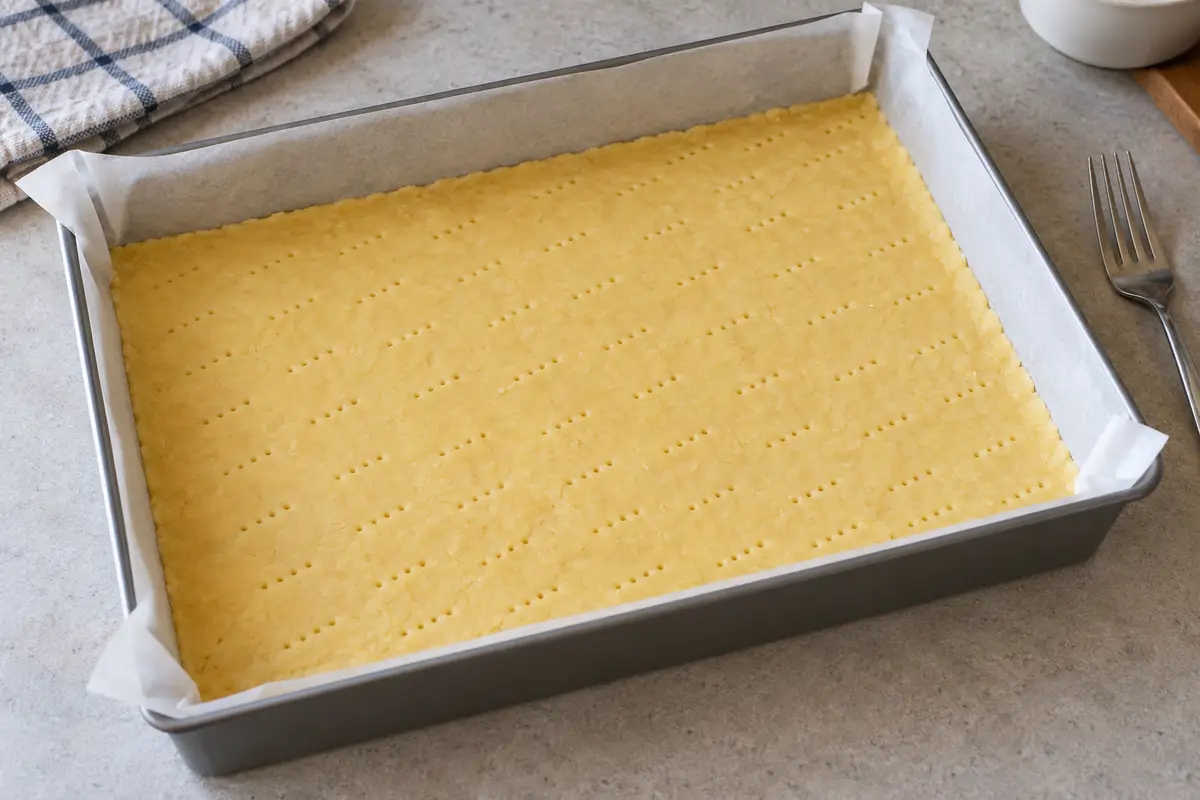
Mix 500 g flour with the powdered sugar, baking powder and salt, then rub in 250 g cold butter, cut into cubes, until the mixture forms fine crumbs. Add 4 yolks and knead briefly, just until combined; do not warm the pastry by kneading it for too long. Divide it into two equal portions and press each into the base of a prepared pan in an even layer about 4–5 mm thick, without raised sides and without any extra flour. Prick the pastry with a fork, cover the pans and refrigerate for 30 minutes; prepare the custard during this time.
AI-generated In a bowl, thoroughly whisk 150 ml cold milk with 2 yolks, 25 g flour and 40 g potato starch until there are no lumps. In a saucepan with a capacity of about 2 l, bring the remaining 450 ml milk, 120 g fine granulated sugar and the vanilla sugar to a boil over medium heat. Pour in the milk-and-yolk mixture in a thin stream, whisking vigorously; once the whole custard starts bubbling, reduce the heat and cook for another 2 minutes, stirring constantly, including along the bottom, until thick and smooth. Transfer to a clean, shallow, heatproof dish with a base of about 20 × 30 cm and spread in a layer no thicker than 2 cm. Press plastic wrap suitable for contact with hot food onto the surface and refrigerate immediately; do not leave the custard on the counter while the sheets bake.
Preheat a conventional oven to 170°C and position a rack in the middle; do not use the fan setting. Take one pan of pastry and one bowl of 3 whites out of the refrigerator, leaving the second pan and the remaining 3 whites covered and refrigerated. Beat the whites with a mixer on medium speed until soft peaks form, then gradually add 150 g fine granulated sugar, a spoonful at a time, beating continuously. After about 8–10 minutes, the mixture should be thick and glossy and hold distinct peaks, and the sugar rubbed between your fingers should not feel grainy; briefly fold in 5 g potato starch at this point.
Spread 150 g blackcurrant jam over the chilled pastry in a thin, even layer, then gently spread the entire first batch of meringue over the jam. Put the pan straight into the preheated oven and bake on the middle rack for 45–50 minutes. The pastry edges should be golden and firm, and the meringue lightly browned, dry on the surface and set, with no wet, liquid mixture beneath any cracks; the inside of the meringue may remain slightly soft. If the top browns too quickly, loosely tent the pan with aluminum foil without touching the meringue and continue baking; if the pastry edges are still pale or soft, bake for another 5–10 minutes. Set the pan on a wire rack and leave the sheet in the pan until completely cool; do not turn off the oven.
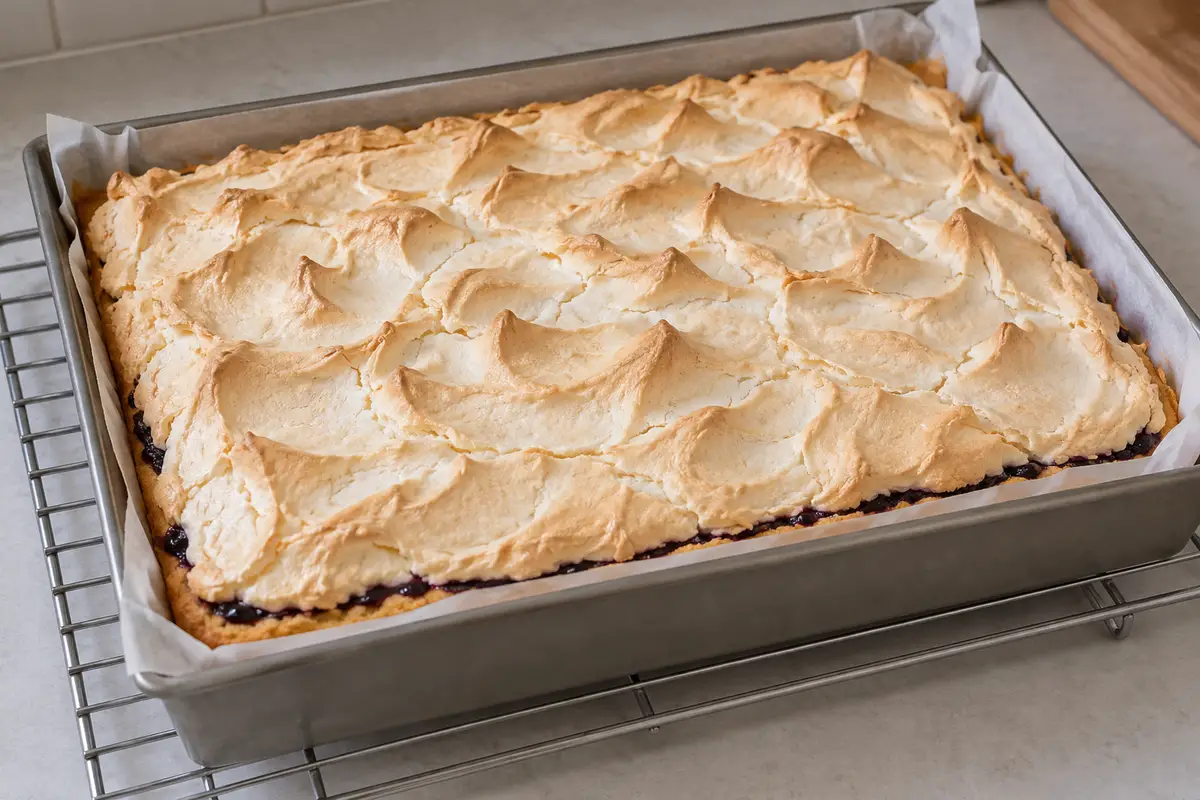
AI-generated Only after taking out the first sheet, remove the second pan and the remaining 3 whites from the refrigerator. In a clean, dry bowl, whip a fresh batch of meringue exactly as in step 4, using the remaining 150 g fine granulated sugar and 5 g starch. Spread the remaining 150 g jam over the second pastry base, cover with all the freshly whipped meringue and bake immediately at 170°C in a conventional oven with no fan for 45–50 minutes, using the same signs of doneness and any additional baking time needed for the first sheet. Do not bake both pans at once and do not hold a finished second batch of meringue while the first sheet bakes.
Set the second pan on a wire rack and turn off the oven; leave both sheets in their pans until completely cool. Allow about 60 minutes for the second sheet, waiting longer if the base of the pan or the pastry is still warm; the first sheet has already been cooling during the second bake. At the start of this cooling time, take the covered custard and the 200 g butter for the cream out of the refrigerator, cut the butter into small cubes and leave them for about 45–60 minutes. Before beating them together, both should be at a similar room temperature: the custard must be completely cooled, and the butter soft enough to yield easily when pressed but not melted. If the sheets take longer to cool, return the custard to the refrigerator rather than leaving it on the counter for several more hours.
Wash and dry the bowl and mixer beaters after working with the raw whites. Beat the 200 g softened butter with a mixer for 3–5 minutes, until pale and fluffy. Briefly stir the cooled custard until uniform, then add it to the butter one full spoonful at a time, beating on medium speed until each addition is incorporated. Add the remaining custard; the finished cream should be smooth, uniform and hold spatula marks. Do not combine the butter with warm or ice-cold custard, and assemble the cake as soon as the cream is ready.
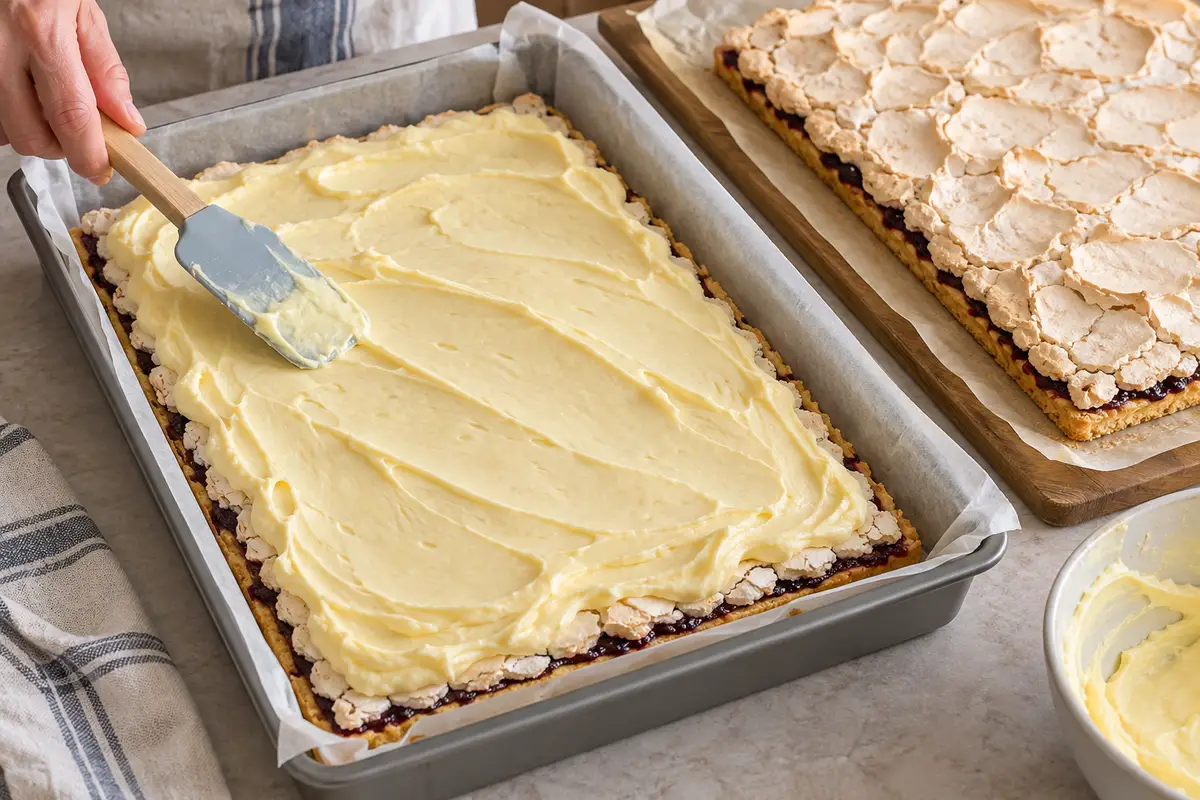
Leave the first completely cooled sheet in its pan on the parchment, with the meringue facing up. Dollop all the cream over it in small portions and gently spread into an even layer without pressing it into the brittle meringue. Lift the second sheet from its pan using the overhanging parchment edges, supporting the base with two wide spatulas, and transfer to a flat board. Carefully slide it onto the cream, pulling out the parchment from underneath as you go. Place this upper sheet with its pastry underside against the cream and its meringue facing up; do not turn it over and do not press it down.
AI-generated Cover the pan with a tall lid or plastic wrap stretched above the cake so the cover does not touch the meringue, and refrigerate immediately. Chill for at least 6 hours: the cream needs to set and the layers need to come together enough to be sliced without squeezing out the filling. This chilling time is needed after assembly and does not replace the earlier cooling of the sheets or chilling of the custard.
Lift the chilled cake out of the pan using the overhanging parchment edges, supporting the base with wide spatulas, and transfer to a flat board. Using a sharp, finely serrated knife, cut into 20 rectangular portions in a 4 × 5 grid, gently cutting through the meringue and wiping the blade between cuts. Serve with the pastry, currant jam, meringue and cream layers visible; return the remaining cake to the refrigerator immediately.
Estimated nutrition

Rate this recipe
0 ratings
Comments