
AI-generated
Stollen — fruit and marzipan yeast loaf
Log in or create a free account to save recipes.
Source: https://recipheon.com/en/recipes/desserts/stollen-fruit-and-marzipan-yeast-loaf
About this recipe
Stollen is a German Christmas loaf made from buttery yeast dough rich in raisins, almonds and candied orange peel. In this home version, a pale marzipan log runs through the center, while an uneven fold creates its distinctive lengthwise ridge. Prepare the raisins the evening before with a little rum and water, keeping all the liquid for the loaf. Add the fruit and almonds only after the first rise so they do not hinder the development of an elastic dough. Brush the hot stollen with butter, dust with confectioners' sugar once completely cooled, then wrap tightly and leave for a day to let the flavors blend. This is one large loaf yielding twenty fairly thin slices. The crumb stays dense and moist, with a distinct almond center; it does not resemble light challah. The rum is baked into the dough, but this does not mean that all the alcohol is removed.
Ingredients
Raisins prepared the evening before
200 g plain dried raisins without seeds and without added sugar
30 g light unsweetened rum with 40% alcohol, weighed
30 g water for soaking the raisins; all the liquid with the rum goes into the dough
Buttery dough and filling
400 g type 550 wheat flour, including 30 g for the yeast sponge
160 g milk with 3.2% fat, weighed
20 g fresh baker's yeast
60 g fine white sugar, divided into 10 g for the yeast sponge and 50 g for the dough
50 g raw egg without shell, about 1 medium egg
150 g softened butter with 82% fat, diced
4 g fine salt
2 g ground cinnamon, about 1 level teaspoon
60 g candied orange peel, finely diced, without excess syrup
50 g finely ground blanched sweet almonds without additives
150 g white marzipan containing about 50% almonds
Butter coating and sugar finish
50 g additional butter with 82% fat for brushing after baking; the unused part is excluded from the servings
60 g confectioners' sugar without added starch for dusting the cooled loaf; loose excess from the paper is not served
Steps
The evening before, put the 200 g raisins in a small bowl, add the weighed 30 g rum and 30 g water and mix thoroughly. Cover and refrigerate for 6–12 hours, stirring once during that time if possible. This is a small amount of liquid, which the fruit will partly absorb. Keep all the liquid left on the bottom too; do not drain the raisins. The next day, take them out of the refrigerator about 30–45 minutes before adding to the dough.
Warm all 160 g milk until pleasantly lukewarm, not hot. In a large bowl, rub the 20 g fresh yeast with 10 g sugar, then add the milk and 30 g flour taken from the prepared 400 g. Mix, cover and leave for about 15–20 minutes, until bubbles and a light foam appear. Keep the remaining 370 g flour and 50 g sugar for the dough. The butter should be soft but not melted.
Add the remaining 370 g flour, 50 g sugar, the weighed 50 g egg, salt and cinnamon to the yeast sponge. Knead with a dough hook on low speed for about 4–5 minutes, until combined. Then gradually add all 150 g softened butter and knead for another 5–7 minutes, until smooth and springy and beginning to pull away from the bowl. Kneading by hand will take about 15–20 minutes. The dough is rich and fairly firm; do not add flour and do not add extra milk.
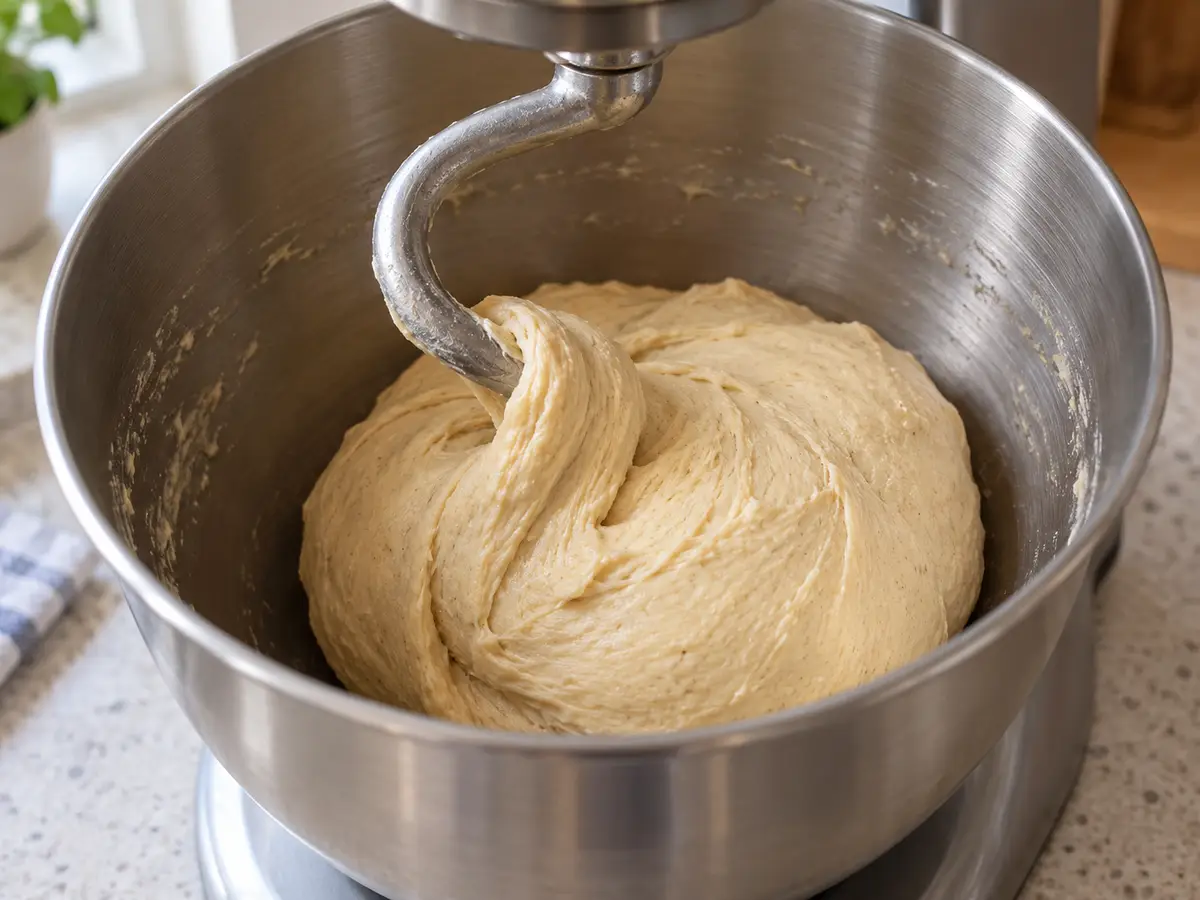
AI-generated Gather all the dough into a ball, leave in the bowl and cover tightly. Leave in a warm, draft-free place for about 60–90 minutes, until noticeably larger and puffier. Heavy buttery dough does not have to double in volume. Do not put the bowl on a hot radiator or in a strongly heated oven, because the butter should remain incorporated in the dough.
Add all the raisins with all the remaining rum and water, the 60 g candied orange peel and 50 g ground almonds to the risen dough. Work them in by hand in a few additions or briefly combine with the hook on its lowest speed, just until evenly distributed. Scrape the dough and liquid from the bowl; do not drain the fruit and do not add flour. If the dough tears at first, fold it a few times and leave covered for 10 minutes to rest.
Between sheets of paper, shape all 150 g marzipan into a log about 26 cm long and about 2–3 cm thick. Flatten the dough on parchment paper into an approximate 34 × 22 cm rectangle about 1.5–2 cm thick; do not dust with flour. Place the log along the longer side, slightly off-center. Fold the short ends of the dough inward by about 2 cm. Fold one long side over the marzipan so its edge ends about 2–3 cm short of the opposite edge. Press the seam along the filling and close the ends. This makes one stollen about 30 cm long with a lengthwise ridge and completely enclosed marzipan.
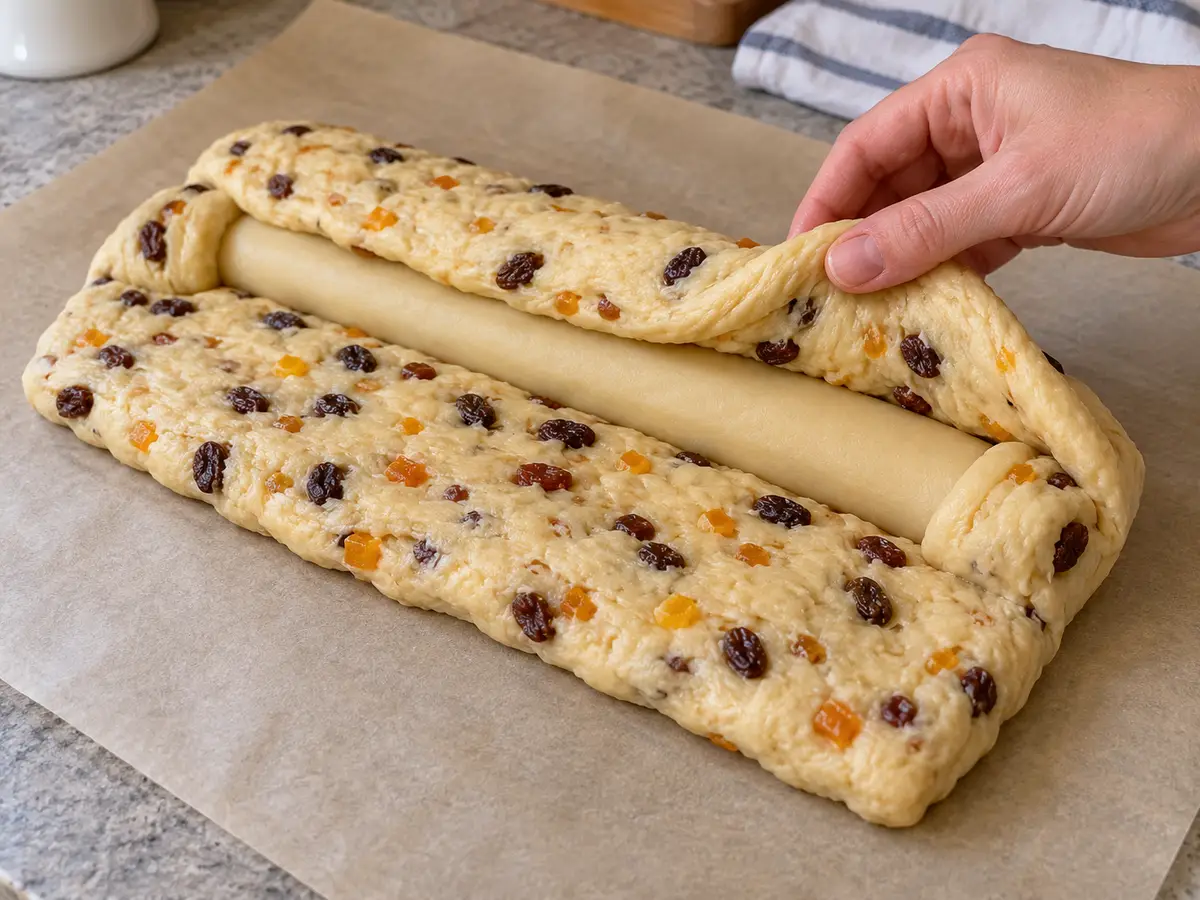
AI-generated Transfer the stollen with its paper to a large baking sheet. Cover loosely and leave for about 45–60 minutes, until slightly puffy. Gently push protruding raisins beneath the surface so they do not scorch. Toward the end of proofing, preheat the oven to 170°C with conventional top and bottom heat. The filling should remain covered with dough; do not slash the ridge and do not brush the top with extra egg.
Place the sheet in the lower third of the preheated oven. Bake at 170°C for about 55–65 minutes, until the top is clearly golden brown and the sides have set. If the top browns earlier, cover loosely with aluminum foil and finish baking. Toward the end, check a section of crumb away from the marzipan log with a skewer: there should be no raw dough on it, although the filling stays moist. Do not shorten baking simply because the crust has colored.
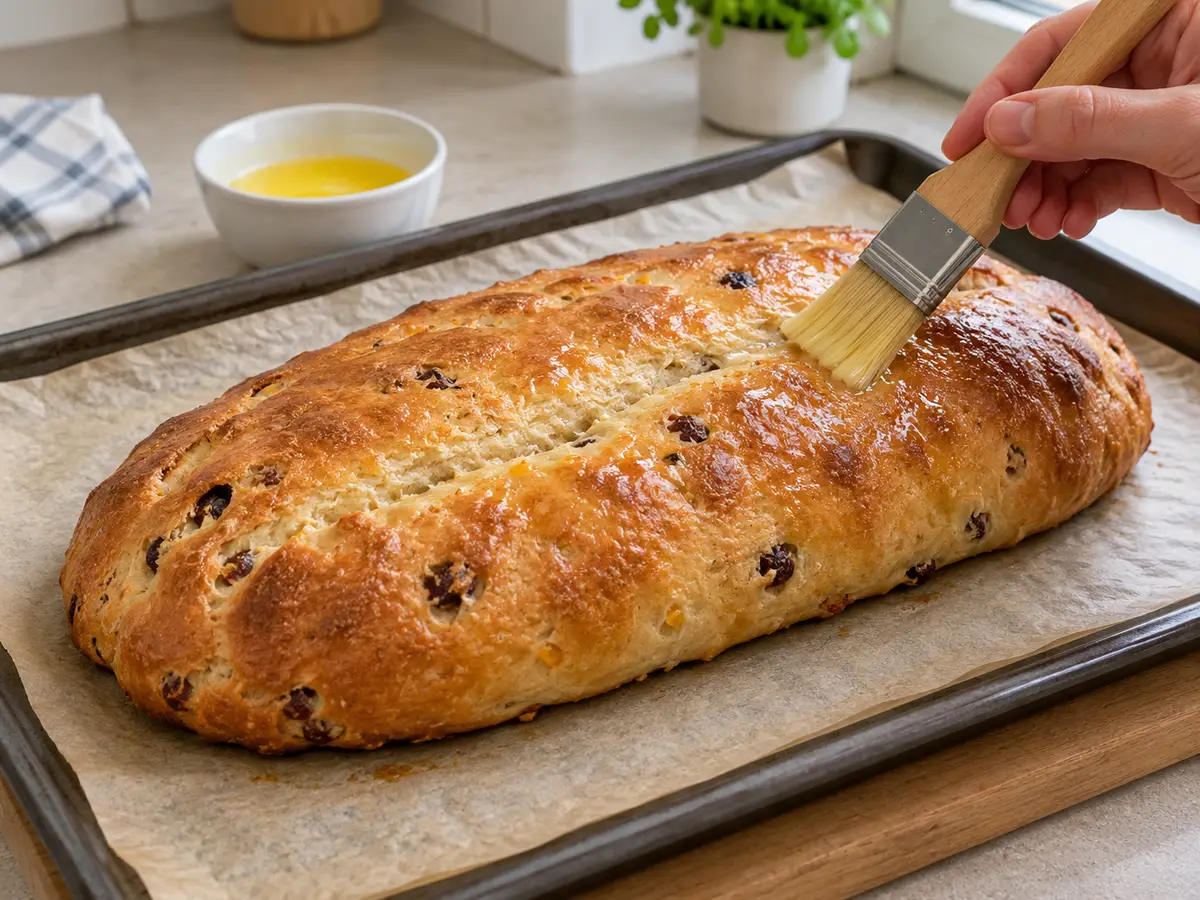
Toward the end of baking, gently melt the additional 50 g butter. Leave the hot loaf on the sheet for about 10 minutes, then carefully brush the top and sides in two or three thin passes. Do not pour leftover butter onto the paper and do not add it to the slices later. Transfer the loaf to a rack, supporting it with wide spatulas, and leave for about 3–4 hours, until completely cooled in the center too. Do not wrap warm stollen and do not slice it.
AI-generated Place the completely cold stollen on clean paper and sift the prepared 60 g confectioners' sugar over it, making a white layer on the top and sides. Do not put the loose excess from the paper into the wrapping and do not serve it with the slices. Wrap the loaf tightly in parchment paper and foil, then leave for about 24 hours in a cool, dry place away from sunlight and heating. Cut into 20 slices. Keep tightly wrapped for up to 7 days in a cool pantry; in a warm home, use the refrigerator and take portions out about 30 minutes before serving. You can freeze individual slices for 2 months. Do not add further dusting or decorations. Baking does not guarantee that all the alcohol from the rum is removed.
Estimated nutrition

Rate this recipe
0 ratings
Comments