
AI-generated
Torta della nonna — shortcrust tart with lemon-vanilla custard and pine nuts
Log in or create a free account to save recipes.
Source: https://recipheon.com/en/recipes/desserts/torta-della-nonna-shortcrust-tart-with-lemon-vanilla-custard-and-pine-nuts
About this recipe
Torta della nonna combines buttery shortcrust pastry, thick milk custard and lightly golden pine nuts. This covered tart encloses its filling between two thin sheets of pastry. Freshly grated yellow lemon zest stays in both the pastry and custard, with real vanilla rounding out its aroma. Cook the custard in a saucepan first, then cool it thoroughly: a cold filling is easier to spread and cover with the pastry lid. Roll the pastry between sheets of parchment without extra flour, using every offcut to reinforce the edge and patch any cracks. The pine nuts go on without being toasted first and turn golden during baking. Once out of the oven, the tart needs time to cool and chill so the custard can set before slicing. Only then dust it with powdered sugar and divide it into twelve servings. An ordinary 24 cm metal pan, saucepan and rolling pin are enough; plan to make the dessert several hours before serving.
Ingredients
All pastry for the base and lid
300 g dry cake flour, wheat type 450, all for the pastry, with no extra flour for rolling
150 g unsalted butter, 82% fat, whole and not clarified, cold and cubed
100 g white sugar for the pastry
50 g raw whole egg without the shell, beaten and weighed, about 1 medium egg
2 g fine salt
All custard and weighed milk for brushing
510 g milk, 3.2% fat, weighed: 500 g for the custard and 10 g for brushing the top
60 g raw egg yolks without whites, weighed, about 3–4 yolks
80 g white sugar for the custard
40 g dry cornstarch, not corn flour or ready-made pudding mix
8 g sugar with real Bourbon vanilla, not just vanillin
4 g freshly grated yellow zest from a washed lemon, without the white pith: 2 g for the pastry and 2 g for the custard
Pine nuts and a light dusting
30 g shelled pine nuts, plain dried, not toasted or salted, all for the top
12 g pure powdered sugar without starch for a light dusting; residue in the sieve and on the paper is not served
Steps
Weigh the egg without its shell and, separately, the yolks without whites. Grate only the yellow layer from the washed lemon: you need 4 g, with 2 g each for the pastry and custard. From the full 510 g milk, reserve 10 g for brushing the top and refrigerate it. Divide the remaining 500 g into 50 g cold milk and 450 g for heating.
Rub all 300 g flour with 150 g cold butter between your fingertips until finely crumbly. Add 100 g sugar, 2 g salt and 2 g grated zest. Pour in all 50 g beaten egg and quickly bring everything together into a smooth dough. Do not knead for long and do not add water; gather up all the crumbs from the bowl as well.
Divide all the dough, about 604 g, into 360 g for the base and sides and 244 g for the lid. Flatten each portion, wrap separately and refrigerate for about 45 minutes. Meanwhile, cook and chill the custard. The pastry should be firm and cool, but before rolling it should bend slightly without crumbling.
Immediately mix all 60 g yolks with the 80 g custard sugar in a bowl. Add 40 g cornstarch and the reserved 50 g cold milk. Whisk until smooth without dry lumps, thoroughly incorporating everything from the bottom. Do not leave the yolks sitting under the sugar while heating the milk.
Heat 450 g milk with 8 g vanilla sugar and the remaining 2 g zest until it starts steaming. Gradually pour into the yolks while whisking constantly, then return everything to the saucepan. Cook over low or medium heat, whisking across the bottom. Once the custard thickens considerably and the first bubbles appear, stir for about another minute and remove from the heat.
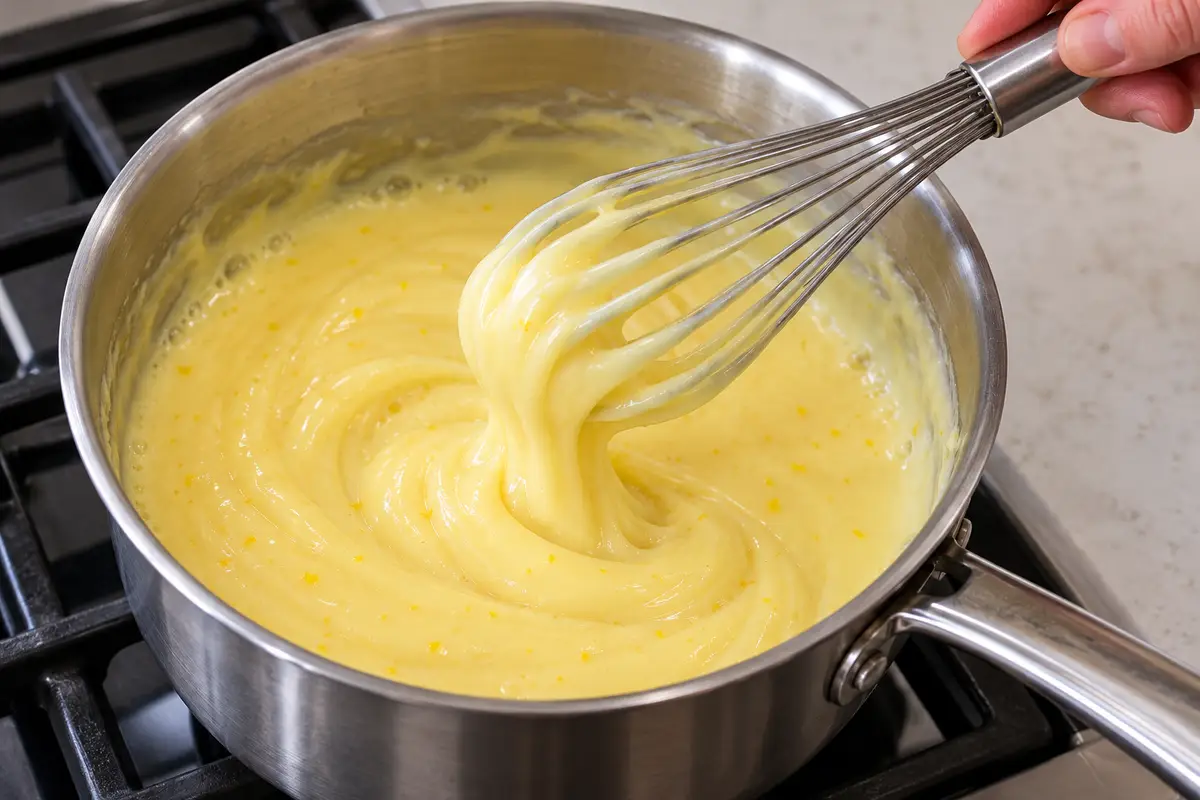
AI-generated Scrape all the custard from the saucepan into a wide shallow dish. Cover its surface directly with food wrap so no skin forms. After about 10 minutes of initial cooling, refrigerate for about 35 minutes or longer, until cool and thick. This overlaps with chilling the pastry; do not fill it with warm custard.
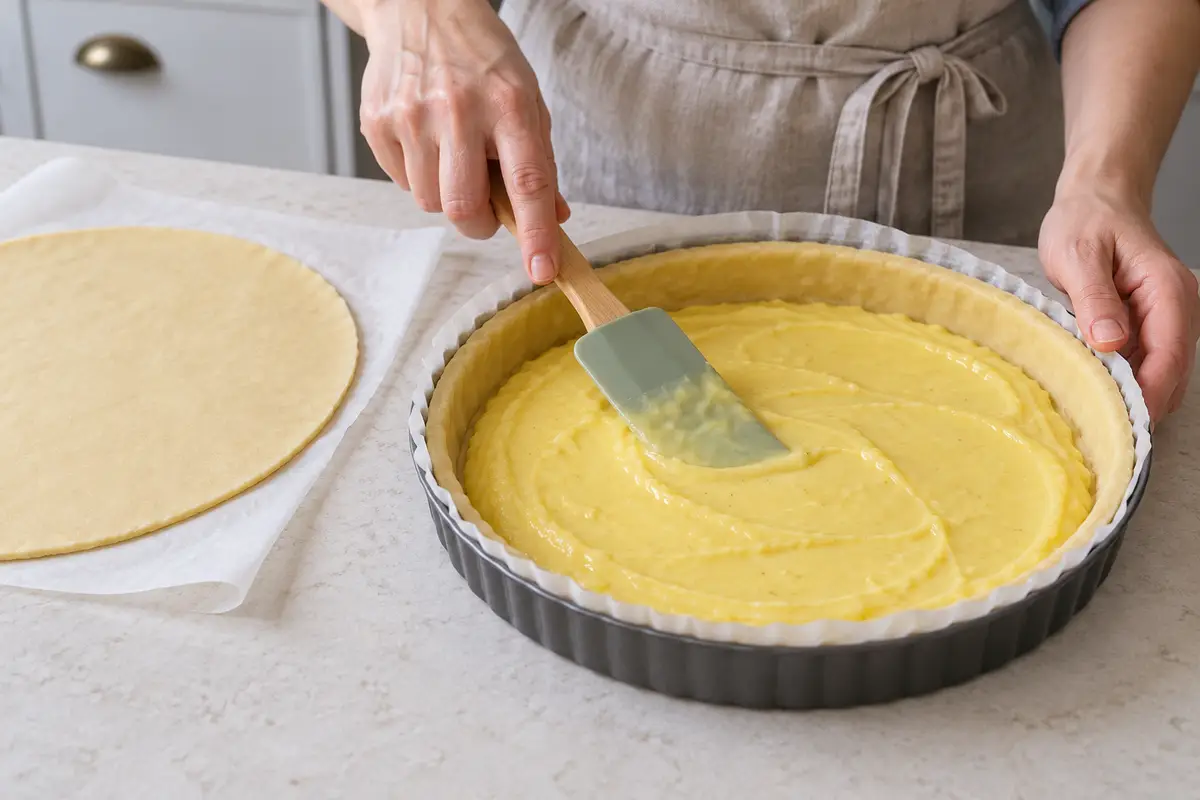
Line a metal pan with an internal diameter of 24 cm and a height of at least 3 cm with parchment, including the sides. Roll the larger pastry portion between sheets of parchment into a circle about 32 cm across and about 4 mm thick. Line the base and sides to a height of 3 cm. Press all offcuts into the edge or cracks and lightly prick the base with a fork.
Briefly whisk the cool custard, transfer it all to the base and level it. Roll the smaller pastry portion between parchment into a circle about 25 cm across, also about 4 mm thick. Remove one sheet, transfer the pastry over the custard and carefully peel away the other sheet. If it cracks, press the gap together with your fingers, using every piece of pastry.
AI-generated Join the lid to the edge, folding any excess inward instead of discarding it. Prick the top with a fork in several places to let steam escape. Brush with all 10 g reserved milk, scatter over 30 g pine nuts and press them down lightly. Refrigerate the tart for 15 minutes; meanwhile, preheat the oven to 175°C, conventional heat.
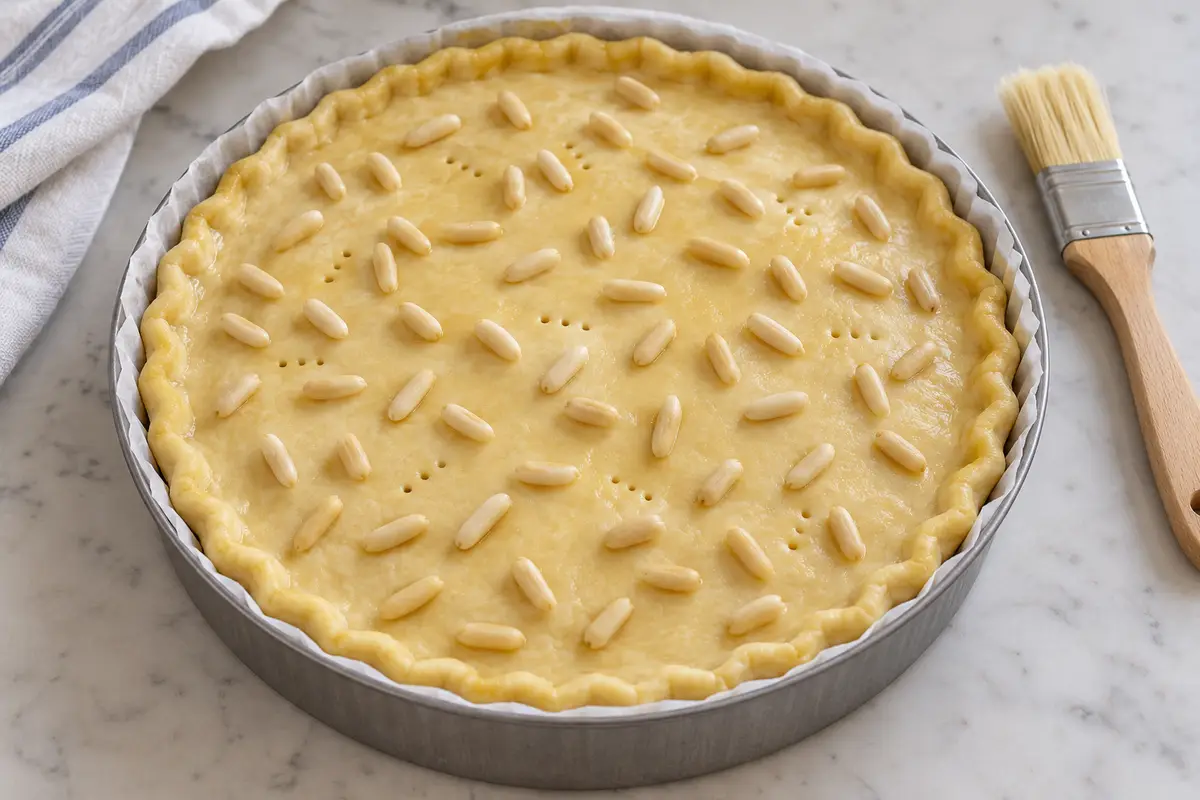
AI-generated Bake on the rack below the middle for about 50–60 minutes. The top and edge should become distinctly golden and the pine nuts lightly browned. If they darken too quickly, cover the tart loosely with aluminum foil and finish baking. Do not remove pale pastry just because the nuts have browned; the custard has already been cooked.
Set the pan on a rack and cool for about 2 hours, until the tart is no longer warm. Then refrigerate for at least 2 hours so the custard sets before slicing. Do not leave it on the counter overnight. Remove it from the pan only when completely chilled, supporting the base to avoid damaging the delicate pastry edge.
Lightly sift powdered sugar over the cold tart; residue from the sieve and paper does not go into the servings. Cut the whole tart into 12 slices, keeping all the edge, custard and pine nuts. A serving weighs approximately 100 g. Serve chilled and keep the remaining tart covered in the refrigerator for up to 2 days.
Estimated nutrition

Rate this recipe
0 ratings
Comments