
AI-generated
Xuixo – flaky fried roll with pastry cream
Log in or create a free account to save recipes.
Source: https://recipheon.com/en/recipes/desserts/xuixo-flaky-fried-roll-with-pastry-cream
About this recipe
Xuixo is a Catalan pastry from Girona: an elongated fried roll coated in fine sugar crystals, with thick pastry cream inside. Its distinctive shell comes from yeast dough that encloses cool butter and is then rolled and folded several times. In this home version, three half-folds with refrigerator breaks help preserve the delicate layers. The filling combines milk, egg yolks and cornstarch with a little lemon zest. The cream must be cold and the ends tightly sealed before the final rise and frying. The whole batch makes twelve xuixos, one per serving. Allow a relaxed day for chilling and rising; the cream cools while you prepare the dough.
Ingredients
For 12 servings, 12 pastries
170 g strong wheat bread flour for the starter
180 g white wheat flour, Polish type 450 or 500, divided into 170 g for the dough and 10 g for dusting
200 g water, divided into 100 g for the starter and 100 g for the dough
15 g fresh baker’s yeast
132 g white sugar, divided into 12 g for the dough, 60 g for the cream and 60 g for coating
4 g salt
10 g fresh lemon juice without seeds
50 g unsalted butter, 82% fat, cool and pliable enough to roll, for enclosing in the dough
350 g milk, 3.2% fat, pasteurized or UHT, weighed on a scale, for the cream
60 g raw egg yolks without whites or shells, about 3 large yolks, for the cream
28 g cornstarch for the cream
2 g finely grated yellow zest from a washed lemon, without white pith, for the cream
905 g sunflower oil, divided into 900 g for frying and 5 g for greasing the work surface, rolling pin and hands; most frying oil will remain in the pan
Steps
Mix the yolks with 60 g sugar and the cornstarch until smooth. Heat the milk with the lemon zest until almost boiling. Gradually whisk it into the yolks, then return everything to the saucepan. Cook over moderate heat, constantly stirring across the bottom, until the cream thickens and begins to bubble gently; stir for about 30–60 seconds more. Transfer all the cream to a shallow dish and cover its surface with food wrap. Cool briefly, then refrigerate until completely cold before filling. Do not strain out the fine zest. Measuring and mixing take about 10 minutes; heating and cooking take about 10 minutes. The cream chills while you continue working.
Dissolve the yeast in 100 g lukewarm, not hot, water. Combine with all the bread flour and knead briefly into a firm ball. Place in a bowl and cover the top with 170 g white flour, keeping the remaining 10 g for dusting. Cover the bowl and leave for about 1 hour, until the starter has visibly risen and the flour layer has cracked. Preparation takes about 15 minutes. Rising may take longer in a cool kitchen.
Add the remaining 100 g water, 12 g sugar, salt and lemon juice to the starter and its covering flour. Knead for about 10–15 minutes until the dough is elastic and as smooth as possible. Do not add the butter yet. Flatten the dough, cover and refrigerate for 30 minutes. This stage takes about 15 minutes of work plus half an hour of chilling.
Between sheets of baking parchment, flatten all 50 g butter into a square about 10 cm wide. The butter should stay cool but bend under pressure from the rolling pin. Roll the chilled dough into a cross with a slightly thicker center and four arms. Place the butter in the middle, fold the arms over it and pinch the joins to enclose the butter. Dust sparingly using only the reserved 10 g flour.
Gently roll the packet into a rectangle about 40 × 20 cm and fold it in half. Cover and refrigerate for 20 minutes. Turn the dough through 90°, roll it into a similar rectangle, fold in half and chill again for 20 minutes. Repeat the rolling and folding once more, then chill for another 20 minutes: make 3 half-folds and take 3 refrigerator breaks in total. If the butter softens or starts breaking through the dough, stop rolling and extend the chilling. Enclosing the butter and the three rounds of rolling take about 30 minutes of work, besides the three breaks of 20 minutes.
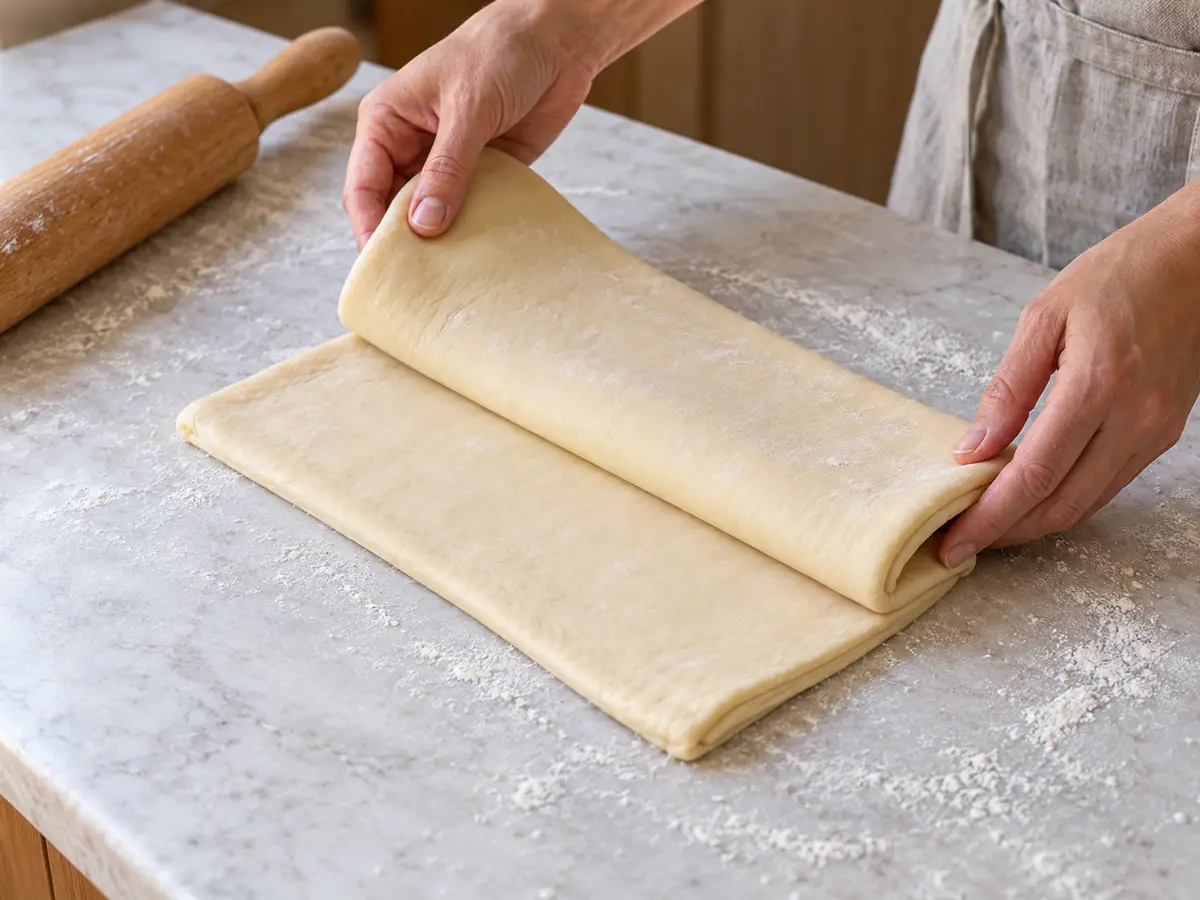
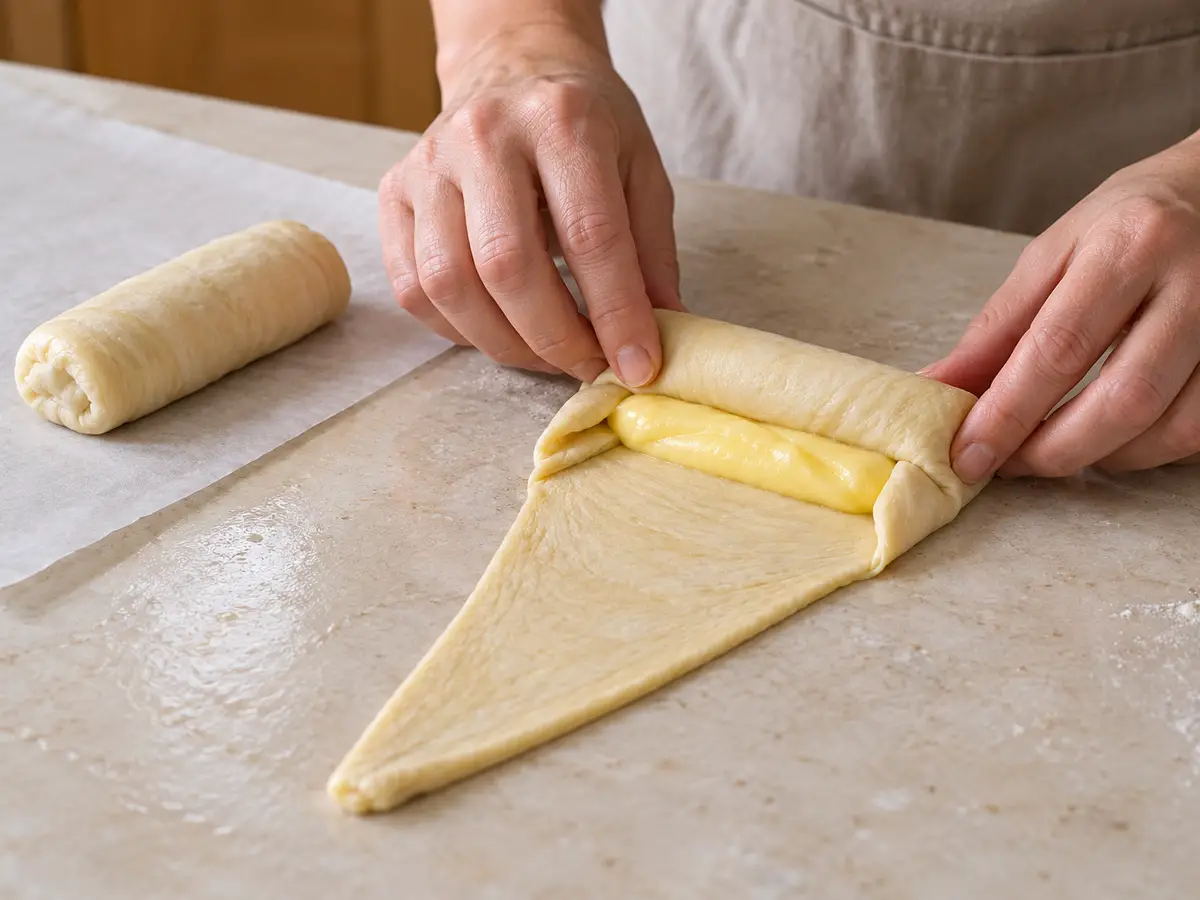
AI-generated After the last chill, roll the dough into a rectangle about 24 × 30 cm, about 8 mm thick. Divide into 12 roughly square pieces, about 8 × 7.5 cm. Use all trimmings in these portions. Use the measured 5 g oil to lightly grease the work surface, rolling pin and hands. Position each piece as a diamond and gently roll it diagonally to about 22–25 cm long and about 3–4 mm thick. Briefly stir the cold cream and divide it all among the 12 pieces, usually about 40 g each. Place it in a strip, fold the side ends inward and roll into a cylinder about 10–12 cm long. Pinch the ends firmly closed and place seam down on baking parchment. Do not set aside any surplus cream outside this batch. Shaping takes about 20 minutes.
AI-generated Cover the pastries loosely and leave for about 60–90 minutes in a moderately warm place until visibly puffy, almost doubled in volume and slightly wobbly when you move their supporting sheet. Do not place them on a hot radiator or in a strongly heated oven, so the butter between the layers does not melt. Allow 90 minutes in the schedule; in a cooler room, also follow the dough’s appearance.
Pour 900 g oil into a deep saucepan about 20 cm wide, forming a layer about 3 cm deep. Heat for about 5 minutes over moderate heat. Lower the first pastry on a slotted spoon: steady small bubbles should surround it, without instant browning. Fry 2 at a time, turning gently, usually about 4–5 minutes per batch, until evenly golden and cooked between the layers. Lower the heat if they darken fast. Drain over the pan, then on paper towels. Coat while warm in the reserved 60 g sugar. Allow about 35 minutes for six batches and short pauses, besides 5 minutes to heat the oil. Cool for about 30 minutes; extend this if the cream is still warm. Serve one pastry each. Allow about 6 hours and 50 minutes total: 90 minutes of work, 50 minutes of heating and frying, and 4 hours and 30 minutes of separate chilling and rising. The cream chills while you prepare the dough.

AI-generated
Estimated nutrition

Rate this recipe
0 ratings
Comments