
AI-generated
Homemade Leberkäse — finely textured meatloaf with a browned crust
Log in or create a free account to save recipes.
Source: https://recipheon.com/en/recipes/main-dishes/homemade-leberkase-finely-textured-meatloaf-with-a-browned-crust
About this recipe
Homemade Leberkäse is a compact, gently springy loaf made from very finely processed meat, pork backfat and ice. Beneath its browned crust is an even, gray-beige interior: ordinary salt does not produce the pink color associated with cured meat. This Bavarian-style version contains no liver or cheese. Pork and beef form the base, fresh backfat keeps it juicy, and a little starch helps bind the mixture. Thorough chilling and a powerful food processor approved for crushed ice are essential. Three small batches are easier to process into a smooth, sticky paste without overheating. Pack it into a parchment-lined pan, bake gently and slice after a short rest. Divide all the juices and fat left in the pan among the six servings. This recipe is for the Leberkäse itself, using all the listed ingredients.
Ingredients
For one loaf and six servings
400 g raw ground pork, about 9% fat, with no added salt or water
250 g raw ground beef, about 13% fat, with no added salt or water
150 g fresh raw pork backfat without skin, unsalted and unsmoked
180 g finely crushed ice made from drinking water
30 g dry potato starch
16 g ordinary table salt, not curing salt
1 g ground black pepper
0.5 g ground nutmeg
1 g dried marjoram
1 g raw peeled garlic
Steps
Use a powerful blade food processor whose manual permits crushed ice, and a loaf pan with internal dimensions of about 20 × 10 × 7 cm and a capacity of at least 1.4 l. Cut the backfat into 4–5 mm dice and mince the garlic very finely. Weigh both ground meats and the remaining ingredients. Do not replace fresh backfat with lard or bacon.
Spread the meat and backfat in a thin layer in a covered container and chill for about 30 minutes; you may put them in the freezer for the last 10–15 minutes. They should be very cold and firm, but not frozen solid. Chill the processor bowl and blade as directed in the appliance manual. Keep the ice in the freezer until processing.
Mix the starch, salt, pepper, nutmeg and marjoram. Add to the cold meats, backfat and garlic and combine briefly. Divide into three roughly equal portions; keep two refrigerated while working with the first. Divide the crushed ice into three 60 g portions. Start preheating the oven to 175°C, conventional heat, so it is ready once the paste is processed and packed into the pan.
Put the first portion of meat mixture and 60 g crushed ice in the processor. Process in short bursts, stopping and switching off the machine before scraping down the sides. The paste should become smooth, even and sticky, with no distinct pieces of backfat. Transfer to a cold bowl and repeat with the remaining two portions. If the paste or machine warms up, stop and chill the paste for 5–10 minutes instead of processing for long periods without a break.
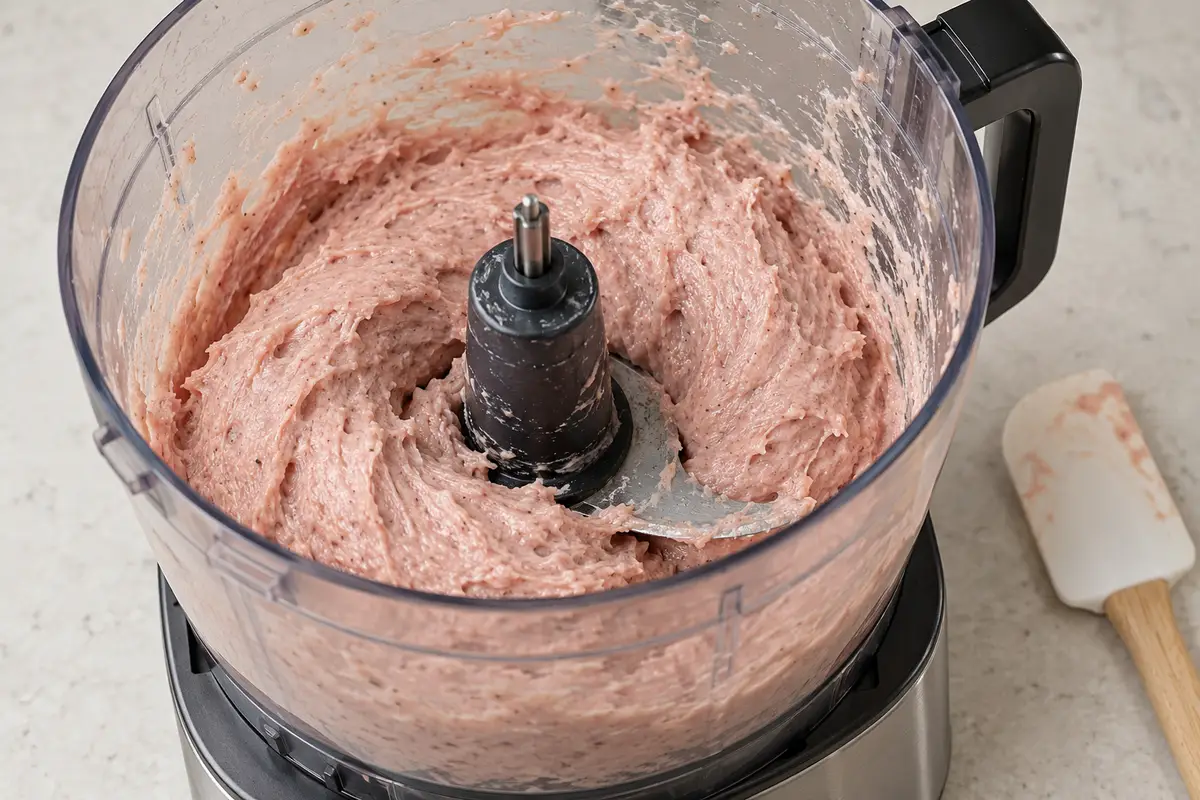
AI-generated Scrape all the paste from the blade and sides of the processor into the bowl, taking care around the blade. Stir with a spatula for 1–2 minutes until the three batches form one even, sticky mixture. Cover and refrigerate until ready to fill the pan. Line the pan with parchment, leaving handles at the sides; do not grease it with any extra fat.
Transfer all the paste to the pan in several additions, pressing each firmly into the bottom and corners with a spatula to reduce air pockets. Smooth the top; the paste does not need to reach the top of the pan. Use the tip of a spatula or a knife to mark a shallow grid without cutting deeply into the loaf. Scrape any paste left in the bowl or on the utensils into the pan.
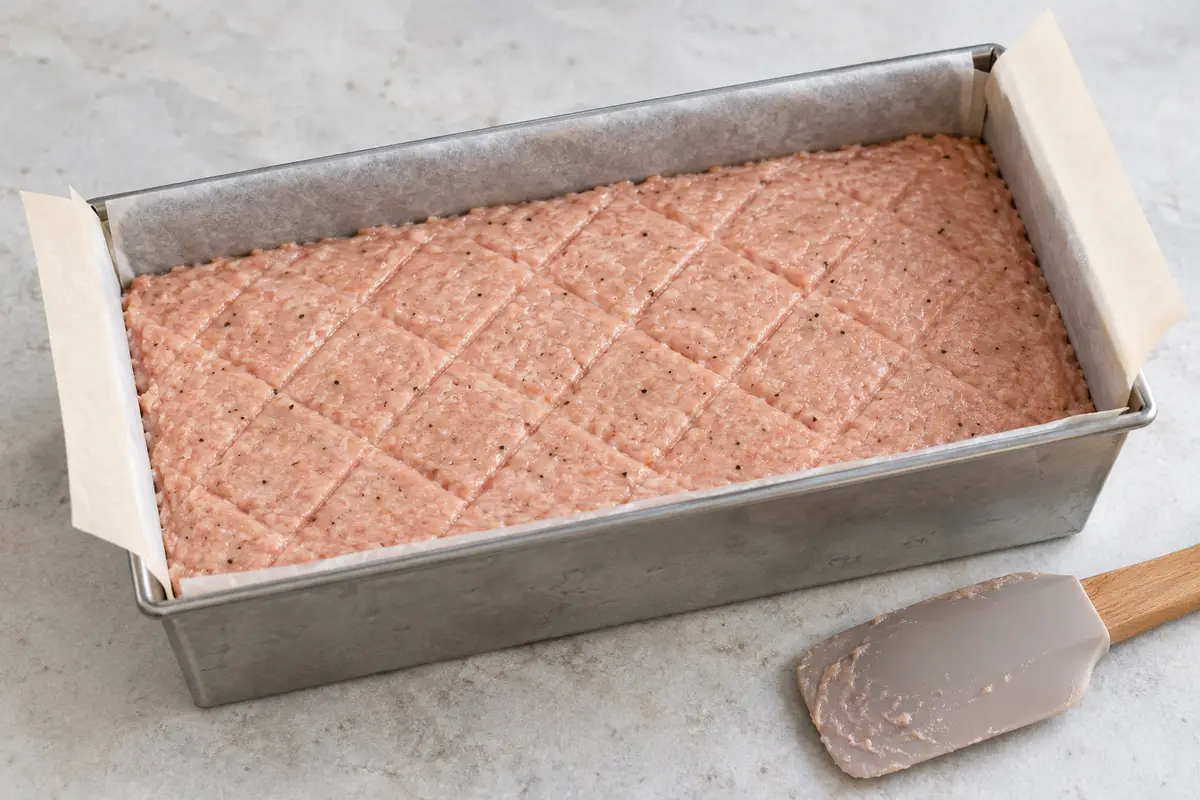
AI-generated Place the pan on the middle rack of the preheated oven and bake for 60–70 minutes at 175°C. The top should be distinctly browned and the loaf firm and springy, including at the center. If the top darkens too much before then, cover loosely with foil and continue baking. This time range is for the stated pan size; do not shorten it just because the crust has already browned.
Remove the pan and let the loaf rest for 15 minutes to firm up before slicing. Keep the juices and rendered fat in the pan. Carefully lift the loaf out by the parchment, transfer to a board and cut into six roughly equal servings. Made with ordinary salt, this version has a fine, cohesive gray-beige interior; its color alone is no reason to shorten baking.
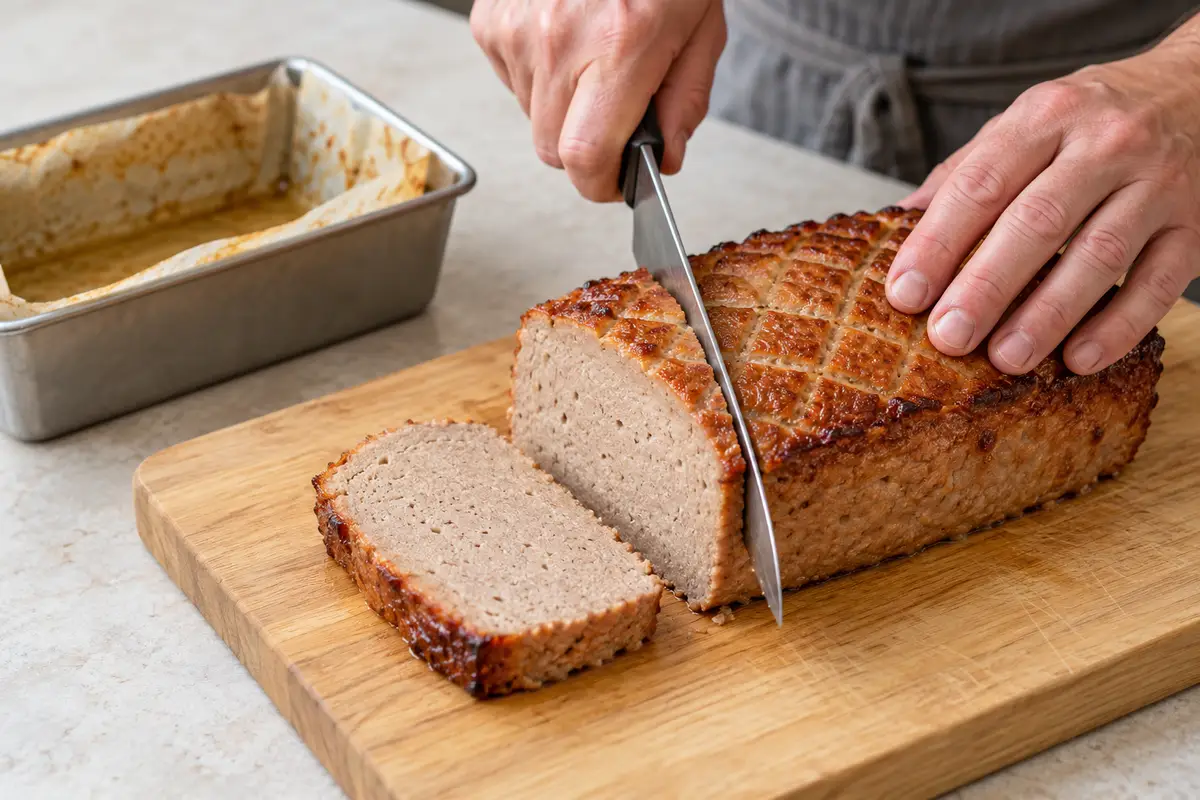
AI-generated Serve warm, dividing all the juices and fat from the pan among the servings. If saving some for later, transfer it with its share of juices to a shallow container, let it cool briefly and refrigerate without leaving it on the counter for long. Eat the next day; reheat portions thoroughly until hot at the center as well.
Estimated nutrition

Rate this recipe
0 ratings
Comments