
AI-generated
Bitterballen
Log in or create a free account to save recipes.
Source: https://recipheon.com/en/recipes/snacks/bitterballen
About this recipe
Bitterballen are small Dutch snacks with a crisp, golden coating and a soft beef filling. The filling combines slowly braised, finely shredded beef with a very thick ragout made from a butter-and-flour roux and the beef cooking broth. Once chilled, the mixture becomes firm enough to shape into balls; after frying, it is soft and creamy again. Nutmeg, parsley, and a little mustard complement the beef flavor. The recipe makes 32 small balls, or 8 servings of four, served with mustard. Allow about 9 hours and 35 minutes, including braising the beef, at least 4 hours of chilling the filling, and 30 minutes for the coating to rest in the refrigerator. Precisely measured broth, a completely cold filling, and a sealed double coating help keep the filling inside the balls. Gelatin is not needed.
Ingredients
Beef and broth
600 g boneless beef chuck, weighed after removing tough membranes and excess fat
1000 ml water for braising the beef
up to 300 ml additional hot water, only if needed during braising or to top up the broth
100 g peeled onion, cut into large pieces; for the broth only
80 g peeled carrot, cut into large pieces; for the broth only
1 bay leaf
2 sprigs fresh thyme
salt and freshly ground black pepper, to taste
Thick ragout
500 ml beef cooking broth, measured after straining; made with the ingredients above
80 g butter
100 g all-purpose flour for the roux
8 g fresh parsley, finely chopped
0.5 g ground nutmeg, about 1/4 teaspoon
10 g smooth mustard for the ragout
Coating, frying, and serving
60 g all-purpose flour for coating; some may be left over
4 large eggs, size L, about 230 g without shells
30 ml water for beating with the eggs
250 g fine breadcrumbs; some may be left over
1500 ml refined canola oil for deep-frying; most will remain in the pot
80 g smooth mustard for serving
Steps
Cut the beef into large pieces about 5 cm across. Put them in a heavy-bottomed pot, pour in 1000 ml water, and slowly bring to a gentle simmer. Skim off the foam, then add the onion, carrot, bay leaf, thyme, and a little salt and pepper. Cover and braise over very low heat for about 2 hours and 30 minutes to 3 hours. The liquid should barely tremble, not bubble vigorously. Check occasionally that the meat is almost covered with liquid; if needed, add hot water in 50 ml increments from the reserve of up to 300 ml. The beef is ready when it separates easily into fibers with a fork. If it is still firm, braise it longer and check every 15–20 minutes.
Transfer the tender beef to a plate and use two forks to pull it into short, thin strands. Cut any longer strands with a knife; use all the beef for the filling, usually about 400–430 g after braising. Strain the broth through a fine sieve. Remove the onion, carrot, bay leaf, and thyme stems: they have flavored the liquid and do not go into the balls. Skim any visible excess fat from the surface of the broth. Now measure exactly 500 ml liquid for the ragout. If you have more, reduce the strained broth without a lid to this volume; if you have less, top it up with hot water from the remaining reserve. Do not pour all the liquid into the roux without checking its volume, as the filling may become too loose.
Melt 80 g butter in a clean, heavy-bottomed pot over medium-low heat. Add 100 g flour and stir for about 2–3 minutes until you have a smooth, pale roux; do not let it brown deeply. Remove the pot from the heat and gradually add the measured 500 ml broth in several additions, whisking out the lumps each time. Return to low heat and cook for about 4–5 minutes, stirring vigorously, until the mixture thickens noticeably and the raw flour taste disappears. Add the shredded beef, 10 g mustard, the parsley, and the nutmeg. Cook for about 2 more minutes, stirring with a spatula. Season with salt and pepper. The ragout should pull away from the sides, gather into a heavy mass, and leave the bottom exposed when you draw a spatula through it. Do not add liquid to thin it.
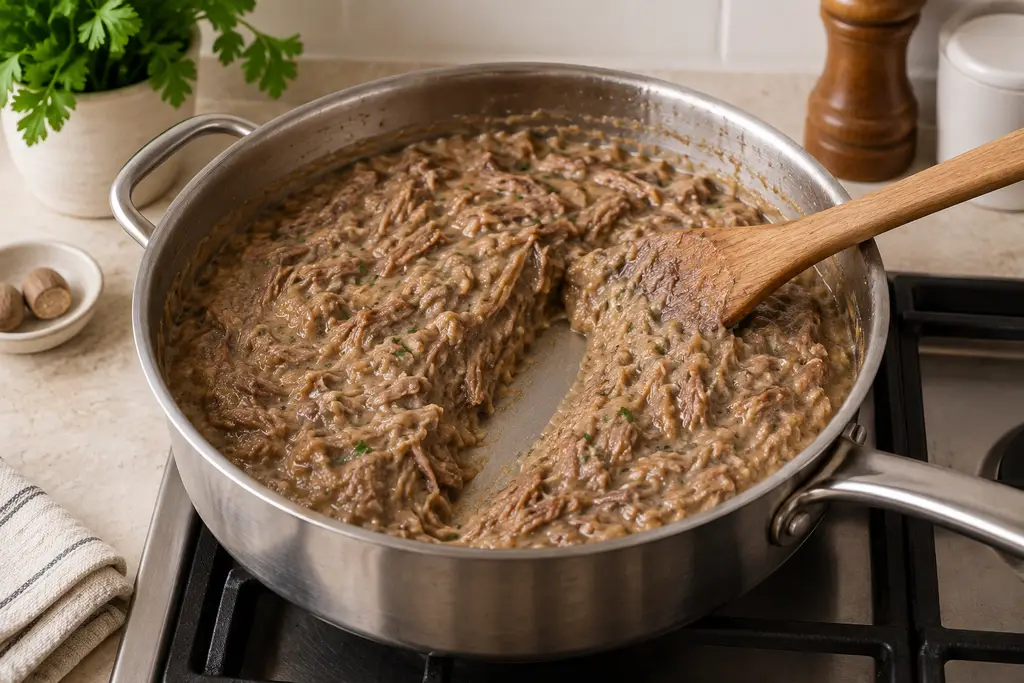
AI-generated Immediately spread the hot ragout in a clean, shallow dish in a layer no thicker than about 2 cm; use two dishes if needed. To speed up cooling, place the dish in a larger container of cold water, making sure no water gets into the filling. After letting the steam escape briefly, cover the surface and refrigerate as soon as possible at 4°C, no later than 2 hours after cooking. Do not leave the mixture on the counter for several hours. Chill for at least 4 hours, until completely cold and firm, including in the center. If it is still soft after this time, chill it longer; do not try to shape balls from lukewarm ragout.
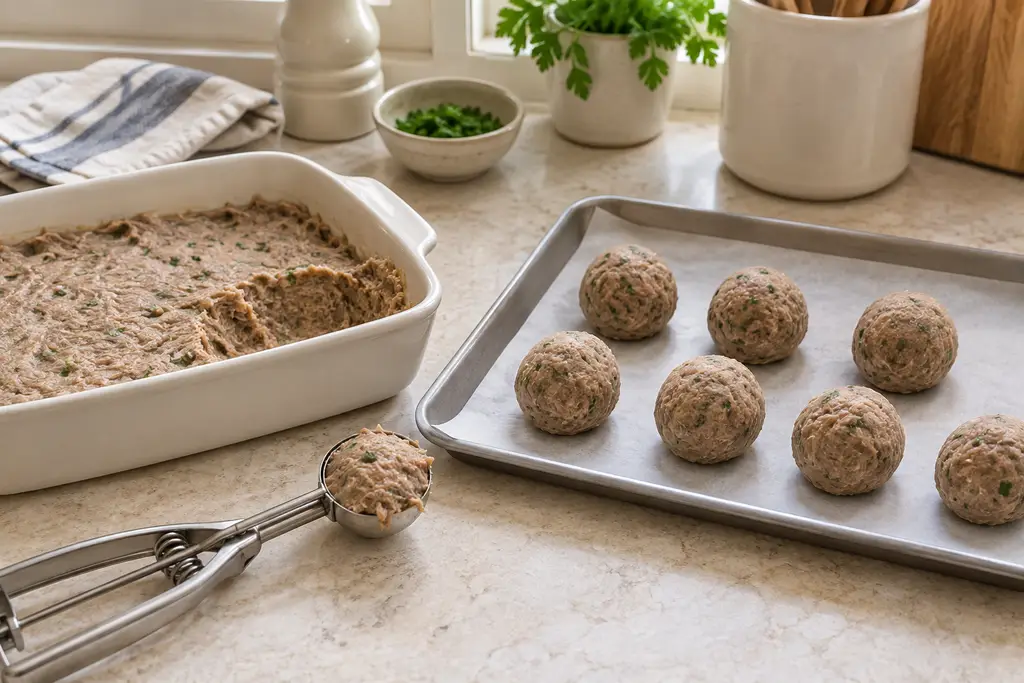
Weigh the cold ragout and divide it into 32 equal portions, usually about 33–35 g each before coating. With clean, damp hands, quickly shape small, compact balls about 3.5–4 cm in diameter. Do not leave cracks or long strands of beef sticking out. The filling is a single, uniform mixture: there is no separate outer casing and no extra filling to add in the center. Take only a few portions out of the refrigerator at a time and keep the rest chilled. Place the shaped balls on a tray lined with parchment paper and chill them again if they begin to soften as you work.
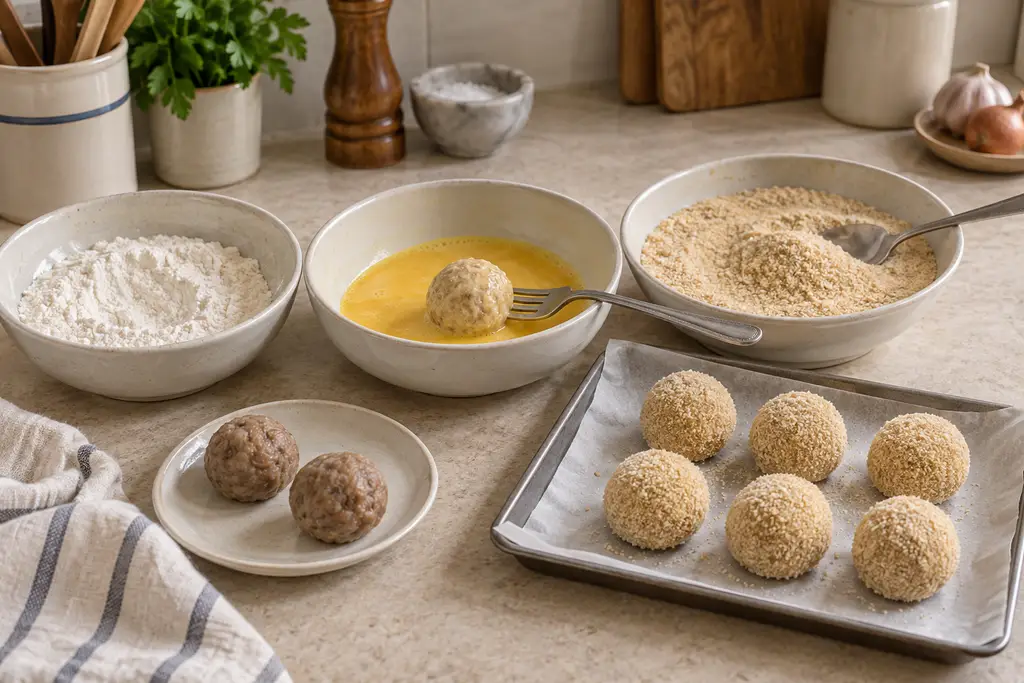
AI-generated Prepare three wide dishes: one with 60 g flour, one with the eggs thoroughly beaten with 30 ml water, and one with the breadcrumbs. Lightly coat each cold ball in flour and shake off the excess. Dip into the egg, let the excess drip off, then coat thoroughly in breadcrumbs. Repeat just the egg dip and breadcrumb coating to make a second layer. The coating must cover the entire surface, without exposed damp patches or cracks; press it on gently without squashing the ball. Place in a single layer on a clean tray. Do not force unused flour, egg, or breadcrumbs into the coating. Refrigerate all the coated balls for at least 30 minutes. They should be thoroughly chilled when they go into the oil.
AI-generated In a tall, heavy-bottomed pot with an internal diameter of about 18 cm, heat 1500 ml oil to 175°C. This gives an oil depth of about 6 cm; the pot must be tall enough for the oil to rise no higher than halfway up its sides, even after adding the balls. Have ready a thermometer, a slotted spoon, and a rack set over a baking sheet. Carefully lower in 5–6 cold balls at a time, leaving space between them. Fry for about 4–5 minutes, turning gently, until evenly golden brown. Keep the oil temperature close to 175°C and wait for it to heat back up before adding the next batch. Check the first ball with a thermometer: the center should reach at least 75°C for 30 seconds. Extend the time slightly if needed, but do not keep frying long after browning, as the coating may split and the ragout leak out. Do not overcrowd the pot and do not leave the oil unattended.
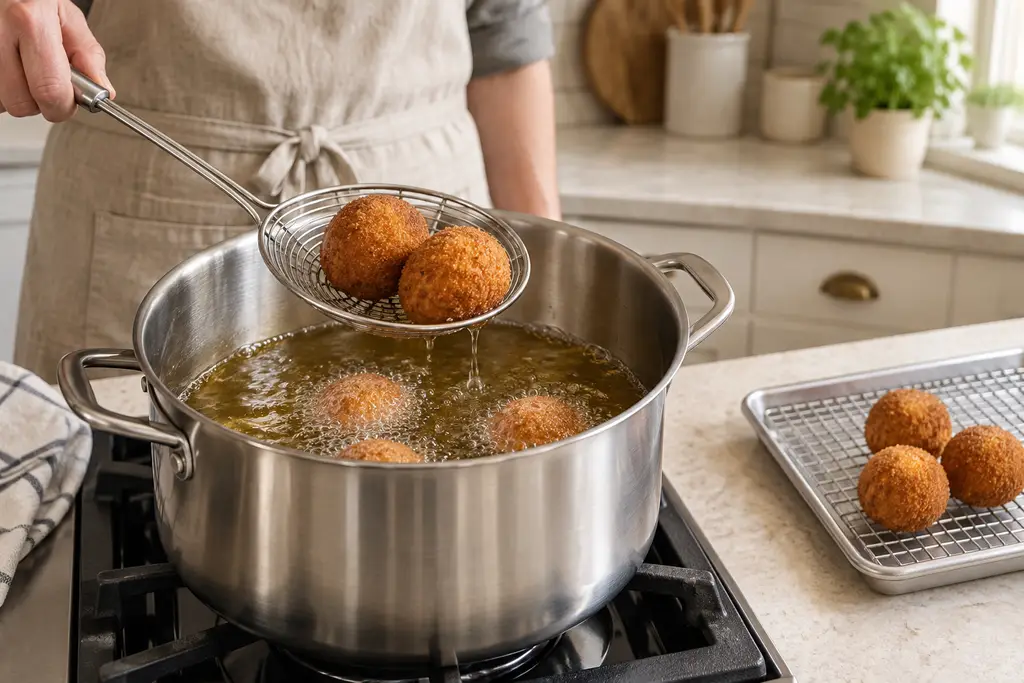
AI-generated Lift the bitterballen out with a slotted spoon, letting the oil drain back into the pot, and place on the rack in a single layer. Wait about 5 minutes before eating: the filling stays very hot for a long time, even after the coating has cooled a little. Serve each batch freshly fried, with four balls per serving and 80 g mustard divided among the 8 servings. The full batch makes 32 balls. Do not cover the fried balls tightly, as trapped steam will soften the coating. You can cut a ball open to show the creamy ragout with strands of beef.
Estimated nutrition

Rate this recipe
1 rating
Comments