
AI-generated
Pane carasau — thin crisp sheets of Sardinian bread
Log in or create a free account to save recipes.
Source: https://recipheon.com/en/recipes/snacks/pane-carasau-thin-crisp-sheets-of-sardinian-bread
About this recipe
Pane carasau is Sardinian bread made as very thin dry sheets that crackle gently when broken. This home version needs two baking stages: a thin dough round first puffs in a hot oven, then its separated halves are baked individually until crisp. Use fine semola rimacinata made from durum wheat, water, fresh yeast and salt. Thorough kneading and resting make even rolling easier without holes that would release the steam needed for puffing. A very hot metal baking sheet in an ordinary oven replaces a traditional bread oven. Carefully cut around the edge of the warm, still-soft round to make two thin sheets. After the second bake, cool them completely so they stay crisp in a closed container. All dough, edges and small broken pieces are served. This recipe makes four rounds split into eight sheets, served without olive oil, toppings or garnish so the grain flavor comes through.
Ingredients
All the dough for four rounds
300 g semola rimacinata, very finely remilled durum wheat flour, for the dough; not coarse semolina
180 g lukewarm water, weighed
3 g fresh baker's yeast
6 g fine salt
Semola for light dusting
20 g of the same fine semola rimacinata for dusting the worktop, cloth and board; use only a thin layer as needed, with the rest not served
Steps
In a bowl, dissolve all 3 g fresh yeast in the 180 g weighed lukewarm water. Add 300 g semola rimacinata, combine with a spoon, then add 6 g salt. Knead on a clean worktop for about 12–15 minutes until smooth and springy. Do not add olive oil, sugar or more water. Keep the separate 20 g semola only for light dusting during the following steps.
Divide all the dough into four equal parts, about 122 g each, and shape into smooth balls. Space apart on a light dusting from the weighed semola and cover tightly with a large bowl or plastic wrap, without olive oil. Leave at room temperature for about 2–3 hours until clearly risen and almost doubled. Do not let the surfaces dry out; a hard skin makes thin rolling harder.
Near the end of rising, put a sturdy metal baking sheet about 30 × 40 cm upside down on the middle rack. Preheat the oven to 250°C, conventional heat, and heat the sheet for at least 40 minutes. Do not use glass, parchment or fat on the baking surface. Prepare a flat wooden board for sliding the rounds, two wide spatulas and dry oven mitts.
Lightly dust the worktop and rolling pin with part of the 20 g semola supply. Roll each ball into an even round about 25–26 cm across and about 2 mm thick, turning it on the worktop. Center and edges should be similarly thick, without holes, overlaps or a thick rim. If the dough springs back strongly, cover for 5 minutes and continue. Do not trim anything; use all four portions in full.
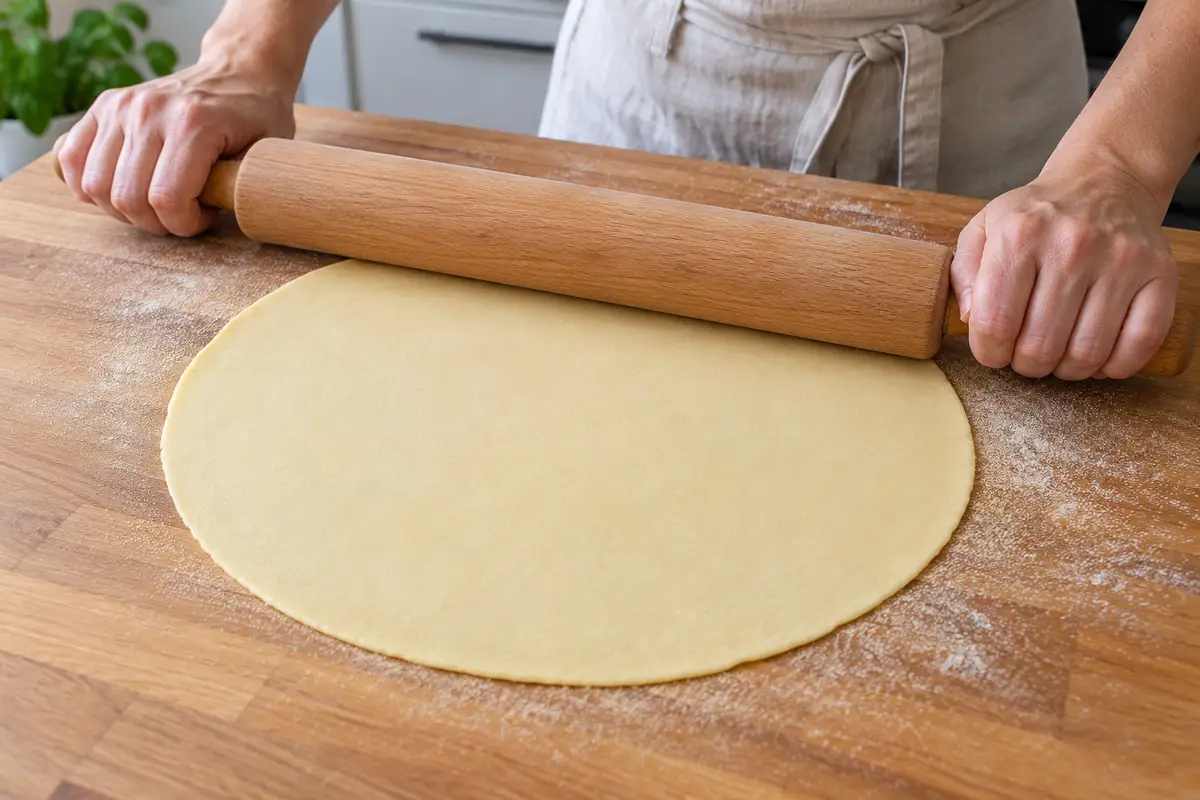
AI-generated Place the rolled rounds on a clean cloth lightly dusted with semola from the same weighed supply. Cover and leave for about 20 minutes; if stacking them, separate each with a fold of cloth. Do not put raw rounds directly on one another. Surfaces should stay soft and elastic. Do not prick with a fork, as steam needs to lift the whole sheet during the first bake.
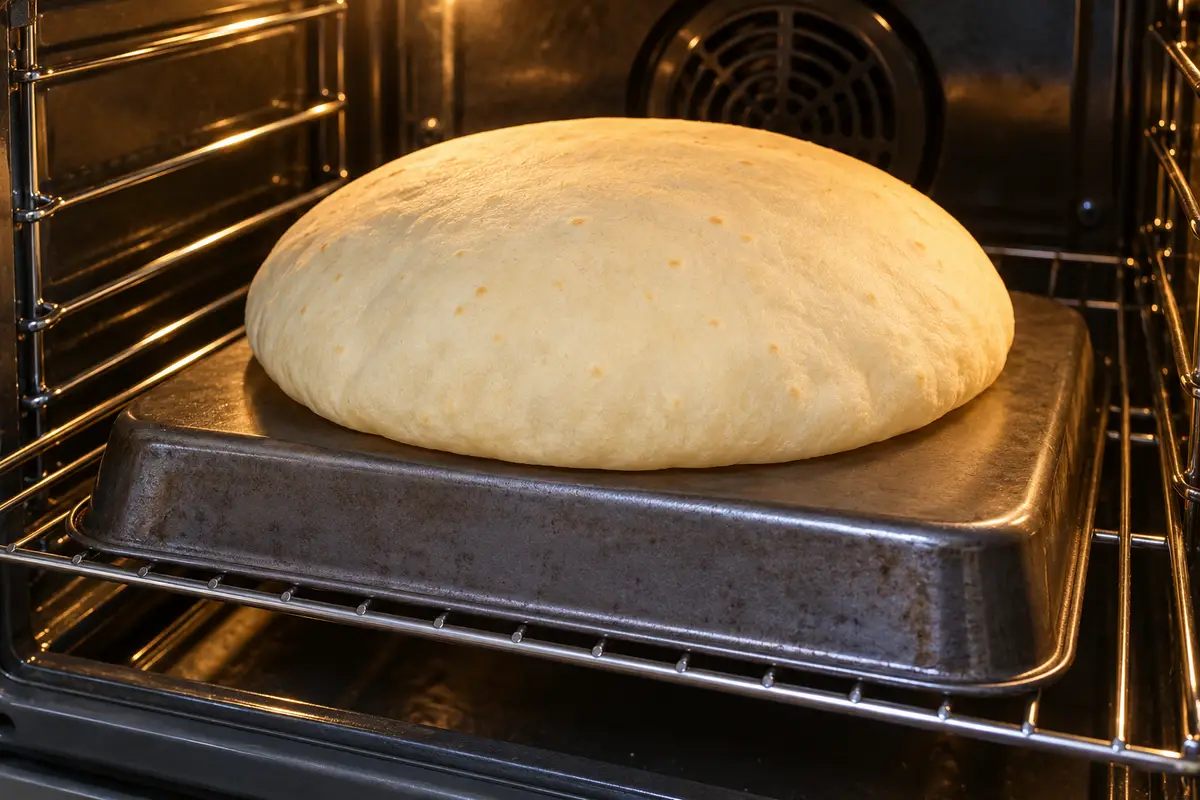
Transfer the first round to a lightly dusted board, using only semola left from the weighed supply. Check that it slides freely, then slide onto the hot sheet without touching it with your hands. Close the oven and bake at 250°C for about 2–4 minutes until a large inflated pocket forms, still pale and soft. Once the entire round has puffed, leave about another 20 seconds, then lift out with two spatulas.
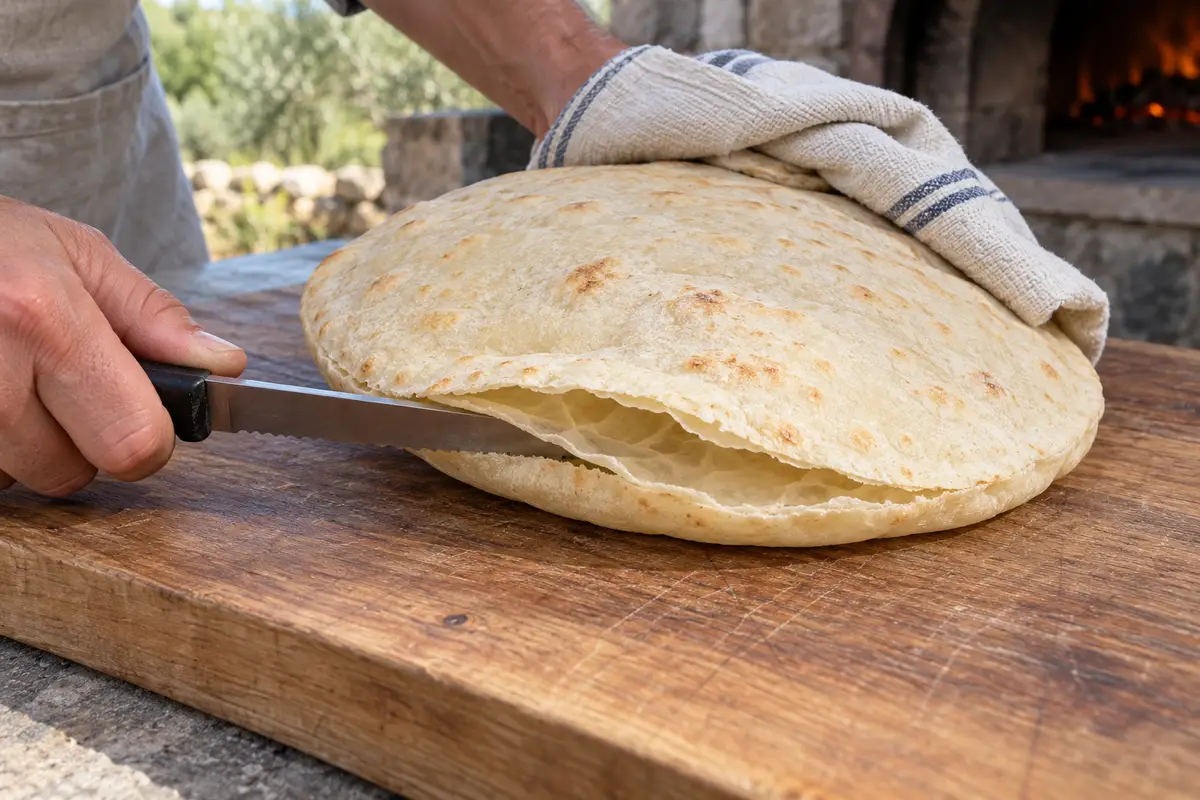
AI-generated Set the puffed bread on a dry board. Hold it through a dry folded kitchen towel and carefully cut into the rim with a serrated knife so steam escapes away from hands and face. Wait a few seconds, then guide the knife horizontally around the circumference to separate the top layer from the bottom. Work while the dough is still warm and flexible. This makes two thin sheets; do not trim and do not discard a strip from the edge.
AI-generated Lay separated sheets flat with clean dry cloth between them and lightly weight with a second board so the edges do not curl. Bake and split the remaining three rounds the same way. Between batches, keep the oven closed for about 2 minutes so the sheet regains heat. The four dough portions yield eight sheets; keep any broken pieces and crumbs for the final crisping and serving too.
After splitting all rounds, set the oven to 220°C, still conventional heat, and wait about 10 minutes before the second bake. Leave the baking sheet inside. Prepare room for the sheets to cool freely on a rack. Bake each of the eight sheets separately, not the whole thick stack. Remove all cloths and do not brush the bread with olive oil or water.
Put one sheet at a time on the hot baking sheet and bake at 220°C for about 2–4 minutes, flipping halfway with a wide spatula. It should become lightly golden and dry even at the edges, without dark scorching. Repeat for all eight sheets; crisp broken pieces alongside in a single layer. The whole series takes about 16–32 minutes, not one short batch. Do not fold and do not roll up the crisp bread.
After the second bake, move sheets to a rack to release steam without covering; do not seal warm bread in a container. After the last batch, allow about another 30 minutes for everything to cool completely. A cold sheet should break easily with a dry snap rather than bend. Divide all eight sheets and saved fragments into eight servings. Serve without extras, including the edges too.
Gently put completely cold dry sheets into an airtight container large enough to hold them without crushing. Store in a dry place at room temperature and use within a week. If they become damp and lose crispness, spread on a baking sheet and dry at 180°C for about 3–5 minutes, then cool completely again. Do not add olive oil or toppings during storage.
Estimated nutrition

Rate this recipe
0 ratings
Comments