
AI-generated
Sklandrausis – Latvian rye tartlets with carrots and potatoes
Log in or create a free account to save recipes.
Source: https://recipheon.com/en/recipes/snacks/sklandrausis-latvian-rye-tartlets-with-carrots-and-potatoes
About this recipe
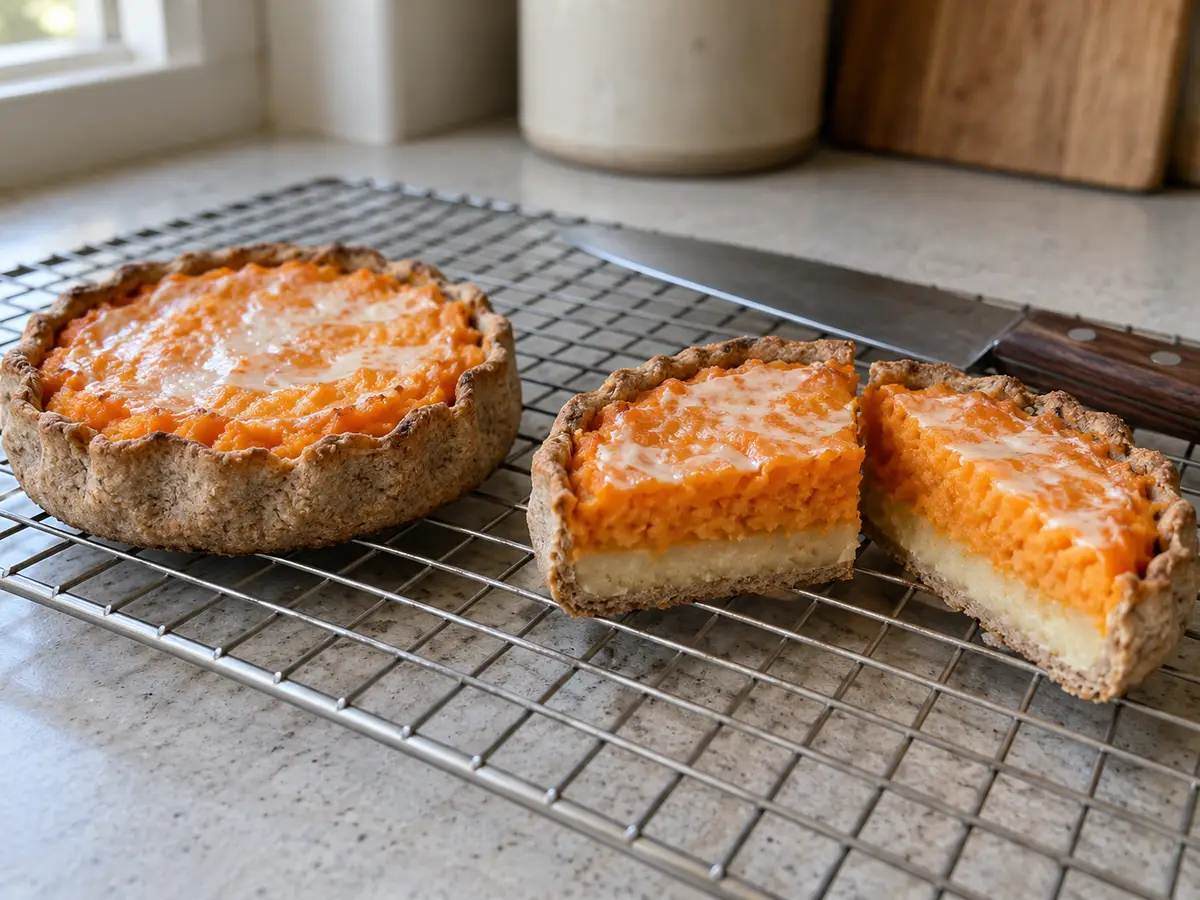
Sklandrausis are Latvian tartlets made from thin rye dough without yeast, with raised edges surrounding two separate fillings. A mild potato mixture with butter and caraway forms the lower layer, topped with a thicker, lightly sweetened carrot layer with sour cream. A thin sour cream finish rounds off the flavor after baking. This home version makes ten tartlets, baked in two batches on a regular baking sheet. Let them cool before serving: the filling sets as they cool, and a cut tartlet clearly shows both layers.
Ingredients
For 10 tartlets
200 g finely ground whole-grain rye flour, type 2000
20 g light wheat flour, type 450 or 500
40 g unsalted butter, 82% fat, divided into 20 g for the dough and 20 g for the potatoes
120 g water for the dough, plus cooking water for the vegetables, which is drained off
250 g potatoes, boiled in their skins, then peeled and drained
500 g carrots, peeled before boiling, cooked and thoroughly drained
160 g cultured sour cream, 18% fat, divided into 20 g for the potatoes, 80 g for the carrots and 60 g for the topping
50 g white sugar, divided into 40 g for the carrots and 10 g for the topping
4 g salt, divided into 2 g for the dough, 1 g for the potatoes and 1 g for the carrots
1 g caraway seeds
Steps
The potato and carrot quantities listed refer to the cooked vegetables. If starting with raw vegetables, prepare about 300–350 g potatoes in their skins and 600–650 g carrots. Scrub the potatoes, peel the carrots and cut them into large pieces. Cook in two separate pots, in unsalted water covering the vegetables: the potatoes usually need 25–30 minutes and the carrots 20–25 minutes after the water comes to a boil, until very soft. Drain off all the water. Let the potatoes cool slightly, peel them and allow excess moisture to evaporate. Weigh out 250 g prepared potatoes and 500 g well-drained carrots. Keep any surplus for another dish; it is not part of this batch of tartlets.
Mix both flours with 2 g salt. Heat the weighed 120 g water with 20 g butter just until the fat melts. When the liquid is warm but not scalding, pour it into the flour and knead into a firm, pliable dough. It should be easy to roll out and hold the shape of its raised edge. Cover and leave for about 15 minutes; prepare the fillings during this time. Do not add flour for dusting.
While the weighed potatoes are still warm, mash them thoroughly with a potato masher or pass them through a potato ricer. Mix in the remaining 20 g butter, 20 g sour cream, 1 g salt and all the caraway. The mixture should be smooth and thick, without lumps, but not runny. Do not blend the potatoes, so they do not become gluey. Keep all the mixture for the lower filling layer.
Puree the weighed, well-drained carrots until smooth and thick, without adding any liquid. Mix with 80 g sour cream, 40 g sugar and 1 g salt. The mixture should spread easily, not run. Keep all of it for the upper layer. Towards the end of preparing the fillings, preheat the oven to 220°C using top and bottom heat; preheating overlaps with the remaining work.
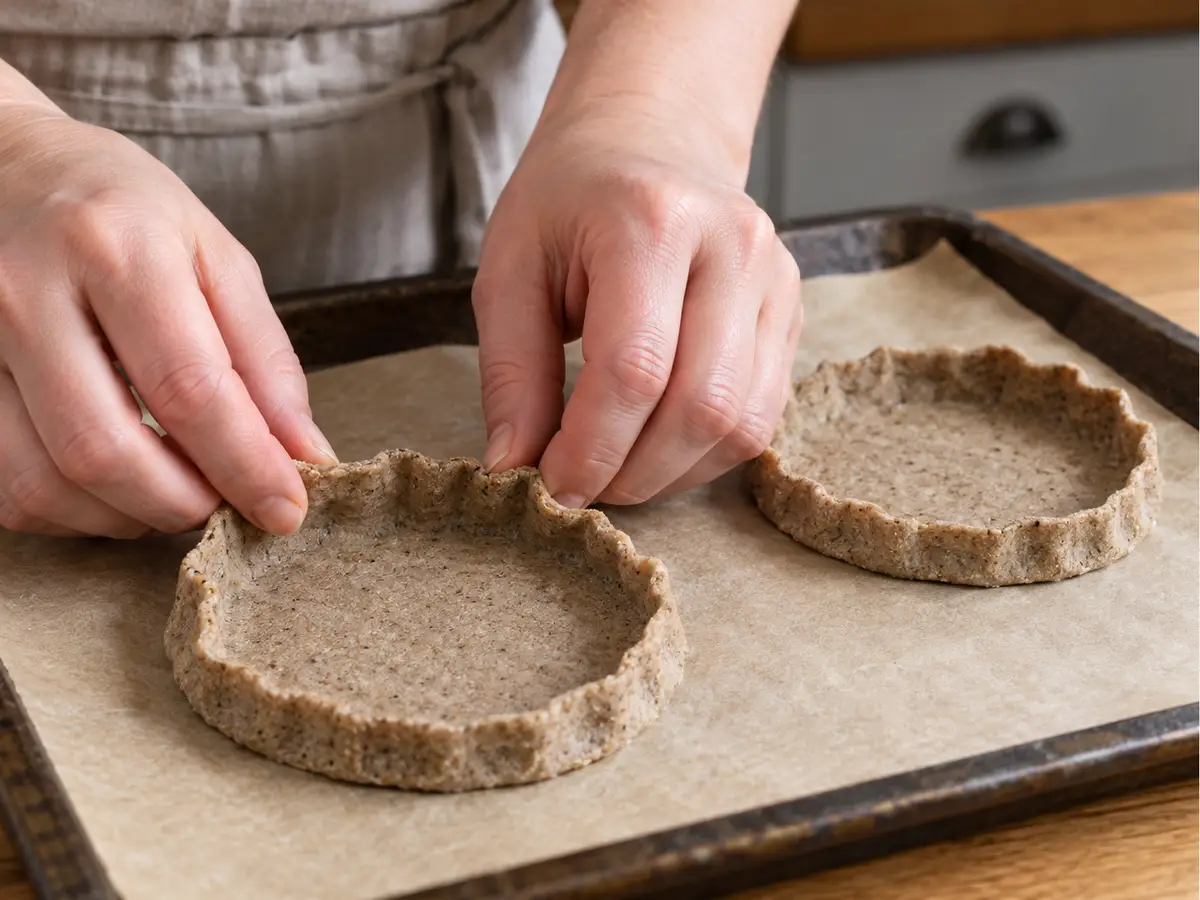
Divide all the dough into 10 equal pieces. Roll each piece between sheets of baking paper into a circle about 13 cm in diameter and 2–2.5 mm thick. Raise and gently pinch the edges to form a standing rim about 1.5 cm high; the flat base will then be about 10 cm in diameter. Mend small cracks with dough from the same portion, without discarding any offcuts. On a baking sheet about 40 × 30 cm lined with baking paper, arrange 5 shells in two rows of 3 and 2, leaving about 2 cm between them. Prepare the remaining 5 for the second batch.
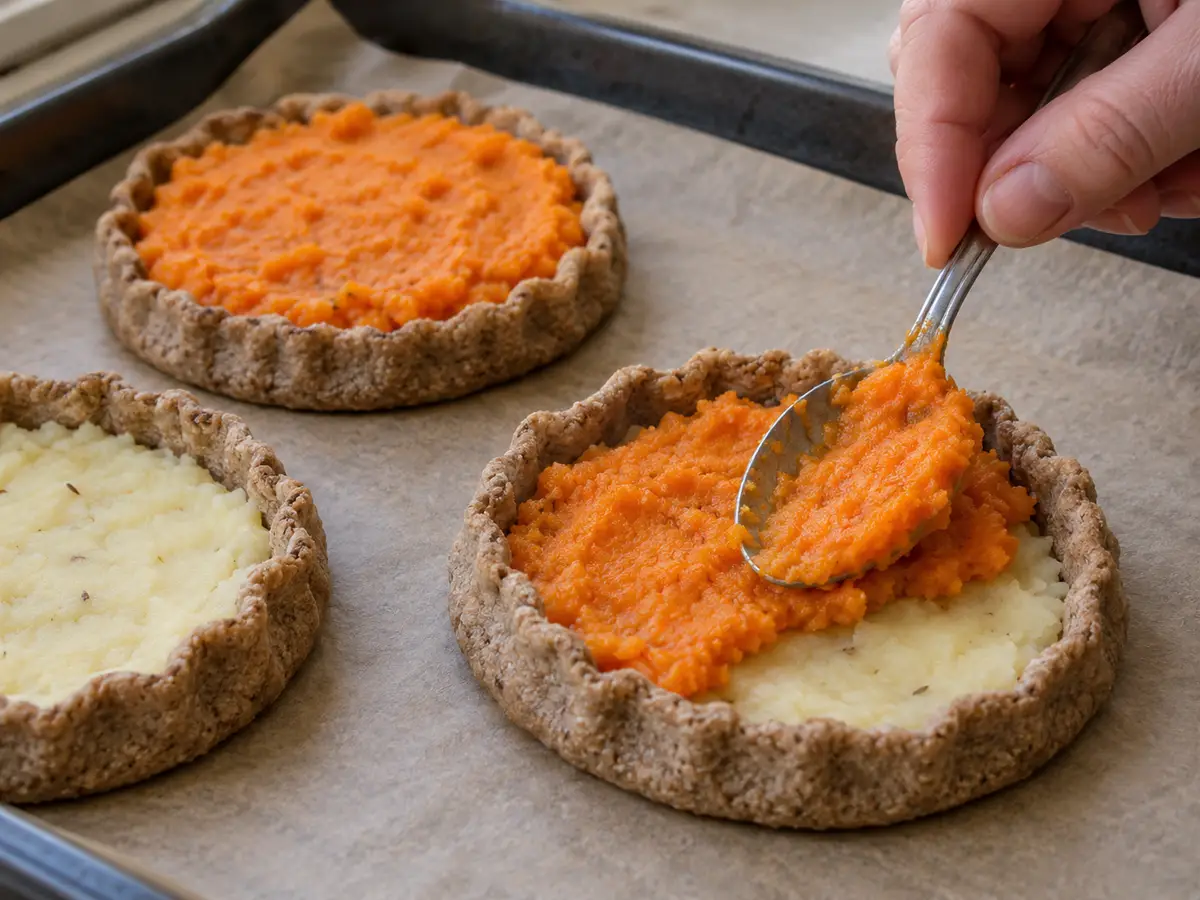
AI-generated Use half the potato mixture and half the carrot mixture for the first batch, keeping the rest for the second. Spread the potatoes thinly over the bases of 5 shells. Spoon the carrot mixture on top to form a clearly thicker upper layer. Do not mix the layers. Smooth the surface and leave it slightly below the rim. Fill the remaining 5 shells with the reserved fillings just before baking them, so the raw bases do not become soggy while waiting. Use all of both fillings across the two batches.
AI-generated Place the first baking sheet on the middle level of the preheated oven. Bake at 220°C for about 20–25 minutes, without the fan, until the bases and rims are dry and firm and the filling surface is lightly baked. Remove and bake the second batch of 5 in the same way; the two batches will take about 40–50 minutes in total. Use a second paper-lined baking sheet, or carefully transfer the next shells onto the same sheet after it has cooled briefly.
Mix the remaining 60 g sour cream with 10 g sugar. After baking each batch, spread half of this finish thinly over its tartlets; use all of it in total. Once they are safe to move, lift them off the baking sheet and place on a rack. Cool for about 30–45 minutes after each batch comes out of the oven, until the tartlets have cooled and are no longer warm; allow longer if needed. The first batch can cool while the second bakes. Serve 10 portions, one tartlet each. Allow about 3 hours and 25 minutes for the whole preparation.
AI-generated
Estimated nutrition

Rate this recipe
0 ratings
Comments