
AI-generated
Lussekatter — Swedish Saffron Buns with Raisins
Log in or create a free account to save recipes.
Source: https://recipheon.com/en/recipes/breakfast/lussekatter-swedish-saffron-buns-with-raisins
About this recipe
Lussekatter are Swedish saffron yeast buns shaped into an S and decorated with two raisins. They have a soft, springy crumb and a thin golden crust. Saffron crushed with sugar releases its aroma in warm milk, while softened butter added during kneading enriches the dough. Type 550 wheat flour makes tender buns without excessive dusting. Two rises lighten the crumb; curl the rope ends in opposite directions, leaving the spirals a little room. Bake sixteen buns on two baking sheets, one after the other, and press the soaked raisins deep into the coil centers so they stay in place.
Ingredients
Dough, Raisins, and Egg Wash
510 g type 550 wheat flour, divided: 500 g for the dough and 10 g for dusting
260 ml milk (3.2% fat), divided: 250 ml for the dough and 10 ml for the egg wash
75 g softened unsalted butter (82% fat) for the dough
80 g fine white sugar, divided: 10 g for crushing the saffron and 70 g for the dough
2 raw eggs, size M, about 100 g without shells, divided: 1 for the dough and 1 for the egg wash
7 g instant yeast
0.5 g saffron threads
5 g salt for the dough
32 raisins, about 16 g before soaking, 2 for each bun
100 ml water for soaking the raisins, drained before shaping the buns
Steps
Have ready two flat baking sheets with a usable surface of about 30 × 40 cm, parchment paper, a large bowl, a small saucepan, a mortar, a pastry brush, and cooling racks. Crush the saffron with 10 g sugar. Heat 50 ml of the milk reserved for the dough until it is steaming, but do not let it boil; remove from the heat, add the saffron and sugar, and leave covered for 10 minutes. Add the remaining 200 ml milk for the dough: the mixture should be only slightly lukewarm, not hot; if needed, wait for it to cool.
Mix 500 g type 550 wheat flour, the instant yeast, the remaining 70 g sugar, and the salt in the bowl. Add all the saffron milk, including the threads, and 1 egg, then begin kneading. After a few minutes, add the softened butter in small pieces, kneading until it is incorporated; knead for about 10–15 minutes in total, until the dough is smooth, springy, and soft, still slightly sticky. Do not add extra flour to the bowl so the dough does not become stiff.
Cover the bowl and leave the dough in a warm place for about 60–75 minutes, until it roughly doubles in volume; it may need longer in a cooler kitchen. While it rises, pour 100 ml water over the raisins and soak for 30 minutes. Then drain them thoroughly and set aside for shaping; do not add the water to the dough.
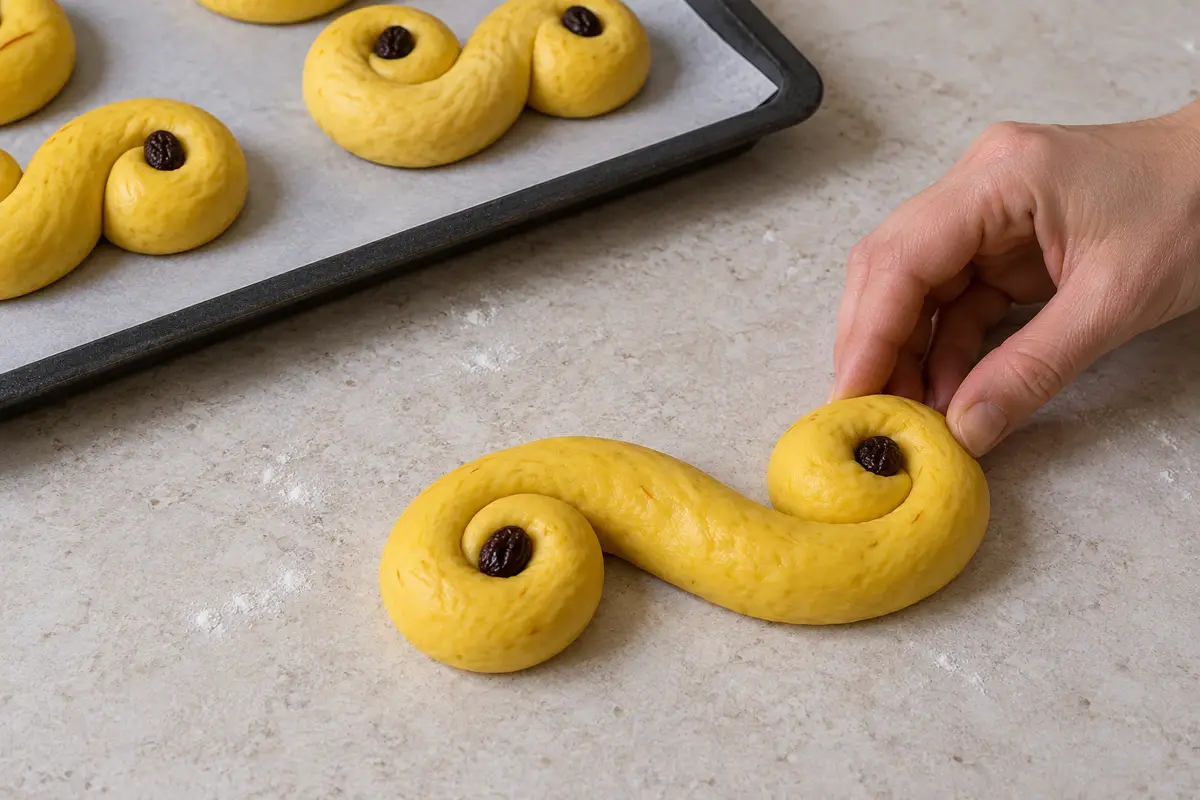
Line the baking sheets with parchment and lightly dust the work surface with the allotted 10 g type 550 wheat flour. Gently deflate the dough and divide it into 16 equal pieces; keep the remaining pieces covered. Roll each piece into a rope about 30–35 cm long and about 1.5 cm thick. Curl one end inward clockwise and the other in the opposite direction, forming two spirals on opposite sides of the central section and an S shape; leave a little space within the coils. Place eight buns on each baking sheet, about 3 cm apart, and press one drained raisin deep into the center of each spiral, giving each bun two raisins.
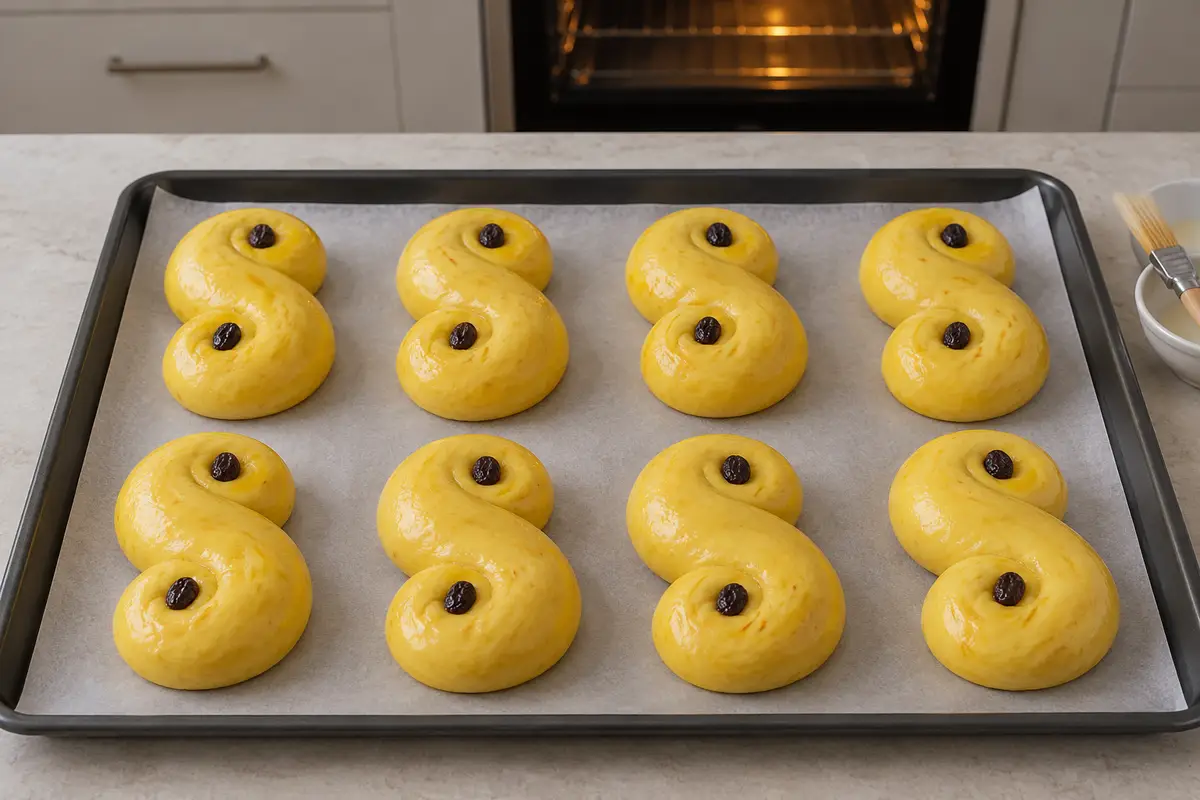
AI-generated Cover the baking sheets with kitchen towels and leave for about 35–45 minutes, until the buns are visibly swollen and puffy and a light indentation made with a finger slowly springs back. Toward the end of the rise, preheat a conventional oven (no fan) to 200°C, with the baking sheet on the middle rack. Beat the remaining egg with 10 ml milk and brush a thin layer over the buns just before baking, without pressing on them with the brush. Keep the second sheet covered in a cooler part of the kitchen and brush the buns only just before putting it in the oven; discard any unused egg-wash mixture.
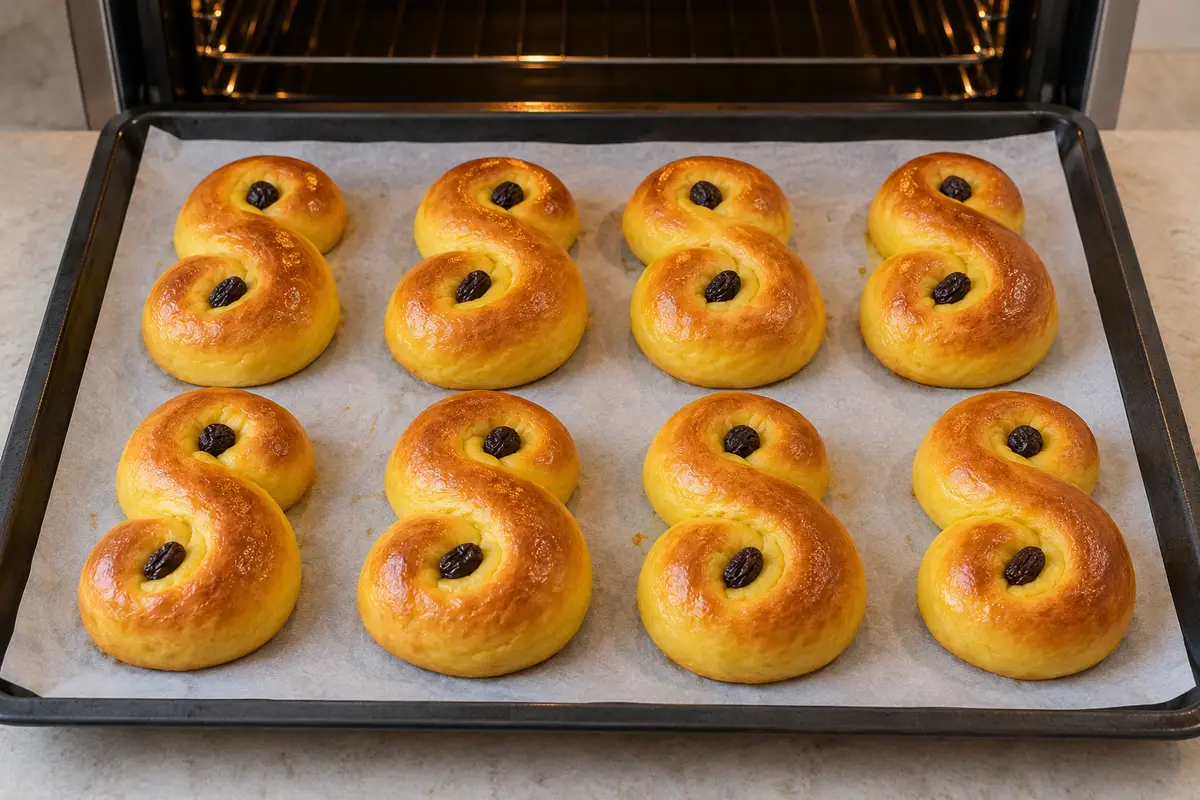
AI-generated Bake one sheet on the middle rack for 12–15 minutes at 200°C on the conventional (no-fan) setting. The buns should be risen and golden, with dry, lightly browned bottoms; if they are still pale, bake for another 2–3 minutes. Then bake the second sheet the same way; baking all 16 buns takes about 25–30 minutes, and any extra baking will extend that time. Transfer the first batch to a cooling rack while the second is in the oven.
AI-generated Transfer the second batch to a cooling rack as well and leave to cool for at least 30 minutes; if the buns are still hot, give them more time. Serve lukewarm or completely cooled. This quantity makes 16 buns, one per serving.
Estimated nutrition

Rate this recipe
0 ratings
Comments