
AI-generated
Baked Yeast Buns with Plum Butter
Log in or create a free account to save recipes.
Source: https://recipheon.com/en/recipes/desserts/baked-yeast-buns-with-plum-butter
About this recipe
These baked buns with plum butter have a soft, buttery crumb and a thin golden crust. Twelve filled buns rise close together in one pan, so you can pull them apart along their tender sides after baking. Thick, cool plum butter is easier to seal inside the dough than runny jam; clean edges and a firmly pinched seam help keep the filling inside. Add the butter gradually while kneading, and use a small reserved portion to grease the pan and brush the buns. Allow about four hours to prepare and serve the warm buns, including both rises and the rest after baking.
Ingredients
Dough and Filling
500 g dry all-purpose flour for yeast baking, without raising agents
250 ml cow's milk (3.2% fat)
2 raw size M eggs, about 100 g edible weight without shells, at room temperature
100 g unsalted cow's milk butter (82% fat), divided: 70 g for the dough, 10 g for the pan, and 20 g for brushing the buns
65 g superfine white sugar
7 g dry instant yeast
6 g fine salt
300 g thick plum butter, cool, 25 g for each bun
Steps
Set aside 30 g butter for preparing the pan and brushing the buns. Melt the remaining 70 g over low heat and let it cool until still liquid but not hot. Gently warm the milk: it should feel pleasantly lukewarm, not hot enough to burn. Beat the eggs with a fork in a small bowl.
In a large bowl, mix all the flour, sugar, instant yeast, and salt. Add the lukewarm milk and eggs and knead by hand or with a mixer's dough hook on low speed for 4–5 minutes. Add the cooled 70 g butter in several additions, kneading until incorporated after each. Knead for about another 8–10 minutes, until the dough is smooth, soft, and elastic, though still slightly sticky. Do not add flour; if needed, scrape the dough from the sides of the bowl with a spatula and continue kneading.
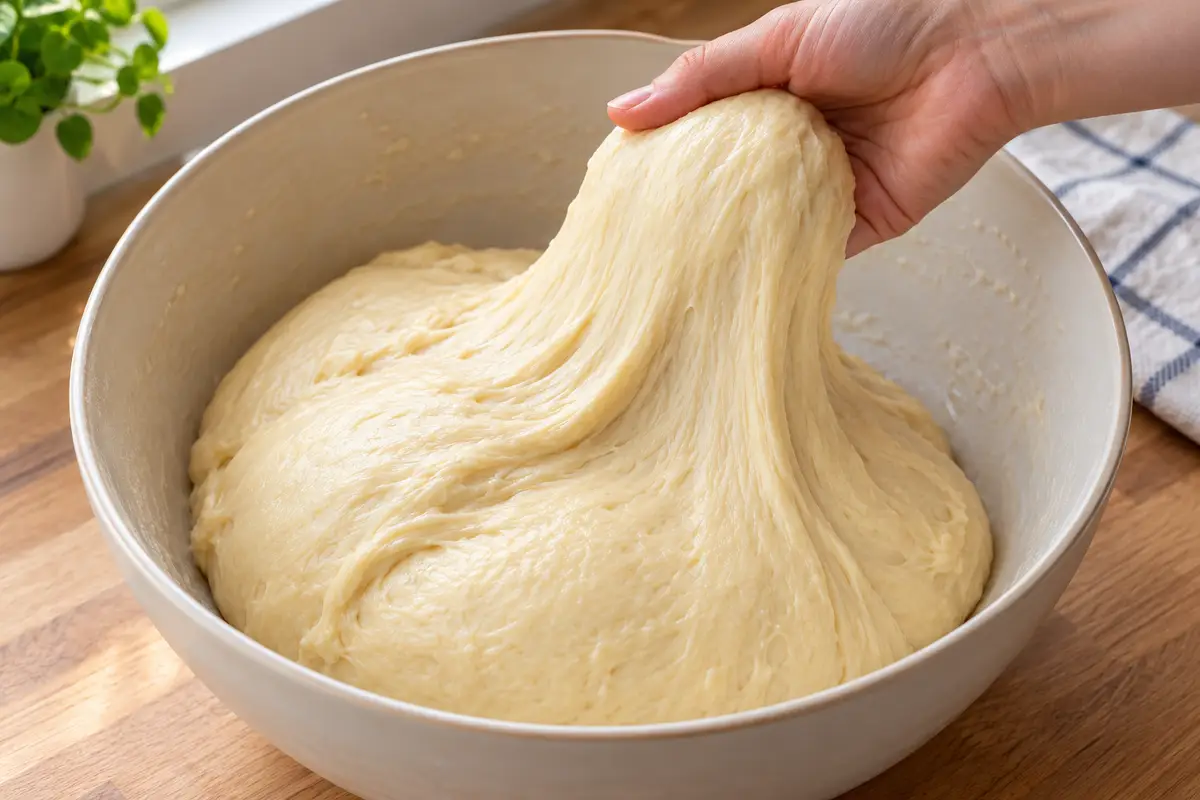
AI-generated Gather the dough into a ball in the same bowl, cover, and leave in a warm place without drafts for about 60–90 minutes, until roughly doubled in volume. Judge by how much the dough has risen, not just the clock; it may take longer in a cool kitchen.
Melt the reserved 30 g butter. Use one third of this portion, corresponding to 10 g, to grease the bottom and sides of a metal pan measuring about 30 × 20 cm inside; reserve the remaining 20 g for brushing the buns. Turn the risen dough out onto a clean work surface without dusting it with flour, gently press to release excess gas, and divide into 12 equal pieces. If it sticks slightly, use a dough scraper or spatula rather than adding flour.
Flatten each piece with your palm into a round about 10–11 cm across, leaving the center slightly thicker. Place 25 g thick, cool plum butter in the center. Gather the edges over the filling and pinch firmly together so the plum butter does not get onto the edges being joined. Bring the seam together in one spot and check that there are no holes; do not stretch the dough into a thin, translucent layer.
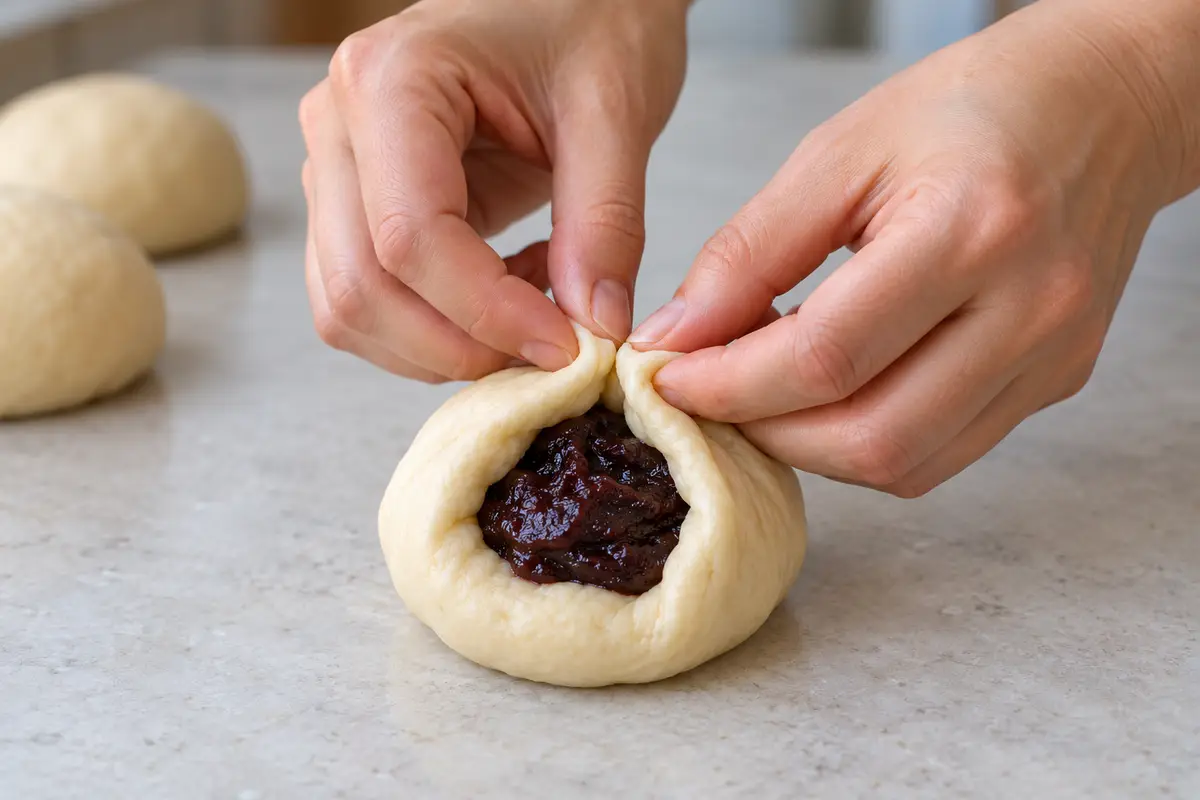
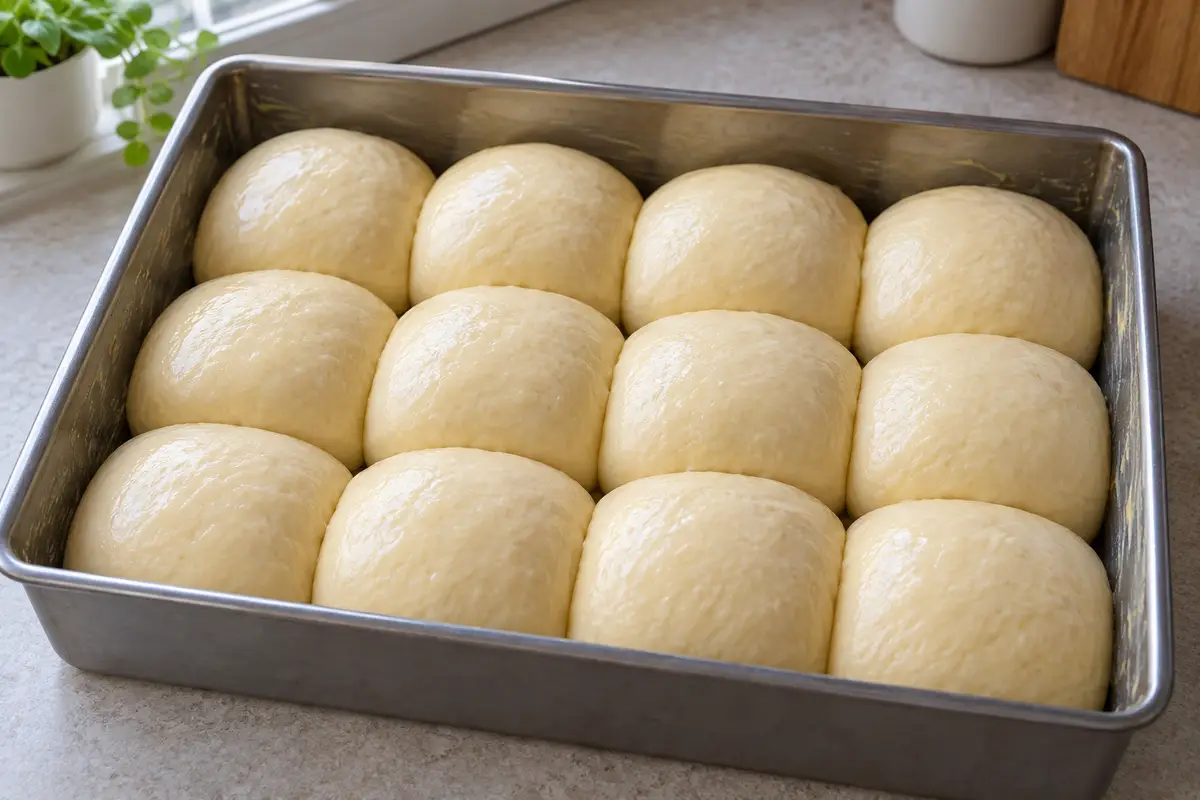
AI-generated Brush the sides of each sealed bun with some of the reserved butter and place it seam-side down. Arrange the buns in 3 rows of 4 in the pan, leaving small gaps of about 0.5–1 cm between them. Brush the tops with the remaining butter, using all 20 g allocated for the sides and tops. The buns should not be tightly packed at this stage.
Cover the pan without letting the cover touch the dough and leave for about 30–45 minutes. The buns should become noticeably puffy, increase in volume, and almost touch at the sides. Toward the end of this rise, preheat a conventional oven (no fan) to 175°C. Uncover the pan only when ready to put it in the oven.
AI-generated Place the pan on the middle rack of the preheated oven. Bake for about 35–40 minutes at 175°C on the conventional (no-fan) setting; start checking the browning after about 30 minutes. If the tops darken too quickly, cover loosely with aluminum foil and finish baking. The buns are ready when distinctly golden and springy when pressed lightly. If in doubt, gently ease two center buns apart: their sides should be baked through, without wet, sticky dough. Stop baking once the center is done so the buns do not dry out.
After taking the pan out of the oven, set it on a wire rack and wait about 15 minutes. Gently separate the buns where they meet and lift them out with a wide spatula. Serve warm, without any additional topping; the plum butter cools more slowly than the dough, so take care with the first bite. One serving is one of the twelve buns.
Estimated nutrition

Rate this recipe
0 ratings
Comments