
AI-generated
Castagnaccio – Tuscan chestnut flour cake
Log in or create a free account to save recipes.
Source: https://recipheon.com/en/recipes/desserts/castagnaccio-tuscan-chestnut-flour-cake
About this recipe
Castagnaccio is a low, dense cake from the Tuscan tradition, with a flavor that comes mainly from chestnut flour. Raisins add fruity sweetness, pine nuts a gentle crunch, and rosemary a distinctive aroma. This home version has no added sugar or leavening agent: the cake stays moist and dense instead of rising like a sponge cake. A thin layer in a wide pan is important, as is ending the bake when fine cracks appear on the surface. Once cool, cut it into eight portions and serve without extra cream to preserve its characteristic chestnut flavor.
Ingredients
For 8 portions, a round 26 cm pan
250 g pure chestnut flour made from dried edible chestnuts, with no added sugar
550 g water: 400 g for the batter and a separate 150 g for soaking the raisins
60 g dry raisins without seeds, with no added sugar
40 g raw pine nuts without shells: 20 g for the batter and 20 g for the top
35 g extra virgin olive oil: 15 g for the batter, 10 g for the pan and 10 g for the top
1 g fresh rosemary leaves, without woody stems
2 g fine salt
Steps
Preheat the oven to 180°C with conventional top and bottom heat. Cover the dry raisins with the separate 150 g of lukewarm water and leave for about 10–15 minutes to soften. Prepare the batter during this time. Use a shallow metal pan, 26 cm in diameter, with a solid, leakproof base; the fluid batter could leak from a springform pan that is not tightly sealed.
Sift the chestnut flour into a bowl and add the salt. Gradually pour in all 400 g of water allocated to the batter, stirring with a whisk until the lumps disappear. The batter should be smooth and fluid, like thick cream, without whisking it into a foam. Leave for 10 minutes so the flour absorbs the water, then stir briefly. This rest overlaps with soaking the raisins and preheating the oven.
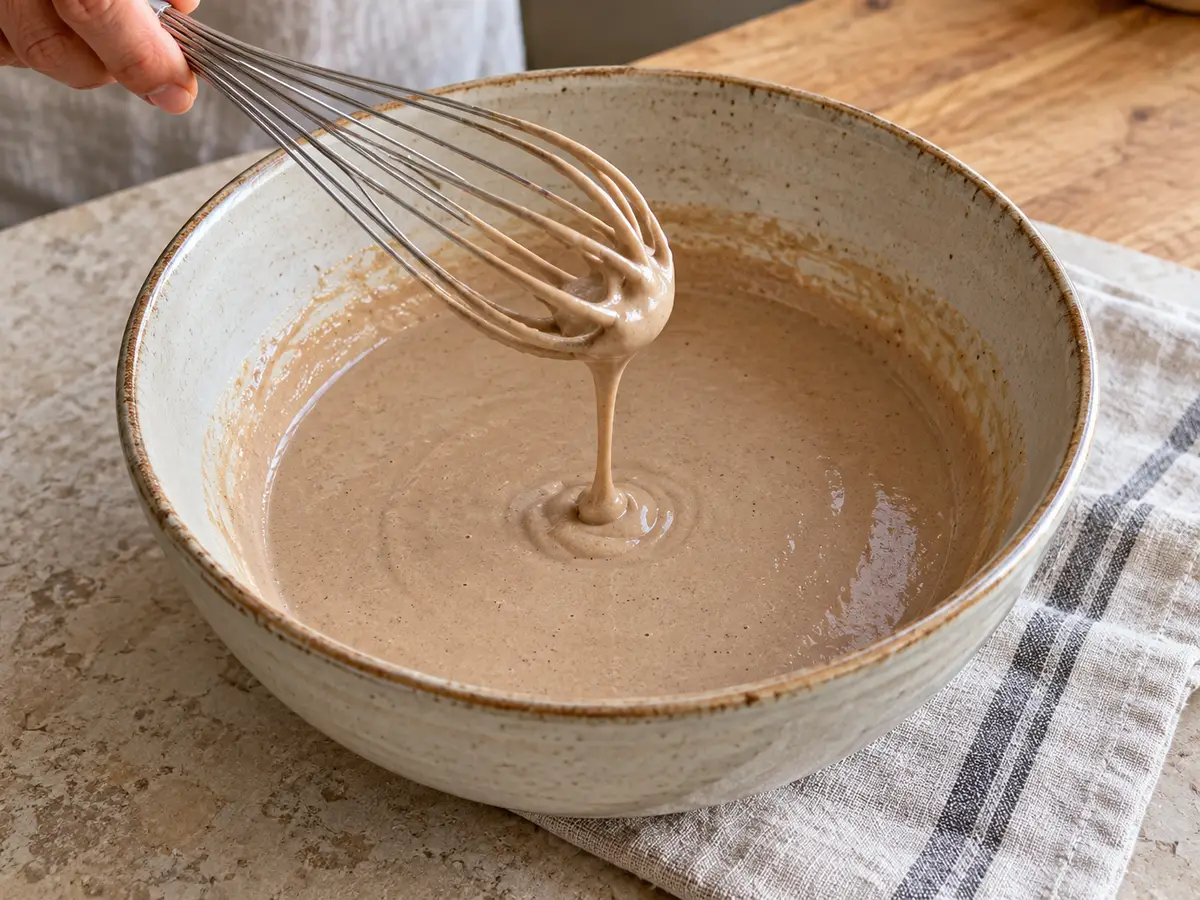
AI-generated Drain the raisins and gently squeeze them. Pour away the soaking water; do not add it to the weighed 400 g of water in the batter. Stir all the raisins, 20 g of pine nuts and 15 g of olive oil into the batter. Reserve the remaining 20 g of pine nuts and the remaining oil for the next stage. Do not add sugar or extra flour.
Spread 10 g of olive oil over the entire base and sides of the pan. Pour in all the batter and level it into a low layer, about 1–1.5 cm deep. Scatter over the remaining 20 g of pine nuts and the washed, patted-dry rosemary leaves. Discard the woody stems. Drizzle evenly with the final 10 g of olive oil. Do not add other decorations or a glaze.
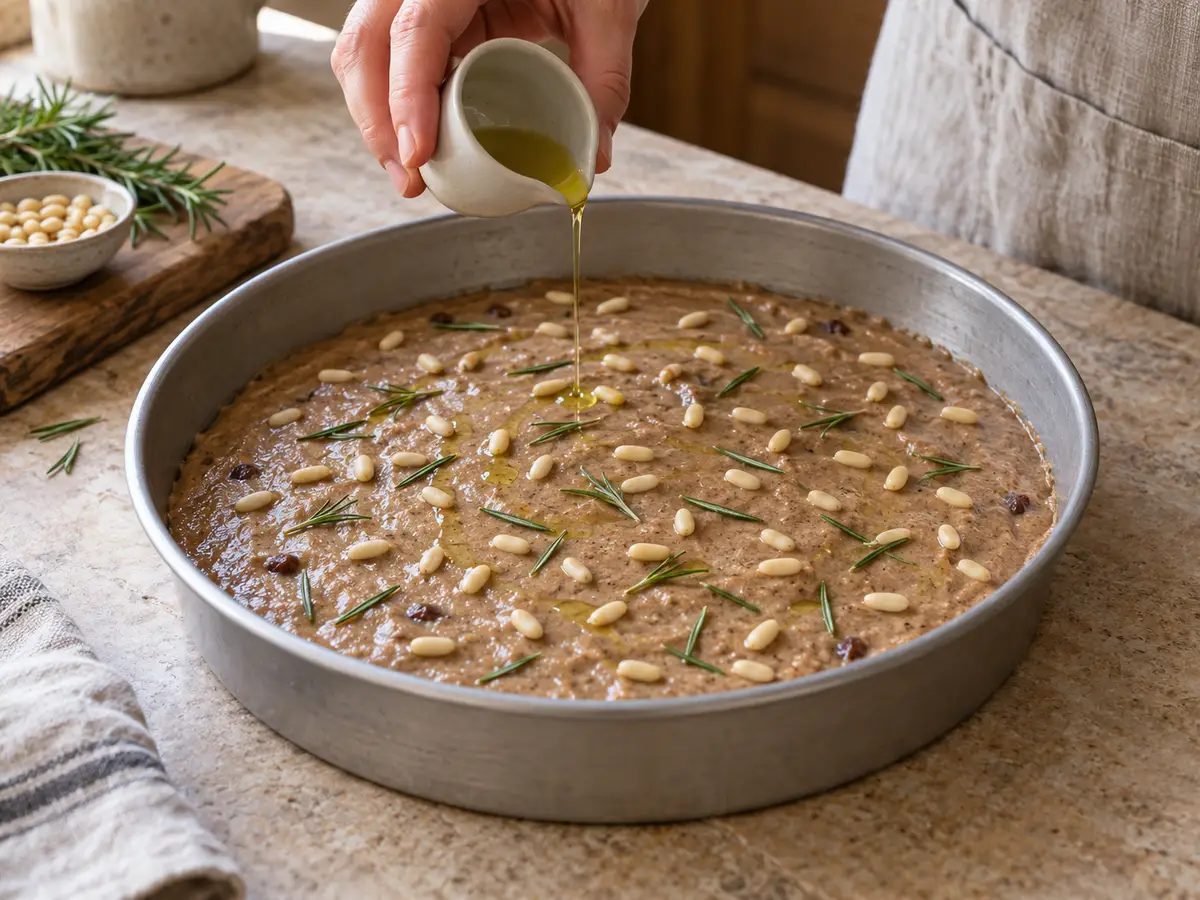
AI-generated Bake on the middle rack for about 30–40 minutes; the time plan allows 35 minutes. The top should turn matte with fine cracks, and the pine nuts should brown lightly. The center should be set but still moist and dense, without liquid batter. Castagnaccio does not rise like a sponge cake. Do not wait for it to become very dry or for the pine nuts to turn black.
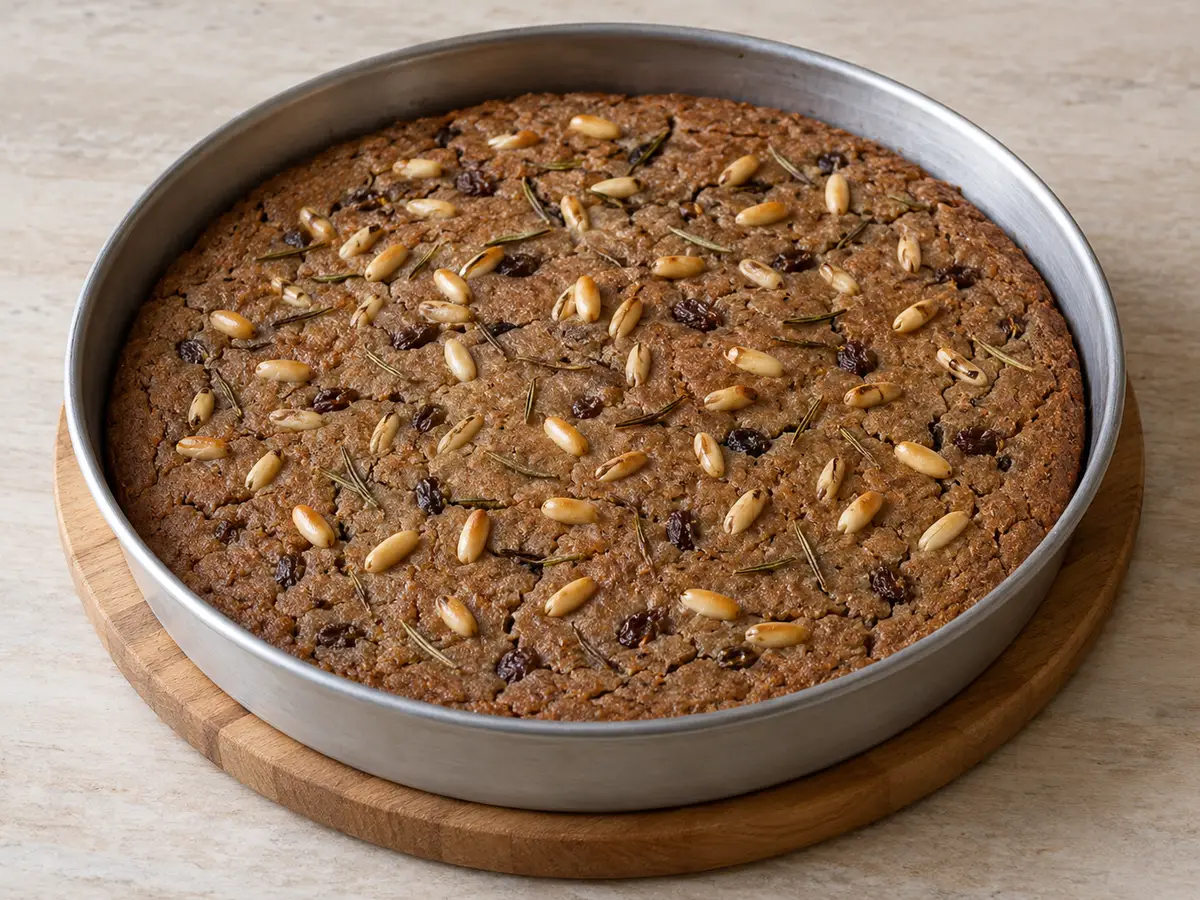
AI-generated Set the pan on a rack for about 45 minutes, until the cake reaches room temperature and can be sliced neatly. If it is still warm, cool it longer. Divide into 8 portions and serve without extra cream. Allow about 1 hour and 50 minutes in total: 20 minutes of work, 35 minutes of baking, plus 10 minutes of batter resting and 45 minutes of cooling. Do not count the raisin soaking and oven preheating again.
Estimated nutrition

Rate this recipe
0 ratings
Comments