
AI-generated
Dobos Cake with Chocolate Cream and Caramel
Log in or create a free account to save recipes.
Source: https://recipheon.com/en/recipes/desserts/dobos-cake-with-chocolate-cream-and-caramel
About this recipe
Dobos cake combines six thin sponge layers, chocolate buttercream and a crisp caramel topping. Bake the layers one at a time, making the batter in three small batches so the whipped mixture does not have to wait long. The cream is made from eggs and sugar warmed over steam, chocolate and softened butter; the chocolate base must cool before the final beating. The caramel needs the most attention: spread it on a separate sponge layer and cut it into wedges while it is still pliable. This lets you portion the finished cake without breaking through a hard sheet of caramel. Five even layers of cream join all six sponge layers, and the caramel pieces lie flat on top. The round cake makes twelve servings.
Ingredients
Sponge layers, cream and caramel
10 raw whole chicken eggs, size M, about 500 g edible contents without shells, divided: 6 eggs (about 300 g) for the sponge layers and 4 whole eggs (about 200 g) for the cream
450 g fine white sugar, divided: 120 g for the sponge layers, 180 g for the cream and 150 g for the caramel
120 g dry wheat cake flour
290 g butter made from cow's milk (82% fat), divided: 30 g to melt for the sponge layers, 250 g softened for the cream and 10 g for the caramel
200 g dark chocolate (70% cocoa), without filling, to be chopped
1530 ml water, divided: 30 ml for the caramel, 1000 ml for the steam bath and 500 ml for warming the knife; the last two portions are used only as process materials, do not go into the cake and are discarded
Steps
Preheat the oven to 180°C on the conventional (no-fan) setting. Draw circles 20 cm in diameter on six sheets of parchment paper and turn the paper drawn-side down; have ready a flat metal baking sheet at least 30 × 40 cm, a cooling rack, mixer, spatula, scale and flat cake plate. For the cream, you will need a metal bowl and a pot that fits beneath it, with the bowl clear of the water; for the caramel, have ready a small heavy-bottomed saucepan, a sharp knife and a heatproof container for the water used to warm it. Divide the sponge ingredients into three sets, each with 2 eggs, 40 g sugar, 40 g flour and 10 g butter; reserve the remaining 4 eggs for the cream and leave its 250 g butter covered to soften.
Melt the first 10 g butter over low heat and let cool until still liquid but no longer hot. Beat the first 2 whole eggs with 40 g sugar for about 5 minutes until pale and fluffy, with the mixture falling in a thick ribbon. Gently fold in 40 g sifted flour with a spatula, then fold in the butter after first mixing it with one tablespoon of the same batter. Divide the entire prepared batch into two equal portions; each will make one thin sponge layer, with no batter left over.
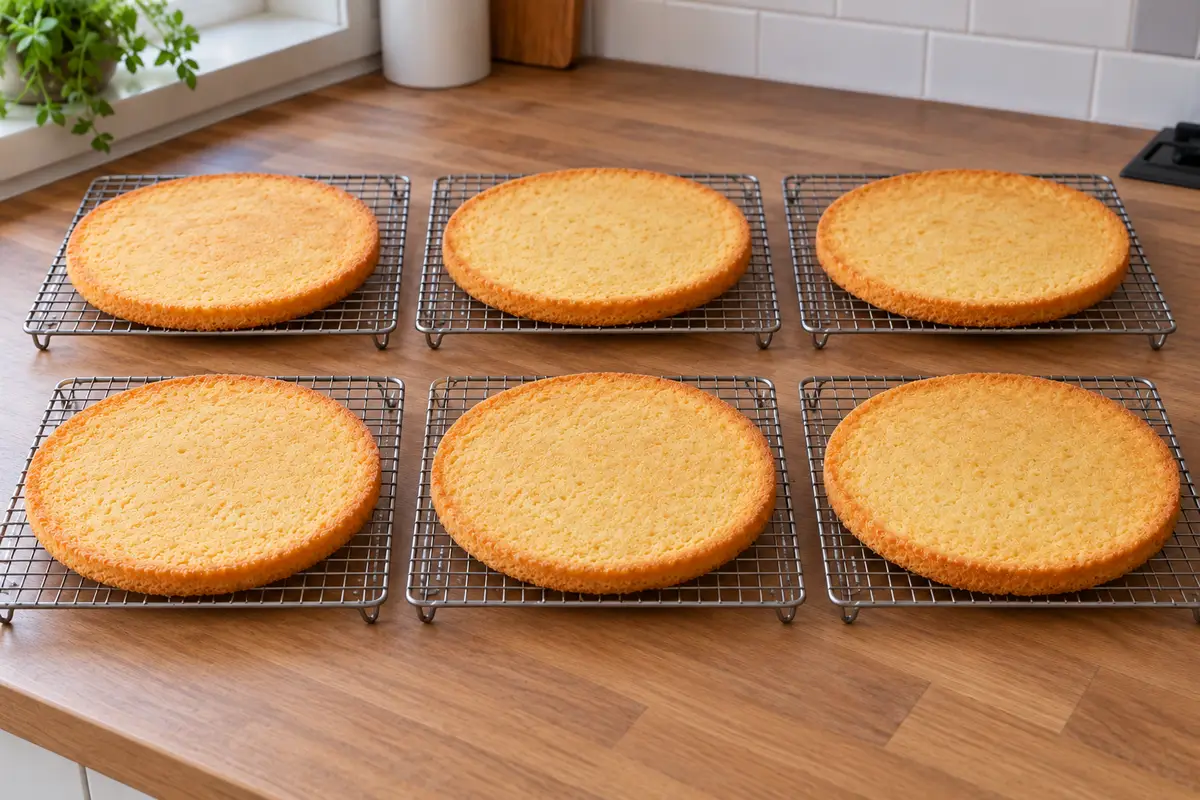
Spread the first half of the batter inside one circle in a thin, even layer and bake on the middle rack for about 8–10 minutes, until lightly golden with a springy surface and no wet batter. Keep the other half in the bowl only during this bake, then spread it on the next sheet of paper and bake in the same way. Make fresh second and third batches following the previous step, using the remaining ingredient sets, and bake the next four layers one at a time: six separate bakes in total. Transfer each layer with its paper to the rack, carefully remove the paper after a few minutes and leave to cool completely; the last layer needs about 20–30 minutes, during which you can start the cream. Do not trim the sponge and do not discard any of it; reserve the most even disc as the sixth layer for the caramel top.
AI-generated Pour 1000 ml water into the prepared pot and bring to a gentle boil; the bottom of the bowl set over the pot must stay above the water. Combine 4 whole eggs with 180 g sugar in the bowl and whisk over steam for about 8–10 minutes, stirring constantly, including around the sides. The mixture should be clearly hot, thick and fluffy, with a ribbon that briefly remains on the surface; do not stop heating just because the sugar has dissolved. Remove the bowl, add all 200 g finely chopped chocolate and stir until it has completely melted; discard the steam-bath water.
Leave the chocolate base for about 60 minutes, stirring several times, until completely cool but not icy cold and at a similar temperature to the softened butter; the last sponge layers cool at the same time. Beat 250 g softened butter with a mixer for about 5 minutes until fluffy. Add all the cooled base one spoonful at a time, beating each addition until combined, to make a smooth, uniform cream with no separated liquid. Divide all the finished cream into seven equal portions: five for joining the sponge layers and two for coating the sides of the cake.
Place the reserved sixth, cooled sponge layer on paper on a flat board and have the spatula and knife ready so you can cut the caramel without delay. Bring 500 ml water to a boil, take the pot off the heat and pour the water into a heatproof container. Dip the knife blade into the water, then dry it thoroughly; warm and dry it again before each subsequent cut. This water is only for the tool and will be discarded; do not add it to the caramel. Do not grease the knife or paper with extra butter or oil.
Combine 150 g sugar with the remaining 30 ml water in the saucepan. Heat over medium heat for about 5–8 minutes, until the sugar dissolves and the syrup turns an even golden amber; do not stir with a spoon while it boils, only gently tilt the saucepan. Take the saucepan off the heat, add 10 g butter and carefully stir with a spatula, watching out for steam. Hot caramel can burn you badly: do not touch it and do not taste it, and cover the prepared sponge layer with it immediately in the next step.
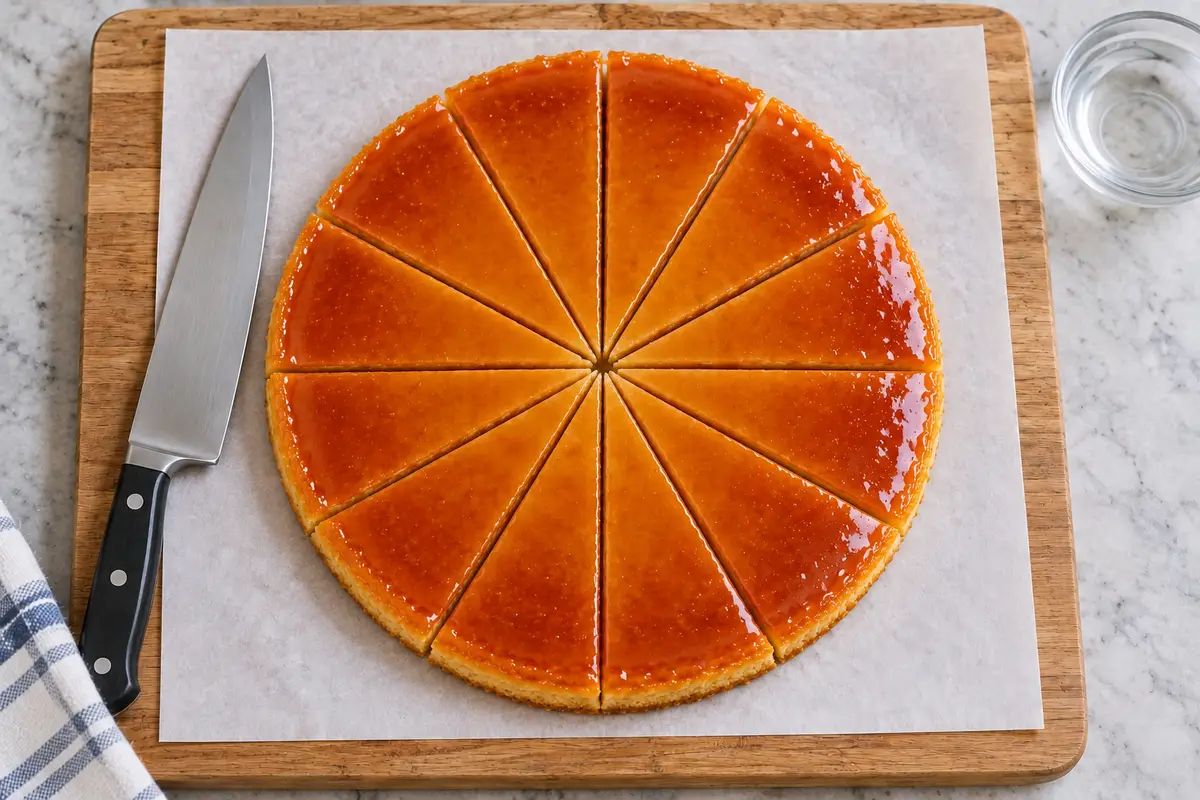
Pour the caramel over the sixth sponge layer and immediately spread it quickly in as even and thin a layer as possible, right to the edges, using the spatula to transfer the liquid caramel left in the saucepan too. When it stops flowing freely but is still pliable, use the warmed, dried knife to cut the caramel-covered sponge into 12 wedges, making firm cuts from the center to the edge; do not wait for the caramel sheet to harden completely. Warm and dry the blade after each cut, then leave the pieces for about 20 minutes to cool and harden. Assemble the remaining cake layers during this time; discard the knife-warming water at the end.
AI-generated Place the first of the five plain sponge layers on the plate, spread with one of the five filling portions of cream and cover with the next layer. Repeat, using all five plain layers and spreading cream over the top of the fifth as well: you will have five even cream layers, the last of which supports the caramel-covered sponge. Spread the remaining two portions around the sides of the cake. Once the caramel wedges have cooled, place all 12 flat on the top cream layer to recreate the original circle, with minimal gaps along the cuts; the cake has six sponge layers in total, including the caramel-covered one.
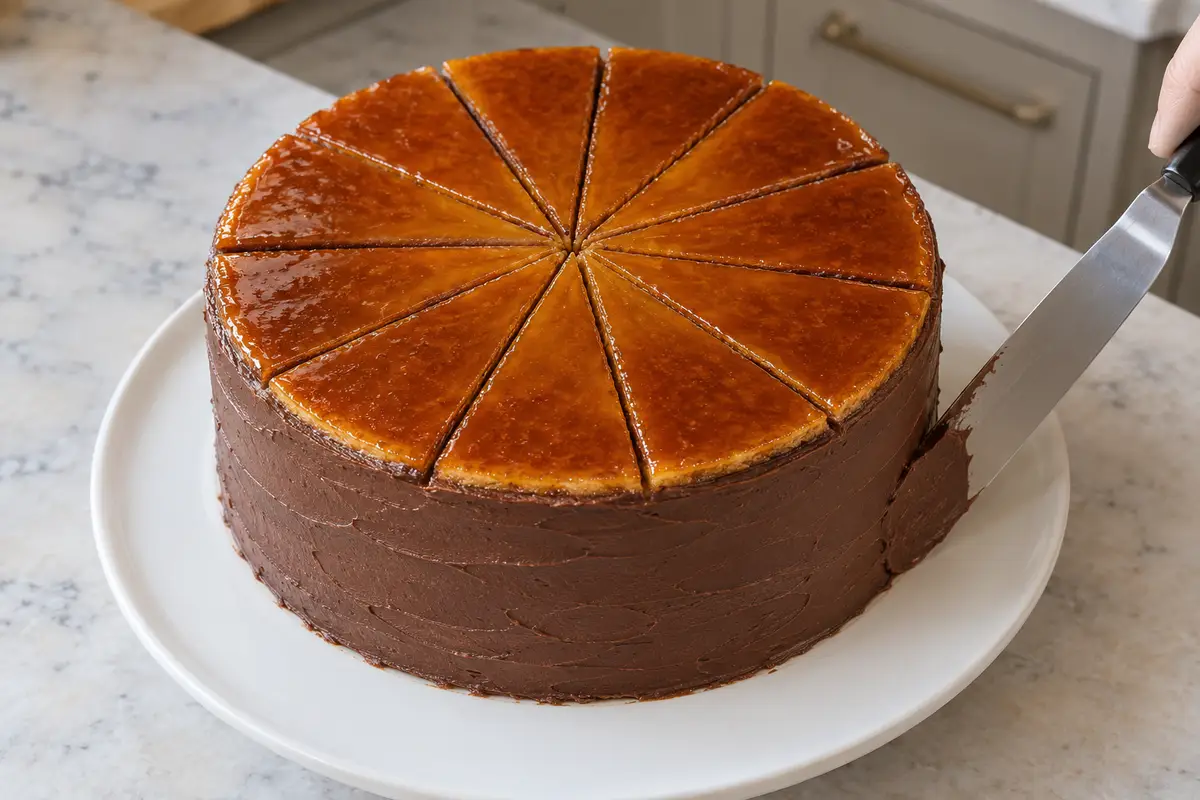
AI-generated Put the cake in the refrigerator immediately for at least 3 hours so the cream firms up and joins the layers. Cover it so the covering does not touch the caramel. Cut into 12 servings with a sharp knife, following the gaps between the caramel wedges and wiping the blade between cuts; do not try to break the caramel on the assembled cake. Serve the cake and return any remaining servings to the refrigerator immediately.
Estimated nutrition

Rate this recipe
0 ratings
Comments