
AI-generated
Marcinek — a Podlasie cake with thin layers and cream filling
Log in or create a free account to save recipes.
Source: https://recipheon.com/en/recipes/desserts/marcinek-a-podlasie-cake-with-thin-layers-and-cream-filling
About this recipe
Marcinek, associated with Podlasie and Hajnówka, is made of many thin, separately baked layers filled with cream. This home version has twelve round layers about 22 cm across. Initially crisp, they absorb moisture from the filling overnight and become a soft, evenly layered cake. The filling combines the gentle sweetness of 36% whipping cream with the pleasant tang of thick 18% sour cream; whip the cream separately before adding the rest. Rolling between parchment sheets means no extra dusting flour is needed. We do not discard the trimmings: bake and crumble them for the top and sides. Rolling and baking successive layers take most of the work, so start the day before serving. Do not shorten the overnight refrigeration, which softens the layers and makes them easy to slice. Serve without extra glaze, cookies or decorations.
Ingredients
All the dough for twelve layers
400 g all-purpose wheat flour, type 550
125 g butter, 82% fat, cold and diced
125 g thick sour cream, 18% fat
50 g raw beaten whole egg without shell, weighed; about 1 egg, size M
70 g fine white sugar
2 g food-grade baking soda, not baking powder
2 g fine salt
All the cream filling and coating
600 g thick sour cream, 18% fat, well chilled
400 g liquid heavy whipping cream, 36% fat, weighed and very cold
80 g powdered sugar made only from ground sugar, without starch
8 g fine sugar with real vanilla
Steps
Prepare two flat baking sheets about 30 × 40 cm, parchment, a rolling pin, a flat plate or template 22 cm across, a rack and a cake stand. Beat the egg and weigh 50 g without shell; leave any remainder outside the recipe. Separately weigh 125 g sour cream for dough and 600 g for filling. Keep the filling's sour cream and whipping cream refrigerated. Do not grease the sheets.
Mix 400 g flour with 70 g sugar, the baking soda and salt. Rub in the cold butter with your fingertips or cut it in until fine crumbs form. Add 125 g sour cream and all the weighed 50 g egg. Knead briefly, just until a soft even dough comes together. Do not knead at length like yeast dough. Do not add more flour and do not add milk; parchment will be used for rolling.
Wrap all the dough and refrigerate for 30 minutes to rest and make rolling easier. Divide into twelve equal parts of about 64 g. Shape small flattened balls, cover and keep refrigerated, taking out one at a time to roll. Keep every portion; do not set any aside for an extra layer or a raw decoration.
Preheat to 190°C, conventional heat, with the rack in the middle. Prepare parchment sheets a little larger than the rounds and another sheet to cover dough while rolling. Bake one layer at a time, alternating sheets so each raw round goes onto a cool sheet. While one bakes, you can roll the next. Do not stack layers in the oven.
Roll one portion between two parchment sheets into a very thin round about 23 cm across and 1–2 mm thick. Remove the top parchment, place the 22 cm template on the dough and trim the uneven edge. Keep all raw trimmings together, covered. Prick the layer all over with a fork. Press small cracks together with your fingers; transfer parchment and dough flat onto the sheet without stretching.
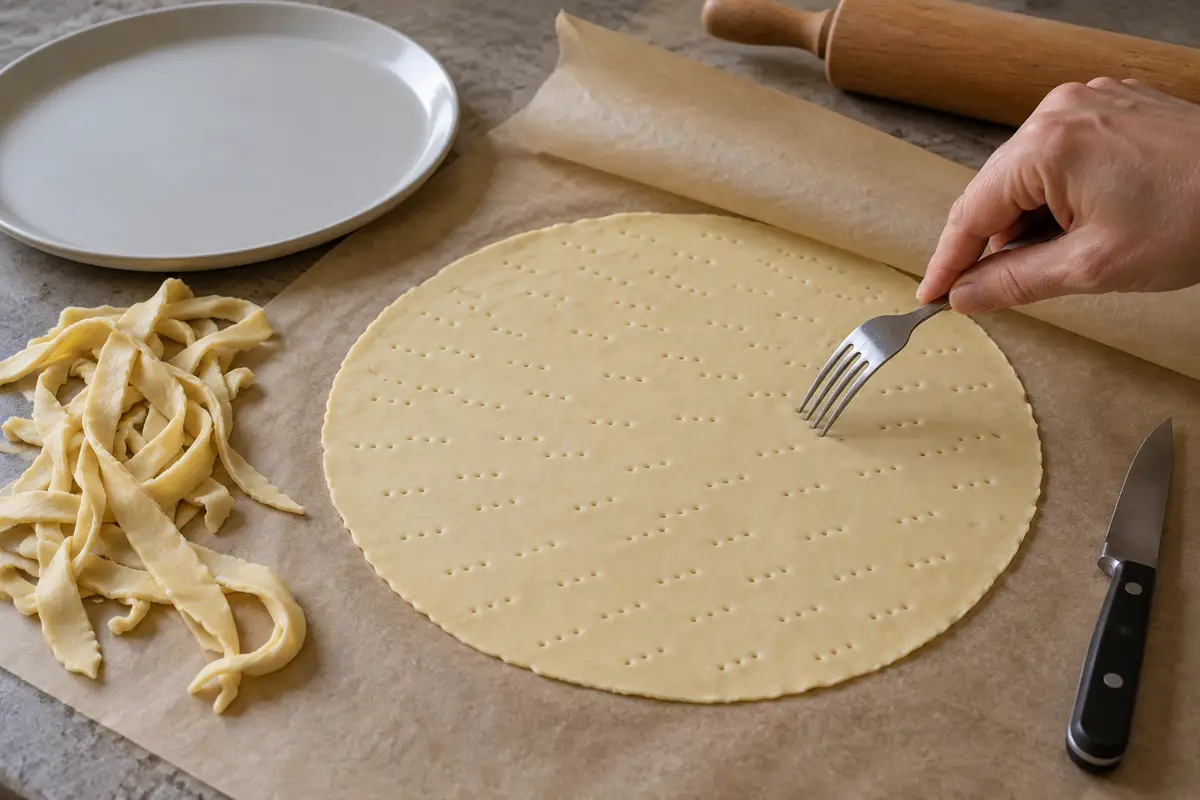
AI-generated Bake each round at 190°C for about 7–9 minutes until evenly golden, including the center, without damp pale patches. Carefully slide parchment and layer onto a flat surface; after cooling briefly, lift onto a rack with a wide spatula. Repeat rolling and baking until there are exactly twelve layers. The whole series takes about 84–108 minutes of baking, not just a few minutes for the entire cake.
Spread all saved trimmings in a single layer on parchment; flatten larger pieces to similar thickness. Bake as the final batch at 190°C for about 5–7 minutes until golden. Cool and crumble all of them finely for the coating. Every cake layer must be completely cold before filling; allow about another 30 minutes of cooling after the last batch. Do not stack hot layers.
Mix the 600 g sour cream with sifted powdered sugar and vanilla sugar. Separately whip all 400 g very cold whipping cream, 36% fat, to stable peaks that bend slightly, without butter lumps. Fold in the sour cream mixture in three portions, just until combined. The filling stays soft and slightly tangy. Do not try to beat the whole mixture at length into a stiff foam.
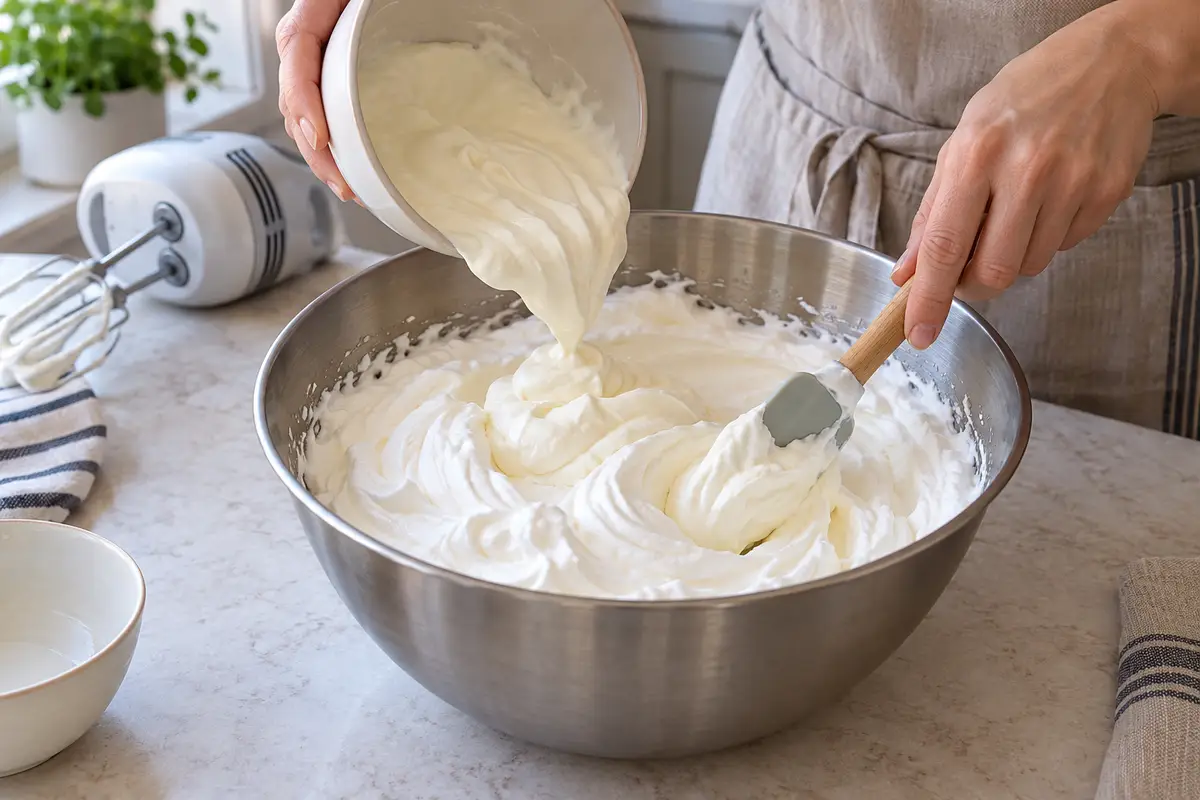
AI-generated Roughly divide the filling into twelve equal portions of about 90 g. Keep one covered in the refrigerator for the top and sides. Stack the cold layers on a flat cake stand, spreading a portion between each pair. There will be twelve cake layers and eleven layers of filling. Place each round evenly and press lightly with your palm without breaking; any crack will be covered by the next layer.
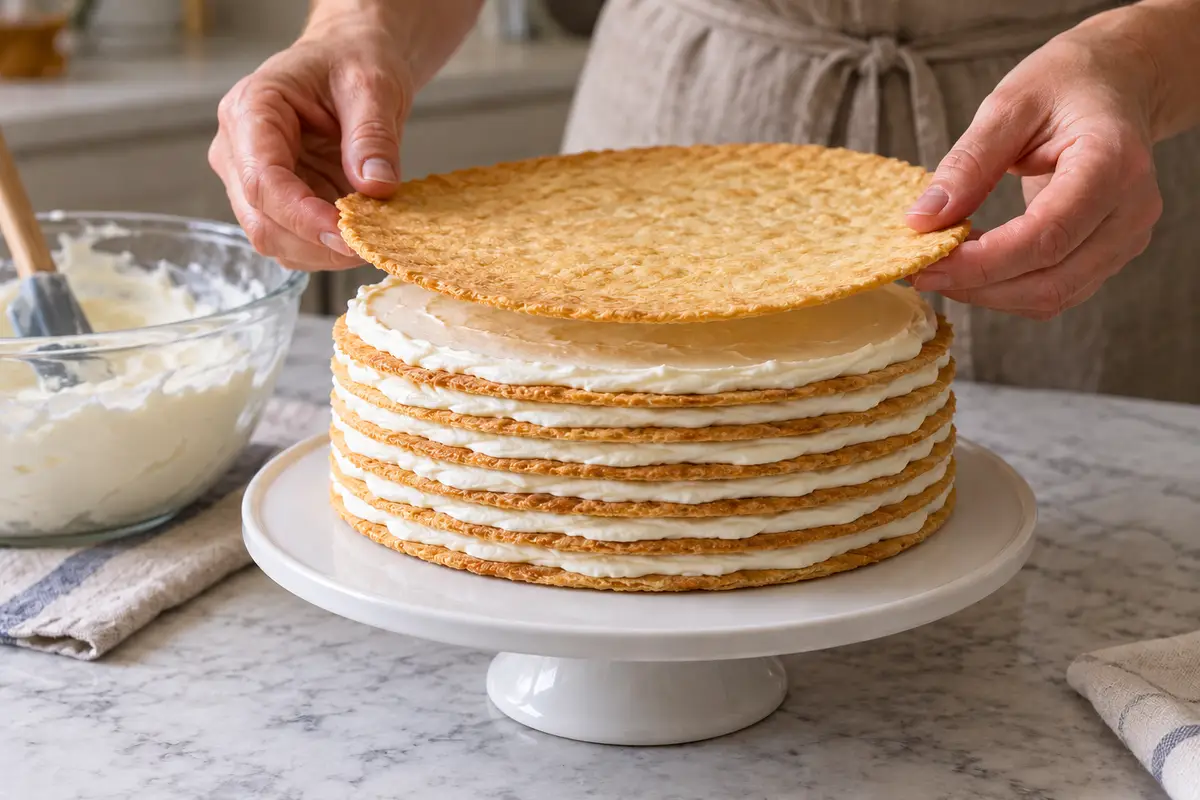
AI-generated Spread the remaining filling portion thinly over the whole top and sides. Scrape the bowl and spatula thoroughly. Coat the cake with all the baked-trimming crumbs, pressing gently onto the sides. Pick up any crumbs that fall onto the stand and apply them again. Do not add cookies, cocoa, nuts or glaze; all the finish comes from the weighed ingredients.
Cover with a tall cover that does not touch the surface and refrigerate for 12–18 hours, preferably until the next day. Do not leave it on the kitchen worktop overnight. The thin layers will soften with moisture from the filling and come together. Do not speed this up by freezing and do not cut immediately after assembly. Chilling is part of preparation, not just storage.
Cut the chilled cake into twelve servings with a sharp knife, wiping the blade between cuts. The cross-section should show thin soft layers of pastry and filling. Serve without further extras; share crumbs on the stand among the servings. Keep the rest covered in the refrigerator and eat within 3 days of making the cream filling. Take out only the amount needed for serving.
Estimated nutrition

Rate this recipe
0 ratings
Comments