
AI-generated
Panforte — Italian Cake with Honey, Nuts, and Candied Fruit
Log in or create a free account to save recipes.
Source: https://recipheon.com/en/recipes/desserts/panforte-italian-cake-with-honey-nuts-and-candied-fruit
About this recipe
Panforte is a dense Italian cake with honey, almonds, hazelnuts, and candied citrus peel. A small amount of flour binds the fruit and nuts, while hot honey and sugar syrup holds them together in a firm, spiced mixture. This low cake has a slightly chewy texture and a clear mosaic of nuts in each slice. Orange and citron peel give it a sweet citrus flavor, complemented by cinnamon, cloves, nutmeg, and a little pepper. Prepare the pan and dry ingredients before cooking the syrup: the mixture thickens quickly once the syrup is added, so you need to spread it promptly in the springform pan. Lining the base and sides with greased parchment helps release the sticky cake. Do not judge doneness by a firm center, as panforte firms up only as it cools. Wait until it has cooled completely before dusting it with powdered sugar and cutting thin slices. A 20 cm springform pan makes twenty small servings. Allow about four and a half hours, including three hours of cooling.
Ingredients
Fruit and nut cake
200 g whole raw blanched almonds, without skins
100 g raw shelled hazelnuts with skins, which remain in the cake
150 g candied orange peel; weight after draining any loose syrup, if present; the syrup is not used
150 g candied citron peel; weight after draining any loose syrup, if present; the syrup is not used
100 g wheat flour, Polish type 450
150 g light-colored liquid honey
130 g white granulated sugar
4 g ground cinnamon
0.5 g ground cloves
0.5 g ground nutmeg
0.5 g ground black pepper
5 g unsalted butter (82% fat) for greasing the parchment in the pan
20 g powdered sugar for dusting the finished cake
Steps
Preheat a conventional oven (no fan) to 160°C. Line the base and sides of a 20 cm springform pan with parchment paper and grease the paper with all 5 g butter. Have an extra piece of parchment and a sturdy spatula ready for leveling the mixture; the pan must be prepared before you start cooking the syrup.
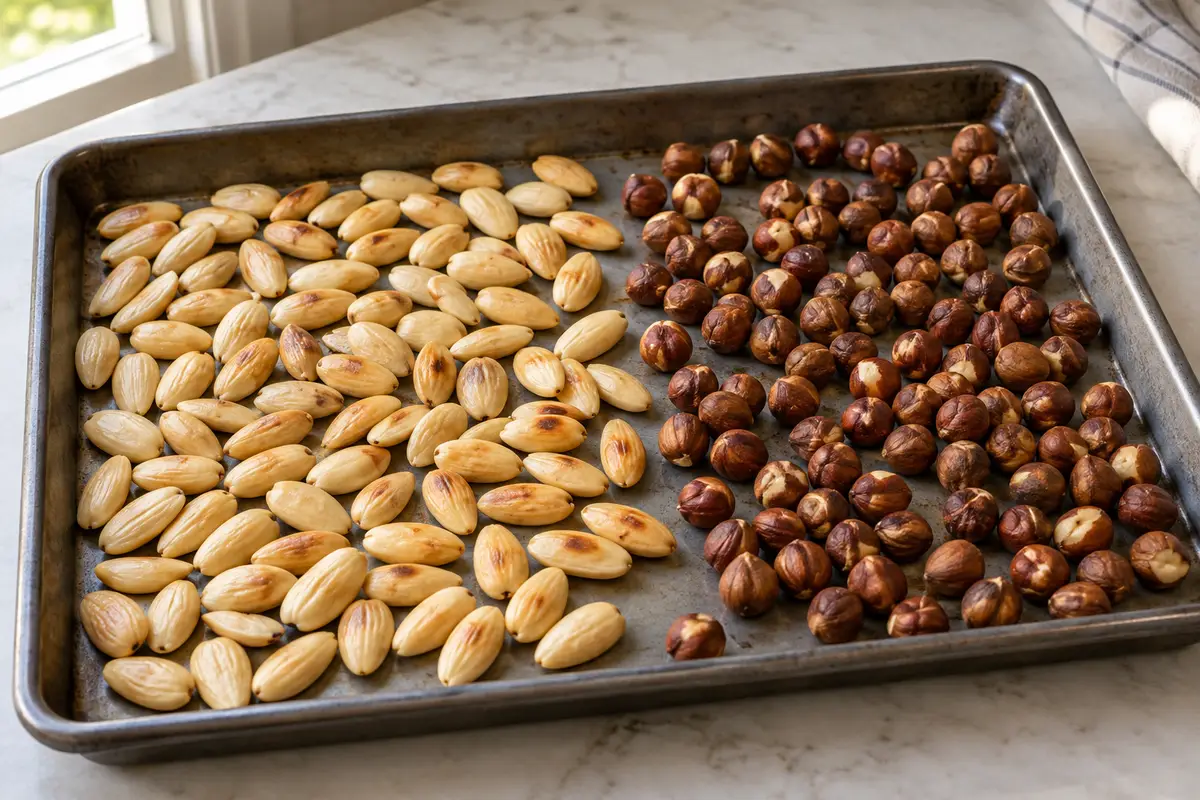
Spread the almonds and hazelnuts in a single layer on a baking sheet, in two separate areas, and toast on the middle rack for about 10–12 minutes. Stir halfway through; take them out when lightly golden and fragrant. Let stand for about 5 minutes until cool enough to handle safely, working on the citrus peel in the meantime. Do not remove the hazelnut skins.
AI-generated Drain any loose syrup from the citrus peel, if present, and weigh out 150 g of each type; cut the peel into dice about 5–8 mm across. Very coarsely chop the hazelnuts and almonds, leaving some whole. In a large heatproof bowl, mix them with the peel, flour, cinnamon, cloves, nutmeg, and pepper until the fruit and nuts are evenly coated.
Put the honey and granulated sugar in a small, heavy-bottomed saucepan. Heat over low heat for about 4–5 minutes, stirring until the sugar dissolves and the syrup is smooth. Increase to medium-low heat, bring to a boil, and cook for about 2 minutes, maintaining even bubbles across the entire surface. The syrup should be thick and light-colored; do not wait for dark caramel, and remove the pan from the heat immediately after this brief boil.
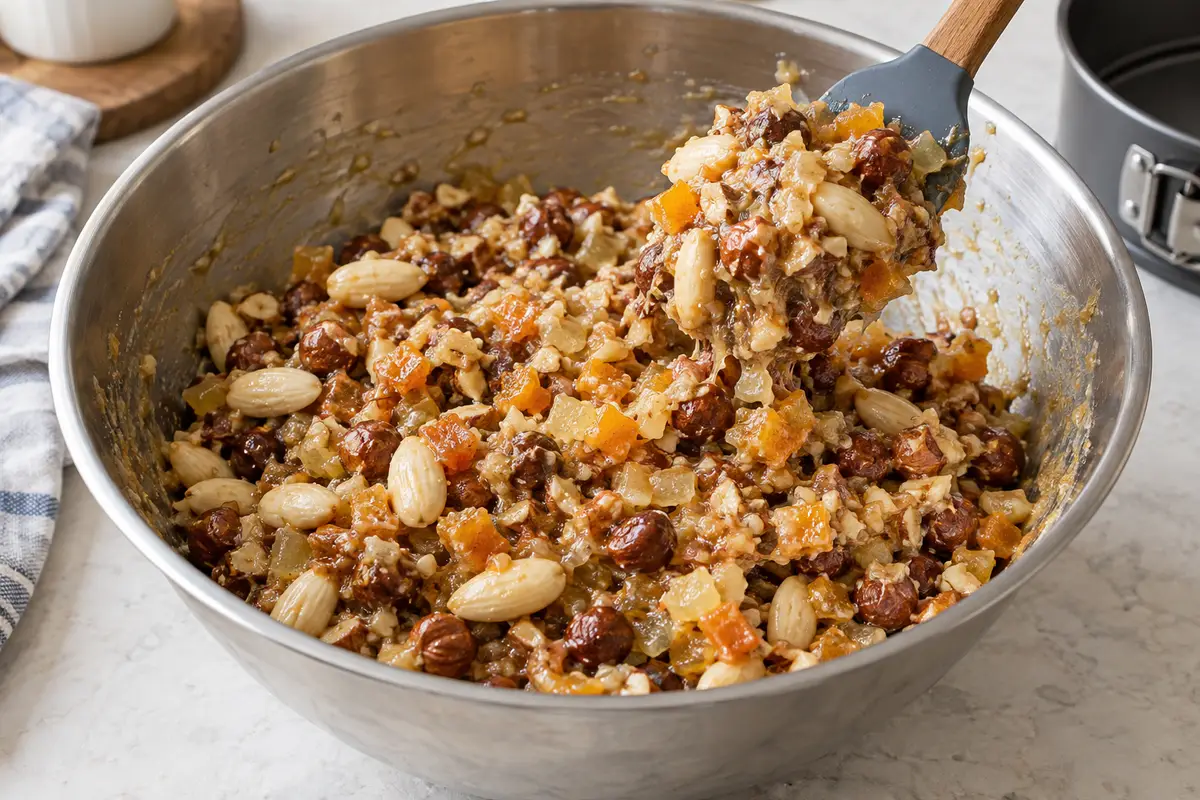
Carefully pour the hot syrup into the bowl of fruit and nuts and immediately mix with a sturdy spatula until no dry flour remains. The mixture will be very thick and sticky, with distinct pieces of nuts; mixing should take about 1–2 minutes. Work promptly and do not touch the hot mixture with your hands, as the syrup can burn.
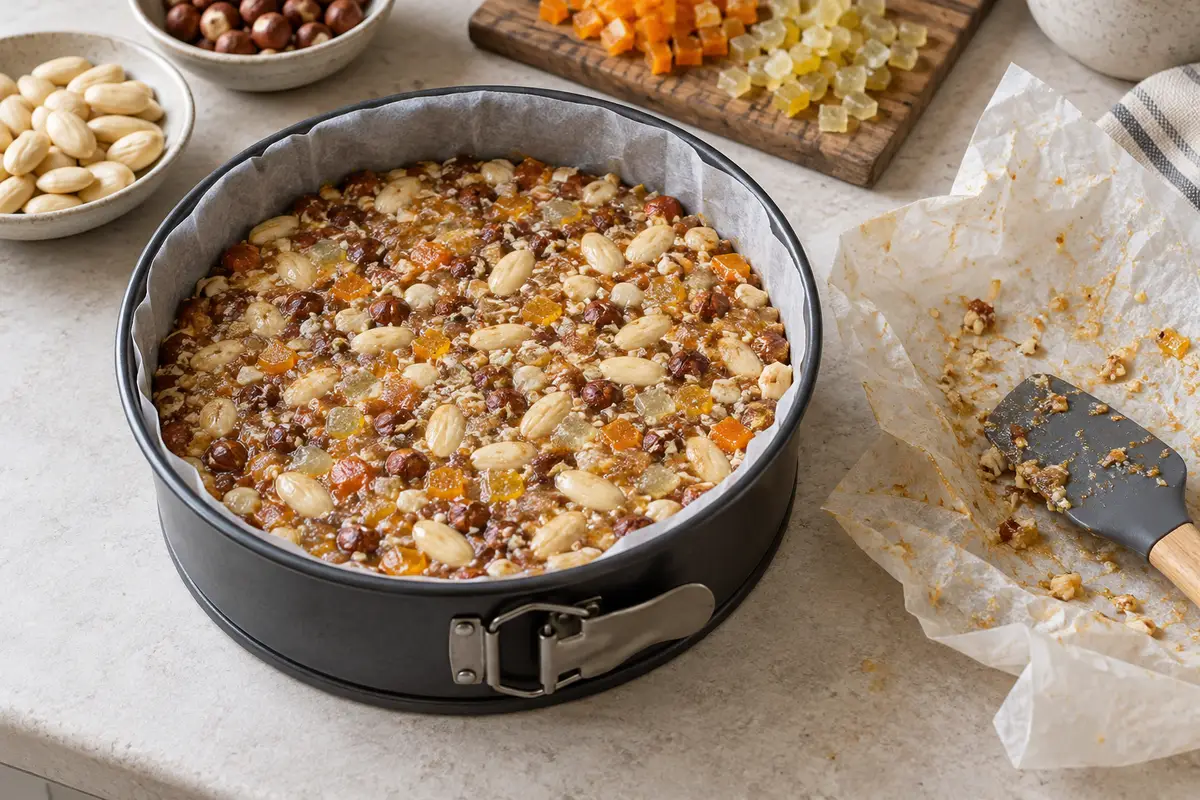
AI-generated Immediately transfer the mixture to the prepared springform pan and spread it to the edges with a spatula. Cover the top with the extra parchment and press through the paper with the spatula into an even layer about 2–3 cm thick, then remove this top sheet. Do this within about 2–3 minutes, before the mixture cools and hardens; the bottom and side parchment stay in the pan during baking.
AI-generated Set the springform pan on a baking sheet and bake on the middle rack at 160°C on the conventional (no-fan) setting for about 35–40 minutes. The top should set and darken slightly, and small syrup bubbles may appear around the edges. The center will stay soft while hot; do not extend baking until it is completely firm, so the cooled cake does not become too hard.
After baking, leave the panforte in its pan on a wire rack for about 30 minutes, until it is no longer very hot and becomes more stable. Carefully remove the ring and peel away the side parchment, leaving the cake on the pan base with the bottom parchment. Continue cooling on the rack for about 2 and a half hours, until the cake is completely cold and firm, including in the center; only then transfer it to a plate and remove the bottom parchment. Complete cooling takes about 3 hours.
Dust the completely cooled panforte with all the powdered sugar. Cut into twenty thin servings with a sharp, sturdy knife, pressing steadily through the pieces of nuts. Serve at room temperature; the cut surface should be dense and slightly chewy, with visible nuts and citrus peel.
Estimated nutrition

Rate this recipe
0 ratings
Comments