
AI-generated
Seadas – Sardinian cheese pastries with honey
Log in or create a free account to save recipes.
Source: https://recipheon.com/en/recipes/desserts/seadas-sardinian-cheese-pastries-with-honey
About this recipe
Seadas are Sardinian pastries with a thin, crisp shell filled with mild sheep cheese and fragrant lemon zest. After frying, they are served warm with honey, which balances the slightly tangy filling. The fine semolina and lard dough needs to rest, while the heated cheese must be shaped and chilled well before sealing. This helps you make a thin shell and a tightly closed edge. This home version makes twelve small pastries, or six servings of two. Choose fresh cheese suitable for melting; hard, long-aged pecorino will not give the same filling.
Ingredients
For 6 servings, 12 small seadas
250 g finely milled durum semolina (semola rimacinata): 240 g for the dough and 10 g for rolling
30 g soft pork lard
120 g lukewarm water, weighed on a scale
2 g fine salt for the dough
300 g fresh, slightly tangy sheep’s milk rennet cheese (pecorino fresco), without rind or free whey
4 g finely grated yellow zest from a lemon suitable for consumption, without white pith
80 g runny honey for serving
600 g olive oil for frying; most will remain in the pan
Steps
Combine 240 g semolina with the salt and all the lukewarm water. Gradually knead in the soft lard, then knead for about 8–10 minutes until smooth, firm and elastic. Do not add extra flour; keep the remaining 10 g semolina for rolling. Cover the dough and refrigerate for at least 2 hours. Prepare the filling during this time; the dough’s rest overlaps the filling’s chilling.
Use fresh, mild sheep cheese suitable for melting, not hard aged pecorino. Coarsely grate or finely chop it. Wash and dry the lemon, then weigh 4 g yellow zest only. Heat the cheese over low heat in a nonstick pan, stirring for about 5–8 minutes until it comes together into a firm, stretchy mass. Remove from the heat and stir in all the zest. Do not add milk and do not brown the cheese; the rest of the lemon is not part of the recipe.
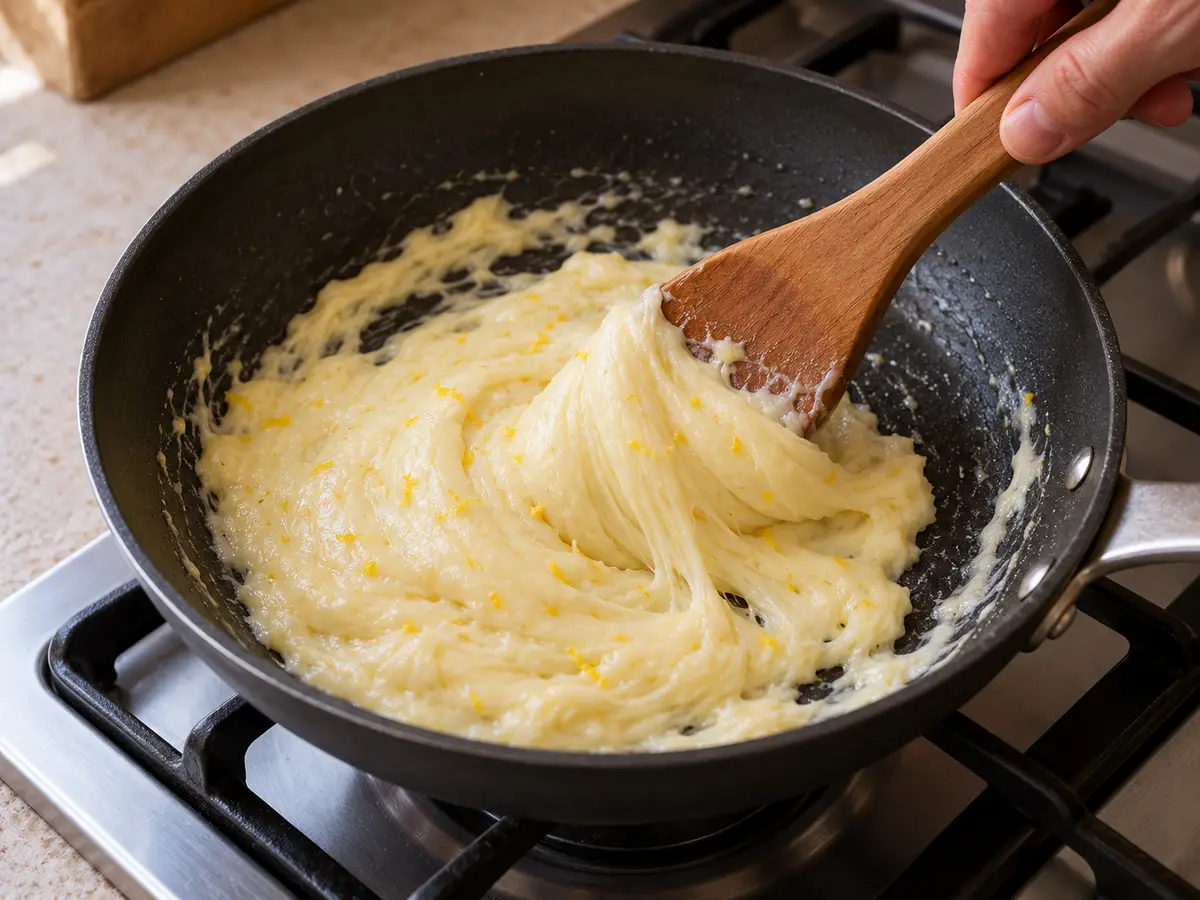
AI-generated Transfer all the still-warm filling to baking parchment and divide into 12 equal parts. Flatten into discs about 6 cm wide and 6–8 mm thick. Once they stop steaming heavily, cover and refrigerate for about 2 hours until cold and firm. Chill longer if they remain soft. Do not leave dairy on the counter for several hours. Meanwhile, the dough finishes resting in the refrigerator.
Take the dough out for a few minutes so it is easy to roll. Divide into pieces and keep unused pieces covered. Roll thinly, to about 1.5–2 mm, dusting only with the reserved 10 g semolina. Cut 24 circles about 9 cm wide. Gather and reroll the scraps to use the dough in the same batch. The circles should be thin and flexible, without dried-out edges.
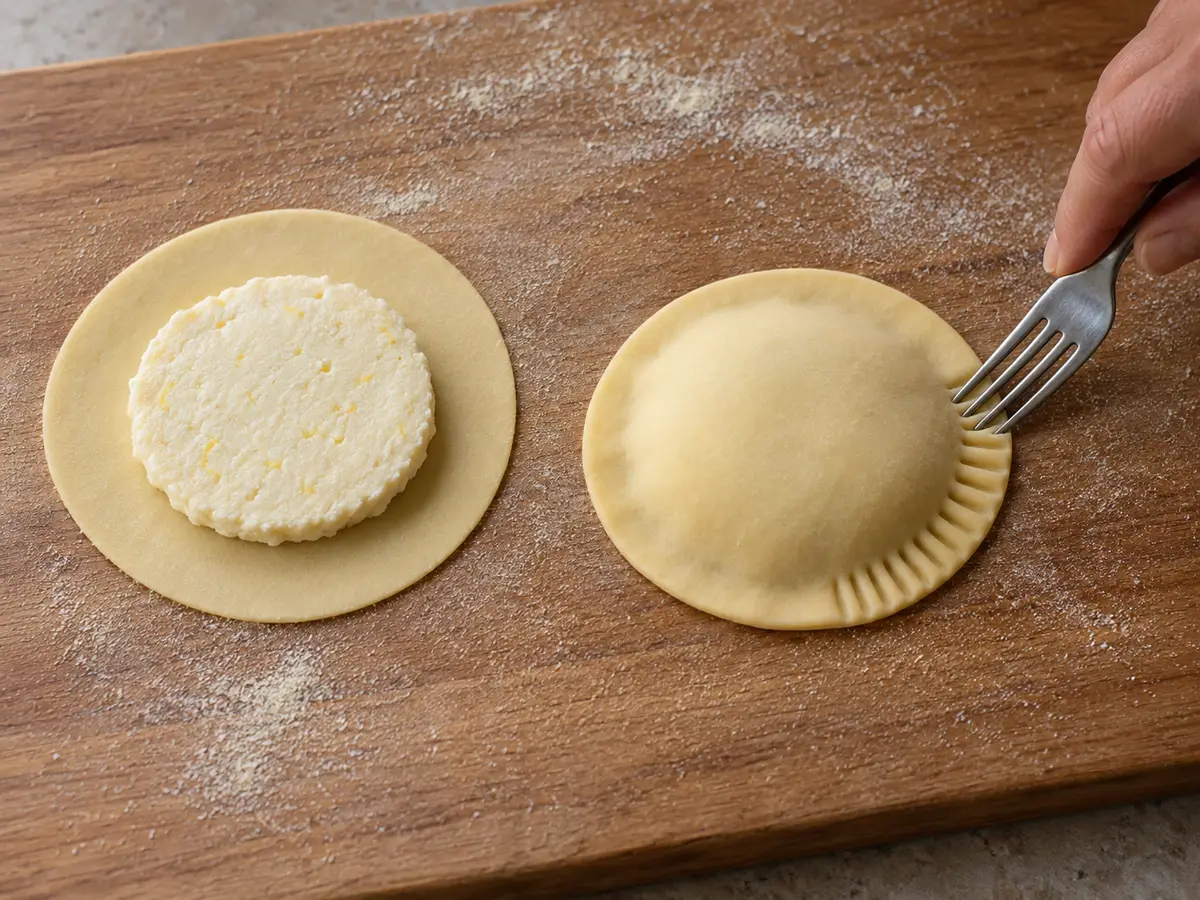
Place one chilled cheese disc in the center of each of 12 pastry circles. Cover with the remaining circles and gently press air from the filling toward the edges. Firmly seal a clean border about 1 cm wide, then press it with a fork or pastry wheel. Do not pierce the area above the cheese. Keep the finished pastries covered while completing the batch; do not brush them with egg.
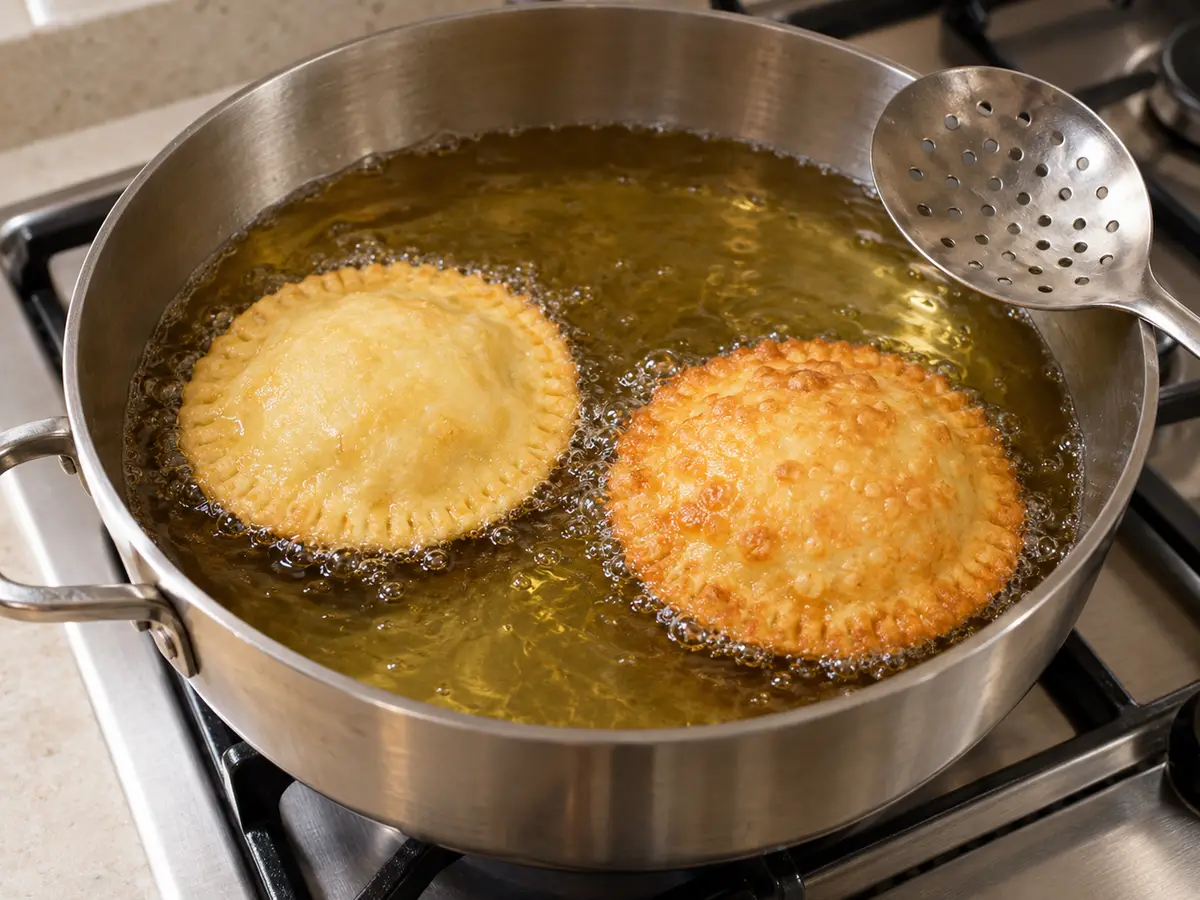
AI-generated Pour the olive oil into a high-sided pan about 24 cm wide, forming a layer about 1.5–2 cm deep. Heat over medium heat. Dip the edge of the first seadas into the oil: it should bubble gently and steadily, without smoking or immediately darkening the dough. Fry about 2 at a time, usually for 1–2 minutes on each side, until golden and covered in small blisters. Turn carefully and adjust the heat between batches. Drain briefly on paper towels; do not serve the remaining oil with the dessert.
AI-generated If the honey is thick, warm it gently just until runny. Divide all the measured 80 g among the 12 fried seadas and serve immediately while warm, 2 per portion. Allow about 3 hours and 20 minutes in total: 50 minutes of preparation, about 30 minutes of heating and frying, and 2 hours of chilling. The dough rests while the filling chills; allow longer if the cheese needs more time to firm up.
Estimated nutrition
We couldn't estimate the nutrition for this recipe yet.

Rate this recipe
0 ratings
Comments