
AI-generated
Tarte Tatin — Upside-Down Caramelized Apple Tart
Log in or create a free account to save recipes.
Source: https://recipheon.com/en/recipes/desserts/tarte-tatin-upside-down-caramelized-apple-tart
About this recipe
Tarte Tatin pairs soft, glossy apples in buttery caramel with a shortcrust base that bakes on top. This version uses firm Braeburn apple quarters and homemade shortcrust pastry without eggs. The fruit first cooks in caramel in the skillet to release some juice, soften and settle snugly together. Only once the liquid has thickened do you cover it with pastry: watery juices could soften the crust after the tart is inverted. The caramel should be a clear amber color, without the bitter taste of burned sugar. A brief cooling period after baking lets the bubbling sauce settle, while inverting the tart while it is still warm preserves the smooth, glossy layer of apples. All the caramel collected from the skillet goes onto the fruit, without any extra sauce or decoration.
Ingredients
Pastry, apples and caramel
150 g all-purpose flour for the shortcrust pastry
125 g unsalted butter (82% fat): 75 g cold butter for the pastry and 50 g for the caramel
165 g fine white sugar: 15 g for the pastry and 150 g for the caramel
65 ml water: 35 ml very cold water for the pastry and 30 ml for the caramel
1 g fine salt for the pastry
1000 g firm Braeburn apples, weighed after peeling and coring; approximately 1.3 kg whole apples are needed
Steps
Mix all the flour, 15 g sugar and 1 g salt in a bowl. Add 75 g cold butter, diced, and briefly rub it in with your fingertips to form small crumbs, then pour in 35 ml very cold water. Gather and press the dough into a cohesive ball without kneading it for long; it should hold together without crumbling, but stay cool, with small traces of butter still visible.
Flatten all the dough into a thick disk, wrap in plastic wrap and refrigerate for at least 30 minutes; leave it there while making the caramel and cooking the apples. Meanwhile, peel and quarter the apples and carefully remove the cores, then weigh out 1000 g prepared flesh. Keep the quarters large and intact rather than cutting thin slices; discard the peels and cores.
Set out a heavy-bottomed metal skillet approximately 24 cm across at the top rim and at least 5 cm deep, with the entire skillet, including its handle, suitable for use in the oven at 190°C. Use the same pan from making the caramel through baking the tart; do not use a pan with a removable bottom. Preheat a conventional oven (no fan) to 190°C and position a rack just below the center.
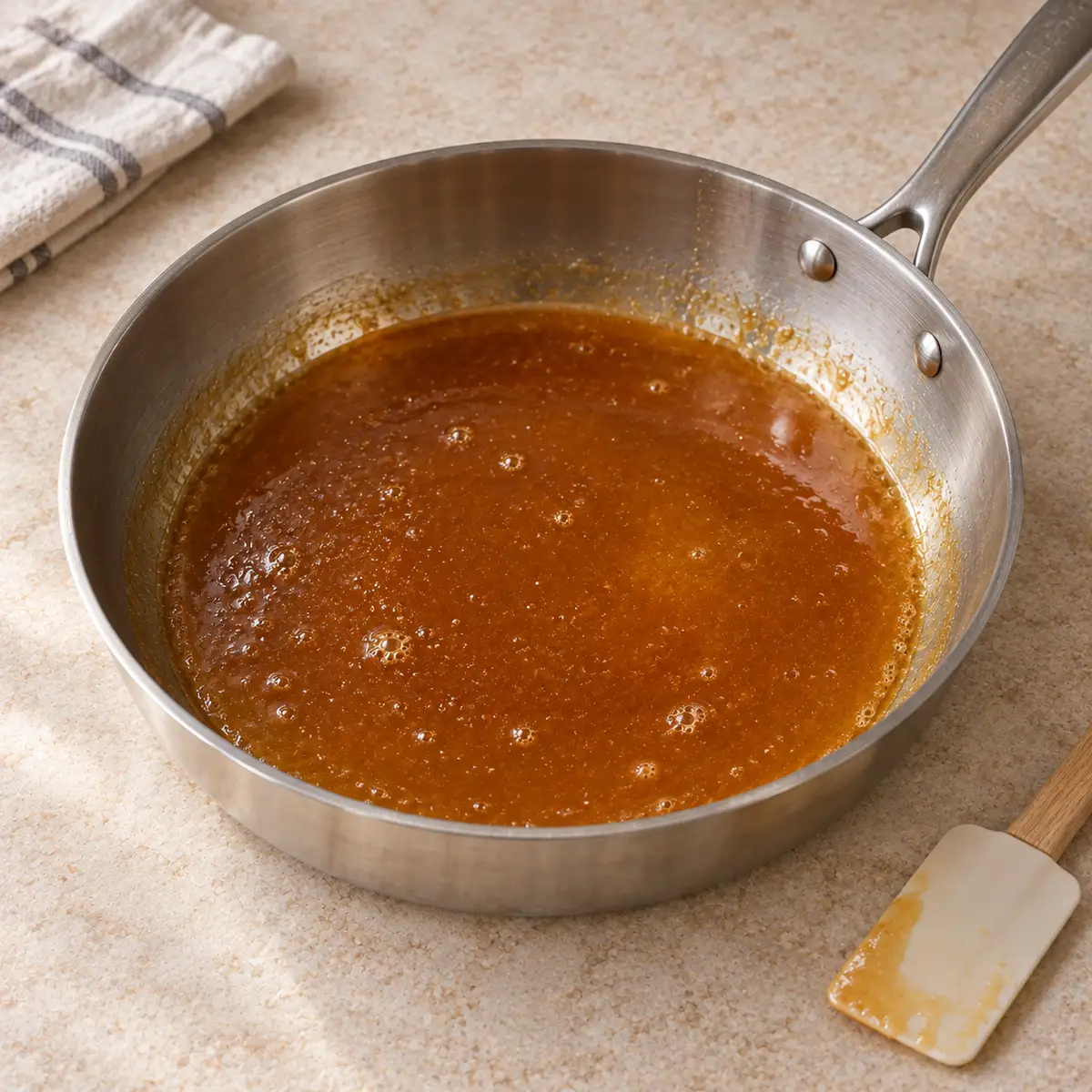
Put the remaining 150 g sugar in the skillet, pour in 30 ml water and gently tilt the pan to moisten all the sugar. Heat over medium heat for approximately 8–10 minutes, until the syrup reduces and turns an even amber color. Do not stir with a spoon while it boils; just gently move the skillet as needed. Remove from the heat before the caramel turns dark brown, add the remaining 50 g butter and carefully stir with a heatproof spatula until combined, watching out for foaming.
AI-generated Using tongs, arrange all the apple quarters in the warm caramel, rounded side down, in tightly overlapping circles, including the center. Set the skillet over medium-low heat and cook without a cover for approximately 20–25 minutes, gently moving the pan every few minutes so the juice blends with the caramel; if the caramel hardens at first, it will dissolve in the fruit juice. The apples should soften around the edges but keep their shape, and the liquid between them should change from watery juice to a thick, glossy syrup with bubbles that burst more slowly. If needed, reduce for a few minutes longer over medium heat without letting the caramel darken; do not pour off the juice and do not crush the fruit.
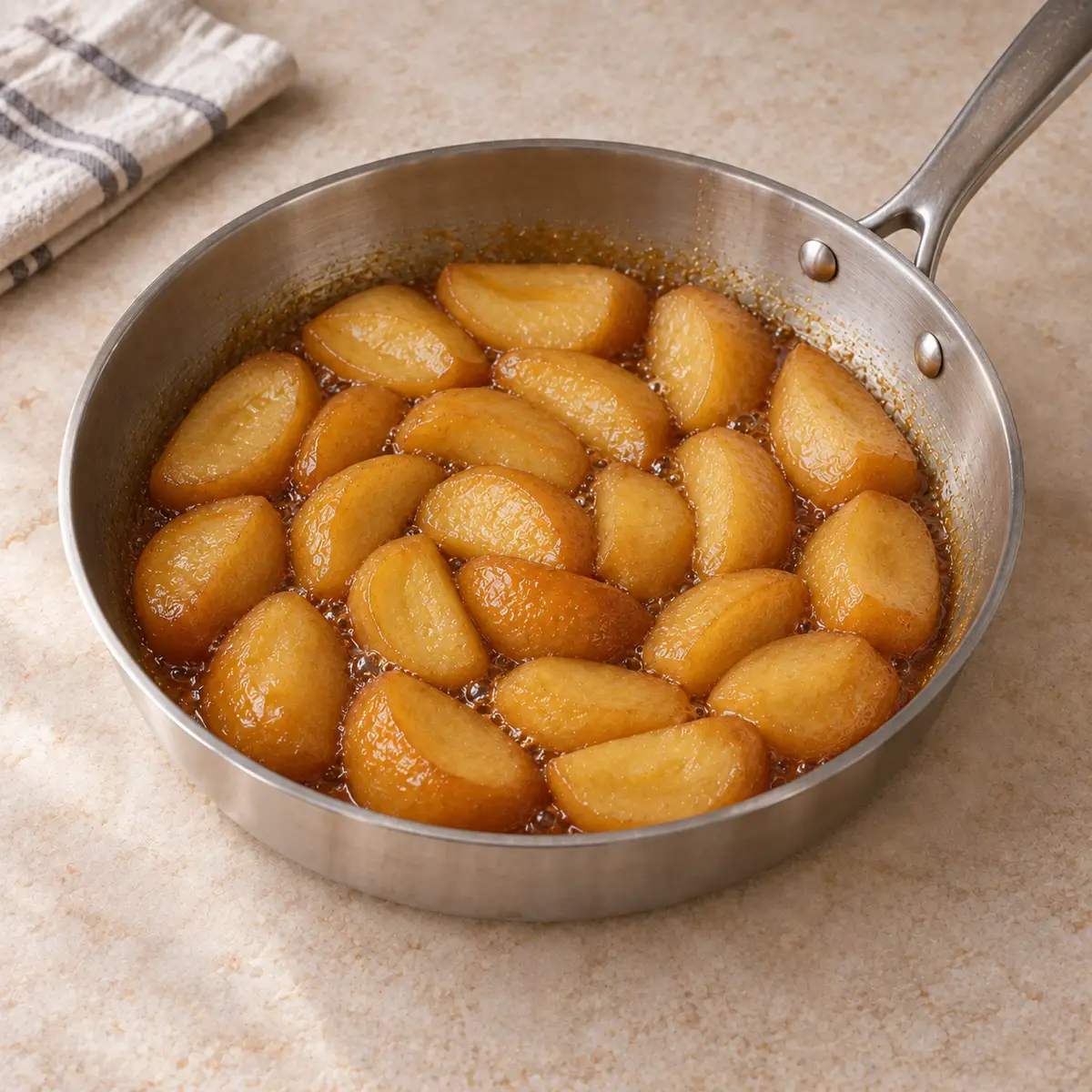
AI-generated Remove the skillet from the heat and leave for approximately 10 minutes, until the caramel stops bubbling and the fruit is no longer steaming heavily. Meanwhile, take the dough out of the refrigerator, remove the plastic wrap and roll out all of it between 2 sheets of parchment paper into a circle approximately 26 cm in diameter and approximately 4 mm thick. Even out the edges with your fingers, without trimming off any dough and without dusting with flour. If you finish before the apples have had their cooling time, return the rolled-out pastry, still in its paper, to the refrigerator.
Remove the top sheet of paper, flip the pastry circle over the apples and remove the second sheet. Lay the pastry over the fruit and carefully tuck the overhanging edge down inside the skillet, along its rim, using the blunt side of a spoon; use all the pastry. Make 3 short slits approximately 2 cm long in the center so steam can escape during baking.
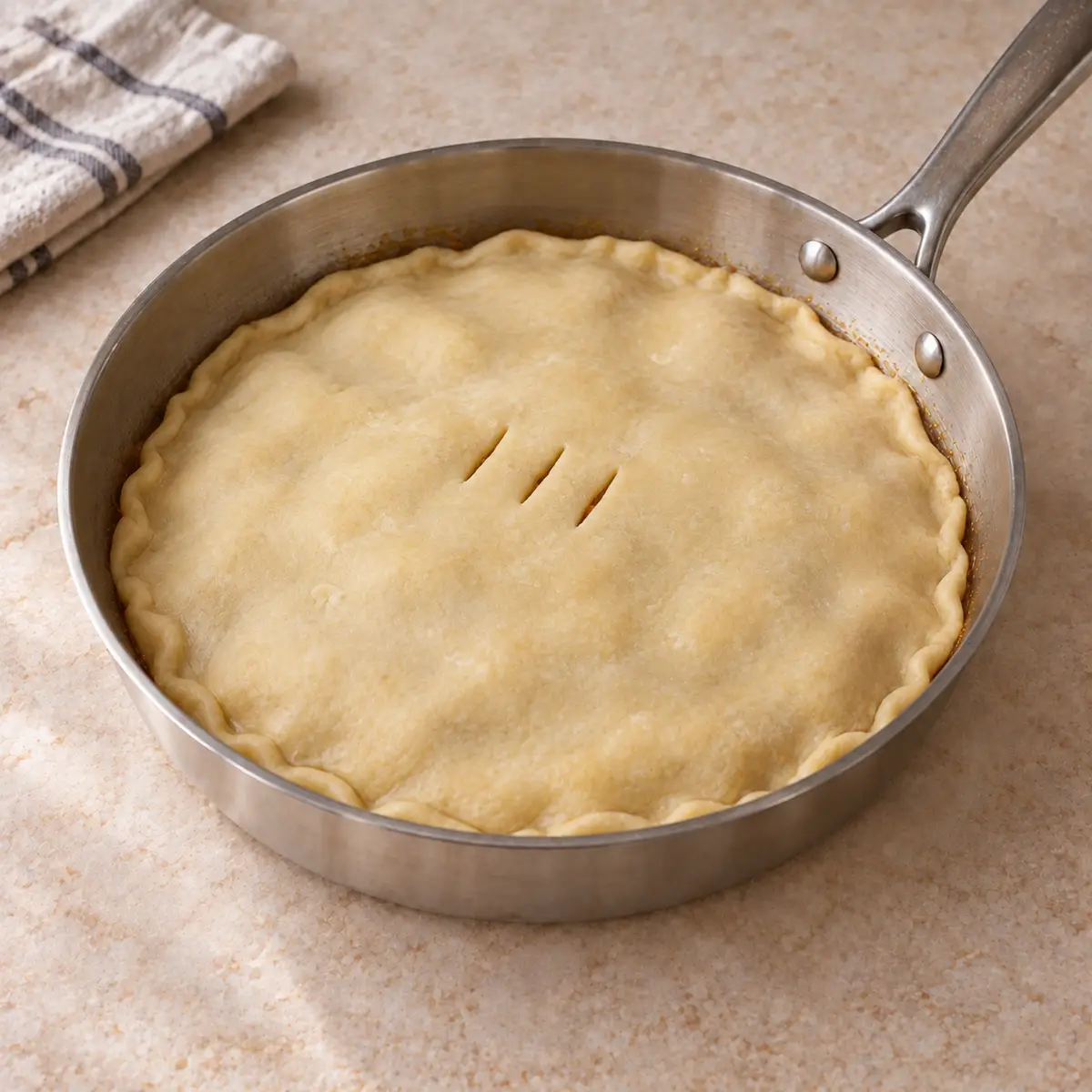
AI-generated Place the skillet on the prepared rack and bake at 190°C on the conventional (no-fan) setting for approximately 35–40 minutes. The entire pastry surface should be clearly golden, dry and baked through, with thick caramel bubbling around the edges. If the center of the pastry is still pale and soft, bake for approximately 5 minutes longer and check again; do not stop baking based only on the color of the edge.
Remove the skillet using dry oven mitts, set it on a heatproof trivet and wait approximately 10 minutes for the juice and caramel to stop bubbling vigorously. Do not wait until completely cool, as the caramel will harden and stick the fruit to the bottom. Carefully loosen the pastry edge from the sides with a thin spatula and set out a plate at least 28 cm in diameter, with a raised rim to catch the flowing caramel.
Cover the skillet with the plate, hold both firmly using dry oven mitts and invert in one decisive movement, directing any escaping hot caramel away from you. Set the plate on a stable counter and carefully lift off the still-hot skillet; if an apple piece has stuck to the bottom, transfer it to the tart. Scrape out the remaining soft caramel with a heatproof spatula and spread it over the fruit. If it has already hardened, warm only the skillet over low heat for approximately 30–60 seconds, just until the caramel loosens, then scrape it out. Cut the tart into 8 slices and serve warm, while the apples are soft and the shortcrust base is still crisp.
Estimated nutrition

Rate this recipe
0 ratings
Comments