
AI-generated
Focaccia col formaggio — thin Ligurian flatbread with creamy cheese
Log in or create a free account to save recipes.
Source: https://recipheon.com/en/recipes/snacks/focaccia-col-formaggio-thin-ligurian-flatbread-with-creamy-cheese
About this recipe
Focaccia col formaggio joins two very thin sheets of dough with soft creamy cheese hidden between them. This home version inspired by Ligurian cooking does not resemble tall yeast focaccia: dough made with flour, water, olive oil and salt rests, then is gently stretched almost transparent. Strong wheat bread flour helps form an elastic layer that holds the filling. Fresh crescenza softens during baking, filling the space between the sheets and sometimes escaping through finger-torn openings on top. These small tears release steam and limit the formation of one large air pocket. Use all the dough for the base, top and thin sealed edge, without discarding scraps. Bake briefly in a very hot home oven until browned blisters and crisp edges appear. After a few minutes, cut into six servings and serve warm while the cheese is still soft. Good ingredients provide all the flavor needed, without extra sauce or garnish.
Ingredients
All the dough for base and top
180 g strong Manitoba wheat bread flour with about 14–15% protein, for the dough
100 g room-temperature water, weighed
15 g extra virgin olive oil for the dough
3 g fine salt for the dough
Cheese and oil for pan and top
400 g plain fresh crescenza, a soft cheese without a rind in the stracchino family, not mozzarella or ricotta
8 g extra virgin olive oil for greasing the pan
12 g extra virgin olive oil for the top
Flour for light dusting
10 g of the same Manitoba wheat bread flour for dusting; use a thin layer as needed, with unused flour not served
Steps
Combine 180 g flour, 3 g salt, all the weighed water (100 g) and 15 g olive oil intended for the dough in a bowl. Gather with a spoon, then knead on a clean worktop for about 8–10 minutes until smooth and elastic. Do not add yeast, baking powder, milk or extra water. Keep the separate 10 g working flour for light dusting later.
Divide all the dough into two parts, leaving a slightly larger portion for the base and a smaller one for the top. Shape into loose balls and cover tightly with inverted bowls, without extra olive oil. Leave at room temperature for about 60 minutes. The dough should relax, not rise. Do not leave the surfaces uncovered, as a dry skin makes very thin stretching harder.
Near the end of resting, preheat the oven to 250°C, conventional heat, allowing about 30 minutes to heat. Set the rack in the lower third of the oven. Prepare a shallow metal baking pan with internal base dimensions about 30 × 40 cm, suitable for this temperature. Spread the precisely weighed 8 g olive oil over the entire base and low rim; do not add parchment or another fat.
Lightly dust the worktop and rolling pin with part of the weighed 10 g flour. Roll the larger dough portion, then carefully stretch over the backs of your hands and knuckles, without digging in your nails. Make a very thin sheet about 32 × 42 cm through which the outline of your hands is visible. If it springs back, cover for 5 minutes and return to stretching rather than pulling harder. Do not add flour beyond the weighed supply.
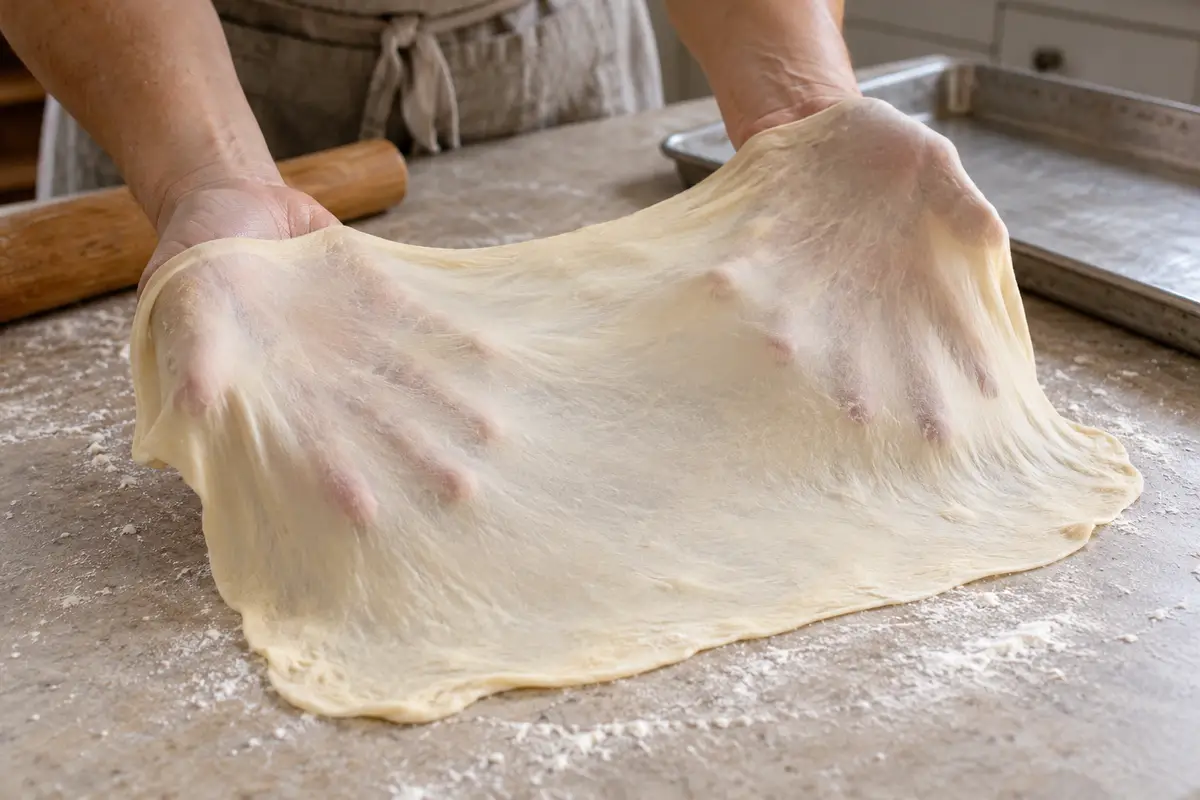
AI-generated Gently transfer the sheet to the oiled pan, covering the entire base with only a little extra dough at the edge. Lay without tension or large overlaps. Pinch any accidental tear together with your fingers, moving a little adjacent dough toward it; the base should remain sealed. Do not trim protruding pieces and do not set any dough aside outside the recipe, as it will form the thin edge seal.
Weigh 400 g fresh plain crescenza and distribute all of it in small roughly walnut-sized mounds over the base. Leave about 1 cm clear at the edge for sealing and small gaps between cheese portions. Do not smear it over the delicate dough and do not squeeze out its creamy portion. The cheese will melt and spread during baking; do not add milk, cream or other filling.
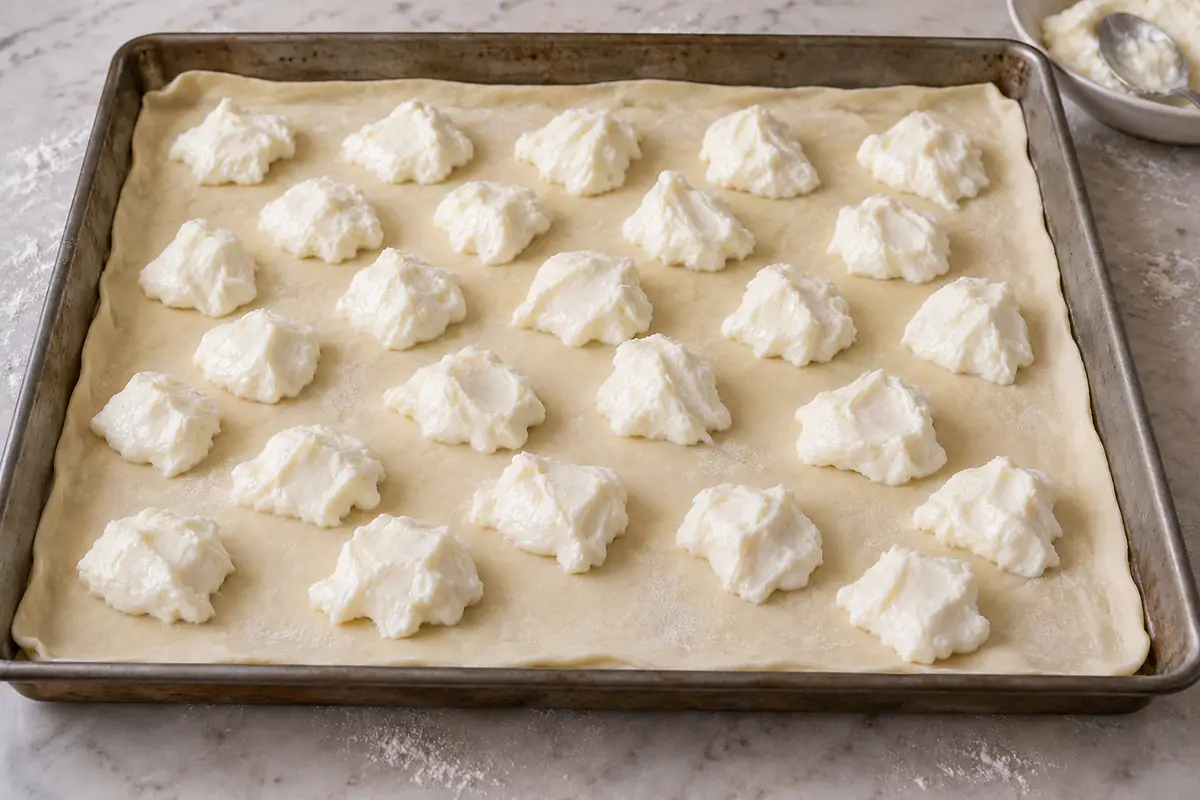
AI-generated Roll and stretch the smaller dough portion the same way, using only the needed remainder of the weighed flour. Make an almost transparent sheet about 30 × 40 cm, enough to cover the cheese. Support it broadly with your hands and lay loosely on top, without pressing into the filling. Use the whole dough portion; unused flour on the worktop is not served.
Press the edges of both sheets together. Fold the small excess of base dough inward and flatten into a narrow sealed edge, without a thick rope and without trimming scraps. Pinch and tear the top with your fingers in about 6 places, making small openings over the cheese. Tear only the top sheet, not the base. The openings release steam and let some cheese escape.
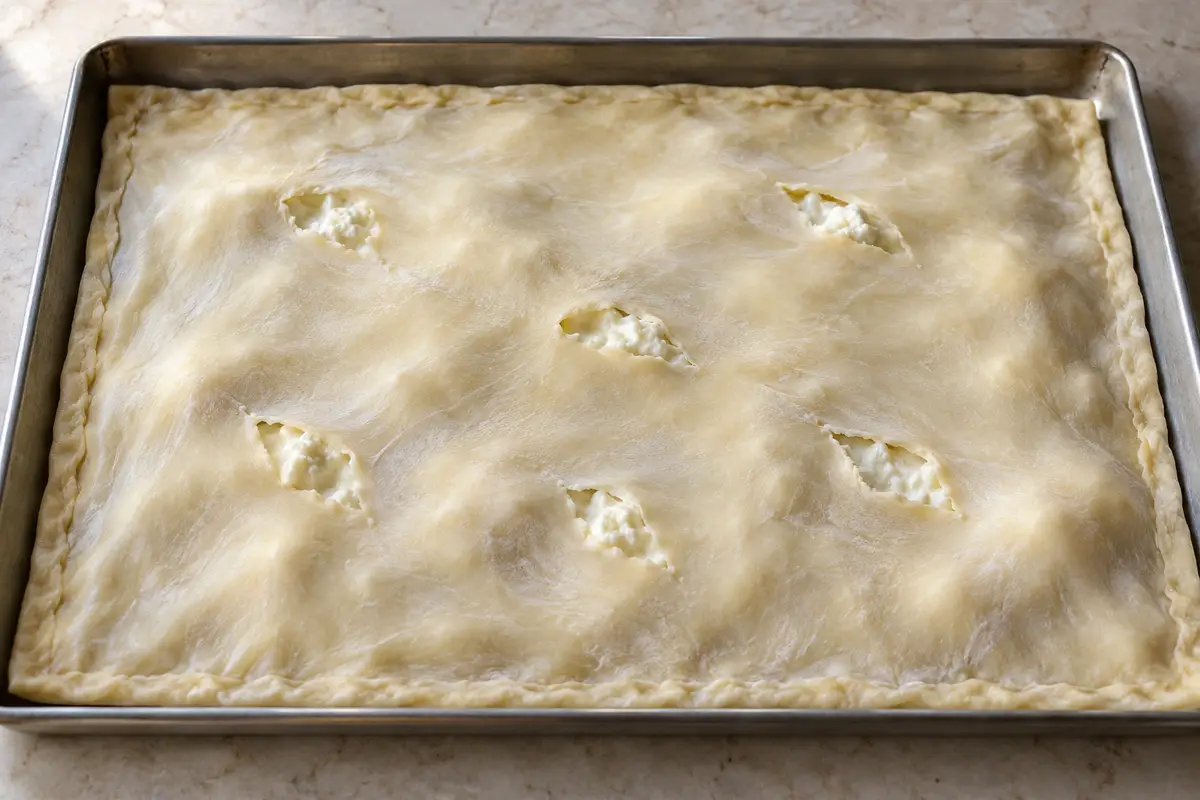
AI-generated Spread all the weighed 12 g olive oil over the top without pressing the brush hard. Put the pan on the prepared lower rack and bake at 250°C for about 12–15 minutes. The surface should have golden and brown blisters, the edges turn crisp and the cheese bubble through the openings. Lift a corner with a spatula: the base should be cooked, not pale and damp. Stop according to these signs before the thin dough dries out completely.
After taking it out, wait about 5 minutes, then divide the entire flatbread into 6 servings including the edges. Use a spatula to gather baked cheese and olive oil left beside the pieces on the pan and include them in the servings. Serve warm without sauce or garnish. Refrigerate leftovers in a shallow container within 2 hours and use within 2 days. Reheat briefly at 200°C for about 5–8 minutes; it may be less crisp than after the first bake.
Estimated nutrition

Rate this recipe
1 rating
Comments