
AI-generated
Fougasse — Leaf-Shaped Provençal Bread
Log in or create a free account to save recipes.
Source: https://recipheon.com/en/recipes/snacks/fougasse-leaf-shaped-provencal-bread
About this recipe
Fougasse is a Provençal olive oil bread with a crisp crust and wide openings that form a leaf pattern. After rising, the soft yeast dough is flattened, cut and gently stretched so the openings stay open during baking. This gives the bread plenty of browned, crisp edges, while the thicker areas retain a soft interior. This version contains all-purpose flour, water, fresh yeast, salt and olive oil, with no additions to obscure the dough's shape. These quantities make two loaves, each baked on its own 40 × 30 cm baking sheet and providing three portions. You need a convection oven to bake both at once on two racks. Allow about 3 hours, including two rises and a brief cooling period on a wire rack. The key points are elastic dough, genuinely wide cuts and a thoroughly preheated oven. Serve the bread while still slightly warm, tearing off pieces along the openings.
Ingredients
Dough and shaping
520 g dry wheat flour, type 650: 500 g for the dough and 20 g for dusting during kneading and shaping
325 ml lukewarm drinking water, not hot
15 g fresh baker's yeast
10 g fine salt
40 ml olive oil: 30 ml for the dough and 10 ml for brushing the tops
Steps
Crumble the fresh yeast into a large bowl and stir it into all the lukewarm water; the water should feel comfortably warm, not hot. Add 500 g flour, all the salt and 30 ml olive oil. Mix for about 5 minutes, until no dry flour remains and you have a soft, shaggy dough.
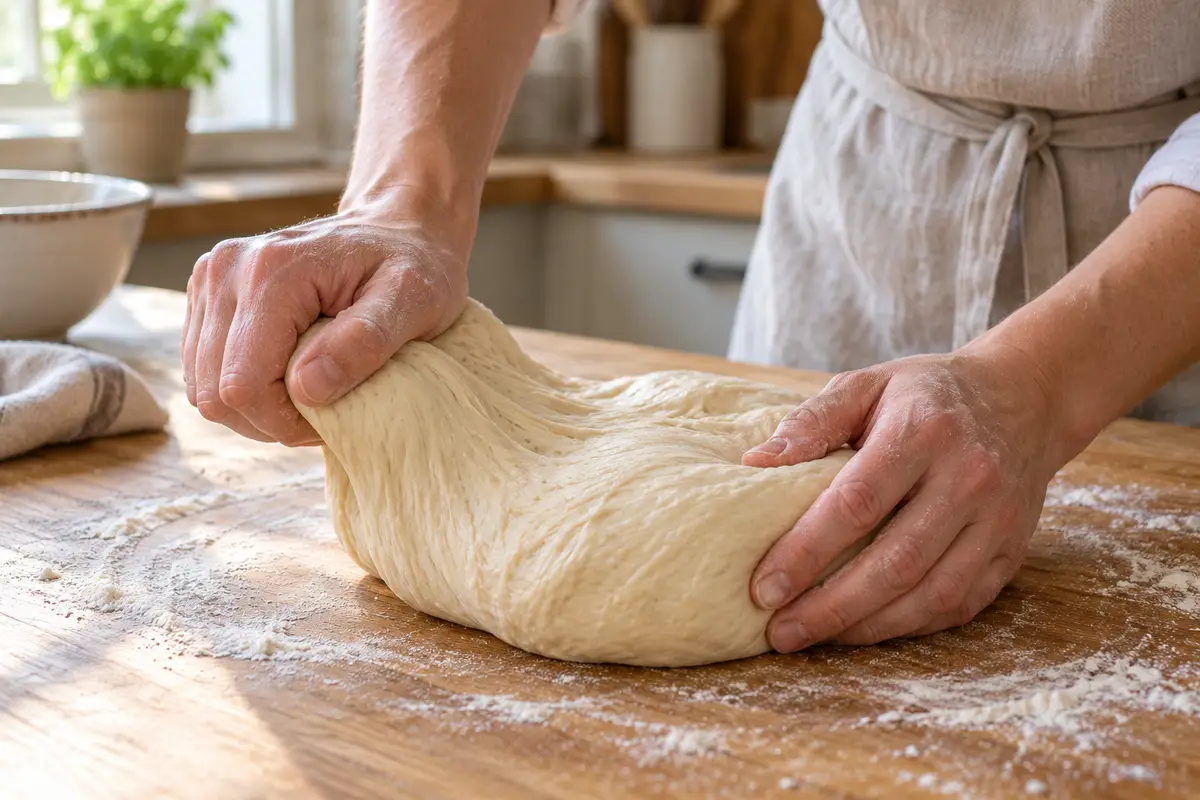
Dust the work surface with half the measured 20 g flour for dusting, reserving the rest for shaping. Turn out the dough and knead by hand for about 10 minutes: stretch it with the heel of your hand, then fold and turn it. It should become smooth, elastic and still slightly tacky; do not add extra flour, so the bread does not become dense. Gather the dough into a ball and return it to the bowl.
AI-generated Cover the bowl with a plate or lid and leave in a warm, draft-free spot for about 60–90 minutes. The dough should roughly double in volume and look airy. Prepare two flat baking sheets about 40 × 30 cm and line them with parchment paper.
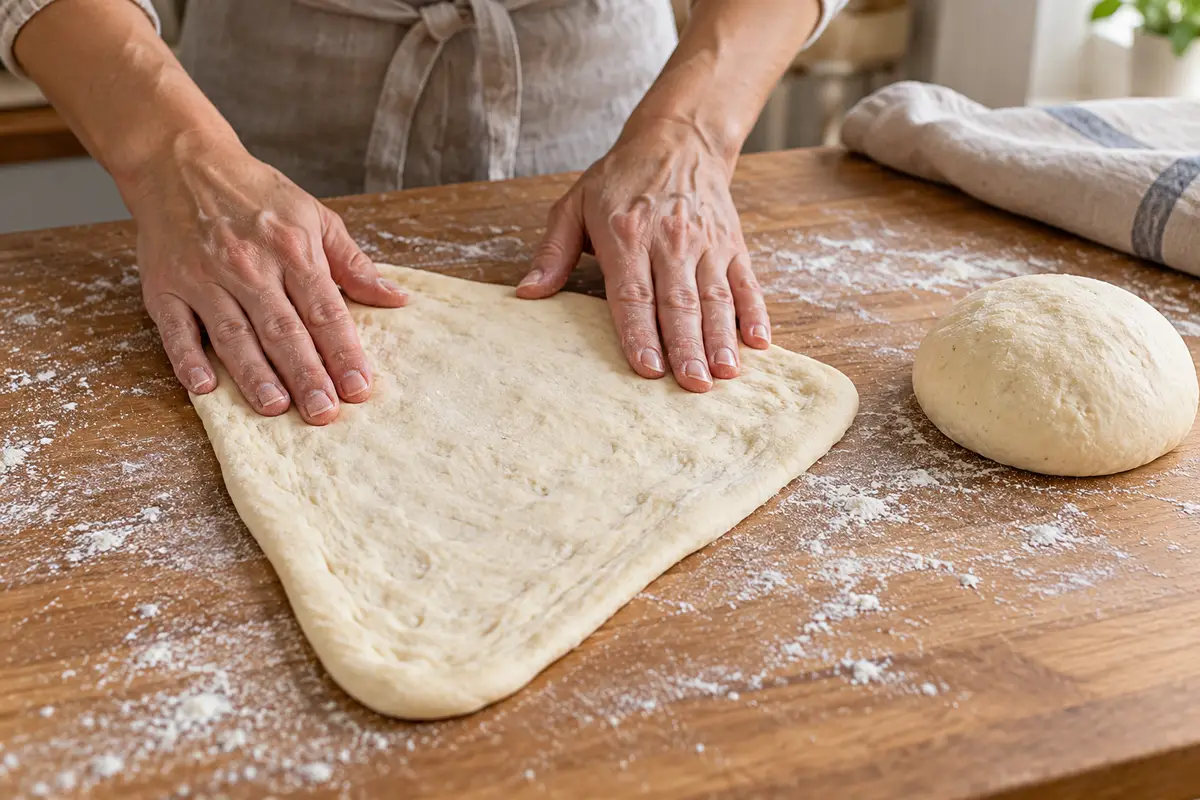
Dust the work surface with the remaining flour for dusting. Gently turn out the dough, divide it into two equal pieces and loosely shape each into a ball. Flatten each portion in turn with your hands into a broad triangle with rounded corners, about 1–1.5 cm thick, keeping some air in the dough. Transfer each piece to its own prepared baking sheet and finish shaping it on the parchment.
AI-generated Use a sharp knife to cut all the way through the center of each triangle lengthwise, leaving about 3 cm of intact dough at both ends. Add three diagonal slits on each side, like leaf veins, also cutting all the way through; do not cut the outer edge and do not join them to the central cut. Gently ease the dough apart with your fingers, opening each cut to about 2 cm wide so it does not close during rising. After stretching, each leaf should measure about 30 × 24 cm; center it on its own baking sheet, with its length running along the sheet's longer side.
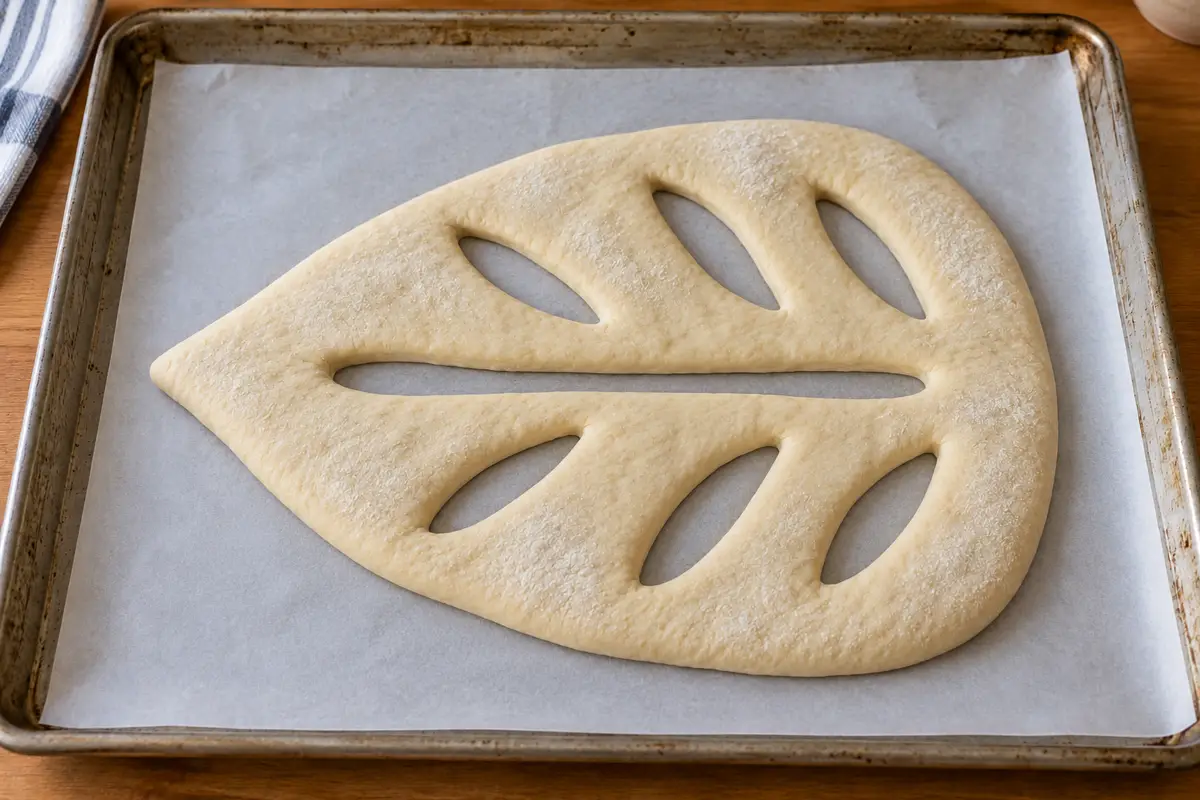
AI-generated Set a convection oven to 210°C and preheat for about 30 minutes. At the same time, loosely cover both baking sheets with clean kitchen towels and let the dough rise again for about 30 minutes. The leaves should puff up slightly and the openings should remain clearly visible; if their edges have moved closer together, gently spread them apart with your fingers before baking. The oven preheats during this rise.
Remove the towels and gently brush the tops of both loaves with the remaining 10 ml olive oil. Put both baking sheets in the preheated oven at the same time on two racks, leaving space between them for air to circulate, and bake for about 20–25 minutes. The loaves are ready when golden brown, with darker browning around the openings; the bottoms should be dry and clearly browned. If you notice uneven browning halfway through baking, swap the sheets between racks and rotate them front to back.
Transfer the loaves from the parchment to a wire rack and leave for about 15 minutes so steam does not soften the bottoms and the interior can rest after baking. Serve while still slightly warm. Divide each loaf into three portions, tearing off pieces along the openings.
Estimated nutrition

Rate this recipe
0 ratings
Comments