
AI-generated
Pâté en croûte — pastry-wrapped pâté with pistachios and aspic
Log in or create a free account to save recipes.
Source: https://recipheon.com/en/recipes/snacks/pate-en-croute-pastry-wrapped-pate-with-pistachios-and-aspic
About this recipe
Pâté en croûte is a French pâté baked in shortcrust pastry and served cold with pistachios and delicate aspic. This home version combines ground pork shoulder with pieces of chicken, egg, cream and herbs. Buttery pastry encloses the filling on all sides, while two chimneys in the lid release steam and later provide openings for adding the aspic. No alcohol or curing salt is added. After baking, the pâté cools briefly on a rack, then chills overnight in the refrigerator; lukewarm stock with gelatin is poured into the cold pastry only afterward. The interior takes only as much liquid as the gaps can hold, so you do not need to use all the prepared aspic. The recipe makes one pâté in an ordinary metal loaf pan and ten portions, without extra bread or salad. Plan a day ahead so the filling, pastry and aspic can be sliced neatly.
Ingredients
Shortcrust pastry
350 g type 550 wheat flour
175 g cold butter with 82% fat
1 egg, size M, about 50 g without the shell, for the pastry
70 g cold water
6 g salt
Raw filling with pistachios
500 g raw ground pork shoulder without bones or skin, with natural fat marbling
300 g raw chicken thigh meat, already without bones or skin
60 g unsalted, unroasted pistachio kernels, without shells
1 egg, size M, about 50 g without the shell, for the filling
50 g cream with 30% fat, weighed
8 g peeled garlic
1 g dried thyme
12 g salt
1 g ground black pepper
0.3 g ground nutmeg
Egg wash and aspic
15 g beaten whole egg without the shell, weighed for sealing and glazing the pastry
250 g clear ready-to-use poultry stock without alcohol, without vegetable pieces or noodles
6 g plain powdered food gelatin, for about 250 g liquid
Steps
Mix the flour with 6 g salt. Add the cold diced butter and briefly rub in with your fingers until the mixture resembles coarse crumbs. Add the egg intended for the pastry and all 70 g water. Quickly bring the ingredients together, without prolonged kneading, until no dry flour remains. This makes about 650 g pastry. Flatten it, wrap and refrigerate for about 1 hour.
Have ready a metal loaf pan with internal dimensions of about 25 × 10 × 7 cm. Line the base and sides with baking parchment, leaving two overhanging edges to lift out the cold pâté later; do not add extra fat to the pan. Pat the thigh meat dry, remove any tough tendons and cut into cubes about 1 cm across. Finely chop the garlic. Keep both portions of meat cold and take them out only when ready to mix the filling.
Add the egg intended for the filling, all the cream, garlic, thyme, 12 g salt, pepper and nutmeg to the ground pork. Mix with a spoon or a clean hand for about 2–3 minutes, until sticky and cohesive. Add all the diced chicken and all the pistachios and mix thoroughly. Do not taste the raw mixture. Cover and refrigerate while rolling the pastry.
Roll about two-thirds of the cold pastry between two sheets of parchment into a rectangle about 40 × 25 cm and about 4 mm thick, without dusting with extra flour. Carefully line the pan, pressing the pastry against the base and sides. Fit the corners without thick overlaps and carefully patch any cracks with a piece of the same pastry. Add all the filling in several portions, pressing with a spoon so no large empty spaces remain. Level the top; the filling does not need to reach the top rim of the pan.
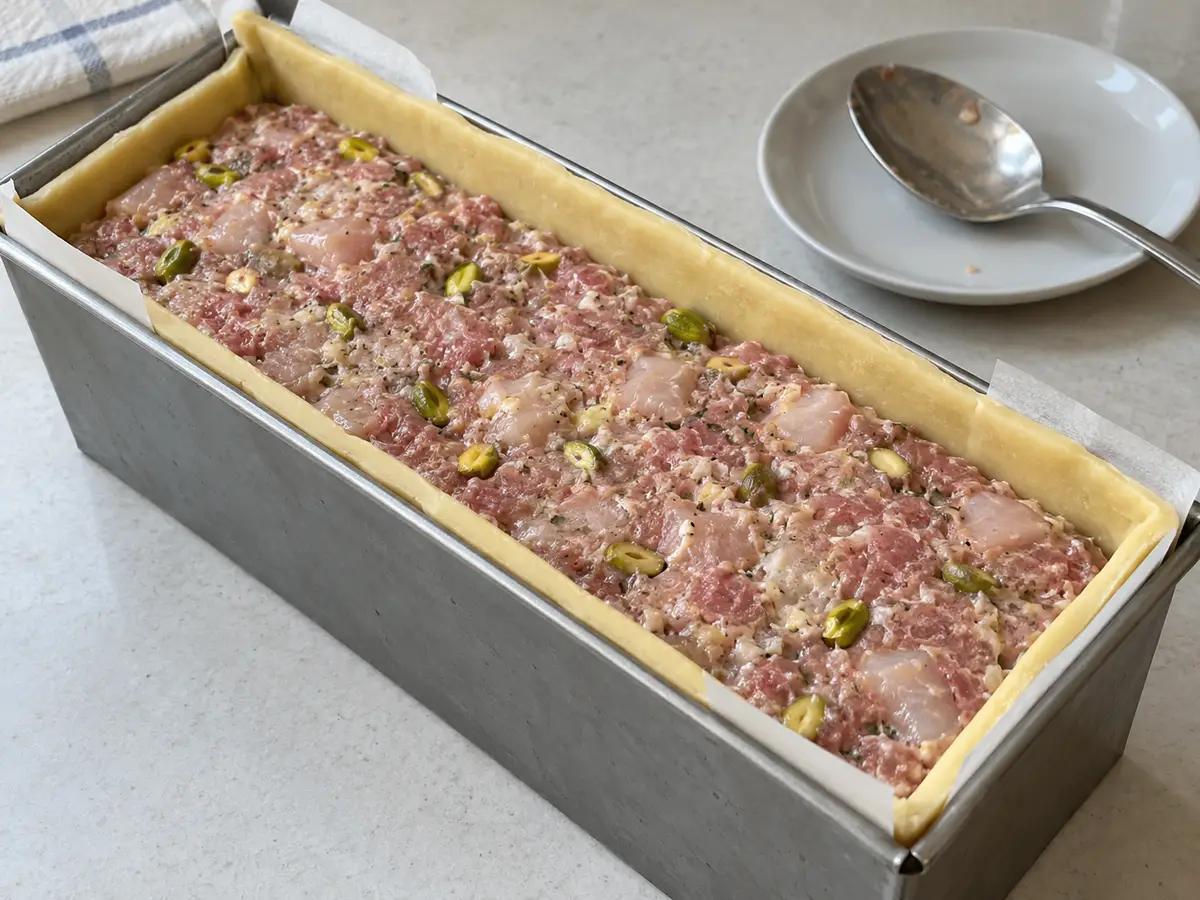
AI-generated Roll the remaining pastry between parchment sheets into a lid slightly larger than the pan, about 27 × 12 cm and again about 4 mm thick. Adjust the side edges of the pastry to the filling level so the lid can rest on the filling. Use a little of the measured 15 g beaten egg to moisten the edges, lay on the lid, seal thoroughly and trim the excess. Brush the top with the rest of the same portion of egg. Cut two holes about 1.5 cm in diameter along the center and insert short chimneys made from rolled baking parchment. Set the offcuts aside for baking separately or discard them; they are not part of the ten pâté portions. Refrigerate the assembled pan for about 20 minutes.
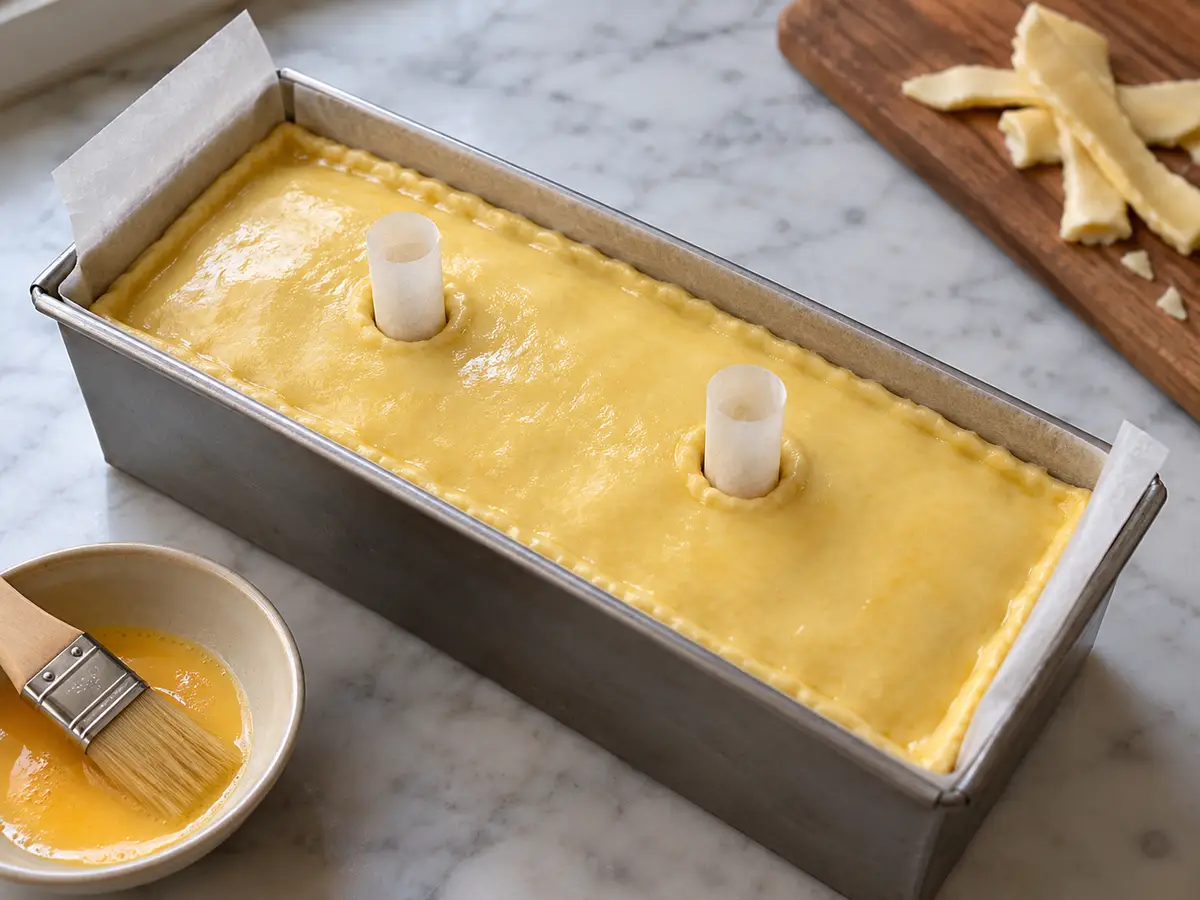
AI-generated Preheat the oven to 200°C with conventional top and bottom heat. Put the loaf pan on a rimmed baking sheet and bake on the lower-middle rack for 20 minutes. Lower the temperature to 170°C and bake for about another 70–80 minutes, about 90–100 minutes in total. If the top browns too much, cover loosely with foil without blocking the chimneys. Do not shorten baking just because the pastry colors early; the filling inside is raw. Do not later add any fat or juices that leak onto the outer baking sheet to the aspic.
Put the pan on a rack and leave for about 30 minutes, without removing the pâté. Carefully remove the parchment chimneys. Then put the pan in the refrigerator with free space around it; do not wait several hours for it to cool completely on the counter. Do not cover tightly at first, then cover once chilled. Refrigerate for at least 12 hours. Do not drain the contents and do not remove the fat: the juices and fat remaining inside the pastry belong to the pâté.
The next day, measure 30 g from the full amount of cold stock, mix with the gelatin and leave to bloom for about 10 minutes. Heat the remaining 220 g stock almost to a boil, take off the heat and thoroughly dissolve the bloomed gelatin in it. Cool for about 10–15 minutes, stirring, until lukewarm but still freely flowing. Use a small funnel or spout to pour it into the completely cold pâté, alternating between the two holes in small additions. When the liquid stops disappearing, pause briefly and stop if the level no longer falls. Usually about 100–180 g prepared aspic fits, depending on the gaps; do not force in all 256 g. Chill any excess separately, outside the portions of this recipe.
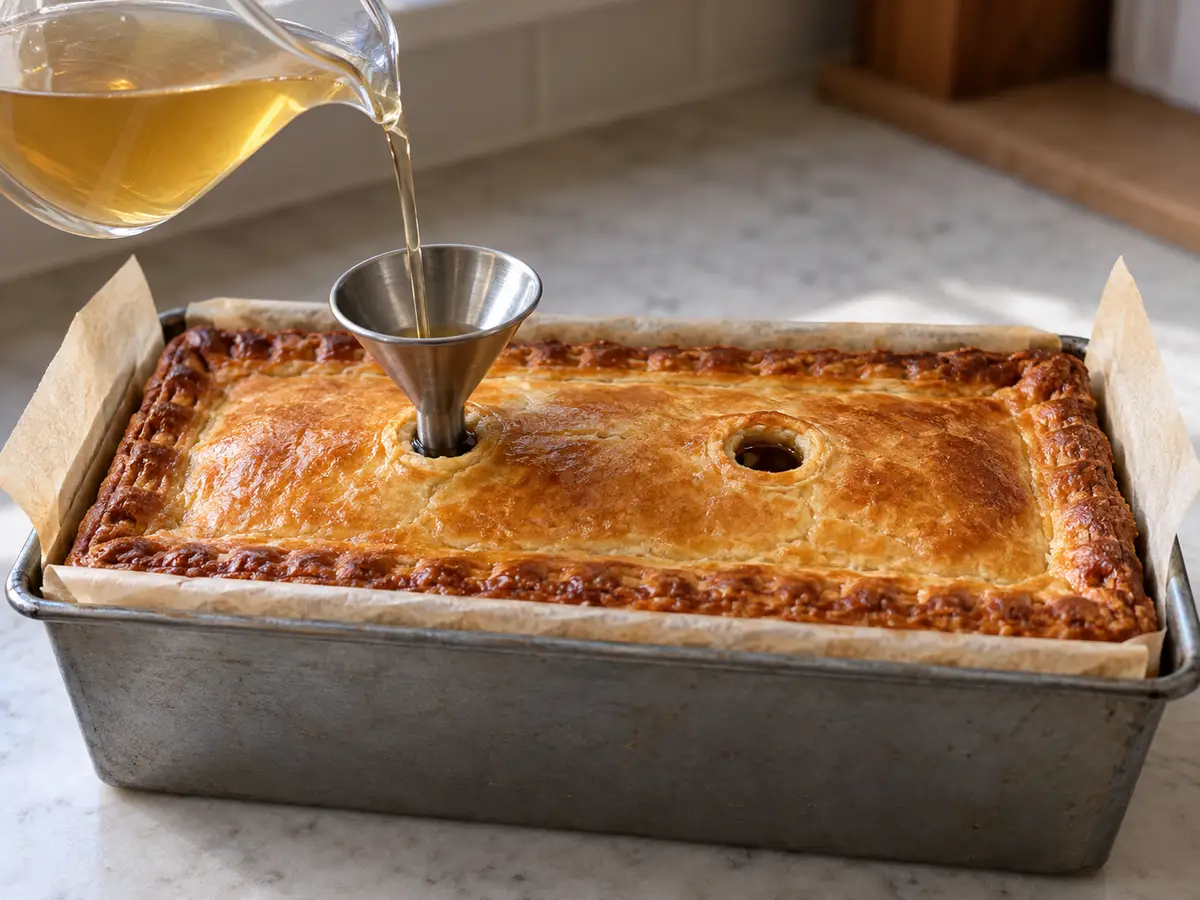
AI-generated Return the pâté to the refrigerator for at least 4 hours, until the aspic is firmly set. Only then carefully lift it out using the parchment and remove the paper from the sides and base. Cut into ten portions with a sharp serrated knife, without extra decoration or unlisted sides. Serve chilled. Immediately refrigerate the remainder in a closed container and eat within the next 2 days.
Estimated nutrition

Rate this recipe
0 ratings
Comments