
AI-generated
Pīrāgi — Latvian yeast rolls with bacon and onion
Log in or create a free account to save recipes.
Source: https://recipheon.com/en/recipes/snacks/piragi-latvian-yeast-rolls-with-bacon-and-onion
About this recipe
Pīrāgi are small Latvian yeast rolls with a savory filling, usually shaped into crescents. Soft milk dough surrounds finely diced bacon and onion, while a thin egg wash gives the crust a golden shine. In this home version, raw smoked bacon is first sautéed with onion, keeping all the rendered fat in the filling. The filling then needs thorough chilling: it thickens, becomes easier to portion and does not warm the dough during shaping. The rolls are made from individual pieces of dough, without cutting out circles and kneading scraps again. Clean, firmly sealed edges and a seam underneath help keep the filling inside. The recipe makes twenty-four rolls baked in succession on two baking sheets; the second half of the dough waits briefly in the refrigerator so it does not overproof while you work on the first. They are particularly good slightly warm, but can be refrigerated or frozen once cooled. This practical home version of a Latvian bake has a full bacon and onion filling and comes without an extra topping.
Ingredients
Bacon and onion filling
300 g raw smoked pork bacon, not parboiled; weight without skin, ribs or cartilage, before sautéing
150 g peeled onion
0.5 g freshly ground black pepper
Milk yeast dough
500 g type 550 wheat flour
250 g milk with 3.2% fat, weighed and gently warmed
15 g fresh baker's yeast
25 g fine white sugar
8 g fine salt
50 g beaten whole egg without shell, about 1 medium (M) egg; any excess is excluded from the dough
60 g softened unsalted butter with 82% fat
Shaping and egg wash
20 g additional type 550 wheat flour for light dusting; unused flour is excluded from the rolls
24 g beaten whole egg for brushing, weighed from a separate medium (M) egg without shell; the remaining egg does not go into the servings
Steps
Cut the bacon into cubes about 4–5 mm across and chop the onion very finely. Put the bacon in a cold, dry frying pan. Heat over medium-low heat for 4–5 minutes, stirring, until the fat begins to render. Add all the onion and cook for another 8–10 minutes, until softened and the watery liquid has evaporated. Do not dry the bacon into hard cracklings. Stir in the pepper. Do not add oil or salt and do not pour off the rendered fat: it all belongs in the filling.
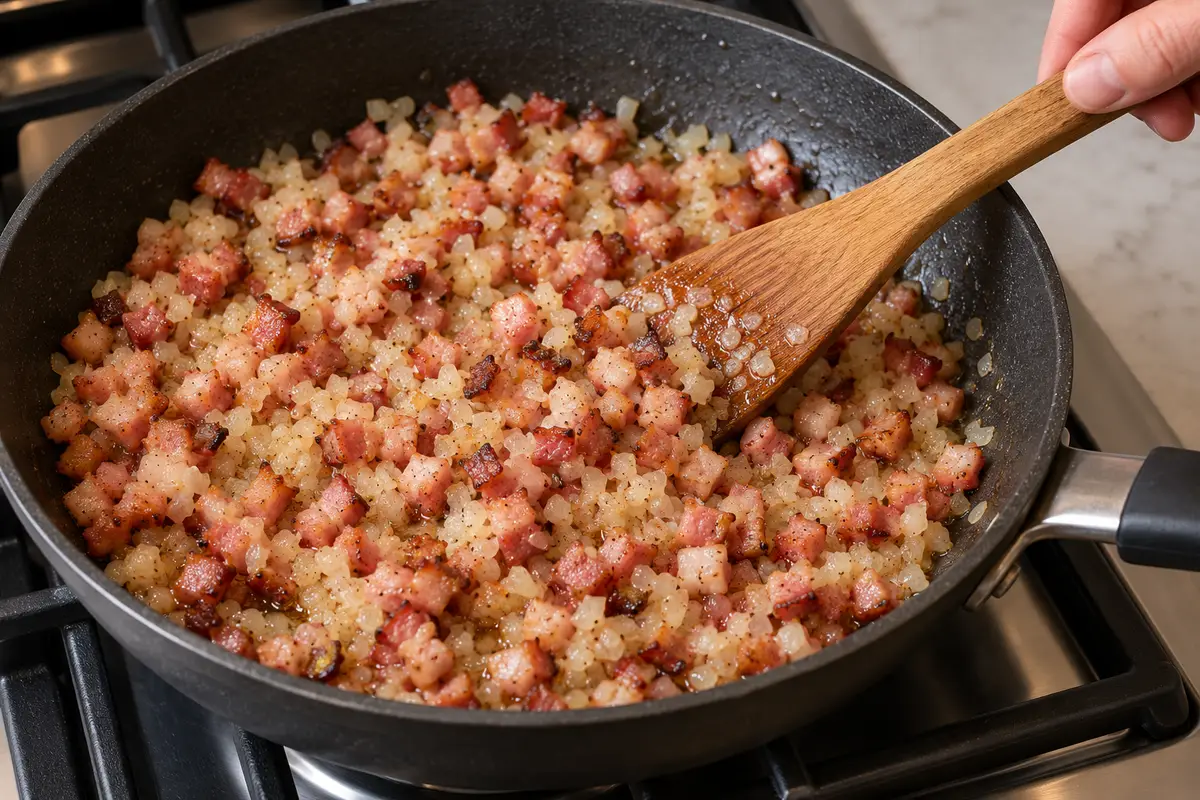
AI-generated Scrape everything from the pan, including the fat, into a shallow dish. Spread in a thin layer and cool for about 20–30 minutes, then refrigerate for about 20–30 minutes, until the filling is cold and the fat has thickened. Do not drain on paper towels. You can chill the filling while kneading and proofing the dough. Stir the cold filling before dividing it so the bacon, onion and fat are evenly distributed.
The milk should be only gently warm, pleasant to the touch. Dissolve the yeast and sugar in it. Put 500 g flour and the salt in a large bowl, pour in all the milk with yeast and add the weighed 50 g egg. Mix, then knead for about 5 minutes, until no dry flour remains. The butter goes in at the next step. Do not add more milk and do not add the flour set aside for shaping.
Add the softened butter in several portions, kneading each one in before adding the next. Knead by hand or with a dough hook on low speed for about another 8–10 minutes. The dough should be smooth, soft, elastic and only slightly sticky; initial slipperiness after adding butter is normal. Scrape residue from the sides into the dough. Do not dust with flour while kneading and do not grease the bowl with extra fat.
Gather the dough into a ball, leave in the bowl and cover. Leave at room temperature for about 75–90 minutes, until nearly doubled in volume and clearly puffy. In a cool kitchen, it may need a little longer. Do not put the bowl on a hot radiator. Check that the filling is completely chilled; do not use warm or liquid filling for shaping.
Line two baking sheets with parchment. Separately weigh out 20 g flour for sparing dusting. Deflate the dough and divide into two equal halves. Cover one half and refrigerate while preparing the first baking sheet. Divide the other into 12 equal pieces of about 38 g each. Divide all the cold filling into two equal halves; keep one refrigerated for the second sheet and divide the other into 12 equal portions. Do not set aside any filling to leave out of the rolls.
Flatten the first 12 pieces one at a time with your fingers or a small rolling pin into circles about 9 cm across, dusting lightly with only the weighed flour. Put one prepared portion of cold filling in the center of each. Leave a clean border about 1 cm wide. Do not spread fat on the edges: it would make a tight seal harder. Exclude leftover flour from the rolls rather than forcing it into the dough.
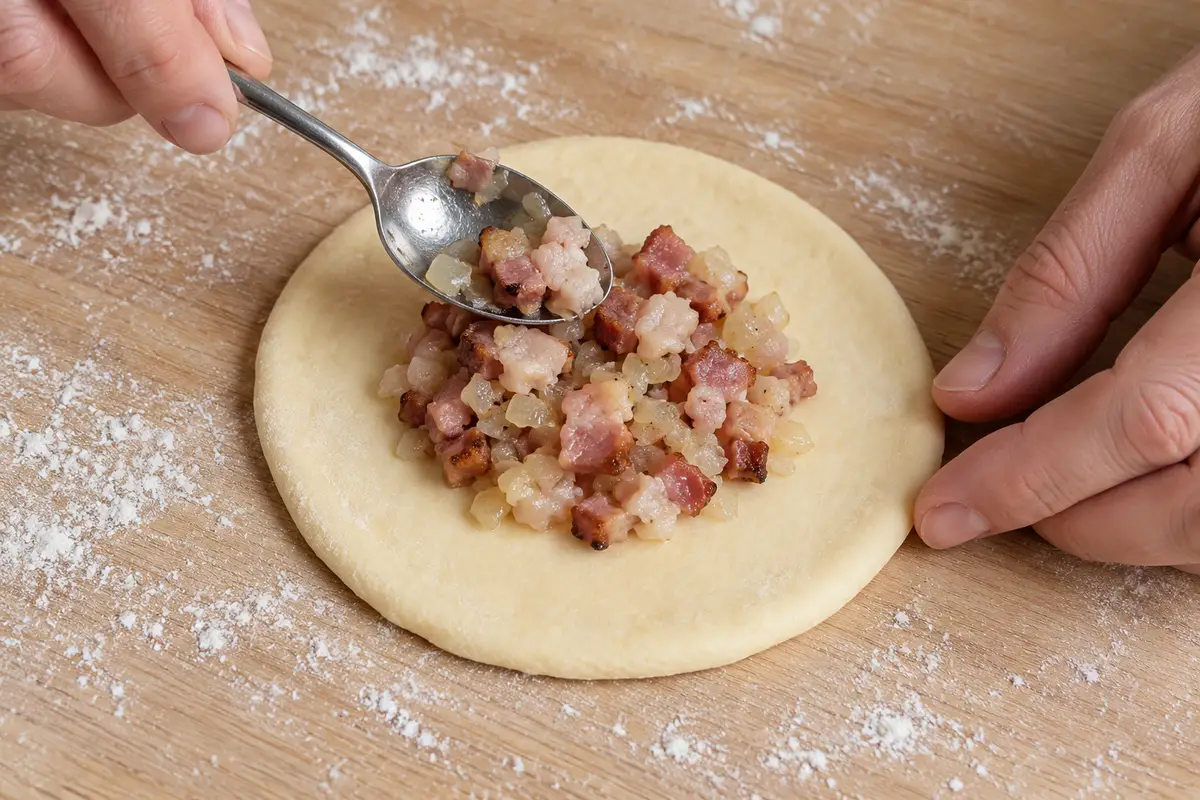
AI-generated Fold each circle in half over the filling and firmly seal the entire edge, releasing excess air. This makes a small filled pocket with slightly tapered ends. Turn it seam-side down and gently curve into a crescent. Do not score the surface. Place 12 on the first baking sheet about 3 cm apart. Each roll must have a firmly sealed seam underneath; reseal any exposed filling before proofing.
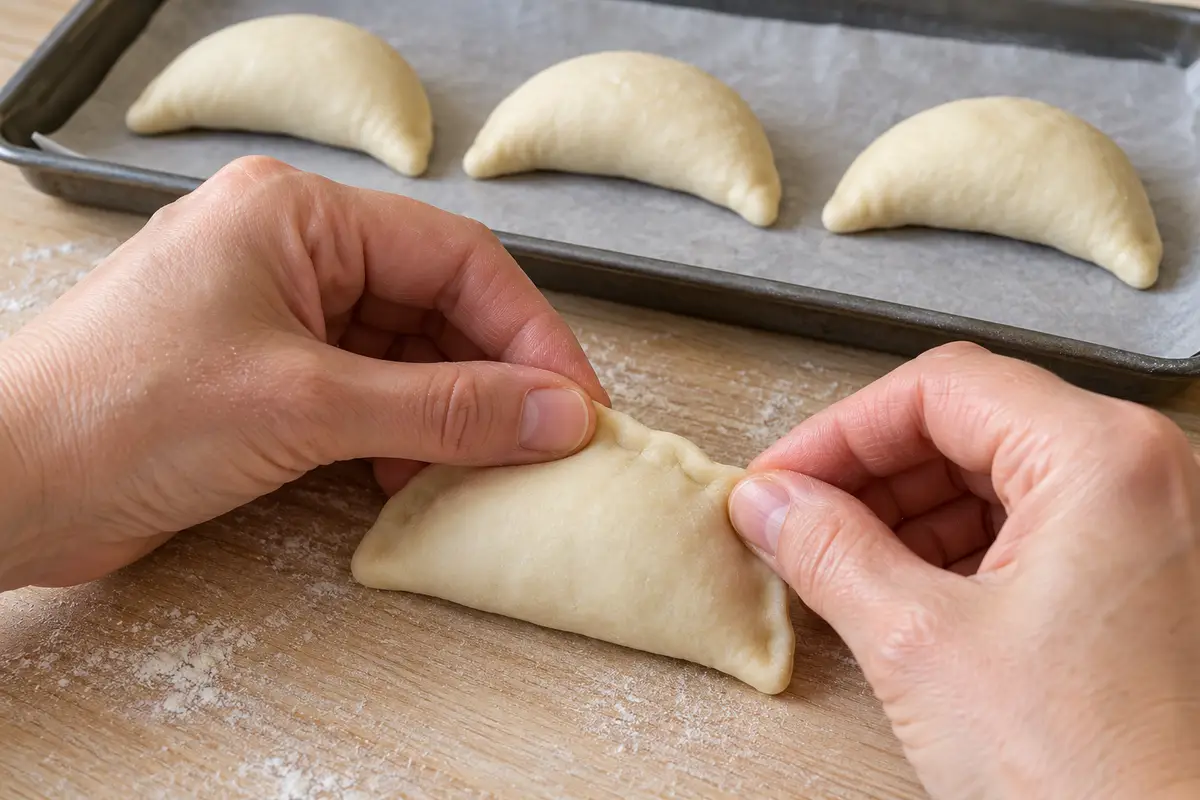
AI-generated Loosely cover the first sheet with a kitchen towel and leave for about 30–40 minutes, until the rolls are clearly puffy. Preheat the oven to 190°C with conventional top and bottom heat. Beat a separate egg without shell and weigh out 24 g for brushing both sheets; set any excess aside, outside this recipe. Just before baking, remove the towel and thinly brush the first 12 rolls with half the weighed egg, or 12 g. Keep the other half of the egg refrigerated.
Put the first baking sheet on the middle rack. Bake for 18–22 minutes at 190°C, until the rolls are evenly golden and the bottoms dry and lightly browned. Once the first sheet goes into the oven, take the second half of the dough and filling out of the refrigerator. Divide into 12 equal portions and shape more crescents exactly as before. Use all the remaining dough and filling. Place seam-side down on the second sheet; do not speed up its proofing with heat from the oven.
Cover the second sheet and leave for about 35–50 minutes after shaping is finished, until the rolls are as puffy as the first batch; cooler dough may rise more slowly. Transfer the first baked rolls to a rack. Brush the second batch with the remaining 12 g egg just before baking and bake at 190°C for 18–22 minutes, until the crust is equally golden and the bottoms dry. Bake the sheets one after the other, not at the same time. Do not add toppings or butter after baking.
Cool each batch on a rack for at least 15–20 minutes before serving; the filling is very hot at first. Serve plain, slightly warm or cooled. One serving is one roll from the full batch of 24. Once completely cooled, refrigerate in an airtight container for up to 3 days or freeze for up to 2 months. Reheat refrigerated rolls for about 8–10 minutes at 160°C. Do not seal warm rolls in a container and do not leave them overnight at room temperature.
Estimated nutrition

Rate this recipe
0 ratings
Comments