
AI-generated
Torta al Testo – Umbrian Skillet Bread with Browned Patches
Log in or create a free account to save recipes.
Source: https://recipheon.com/en/recipes/snacks/torta-al-testo-umbrian-skillet-bread-with-browned-patches
About this recipe
Torta al testo is an Umbrian skillet bread with browned patches and a soft center. Traditionally it is cooked on a griddle called a testo; here you will make it in a regular heavy skillet. This home version uses baking powder, not yeast. Resting makes the dough easier to roll, and gentle cooking lets the center cook through without scorching the surface. The warm wedges can be cut horizontally for filling or served in place of bread. This recipe covers the bread alone. The ingredients make 2 breads, or 8 wedges and 4 servings of 2 wedges each. Allow about 1 hour and 40 minutes, including 30 minutes for resting the dough and 5 minutes under a cloth after the last bread is cooked; preheat the skillet toward the end of the rest and shape the second round while the first cooks.
Ingredients
Dough
500 g all-purpose wheat flour, type 550
275 ml sparkling water at room temperature
25 g extra virgin olive oil for the dough
15 g plain baking powder without vanilla flavoring; not pure baking soda
8 g fine salt
For dusting
up to 20 g all-purpose wheat flour, type 550, for the counter and rolling pin; use only what is needed and leave the unused flour out of the dish
Steps
In a large bowl, thoroughly mix 500 g flour, the baking powder and salt. Pour in 25 g olive oil, then gradually add all the measured sparkling water, stirring with a spoon. Transfer to a clean counter and knead for about 8–10 minutes, until the dough is smooth, soft and slightly springy.
Shape into a ball, place in the bowl and cover with a cloth. Rest for 30 minutes at room temperature. The dough does not need to double in size. During the last 5 minutes of resting, start preheating a heavy skillet about 28 cm across, with a flat base at least 24 cm across, over medium heat; preferably choose a cast-iron skillet or one with a thick base. Keep the skillet dry; do not add fat.
Divide the dough into 2 equal pieces. Keep one covered and roll the other into a round about 22 cm across and about 1 cm thick. Use the measured dusting flour sparingly on the counter and rolling pin, only as much as needed; do not add the remaining flour to the dough. Prick closely spaced holes all over the surface with a fork to limit large bubbles during cooking.
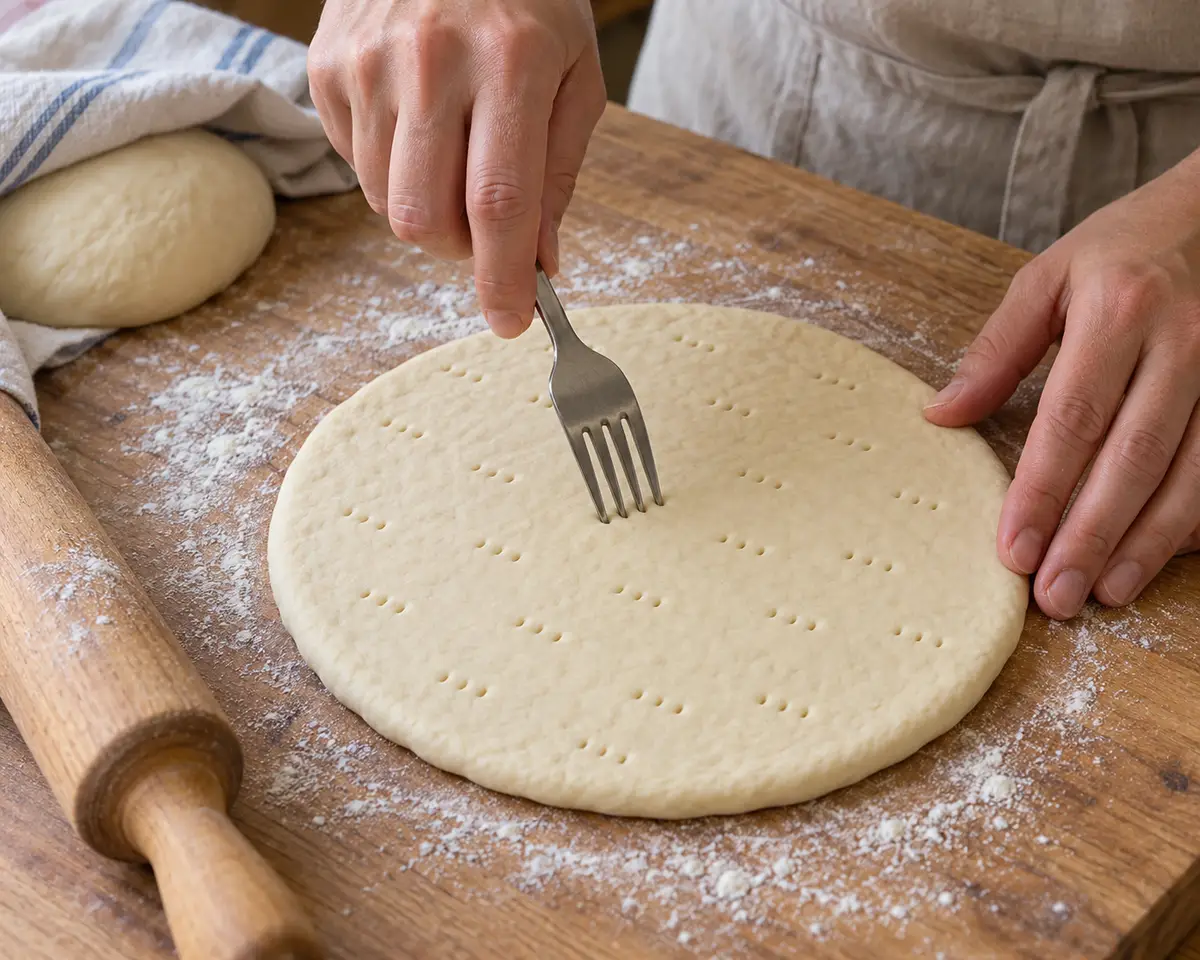
AI-generated Reduce the heat to medium-low and transfer the first round to the dry skillet, supporting it with a broad spatula. Cook for about 7–9 minutes on one side, turn over and cook for another 7–9 minutes. Rotate the bread in the skillet as it cooks so it browns evenly. If the surface darkens too quickly, lower the heat. The cooked bread has browned patches, dry sides and a springy, cooked crumb. If a cut into the edge reveals sticky raw dough, cook for another 2–3 minutes on each side over lower heat. While the first bread cooks, roll and prick the second piece in the same way, using the rest of the dusting flour only as needed. Move the first cooked bread to a board and cover with a cloth, then cook the second in the same way in the same dry skillet.
After cooking the second bread, leave both under a cloth for about 5 more minutes so the surface softens a little. Cut each of the 2 breads into 4 wedges, making 8 wedges, or 4 servings of 2. Serve warm. For filling later, you can cut the wedges horizontally, leaving one edge joined.
Estimated nutrition

Rate this recipe
0 ratings
Comments